Hughes-Stovin syndrome is a very rare condition in which inflammation in blood vessels can lead to two dangerous problems at the same time: blood clots in veins and balloon-like weak spots in the lung arteries. These lung artery changes can bleed, sometimes suddenly and heavily, which is why early recognition matters.
Because it is uncommon, many people go through several evaluations before someone connects the dots—especially if the first sign is a “routine” deep vein clot. The most helpful approach is to treat Hughes-Stovin syndrome as a medical pattern: clotting plus unexplained lung artery abnormalities, often with coughing up blood. With the right imaging, careful use of medications, and close follow-up, many patients stabilize and avoid the most feared complication: massive bleeding from a ruptured lung artery aneurysm.
Table of Contents
- What is Hughes-Stovin syndrome?
- What causes it and who gets it?
- Early symptoms, red flags, and complications
- How it is diagnosed and what tests mean
- Treatment options and the anticoagulation question
- Long-term management, prevention, and when to seek care
What is Hughes-Stovin syndrome?
Hughes-Stovin syndrome (often shortened to HSS) is usually described as a rare form of blood-vessel inflammation (vasculitis) that combines:
- Venous thrombosis (clots in veins, often deep vein thrombosis in the legs, but it can occur elsewhere), and
- Pulmonary artery aneurysms (weak, widened areas in lung arteries that can bleed).
Many experts consider HSS a close relative of Behçet’s disease—sometimes described as an “incomplete” or “variant” form—because the vascular pattern overlaps. The difference is practical: Behçet’s disease is defined by a broader set of signs (often mouth ulcers, genital ulcers, eye inflammation, and skin findings), while HSS may present mainly with clotting and lung artery involvement. In real life, people can sit anywhere along that spectrum.
A classic teaching model breaks HSS into a progression:
- Clotting phase: episodes of thrombophlebitis (painful inflammation in a vein) or deep vein thrombosis.
- Pulmonary vascular phase: inflammation affects pulmonary arteries and can produce in-situ thrombosis (clot forming inside the artery) and then aneurysm or pseudoaneurysm formation.
- Bleeding risk phase: aneurysms may leak or rupture, causing hemoptysis (coughing up blood), which can be life-threatening.
Not everyone follows a neat timeline, but the pattern helps clinicians avoid a common trap: treating the condition as ordinary pulmonary embolism. In HSS, clots in the lungs may be part of pulmonary vasculitis and in-situ thrombosis, not classic “traveling clots” from the legs. That distinction matters because routine anticoagulation can increase bleeding risk if aneurysms are present.
A useful way to frame HSS is as a condition where the danger comes from both sides of the same process:
- Inflammation drives clotting and vessel-wall injury.
- Vessel-wall injury creates aneurysms that can bleed.
Your care team’s job is to lower inflammation fast, secure any unstable aneurysms, and then decide—carefully—if and when clot-directed therapy is safe.
What causes it and who gets it?
There is no single proven cause of Hughes-Stovin syndrome. Most descriptions treat it as an immune-driven vasculitis (the immune system attacks blood vessels), but why that happens in a specific person is not fully understood.
Proposed mechanisms
Current thinking centers on a few linked ideas:
- Inflammation of vessel walls weakens arteries and makes veins “sticky” for clots.
- Endothelial injury (damage to the inner lining of blood vessels) promotes clot formation and abnormal healing.
- In-situ thrombosis in pulmonary arteries may occur because the inflamed artery wall triggers clotting locally, rather than because a clot traveled from the legs.
Some clinicians also consider whether certain infections can act as a trigger in a susceptible person, but no consistent infectious cause has been confirmed. In practice, doctors usually treat the inflammation pattern rather than chase a single trigger.
Relationship to Behçet’s disease
A key concept for patients is that HSS and Behçet’s disease can look like family members:
- Both can involve veins and arteries.
- Both can cause pulmonary artery aneurysms.
- Both can create confusing “clot versus inflammation” decisions.
If someone with suspected HSS has recurrent mouth ulcers, genital ulcers, eye inflammation, or characteristic skin findings, clinicians may lean toward Behçet’s disease with major vascular involvement. If those features are absent, the label “Hughes-Stovin syndrome” may be used to describe the same vascular pattern.
Who is at risk?
Because HSS is extremely rare, true risk factors are hard to define with confidence. Reports describe it most often in young adults, frequently men, but that may reflect who is diagnosed and published rather than who truly develops the condition.
What is more useful than demographic risk is pattern risk—the situations in which clinicians should think about HSS:
- A person with unexplained or recurrent venous thrombosis plus chest symptoms.
- Clotting that occurs with fever, high inflammation markers, or vessel-wall thickening on imaging.
- Hemoptysis plus pulmonary artery abnormalities.
- “Pulmonary embolism” that does not behave like typical embolism, especially when imaging shows aneurysms or artery-wall enhancement.
It is also important to separate HSS from inherited clotting disorders. In classic thrombophilia (genetic tendency to clot), you expect clots, but you do not expect lung artery aneurysms. In HSS, aneurysms are the clue that the problem is not only clotting—it is inflammation and vessel-wall damage.
If you have been told you have HSS, it does not mean you did something to cause it. The actionable focus is identifying the extent of vessel involvement and starting therapy early enough to prevent aneurysm rupture.
Early symptoms, red flags, and complications
Hughes-Stovin syndrome can begin quietly and then turn urgent. Many people first come to medical attention for a leg clot, then later develop chest symptoms. Others present with coughing up blood, which prompts a faster work-up.
Symptoms linked to venous thrombosis
Early signs often resemble typical deep vein thrombosis:
- One-sided leg swelling, pain, warmth, or redness
- Tender “cord-like” superficial veins (thrombophlebitis)
- Arm/neck swelling if clots involve upper veins (less common, but possible)
- Unexplained, recurrent clots despite appropriate care
Because HSS is inflammatory, people may also have systemic symptoms:
- Fever or low-grade temperature spikes
- Fatigue, malaise, or unintended weight loss
- Muscle aches
Symptoms linked to pulmonary artery involvement
Pulmonary artery inflammation and aneurysms can cause:
- Cough and chest pain (often pleuritic—worse with breathing)
- Shortness of breath with activity or at rest
- Hemoptysis (from blood-streaked sputum to large-volume bleeding)
Hemoptysis is the symptom that should shift the mindset immediately from “standard clot” to “protect the airway and find the bleeding source.” Even small amounts matter because they can be a warning sign that an aneurysm is unstable.
Red flags that deserve urgent evaluation
Seek prompt care if any of the following occur, especially in someone with known clots:
- New hemoptysis, even if mild
- Chest pain plus shortness of breath that escalates over hours to days
- Rapid drop in hemoglobin (anemia) without obvious bleeding elsewhere
- A “pulmonary embolism” diagnosis with unusual imaging features, recurrent events, or poor response to standard therapy
Complications clinicians work hardest to prevent
The main complications come from bleeding and progressive vessel damage:
- Rupture of a pulmonary artery aneurysm, which can cause massive hemoptysis and sudden death
- Expansion of aneurysms or development of multiple aneurysms
- Pulmonary hypertension from chronic pulmonary vascular injury and thrombosis
- Right-sided heart strain if pulmonary pressures rise
- Recurrent thrombosis in deep veins or unusual sites
- Post-thrombotic syndrome (chronic leg swelling, pain, skin changes) after repeated DVT
A practical “three-question” checklist used by many teams is:
- Is there an aneurysm (or a pseudoaneurysm) that could bleed?
- Is there active inflammation that needs rapid suppression?
- Is anticoagulation safe right now—or does it increase the chance of catastrophic bleeding?
Your symptoms help answer those questions. The safest care plans treat hemoptysis as a priority signal, not as a minor side detail.
How it is diagnosed and what tests mean
There is no single “Hughes-Stovin blood test.” Diagnosis is built from the clinical pattern plus imaging that shows pulmonary artery changes. Because the condition is rare, diagnosis also includes ruling out look-alikes that require different treatment.
The cornerstone test: CT pulmonary angiography
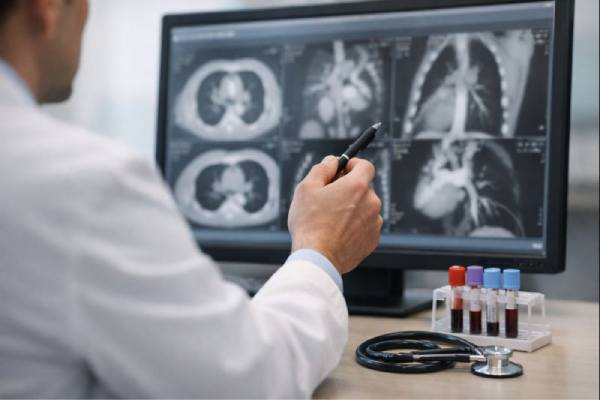
CT pulmonary angiography (CTPA) is often the most valuable test because it can show:
- Pulmonary artery aneurysms (central or peripheral, single or multiple)
- Pseudoaneurysms (more fragile outpouchings that behave like leaks)
- In-situ thrombosis attached to the vessel wall
- Vessel-wall thickening or enhancement suggesting active inflammation
- Signs of lung bleeding (alveolar hemorrhage)
CTPA also helps distinguish HSS from classic pulmonary embolism. In typical embolism, clots often appear as filling defects in otherwise normal-sized arteries. In HSS, clots may sit within abnormal aneurysmal arteries and appear tied to inflamed vessel walls. That difference influences the anticoagulation decision.
Other imaging and why it is used
Depending on findings, clinicians may add:
- Doppler ultrasound of legs/arms to confirm DVT and monitor clot burden
- CT or MR angiography of other arteries if there is concern for aneurysms elsewhere
- Bronchoscopy in select cases of bleeding to localize the source (often avoided if bleeding is severe, because it can destabilize the airway)
If hemoptysis is heavy, teams focus first on airway safety and rapid imaging that can guide intervention.
Laboratory tests: supportive, not definitive
Blood tests often aim to measure inflammation and exclude mimics:
- Inflammation markers (CRP, ESR) may be high during flares
- Complete blood count to check anemia from bleeding
- Kidney and liver tests to guide medication safety
- Autoimmune markers may be tested to evaluate other vasculitides, but results are often nonspecific in HSS
Ruling out important alternatives
Doctors typically evaluate for:
- Septic emboli (infected clots), especially in people with fever and risk factors for bloodstream infection
- Pulmonary artery aneurysms from other causes (infection, trauma, connective-tissue disorders)
- Classic venous thromboembolism without vasculitis
- Behçet’s disease with vascular involvement (important because it guides long-term framing and screening)
A diagnosis of HSS is strongest when the full pattern is present: venous thrombosis plus pulmonary artery aneurysms (with or without in-situ thrombosis), especially in a young adult with inflammatory features and hemoptysis.
Good diagnosis is not just labeling—it is staging. The imaging report should answer practical questions: how many aneurysms exist, where they are, whether they look active or unstable, and whether there is ongoing bleeding. Those details drive treatment choices.
Treatment options and the anticoagulation question
Treatment for Hughes-Stovin syndrome aims to prevent bleeding and stop ongoing vessel damage. Because evidence is limited, care often follows principles used for severe vascular Behçet-like disease, adapted to the individual’s imaging and bleeding risk.
First-line priority: suppress inflammation
For most patients with active disease, clinicians start immunosuppressive therapy promptly. Common strategies include:
- High-dose corticosteroids to control inflammation quickly
- An additional steroid-sparing agent for stronger, longer control, often:
- Cyclophosphamide for severe pulmonary artery involvement
- Azathioprine, mycophenolate, or similar agents in selected cases
The goal is not only symptom improvement but also stabilization or regression of aneurysms and reduction of new clot formation driven by inflammation.
Biologic therapy for refractory or relapsing disease
If disease relapses, aneurysms progress, or side effects limit standard agents, teams may consider biologic medications, especially anti–TNF therapy (such as infliximab). In practice, biologics are most often used when:
- Aneurysms persist or new lesions appear despite conventional therapy
- Inflammation remains high
- Bleeding risk makes some options difficult
Because biologics suppress immune function, clinicians screen for infections and plan vaccination where possible.
The anticoagulation question: “clot treatment” can be dangerous
This is one of the most important and confusing parts of HSS care.
In classic DVT or pulmonary embolism, anticoagulation is standard. In HSS, anticoagulation can raise the risk of catastrophic bleeding if pulmonary artery aneurysms are present or unstable. Many teams treat thrombosis in HSS as inflammation-driven and prioritize immunosuppression over anticoagulation.
That said, anticoagulation is not automatically forbidden. Some patients may need it, but only after careful review of:
- Current imaging (especially whether aneurysms are present, leaking, or high risk)
- History of hemoptysis and current bleeding status
- Location and severity of venous thrombosis
- Whether an aneurysm has been secured by an endovascular procedure
A common approach is:
- Avoid anticoagulation during active hemoptysis or unstable aneurysm features.
- Reconsider anticoagulation only if clot risk is high and bleeding risk is controlled, sometimes after aneurysm embolization or stabilization.
Endovascular and surgical options
When bleeding risk is high or aneurysms are large, interventional radiology can be lifesaving:
- Coil embolization or other embolization methods to seal aneurysms or bleeding vessels
- Stent-grafts in selected anatomies
Surgery (such as lobectomy) is generally reserved for emergencies or when endovascular options are not feasible, because surgical outcomes can be challenging in inflamed, fragile vessels.
Treatment succeeds best when it is coordinated: rheumatology (or immunology), pulmonology, cardiothoracic surgery/interventional radiology, and hematology working from the same imaging and the same risk map.
Long-term management, prevention, and when to seek care
Long-term care for Hughes-Stovin syndrome is a balance between vigilance and normal life. Because the biggest risks involve bleeding and silent aneurysm growth, most plans focus on structured monitoring and clear action steps for symptoms.
Monitoring that protects you from surprises
Your clinicians may recommend:
- Repeat imaging (often CTPA or other vascular imaging) at intervals based on disease activity and prior aneurysm behavior
- Regular inflammation labs (such as CRP) to track disease control
- Follow-up ultrasound for known DVT to monitor resolution or recurrence
- Medication monitoring labs (blood counts and liver tests) for immunosuppressive safety
A practical “good follow-up” sign is that every visit answers:
- Are aneurysms stable, smaller, or gone?
- Is there any new thrombosis?
- Are we seeing medication side effects early?
Everyday risk reduction
While you cannot “lifestyle” your way out of HSS, you can lower avoidable triggers and complications:
- Avoid smoking and vaping, which can worsen lung irritation and complicate recovery from bleeding
- Treat respiratory infections early; coughing and inflammation can aggravate hemoptysis risk
- Discuss vaccines (influenza and others as appropriate) before starting or escalating immunosuppression
- Do not start over-the-counter blood thinners (including high-dose aspirin or herbal supplements with anticoagulant effects) without medical advice
If you have a history of clots, ask your clinician how to handle:
- Long flights or prolonged immobility
- Surgery or dental procedures
- Hormonal therapies that can influence clot risk
What to do if you cough up blood
Hemoptysis deserves a clear plan. Ask your team for personalized thresholds, but a safe general rule is:
- Any new hemoptysis should be reported promptly.
- Large-volume bleeding, breathing difficulty, lightheadedness, or weakness is an emergency.
In the moment:
- Sit upright, stay calm, and avoid lying flat.
- If you know which side bleeds (from prior imaging), some clinicians advise lying with that side down while awaiting help, but do this only if you have been instructed.
When to seek urgent or emergency care
Seek immediate medical help for:
- Moderate or heavy hemoptysis, or repeated episodes over hours
- Shortness of breath at rest, chest pain, fainting, or confusion
- Rapid heart rate with weakness or low blood pressure
- Sudden leg swelling with pain (possible new DVT), especially if chest symptoms are present
- Black or tarry stools or vomiting blood (possible bleeding elsewhere, especially if on blood thinners)
Living well with a rare diagnosis
Because HSS is rare, it helps to keep a concise medical summary accessible:
- Key imaging findings (aneurysm locations and dates)
- Current medications and doses
- Prior bleeding history
- Contact information for your main specialist
That small step can speed up emergency decisions, reduce repeated testing, and help clinicians avoid harmful “default” treatments that do not fit HSS.
References
- “Hughes-Stovin Syndrome: A Comprehensive Narrative Review” 2025 (Review). ([PubMed][1])
- Pulmonary embolism versus pulmonary vasculitis in Hughes-Stovin syndrome: Characteristic computed tomography pulmonary angiographic findings and diagnostic and therapeutic implications. HSS International Study Group 2024 (Free Article). ([PubMed][2])
- A critical analysis of 57 cases of Hughes-Stovin syndrome (HSS). A report by the HSS International Study Group (HSSISG) 2021. ([PubMed][3])
- Recommendations for the management of the vascular involvement in Behçet’s disease by the Japanese National Research Committee for Behçet’s disease-secondary publication 2023 (Guideline/Recommendations). ([PubMed][4])
Disclaimer
This article is for educational purposes and does not provide medical advice, diagnosis, or treatment. Hughes-Stovin syndrome can cause life-threatening bleeding and requires individualized care guided by imaging and specialist assessment. If you cough up blood, have chest pain, severe shortness of breath, fainting, or rapidly worsening symptoms, seek emergency care. Do not start, stop, or change anticoagulants, steroids, or other immunosuppressive medicines without guidance from your clinician.
If you found this article helpful, please share it on Facebook, X (formerly Twitter), or any platform you prefer, and follow us on social media. Your support through sharing helps our team continue producing high-quality, reliable health content.