Hydropericardium means an abnormal buildup of clear fluid around the heart. That fluid collects inside the pericardial sac, a thin “sleeve” that normally holds a small amount of lubricant so the heart can move smoothly. When fluid increases, it can crowd the heart and make each beat less effective. Sometimes the buildup is slow and causes few symptoms. Other times it happens quickly and becomes a medical emergency.
The most important idea is this: hydropericardium is not a single disease. It is a sign that something else is changing—such as infection, inflammation, cancer, kidney failure, thyroid disease, or fluid overload. The safest care plan focuses on two things at once: checking whether the heart is under pressure today, and finding the underlying reason the fluid appeared.
Table of Contents
- What is hydropericardium?
- What causes hydropericardium?
- Symptoms and danger signs
- How it is diagnosed
- Treatment and what to expect
- Long-term management and when to seek care
What is hydropericardium?
Hydropericardium is a type of pericardial effusion—extra fluid in the space between the heart and the pericardium. The word “hydro” signals that the fluid is typically watery and clear (often a low-protein “transudate”), rather than blood (hemopericardium) or milky lymphatic fluid (chylopericardium). In everyday practice, clinicians may use “pericardial effusion” more often than “hydropericardium,” but the concepts overlap.
A small amount of pericardial fluid is normal. Trouble starts when either:
- The body produces more fluid than usual, or
- The body cannot drain fluid normally, so it accumulates.
What the fluid does to you depends on two factors that matter more than the absolute volume:
- How fast it accumulates. A rapid rise (hours to days) can cause dangerous pressure even with a moderate amount of fluid.
- How stretchy the pericardial sac is. Over weeks to months, the sac can gradually stretch, allowing a large effusion with surprisingly mild symptoms—until it reaches a tipping point.
When pressure in the pericardial space rises enough to limit the heart’s filling, it can cause cardiac tamponade. Tamponade is not defined by “a lot of fluid”; it is defined by the heart being compressed so it cannot fill and pump normally.
Hydropericardium can be:
- Acute (often related to infection, injury, procedures, or rapid inflammation)
- Subacute/chronic (often related to systemic conditions like kidney failure, thyroid disease, cancer, autoimmune disease, or persistent fluid overload)
- Localized (fluid pockets, sometimes after surgery) or circumferential (surrounding the heart)
A useful way to think about hydropericardium is as a physics problem the body created: extra fluid inside a limited space. The clinical question is whether that fluid is stable and slow-growing—or whether it is actively threatening blood pressure, breathing, and organ perfusion today.
What causes hydropericardium?
Hydropericardium has many causes, and the right treatment depends on finding the driver. Clinicians often sort causes into a few practical categories based on how the fluid forms.
1) Fluid overload or pressure imbalance
These causes often produce clearer, lower-protein fluid:
- Heart failure with high pressures that promote fluid leakage
- Kidney failure (uremia) and volume overload, especially if dialysis is delayed or inadequate
- Low blood protein (hypoalbuminemia) from severe liver disease, nephrotic syndrome, or malnutrition
- Severe hypothyroidism, which can cause large, slowly developing effusions
Risk factors here include chronic kidney disease, uncontrolled heart failure, cirrhosis, significant protein loss in urine, and missed dialysis sessions.
2) Inflammation or infection
Inflammatory effusions may have more protein and cells, and they can appear with chest pain and fever:
- Viral pericarditis (a common cause overall)
- Tuberculosis in certain regions or risk groups
- Bacterial infection, including after chest surgery or bloodstream infection
- Autoimmune disease (such as lupus or rheumatoid arthritis)
These causes matter because they often require targeted therapy (anti-inflammatory medicines, antibiotics, or specific antimicrobial regimens).
3) Cancer and treatment-related causes
Malignancy can cause effusion by direct involvement of the pericardium or by blocking lymphatic drainage. Radiation therapy and some cancer treatments can also contribute. Key risk factors include known lung cancer, breast cancer, lymphoma/leukemia, and a history of mediastinal radiation.
4) Injury, procedures, and bleeding risk
Although hydropericardium is “watery,” real-world cases can mix fluid types:
- After cardiac surgery or catheter procedures
- After chest trauma
- With anticoagulants (which can shift an effusion toward bleeding if the pericardium is irritated)
5) “Idiopathic” effusion
Sometimes, even after appropriate evaluation, no single cause is found. In those cases, the strategy is careful monitoring and reassessment if the effusion grows, becomes symptomatic, or develops high-risk features.
The most helpful takeaway: hydropericardium is usually not a mystery forever. A structured work-up—looking at systemic illness, inflammation, malignancy risk, and fluid balance—often identifies a treatable driver.
Symptoms and danger signs
Many people with hydropericardium have no symptoms at first. The fluid is often discovered during an echocardiogram done for another reason, or on a chest imaging study. When symptoms do appear, they usually reflect one of two problems: reduced heart filling (pressure effect) or the underlying illness causing the fluid.
Common symptoms
Symptoms tend to be nonspecific, which is why they are easy to dismiss:
- Shortness of breath, especially when lying flat or with mild exertion
- Chest pressure or a feeling of “tightness” (often dull rather than sharp)
- Fatigue, reduced exercise tolerance, or a sense of “running out of energy”
- Persistent cough or a hoarse voice (from local pressure effects, in some cases)
- Palpitations (especially if the effusion is associated with inflammation)
In chronic, slowly enlarging effusions, people may adapt and only notice that daily tasks feel harder—stairs, carrying groceries, or walking quickly.
Signs that can suggest rising pressure around the heart
Clinicians watch for:
- Fast heart rate that seems out of proportion to fever or activity
- Low blood pressure or a narrowing pulse pressure
- Neck veins that look distended when sitting up
- Muffled heart sounds (not always present)
- Enlarged liver or swelling in legs (often due to underlying disease, but it can worsen with tamponade physiology)
Danger signs of possible cardiac tamponade
Seek urgent evaluation if any of these occur, especially together:
- Severe or rapidly worsening shortness of breath
- Fainting, near-fainting, or sudden confusion
- Marked weakness with cold, clammy skin
- New chest pain with dizziness or shortness of breath
- Very low urine output over several hours (a sign of poor organ perfusion)
A key nuance: tamponade can present with “normal” blood pressure early. The body may compensate with a fast heart rate and blood vessel tightening until it can’t keep up. That is why rapid symptom progression matters more than any single number.
Complications to prevent
Hydropericardium can lead to:
- Cardiac tamponade with shock
- Pleural effusions and worsening breathlessness (often from the same systemic cause)
- Arrhythmias in inflammatory states
- Recurrent effusion if the underlying driver persists (for example, malignancy or uncontrolled kidney failure)
If you have known hydropericardium, your most important job is to notice change: symptoms that are new, faster, or more intense than your usual pattern deserve immediate reassessment.
How it is diagnosed
Diagnosis has two goals: confirm the presence and severity of fluid around the heart, and identify the cause. The work-up is typically staged, with urgent steps taken first if tamponade is suspected.
1) Clinical assessment and basic tests
A clinician starts by mapping symptoms and timing:
- How quickly did breathlessness or chest pressure appear?
- Are there signs of infection, autoimmune flare, cancer symptoms, kidney failure, or thyroid disease?
- Any recent procedures, trauma, or medication changes (especially blood thinners)?
Basic tests often include:
- Electrocardiogram (ECG) to look for rhythm issues and indirect signs of a large effusion
- Chest X-ray, which may show an enlarged heart silhouette in larger effusions (but can be normal)
- Blood tests tailored to suspected causes (kidney function, thyroid tests, inflammatory markers, blood count, and others depending on history)
2) Echocardiogram: the key test
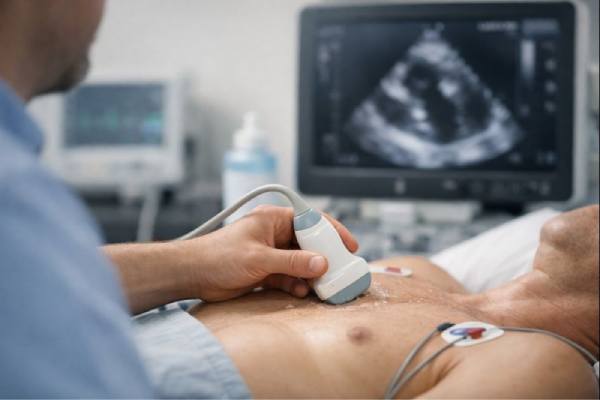
Transthoracic echocardiography is the most useful first-line tool because it can:
- Confirm fluid location and estimate size
- Show whether the fluid is circumferential or pocketed
- Detect heart chamber compression and respiratory variation in filling—features that support tamponade physiology
- Help guide safe drainage if pericardiocentesis is needed
Clinicians often describe effusion size in practical terms (small, moderate, large) and focus heavily on hemodynamic impact rather than “milliliters.”
3) CT or MRI when anatomy needs detail
CT can help when:
- The echo window is poor (for example, due to body habitus or lung disease)
- Clinicians suspect loculated effusions after surgery
- There is concern for pericardial thickening, mass, or malignancy-related involvement
Cardiac MRI can add information about pericardial inflammation and tissue characteristics, especially in complex or recurrent cases.
4) Pericardiocentesis and fluid analysis
Drainage serves two roles:
- Emergency pressure relief in tamponade
- Diagnostic sampling when the cause is unclear or malignancy/infection is suspected
Fluid analysis may include:
- Cell count and differential
- Protein and LDH patterns (to help classify inflammatory vs noninflammatory profiles)
- Gram stain/culture and targeted testing (when infection is a concern)
- Cytology for malignancy
- Additional tests guided by clinical context
A strong diagnostic approach does not stop at “yes, there is fluid.” It asks: is the heart compromised today, and what is the most likely source of the fluid so the recurrence risk can be reduced?
Treatment and what to expect
Treatment depends on urgency and cause. The immediate priority is always safety: if the fluid is pressuring the heart, drainage is time-sensitive. If the effusion is stable, treatment often focuses on the underlying condition with careful monitoring.
1) Emergency treatment for tamponade
When tamponade is suspected, clinicians act quickly:
- Oxygen and supportive care as needed
- IV fluids in selected cases to temporarily improve filling (a bridge, not a fix)
- Urgent drainage, typically pericardiocentesis (a needle-and-catheter procedure guided by imaging)
Pericardiocentesis can rapidly improve symptoms and blood pressure when tamponade is present. In many cases, clinicians leave a small catheter in place for ongoing drainage over hours to days.
2) Treating the underlying cause
For stable patients, the best long-term results come from addressing why the fluid formed:
- Fluid overload/heart failure: adjust diuretics and optimize heart failure therapy; treat contributing kidney issues
- Kidney failure/uremia: dialysis optimization can reduce recurrence risk
- Hypothyroidism: thyroid hormone replacement often leads to gradual improvement over weeks
- Inflammatory pericarditis: anti-inflammatory treatment may be used when there is clear evidence of inflammation
- Infection: targeted antimicrobial treatment; drainage may be needed for bacterial or tuberculous effusions
- Malignancy: drainage for symptom relief and diagnosis; longer-term strategies may include repeat drainage, pericardial window, and oncologic therapy
3) When a surgical approach is considered
A pericardial window (creating a drainage pathway) may be recommended when:
- Effusions recur despite appropriate medical management
- The effusion is loculated or hard to drain safely by needle
- Malignancy-related effusion returns quickly
- Longer-term drainage is needed
Surgical options vary (subxiphoid window, thoracoscopic approaches), and selection depends on anatomy, patient stability, and local expertise.
4) Medication safety and common pitfalls
Important treatment nuances include:
- Avoiding delays when symptoms suggest tamponade
- Being cautious with anticoagulation if the effusion could be bleeding-related
- Monitoring electrolytes and kidney function when diuretics are intensified
- Not assuming that “large effusion” always needs drainage; stable chronic effusions can sometimes be monitored
What to expect after treatment
Many people feel better quickly after pressure is relieved. Recurrence risk depends mainly on the cause. Clear communication helps: ask your team what they believe the driver is, what signs should trigger re-evaluation, and when follow-up imaging should occur.
Long-term management and when to seek care
Long-term care aims to prevent recurrence, catch rising pressure early, and manage the underlying disease that caused hydropericardium in the first place. A good plan is specific, written down, and easy to follow.
Follow-up and monitoring
Most management plans include:
- A repeat echocardiogram schedule based on size and cause (often sooner for moderate/large effusions, or after any treatment change)
- Symptom-based reassessment rules (what changes mean “call today” versus “mention at next visit”)
- Clear medication targets, especially for heart failure or kidney disease
- Lab monitoring when diuretics, thyroid medication, anti-inflammatory drugs, or immunosuppressants are used
If you had drainage, ask whether the fluid analysis identified a clear cause and whether additional testing is needed (for example, cancer evaluation or infection work-up).
Day-to-day habits that support stability
Your best daily actions depend on the driver:
- For fluid overload: follow sodium and fluid guidance, track weight trends, and take diuretics exactly as directed.
- For kidney disease: keep dialysis and lab appointments consistent; report shortness of breath or swelling early.
- For thyroid disease: take replacement medication consistently and recheck labs on schedule.
- For inflammatory causes: follow the taper plan precisely; sudden stopping can trigger rebound symptoms.
A simple, high-yield tool is a weekly “baseline check”:
- How far can you walk comfortably today compared with last week?
- Are you using more pillows at night?
- Is your resting pulse noticeably higher than usual?
- Are you retaining fluid in legs or abdomen?
Reducing recurrence risk
Recurrence prevention often looks like:
- Treating the underlying condition aggressively enough to stop re-accumulation
- Avoiding missed follow-ups after a “good” first improvement
- Re-imaging after respiratory infections or medication changes if symptoms change
- Coordinating care across specialties when needed (cardiology, nephrology, endocrinology, oncology, rheumatology)
When to seek urgent care
Seek immediate medical attention for:
- Rapidly worsening shortness of breath, especially at rest
- Fainting, severe dizziness, or new confusion
- Chest pain with weakness or breathlessness
- A racing pulse with low blood pressure symptoms (cold sweats, gray or pale skin)
- Any sudden collapse or inability to lie flat
If you have a known effusion, do not wait for symptoms to “prove themselves.” The safest outcomes come from early reassessment when the pattern changes.
References
- Diagnosis, treatment, and management of pericardial effusion- review – PMC 2022 (Review)
- New Approaches to Management of Pericardial Effusions – PubMed 2021 (Review)
- Pericardial effusions: perspective of the acute cardiac care physician – PubMed 2023 (Review)
- The physiology of cardiac tamponade and implications for patient management – PubMed 2024 (Review)
Disclaimer
This article is for educational purposes only and does not provide medical advice, diagnosis, or treatment. Hydropericardium can be caused by many conditions and can become life-threatening if it progresses to cardiac tamponade. If you develop severe or rapidly worsening shortness of breath, chest pain, fainting, confusion, or cough up blood, seek emergency care. Do not start, stop, or change prescription medicines (including diuretics, anti-inflammatories, thyroid medicine, or blood thinners) without guidance from a qualified clinician who knows your history.
If you found this article helpful, please share it on Facebook, X (formerly Twitter), or any platform you prefer, and follow us on social media. Your support by sharing helps our team continue producing clear, reliable health content.