Hypertensive pulmonary edema is a medical emergency where fluid rapidly fills the air spaces of the lungs during a sharp rise in blood pressure. The result can feel dramatic: sudden breathlessness, a sense of drowning, and a need to sit upright to breathe. The heart may not be “full of extra fluid” at first—in many cases, pressure and vessel tightening push fluid into the lungs quickly, even when total body fluid is not very high.
This condition sits at the intersection of two problems that amplify each other: severe hypertension and acute heart failure. The good news is that early, targeted care often improves breathing within minutes to hours. The key is recognizing danger signals, getting the right tests quickly, and using treatments that lower lung pressure safely without dropping blood pressure too far, too fast.
Table of Contents
- What it is and why fluid floods the lungs
- Causes and risk factors that trigger episodes
- Symptoms, red flags, and serious complications
- How it is diagnosed in the ER or hospital
- Treatment: what works fast and what to avoid
- Recovery, prevention, and when to seek help
What it is and why fluid floods the lungs
Hypertensive pulmonary edema is a form of acute heart failure where very high blood pressure rapidly raises pressure inside the heart and lung circulation, forcing fluid out of blood vessels and into the lung tissue and air sacs. “Pulmonary edema” means fluid in the lungs. When it happens quickly in a patient who is markedly hypertensive and in respiratory distress, clinicians may also call it “flash” pulmonary edema.
To understand the mechanics, it helps to picture the lungs as a fine sponge wrapped around tiny blood vessels. Under normal conditions, fluid stays inside those vessels. In a hypertensive episode, several changes can happen within minutes:
1) Afterload spikes and the left ventricle struggles
Afterload is the resistance the heart must pump against. When blood pressure surges, afterload rises sharply. Even a heart with previously normal pumping strength can temporarily fail to keep up. Blood backs up into the left atrium and then the pulmonary veins, raising pressure in the lung capillaries.
2) Fluid shifts into the lungs (often more than “extra fluid”)
Many people assume pulmonary edema always means the body is overloaded with fluid. In hypertensive pulmonary edema, the early problem is often fluid maldistribution—fluid shifts into the lungs because pressure changes, not necessarily because total body volume is massively increased. That difference matters because some patients improve dramatically with vasodilators and breathing support even before diuretics have time to work.
3) Stress hormones tighten vessels and worsen the cycle
Severe breathlessness triggers a surge of adrenaline-like stress hormones. Those hormones constrict blood vessels, push blood pressure higher, and increase the heart’s workload, which can worsen pulmonary edema unless the cycle is interrupted.
4) A trigger is often hiding underneath
Hypertensive pulmonary edema is often the “presentation,” not the root cause. Underlying contributors can include coronary ischemia, kidney dysfunction, missed blood pressure medicines, or valve disease. Treating the episode is step one; preventing recurrence requires finding and addressing that driver.
The immediate danger is low oxygen and exhaustion from the work of breathing. Without rapid treatment, patients can deteriorate to respiratory failure, arrhythmias, or shock. With timely care, many improve quickly—sometimes within the first hour—because the physiology can reverse when pressure and airway mechanics are stabilized.
Causes and risk factors that trigger episodes
Hypertensive pulmonary edema usually occurs when a person has a vulnerable cardiovascular system and then encounters a trigger that abruptly raises blood pressure, tightens blood vessels, or increases heart stress. Some patients have known heart disease; others have never been told they have heart failure until this event.
Common triggers
- Missed blood pressure medications: running out of prescriptions, stopping medications due to side effects, or inconsistent dosing can allow blood pressure to rebound quickly.
- Acute coronary ischemia: reduced blood flow to the heart muscle can impair relaxation and pumping, raising pressures behind the left ventricle.
- Kidney dysfunction: when kidneys retain sodium and water or worsen suddenly, blood pressure and congestion can rise together.
- Arrhythmias: rapid atrial fibrillation or other rhythm disturbances reduce effective filling and pumping, increasing back-pressure into the lungs.
- Severe emotional stress or pain: stress hormones constrict blood vessels and can trigger sudden hypertension in susceptible people.
- High-salt intake over several days: in salt-sensitive individuals, this can raise blood pressure and fluid retention enough to precipitate an episode.
- Substances and medications: stimulants, abrupt withdrawal from certain drugs, and some over-the-counter decongestants can raise blood pressure or heart rate.
Structural heart conditions that increase risk
Certain “plumbing” problems make pulmonary edema more likely during pressure surges:
- Aortic stenosis (a narrowed outflow valve), which forces the heart to pump against a fixed obstruction.
- Mitral regurgitation (a leaky mitral valve), which can rapidly increase pressure in the left atrium and lungs.
- Left ventricular hypertrophy from long-standing hypertension, which makes the heart stiff and less able to handle sudden pressure changes.
Who is at higher risk
Risk rises with:
- Long-standing hypertension, especially if poorly controlled
- Older age
- Diabetes
- Chronic kidney disease
- Prior heart failure hospitalization
- Known coronary artery disease
- Sleep apnea (often underdiagnosed and strongly linked to resistant hypertension)
A practical clinical insight: “pressure crisis” vs “volume overload” phenotype
In hypertensive pulmonary edema, many patients arrive with extremely high blood pressure, cold sweating, and rapid respiratory distress that developed over minutes to hours. They may have only mild leg swelling or minimal recent weight gain. This phenotype often responds best to rapid afterload reduction and noninvasive ventilation, with diuretics added when there are clear signs of systemic volume overload.
Identifying triggers is not just academic. The most effective prevention plan is built around the specific driver—medication access and adherence, kidney management, ischemia evaluation, sleep apnea treatment, and a blood pressure regimen that reliably prevents spikes.
Symptoms, red flags, and serious complications
Hypertensive pulmonary edema typically announces itself loudly. The hallmark is sudden, severe breathlessness that feels out of proportion to a mild cold or routine exertion. Because this condition can worsen quickly, recognizing red flags matters.
Common symptoms at presentation
- Severe shortness of breath, often beginning suddenly, with an urgent need to sit upright
- Rapid breathing and a sense of air hunger
- Cough, sometimes producing frothy or pink-tinged sputum
- Wheezing or chest tightness (sometimes mistaken for asthma)
- Anxiety, sweating, and agitation, often driven by low oxygen and stress hormones
- Very high blood pressure, sometimes with a pounding headache or visual changes
Some people describe it as “I can’t get air in” or “I’m drowning.” That description should always be taken seriously.
Red flags that suggest a life-threatening emergency
Call emergency services or seek immediate care if any of the following occur:
- Shortness of breath at rest that worsens over minutes
- Blue or gray lips, severe fatigue, or inability to speak full sentences
- Confusion, fainting, or extreme agitation
- Chest pain, pressure, or pain radiating to the arm, jaw, or back
- One-sided weakness, facial droop, or trouble speaking (possible stroke)
- A sudden “tearing” chest or back pain (possible aortic dissection)
Why symptoms can escalate so fast
Two mechanisms accelerate deterioration:
- Fluid in the lungs reduces oxygen transfer, creating a vicious cycle of panic, adrenaline release, and worsening blood vessel constriction.
- The work of breathing becomes exhausting. A patient may look “okay” early and then crash as respiratory muscles fatigue.
Serious complications clinicians work to prevent
- Respiratory failure requiring intubation and mechanical ventilation
- Arrhythmias, including rapid atrial fibrillation or dangerous ventricular rhythms
- Myocardial infarction or worsening ischemia due to high cardiac workload
- Cardiogenic shock if the heart cannot maintain adequate circulation
- Acute kidney injury, especially if severe hypertension and poor perfusion occur together
- Stroke or brain bleeding, particularly in people with hypertensive crisis physiology
What “improvement” should look like
With effective early therapy, patients often improve in a predictable sequence:
- Breathing becomes less frantic and oxygen needs decrease
- Anxiety and sweating lessen as oxygenation stabilizes
- Blood pressure decreases in a controlled way rather than a sudden drop
- Lung sounds and imaging findings improve over hours, not always immediately
If breathing is worsening despite treatment, that is a signal to escalate care quickly. In hypertensive pulmonary edema, time-sensitive actions—oxygen strategy, pressure reduction, and trigger recognition—are what prevent organ injury.
How it is diagnosed in the ER or hospital
Diagnosis happens fast because treatment cannot wait for every test. Clinicians typically treat breathing distress immediately while confirming (1) pulmonary edema, (2) the role of hypertension, and (3) the underlying trigger.
Step 1: Rapid assessment of breathing and circulation
The first minutes focus on:
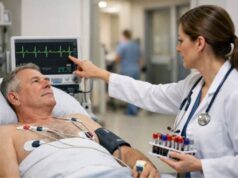
- Oxygen level and respiratory rate
- Blood pressure and heart rate
- Temperature (infection can mimic or trigger heart failure)
- Mental status (confusion may signal low oxygen or stroke)
Clinicians also look for clues of volume overload (leg swelling, jugular vein distension) versus a pressure-driven event with minimal peripheral edema.
Step 2: Bedside exam and immediate tools
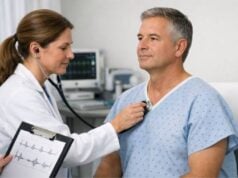
A focused exam can identify:
- Crackles in the lungs (fluid)
- Wheezing (sometimes present even in heart failure)
- Signs of poor perfusion (cold skin, weak pulses)
- New murmurs suggesting valve problems
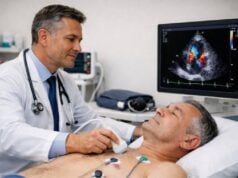
Many hospitals use point-of-care ultrasound to rapidly assess:
- Lung fluid patterns
- Heart pumping function
- Size and collapsibility of major veins (a rough guide to volume status)
Step 3: Core tests used in most cases
Common tests include:
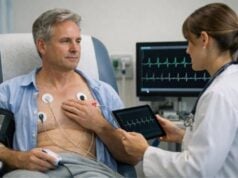
- Electrocardiogram (ECG) to look for ischemia or arrhythmias
- Chest imaging to support pulmonary edema diagnosis and evaluate for pneumonia or other causes
- Blood tests, often including kidney function, electrolytes, and markers of heart strain or injury
- Arterial or venous blood gas in severe distress to measure oxygenation, ventilation, and acid-base status
- Urinalysis when kidney issues are suspected
These tests help separate hypertensive pulmonary edema from conditions that can look similar, such as asthma/COPD flare, pneumonia, pulmonary embolism, or non-cardiac lung injury.
Step 4: Finding the trigger (the part that prevents recurrence)
Once the patient is stabilizing, clinicians shift to cause-finding:
- Medication review (missed doses, recent changes, interacting drugs)
- Evidence of coronary ischemia
- Kidney disease evaluation and recent fluid/salt intake patterns
- Screening for precipitating infections
- Consideration of secondary hypertension causes if episodes recur
Why diagnosis and treatment run in parallel
If a patient is struggling to breathe, waiting for a “perfect diagnosis” wastes time. The safer approach is: support oxygenation, reduce the pressure burden on the lungs and heart, and then refine the diagnosis as test results return. This is also why self-treatment at home is risky—proper diagnosis requires tools that distinguish pulmonary edema from other causes of sudden breathlessness.
Treatment: what works fast and what to avoid
Treatment priorities are straightforward: improve oxygenation, reduce lung congestion pressure, lower blood pressure safely, and address the trigger. Many patients improve quickly when afterload is reduced and breathing mechanics are supported.
Immediate respiratory support
- Oxygen is provided to maintain safe saturation.
- Noninvasive positive pressure ventilation (such as CPAP or BiPAP) is often a cornerstone. It helps push fluid out of the air spaces, reduces the work of breathing, and can improve oxygenation rapidly.
- If the patient cannot protect their airway, worsens despite noninvasive support, or becomes exhausted, clinicians may proceed to endotracheal intubation.
Rapid afterload reduction: the “fast lever” in hypertensive pulmonary edema
In many cases, the most effective early medication strategy is vasodilation to reduce the pressure the heart must pump against and lower lung capillary pressures. Common approaches include:
- Nitroglycerin, often used in higher doses than those used for routine chest pain when the goal is rapid afterload reduction.
- Intravenous blood pressure agents (chosen based on heart rate, kidney function, and clinical scenario) when nitroglycerin is insufficient or not appropriate.
The goal is controlled improvement in hemodynamics and breathing—not an abrupt crash in blood pressure. Clinicians continually reassess symptoms, oxygenation, and blood pressure response.
Diuretics: important, but not always first
Diuretics remove excess fluid through urination and are essential when systemic volume overload is present. However, in pressure-driven episodes with fluid maldistribution, diuretics alone may be too slow to relieve immediate distress. Many clinicians use them when there are signs such as:
- Significant leg swelling
- Recent rapid weight gain
- Enlarged heart or systemic congestion clues
- Known heart failure with chronic fluid overload
Treat the cause, not only the episode
Depending on the trigger, additional treatments may include:
- Therapy for acute coronary syndrome
- Rhythm control or rate control for arrhythmias
- Antibiotics if pneumonia is present
- Careful kidney-focused management if renal failure or fluid shifts are involved
What to avoid (common pitfalls)
- Overly aggressive blood pressure drops that reduce brain, heart, or kidney perfusion
- Routine sedatives or opioids used primarily for “calming,” which can depress breathing unless clearly indicated and carefully monitored
- Defaulting to diuretics alone in a patient who is crashing from afterload-driven pulmonary edema
- Delaying noninvasive ventilation in a patient with severe work of breathing
Effective treatment is both technical and practical: early airway/ventilation support plus rapid, careful blood pressure management, followed by a plan that fixes what caused the surge in the first place.
Recovery, prevention, and when to seek help
Recovery has two phases: stabilizing after the acute event and building a plan that prevents recurrence. Many repeat episodes happen because blood pressure control remains fragile, medications are inconsistent, or the underlying trigger is never fully addressed.
What recovery monitoring usually includes
Before discharge or soon afterward, clinicians often confirm:
- Stable breathing on minimal oxygen (or none)
- Blood pressure controlled on a workable oral regimen
- Kidney function and electrolytes stable after treatment
- A clear diagnosis plan: was this primarily pressure-driven, volume-driven, ischemia-related, or mixed?
Some patients also need an evaluation of heart structure and function to guide long-term therapy, especially if this is a first heart-failure-type event.
A prevention plan that actually works in real life
- Make blood pressure measurable at home
- Use an upper-arm cuff and correct size.
- Measure at consistent times for 1–2 weeks after medication changes.
- Record symptoms, missed doses, alcohol intake, and sleep—these often explain spikes.
- Protect medication adherence
Many crises are preventable with reliable access and routines:
- Simplify dosing schedules when possible.
- Arrange automatic refills and keep a small buffer supply when feasible.
- Report side effects early so therapy can be adjusted instead of abandoned.
- Reduce triggers that provoke sudden surges
- Limit high-sodium “spikes” from restaurant or packaged foods.
- Avoid stimulant-containing products and be cautious with decongestants.
- If alcohol contributes, reduce intake and avoid binge patterns.
- Treat sleep apnea if present, since it can drive resistant hypertension.
- Know your personalized action thresholds
A clinician can help define what should trigger:
- A same-day call
- An urgent visit
- Emergency care
When to seek urgent or emergency help
Seek emergency care immediately for:
- Sudden severe shortness of breath, gasping, or inability to speak full sentences
- Chest pain, fainting, or severe weakness
- New confusion, seizure, or stroke-like symptoms
- Severe high blood pressure with escalating symptoms
For people who have had hypertensive pulmonary edema once, the safest mindset is proactive: treat blood pressure as a daily stability project, not an occasional check. When prevention is done well—consistent medications, trigger control, and follow-up—recurrence risk drops, and long-term heart and kidney protection improves.
References
- 2024 ESC Guidelines for the management of elevated blood pressure and hypertension 2024 (Guideline)
- 2023 Focused Update of the 2021 ESC Guidelines for the diagnosis and treatment of acute and chronic heart failure 2023 (Guideline)
- Clinical Review of Hypertensive Acute Heart Failure 2024 (Review)
- Emergency medicine updates: Sympathetic crashing acute pulmonary edema 2025 (Review)
- Low-dose versus high-dose intravenous nitroglycerin in the treatment of sympathetic crashing acute pulmonary oedema: a systematic review and meta-analysis focusing on efficacy, safety and outcomes 2025 (Systematic Review and Meta-analysis)
Disclaimer
This article is for educational purposes only and does not provide medical advice, diagnosis, or treatment. Hypertensive pulmonary edema can be life-threatening and requires urgent medical evaluation, especially when breathing is difficult, oxygen is low, or chest pain or neurologic symptoms occur. Do not start, stop, or change prescription medicines (including blood pressure drugs or diuretics) based on this article. If you have sudden severe shortness of breath, chest pain, fainting, confusion, or stroke-like symptoms, seek emergency care immediately.
If you found this article helpful, please share it on Facebook, X (formerly Twitter), or any platform you prefer, and follow us on social media. Your support helps our team continue producing trustworthy health content.