A hypoplastic aortic arch is a condition present at birth (congenital—“there from birth”) where the curved section of the body’s main artery is smaller than it should be. Because the aorta is the highway that carries oxygen-rich blood from the heart to the brain and body, a narrowed arch can limit flow, raise strain on the heart, and reduce blood delivery to the lower body—especially in the first days of life.
Some babies look well at birth and then become suddenly ill as normal newborn circulation changes. Others are detected before delivery on a fetal heart scan, giving families and care teams time to plan. In milder forms, symptoms may not appear until childhood or even adulthood, when high blood pressure or exercise intolerance becomes the clue. This guide explains what’s happening, how it’s found, how it’s treated, and what long-term care usually involves.
Table of Contents
- What a hypoplastic aortic arch means
- Causes and who is at risk
- Symptoms across ages and key complications
- How doctors diagnose it
- Treatment options and what to expect
- Long-term management and when to seek care
What a hypoplastic aortic arch means
The aorta leaves the heart, curves like a candy cane (the “arch”), and then continues down to supply the chest, belly, and legs. In a hypoplastic aortic arch, that curved segment is underdeveloped—narrower and sometimes longer than normal. The result is a bottleneck. The heart must push harder to move blood past the narrow area, and the lower body may receive less blood flow than the upper body.
How it affects circulation in early life
In the first days after birth, a baby’s circulation shifts from “placenta-supported” to “self-supported.” During this transition, a temporary fetal blood vessel may still be helping route blood around tight spots. When that vessel naturally closes, a previously compensated narrowing can become an emergency. This is why some newborns with arch hypoplasia seem stable at first and then develop symptoms quickly.
Common patterns and related heart findings
Hypoplastic aortic arch often overlaps with other left-sided heart and aorta conditions, such as:
- Coarctation of the aorta (a tighter narrowing, often near the arch’s far end)
- A bicuspid aortic valve (two valve leaflets instead of three)
- Ventricular septal defect (a hole between the heart’s pumping chambers)
- Smaller left-sided structures that can change how the heart tolerates the narrowing
Not every person has all of these. The combination matters because it shapes both symptoms and the best repair strategy.
Why “size” is not the whole story
Two arches with the same measured diameter can behave differently. Blood flow depends on:
- The length of the narrowed segment (a long narrow tube can be harder than a short pinch point)
- The shape of the arch (certain shapes may create more turbulent flow)
- Collateral vessels (natural “detours” the body may develop over time, usually more in older children and adults)
A practical way to think about severity is this: the more the narrowing increases the workload on the heart or reduces lower-body flow, the more urgent and definitive treatment becomes. The care team’s goal is not only to “open the pipe,” but to restore smooth, durable blood flow that supports normal growth and long-term blood pressure control.
Causes and who is at risk
Hypoplastic aortic arch forms during early fetal development, when the aorta and its branches are being built and remodeled. In many cases, there is no single identifiable cause. Instead, risk comes from a mix of genetic factors, developmental timing, and how blood flows through the fetal heart during key weeks of growth.
Developmental “plumbing” and flow patterns
The fetal aorta develops from a series of paired embryologic arches that normally regress and reorganize. If this process is disrupted—or if blood flow through the left side of the heart is reduced—the arch may not expand to its expected size. This is one reason arch hypoplasia frequently appears alongside other left-sided obstructions. When less blood travels through the arch early on, the arch can “grow small” relative to the rest of the circulation.
Genetic and chromosomal associations
Certain genetic or chromosomal conditions can raise risk. These do not explain every case, but they are important because they can affect:
- The chance of other organ involvement
- Surgical planning and anesthesia considerations
- Long-term developmental and health monitoring
In some families, congenital heart differences cluster across relatives, suggesting inherited susceptibility even when a specific gene is not identified.
Pregnancy and family history factors
Most parents did nothing to “cause” this. Still, clinicians often ask about factors that can increase congenital heart risk overall, such as:
- A prior child or close relative with congenital heart disease
- Maternal diabetes (especially if not well controlled early in pregnancy)
- Certain infections or medication exposures during early pregnancy
- Assisted reproduction and multiple gestation (linked in some studies to higher congenital heart detection rates, though not a direct cause)
These factors are not “proof” of why a particular baby has arch hypoplasia; they are clues that can guide screening.
Who tends to be diagnosed—and when
Diagnosis timing often reflects severity:
- Newborn diagnosis is more common with tighter narrowing or multiple left-sided lesions, because symptoms appear when newborn circulation changes.
- Prenatal diagnosis occurs when fetal echocardiography suggests arch narrowing or uneven heart size. Prenatal detection can be challenging, so expert follow-up scans are common.
- Later diagnosis (childhood to adulthood) is more likely when narrowing is moderate and the body compensates. These individuals may present with high blood pressure, headaches, leg fatigue, or a heart murmur.
If your family is facing this diagnosis, it can help to ask two targeted questions: “Is this isolated or part of a broader heart pattern?” and “Do we need genetic counseling or additional testing?” Those answers shape both immediate decisions and long-term care.
Symptoms across ages and key complications
Symptoms depend on how narrow the arch is, whether there are associated heart defects, and how the body adapts. The same diagnosis can look very different in a newborn compared with a teenager or adult.
Newborn and early infant signs
When arch narrowing is critical, symptoms often appear in the first days to two weeks of life. Warning signs include:
- Poor feeding, sweating with feeds, or tiring quickly
- Rapid breathing, grunting, or increased work of breathing
- Pale, cool, or mottled skin, especially in the legs
- Weak femoral pulses (groin pulses) or noticeable pulse differences
- Low urine output or fewer wet diapers
- Lethargy or unusual sleepiness
In severe cases, babies can develop shock, meaning the body is not getting enough blood flow. This requires emergency evaluation.
Symptoms in older infants, children, and teens
With moderate narrowing, a child may have subtler clues:
- Poor growth or low stamina compared with peers
- Fast breathing during activity
- Leg discomfort or fatigue with exercise
- Frequent headaches or nosebleeds (often linked with higher upper-body blood pressure)
- A heart murmur detected during a routine visit
Some children compensate so well that symptoms remain minimal, but blood pressure changes still matter.
Adult symptoms and “late” presentations
Adults with an undiagnosed or partially repaired arch problem may notice:
- High blood pressure that is hard to control, especially at a young age
- Headaches, dizziness, or ringing in the ears
- Cold feet, leg fatigue, or cramps during walking
- Shortness of breath with exertion
- Chest discomfort, especially if the heart has been working against resistance for years
Complications clinicians watch for
Complications come from two main issues: reduced lower-body flow and long-term high pressure above the narrowing. Important risks include:
- Heart muscle thickening or heart failure symptoms if workload stays high
- Persistent or recurrent narrowing after repair (restenosis)
- High blood pressure even after an anatomically successful repair
- Aneurysm formation near repair sites in some repair types
- In rare cases, stroke risk increases if hypertension is untreated or if vascular abnormalities coexist
A practical point for families: symptoms can change quickly in newborns, but in older children and adults the condition may “whisper” rather than shout. That is why pulse checks and blood pressure in both arms and legs are not minor details—they can be the difference between early, safer treatment and late discovery after complications develop.
How doctors diagnose it
Diagnosis combines careful bedside clues with imaging that maps the arch and measures how much the narrowing affects blood flow. Because the arch is a three-dimensional curve, clinicians often use more than one test to understand both anatomy and function.
Prenatal detection
Many cases are first suspected on fetal ultrasound, then evaluated with fetal echocardiography. Signs that can raise suspicion include:
- Size differences between the right and left sides of the heart
- A smaller-looking aortic pathway compared with the pulmonary pathway
- Flow patterns that suggest the arch is not carrying normal volume
Prenatal diagnosis can be challenging because fetal circulation is different from newborn circulation. For that reason, “suspected” cases typically get repeat scans and a delivery plan that ensures rapid postnatal assessment.
Newborn bedside findings
After birth, clinicians look for a pattern that points to arch obstruction:
- Stronger pulses in the arms than in the legs
- A blood pressure difference between upper and lower extremities
- Lower oxygen saturation in the legs compared with the right hand in certain situations
- Signs of poor perfusion, such as cool legs or delayed capillary refill
These signs are especially important when a baby becomes sick after seeming well.
Key imaging tests
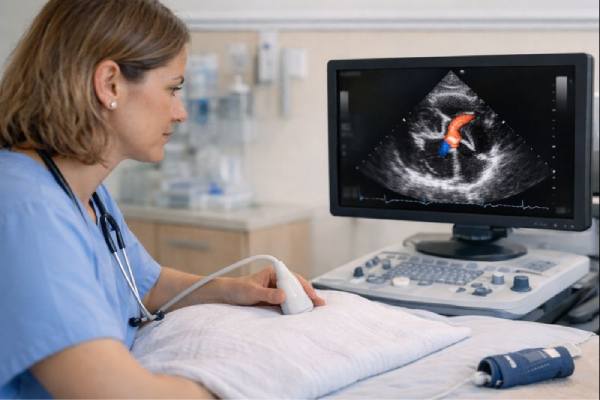
- Echocardiogram (heart ultrasound): usually the first-line test in infants and children. It can show arch size, associated heart defects, and pressure estimates.
- CT angiography or MR angiography: provides detailed 3D anatomy of the arch and branch vessels. MRI is often preferred for repeated follow-up when feasible because it avoids radiation, while CT can be faster and highly detailed in urgent settings.
- Cardiac catheterization: used when hemodynamic measurements are needed, when noninvasive imaging is unclear, or when an intervention (like balloon dilation or stent placement) is planned.
How severity is judged
Clinicians assess severity using:
- The arch’s diameter relative to body size (often reported with standardized scores)
- The length and location of narrowing
- Evidence of increased workload on the heart
- Pressure gradients (differences) across the narrowed area
- Signs of collateral blood flow in older patients
A helpful way to understand the plan is to ask what the team is trying to answer with each test. In most cases, the questions are: “How tight is it?” “Is the heart struggling?” “Are there associated defects?” and “Which repair approach offers the most durable result for this anatomy and age?” Good diagnosis is not only naming the condition—it is building a roadmap for safe treatment and long-term surveillance.
Treatment options and what to expect
Treatment depends on how critical the narrowing is, the person’s age and size, and whether other heart defects need repair at the same time. In newborns with severe arch hypoplasia, treatment is often urgent. In older patients with moderate narrowing, treatment can be planned, but still aims to prevent long-term complications like uncontrolled hypertension.
Stabilizing a sick newborn
If a baby is unstable, clinicians focus on restoring reliable blood flow while preparing for definitive repair. Typical steps include:
- Medications to support circulation and reduce strain on the heart
- Careful management of fluids and breathing support when needed
- A medicine that helps keep a fetal blood vessel open temporarily so blood can bypass the narrowed arch during stabilization
This is time-sensitive care, usually in a neonatal or pediatric cardiac intensive care unit.
Surgical repair approaches
Surgery is commonly the main treatment for significant arch hypoplasia, especially in neonates and infants. The surgical goal is to enlarge the arch and remove narrow segments in a way that is durable as the child grows. Techniques vary with anatomy, but common strategies include:
- Resection of the narrow area with reconstruction to create a wider arch
- Extended repairs that address both a discrete narrowing and a longer underdeveloped segment
- Patch augmentation in selected anatomies, designed to widen the arch without creating tension
When a ventricular septal defect or other lesion is present, teams may choose a single-stage repair (fixing multiple issues in one operation) or a staged approach depending on risk, size, and stability.
Catheter-based options
In some situations—more often in older children, teens, and adults—catheter interventions may be considered:
- Balloon dilation for recurrent narrowing in selected cases
- Stent placement to support a narrowed segment, typically when the vessel is large enough to accommodate a stent safely
Catheter approaches can reduce recovery time, but the choice depends heavily on the arch’s geometry, proximity to branch vessels, and long-term durability.
Risks and outcomes in plain terms
Any arch intervention carries potential risks, including bleeding, nerve injury affecting voice, and recurrent narrowing. Many children recover well and grow normally, but long-term follow-up is not optional because:
- Restenosis can occur as the child grows
- Blood pressure may remain high even when imaging looks good
- Some repair types require ongoing imaging to check for dilation or aneurysm near repair sites
What families often want most is a timeline: how quickly the baby can feed normally, when discharge is likely, and what signs should prompt urgent return. Those details vary, but the overall pattern is consistent: once blood flow is reliably restored, the heart’s workload drops, symptoms improve, and long-term health depends on careful blood pressure control and periodic imaging.
Long-term management and when to seek care
Long-term management is where excellent outcomes are protected. Even after a strong repair, a hypoplastic aortic arch is not a “fix it and forget it” diagnosis. The body’s arteries and blood pressure regulation may remain different for life, and the repaired area needs surveillance.
Follow-up schedule and what it includes
Most patients benefit from lifelong follow-up with a congenital heart disease team. Visits commonly include:
- Blood pressure measurement in both arms and at least one leg
- Review of symptoms with exercise and daily activities
- Periodic echocardiograms to assess heart function and flow patterns
- Cross-sectional imaging (MRI or CT) at intervals to evaluate the arch repair, branch vessels, and any areas at risk for narrowing or dilation
For adolescents and adults, clinicians may add exercise testing to uncover hidden blood pressure spikes or flow limitations.
Blood pressure control is a centerpiece
High blood pressure can persist even after repair, and it is one of the most important drivers of long-term risk. Management may include:
- Home blood pressure monitoring with a clinician-approved plan
- Medications when needed, often started earlier than families expect because the goal is prevention
- Exercise guidance that supports cardiovascular health while respecting any activity restrictions
- Attention to sleep quality and weight management, since both affect blood pressure
A practical insight: people often focus on whether the narrowing has returned, but “silent” hypertension can do damage even when the arch looks open. Treating blood pressure is not an afterthought—it is part of the repair’s success.
Everyday life, sports, and pregnancy considerations
Many children can participate in sports, but intensity and type may be tailored based on:
- Blood pressure response to exercise
- Any residual narrowing or dilation
- Associated valve issues (such as a bicuspid aortic valve)
For pregnancy, preconception counseling is strongly advised in anyone with prior arch repair or residual arch disease. Pregnancy increases blood volume and cardiac workload, so individualized planning reduces risk.
When to seek urgent care
Seek urgent evaluation if any of the following occur:
- New fainting, severe dizziness, or chest pain
- Sudden shortness of breath at rest, bluish color, or signs of poor circulation
- In a newborn: poor feeding, lethargy, fast breathing, or cool legs
- Severe headache with neurologic symptoms (weakness, trouble speaking, vision changes)
Contact your clinician promptly (same day or within days) for:
- New or worsening exercise intolerance
- Recurrent headaches or rising home blood pressures
- Leg fatigue that is new or progressive
- New heart murmur or unexplained fatigue
Long-term care works best when families and patients know what “stable” looks like for them: typical blood pressure range, expected stamina, and their next imaging milestone. That clarity turns follow-up from anxiety into a straightforward maintenance plan.
References
- 2025 ACC/AHA/HRS/ISACHD/SCAI Guideline for the Management of Adults With Congenital Heart Disease: A Report of the American College of Cardiology/American Heart Association Joint Committee on Clinical Practice Guidelines – PubMed 2025 (Guideline)
- The Management of Aortic Coarctation Associated with Hypoplastic Arches and Particular Arch Anatomies: A Literature Review – PMC 2024 (Literature Review)
- Coarctation of the Aorta: Diagnosis and Management – PMC 2023 (Review)
- Prenatal diagnosis of hypoplastic aortic arch without intracardiac malformations: The nevada experience – PubMed 2022 (Observational Study)
Disclaimer
This article is for educational purposes only and does not provide medical advice, diagnosis, or treatment. Hypoplastic aortic arch can be a serious condition, particularly in newborns, and symptoms such as poor feeding, fast breathing, lethargy, cool legs, fainting, chest pain, or sudden shortness of breath require urgent medical evaluation. Treatment and follow-up plans must be individualized by qualified clinicians based on anatomy, age, associated heart conditions, and overall health.
If you found this article helpful, please share it on Facebook, X (formerly Twitter), or any platform you prefer, and follow us on social media. Your support helps our team continue producing high-quality, reliable health content.