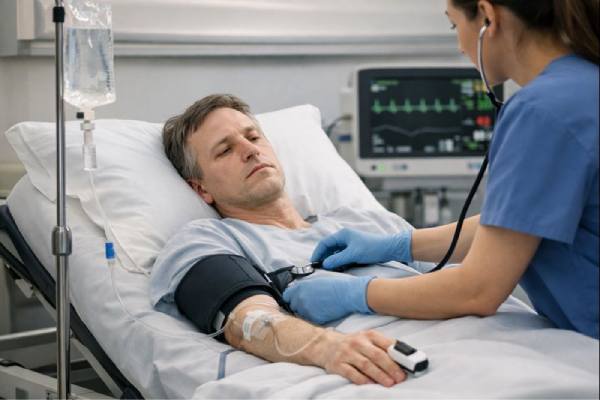
Hypovolemic shock happens when the body loses too much circulating fluid—most often blood—so the heart cannot push enough blood to vital organs. “Shock” (critical low blood flow to organs) is a medical emergency; minutes matter, not hours. Some cases are obvious, such as major trauma with heavy bleeding. Others are quieter, like a slow internal bleed, severe vomiting and diarrhea, or large fluid loss from burns. Early on, the body tries to compensate by speeding the heart and tightening blood vessels. That can hide the severity until the reserve suddenly runs out. This guide explains how hypovolemic shock affects the body, what commonly causes it, who is at greatest risk, the warning signs that require urgent action, and how clinicians confirm the diagnosis and treat it—from first aid and emergency care to recovery planning and prevention.
Table of Contents
- What hypovolemic shock is and what fails first
- Common causes and hidden risk factors
- Symptoms that signal an emergency
- How it’s diagnosed in the field and hospital
- Treatment steps: fluids, blood, and bleeding control
- Recovery, prevention, and when to seek care fast
What hypovolemic shock is and what fails first
Hypovolemic shock is a state of dangerous underfilling of the circulation. When the body loses volume (blood or fluid), the heart has less to pump. Even if the heart is strong, it cannot deliver enough oxygen to the brain, kidneys, and heart muscle if there is not enough circulating volume.
A useful way to picture it: blood pressure is not the whole story. The real problem is oxygen delivery, which depends on (1) how much blood is circulating, (2) how well the heart pumps, and (3) how much oxygen the blood carries. Early in hypovolemia, blood pressure can look “okay” because the body compensates by tightening blood vessels and increasing heart rate. That compensation is temporary.
What typically fails first is the body’s ability to keep organs perfused:
- Brain: lightheadedness, confusion, agitation, or fainting.
- Kidneys: reduced urine output (a key early clue in monitored settings).
- Skin and muscles: cool, clammy skin and delayed capillary refill as blood is redirected to the core.
- Gut: nausea and reduced motility; later, gut injury can worsen inflammation and infection risk.
Clinicians often talk about a progression:
- Compensated shock: fast pulse, anxiety, pale cool skin, but blood pressure may be near normal.
- Decompensated shock: blood pressure drops, mental status worsens, breathing quickens, and urine output falls.
- Irreversible shock (late): organs begin to fail despite resuscitation because injury has occurred.
In hemorrhagic (bleeding) shock, another danger builds in parallel: the “spiral” of hypothermia, acidosis, and impaired clotting. As blood loss continues, the body cools, tissues become acidic from poor perfusion, and clotting becomes less effective—making bleeding harder to stop. This is why rapid bleeding control and temperature management are not “extras”; they are central to survival.
A practical early metric used in many settings is the shock index (heart rate divided by systolic blood pressure). A rising shock index can flag worsening hypovolemia even before a dramatic blood-pressure fall. It is not a diagnosis by itself, but it can prompt faster escalation of care.
The key takeaway: hypovolemic shock is not simply “low blood pressure.” It is a state where the body is no longer delivering enough blood and oxygen to sustain organ function, and delays increase the risk of permanent injury or death.
Common causes and hidden risk factors
Hypovolemic shock has two broad source categories: hemorrhagic (blood loss) and non-hemorrhagic (fluid loss or fluid shifting out of the bloodstream). Identifying the category quickly helps clinicians choose the right resuscitation strategy.
Common hemorrhagic causes include:
- Trauma: car crashes, falls, penetrating injuries, crush injuries, and severe fractures (especially pelvis and femur) that can bleed internally.
- Gastrointestinal bleeding: ulcers, varices, diverticular bleeding, or cancers; blood loss may be hidden until it becomes severe.
- Obstetric bleeding: postpartum hemorrhage, ectopic pregnancy rupture, placental complications.
- Surgical or procedural bleeding: post-operative bleeding or complications from anticoagulation.
- Aortic emergencies: ruptured aneurysm or dissection can cause catastrophic internal bleeding.
Common non-hemorrhagic causes include:
- Severe vomiting and diarrhea: rapid dehydration, especially in children and older adults.
- Major burns: fluid leaks into injured tissues and evaporates from damaged skin.
- Heat illness with heavy sweating: worsened by poor intake, alcohol, or diuretics.
- “Third spacing”: fluid shifts into the abdomen or tissues in conditions like severe pancreatitis, bowel obstruction, or peritonitis (the fluid is still in the body but not in the bloodstream where it can support circulation).
Risk factors that make shock more likely—or make it worse faster—include:
- Older age: less physiologic reserve; medications may blunt compensatory heart-rate changes.
- Blood thinners and antiplatelet drugs: higher bleeding risk and more severe hemorrhage from otherwise “minor” injuries.
- Chronic kidney disease or heart disease: less tolerance for volume swings; symptoms can appear earlier.
- Liver disease or alcohol misuse: clotting impairment and higher risk of GI bleeding.
- Pregnancy and the postpartum period: bleeding can be rapid; compensation can mask severity until late.
- Limited access to fluids or care: delayed treatment turns moderate losses into shock.
- High-risk environments: remote travel, extreme heat, or occupations with trauma exposure.
It is also important to recognize “quiet” high-risk patterns. A person may have:
- A slow internal bleed with fatigue and dizziness rather than obvious blood loss.
- Dehydration plus medications (diuretics or blood-pressure drugs), leading to sudden collapse after a mild stomach illness.
- A child with rapid fluid loss, where dehydration can worsen in hours, not days.
The practical takeaway: the trigger is not always dramatic. Hypovolemic shock can follow common problems—stomach illness, heat exposure, or a fall—when combined with the right risk factors.
Symptoms that signal an emergency
Hypovolemic shock can look different depending on the cause, the person’s age, and how quickly the loss occurs. The most important clue is a mismatch between the body’s needs and the circulation available. When that gap widens, the brain and vital organs show distress.
Early warning signs (often before blood pressure collapses):
- Fast heartbeat or pounding pulse
- Lightheadedness, dizziness, or feeling faint on standing
- Unusual anxiety, restlessness, or “something is very wrong”
- Pale, cool, clammy skin
- Thirst and dry mouth
- Reduced urine output (fewer wet diapers in infants; very dark urine in adults)
- Rapid breathing, especially with exertion
Later or more dangerous signs:
- Confusion, unusual sleepiness, or trouble staying awake
- Weak, rapid pulse; cold hands and feet
- Gray, mottled, or ashen skin color
- Very low urine output or none
- Severe weakness, inability to stand, or collapse
- Chest pain, severe shortness of breath, or new irregular heartbeat
- Worsening abdominal pain or distension (possible internal bleeding or third spacing)
Bleeding-specific clues that can be easy to miss:
- Vomiting blood or “coffee-ground” material
- Black, tarry stools or bright red blood in stool
- Heavy vaginal bleeding, fainting during pregnancy, or severe pelvic pain
- Bruising that spreads rapidly after injury
- Pain and swelling in a thigh, pelvis, or abdomen after trauma (internal bleeding can be large without visible blood)
Dehydration and fluid-loss clues:
- Profuse diarrhea, repeated vomiting, or inability to keep fluids down
- Heat exposure with headache, cramps, and heavy sweating (or later, stopped sweating)
- Large burns with blistering, oozing, or worsening pain
Complications that can follow untreated or late-treated hypovolemic shock:
- Acute kidney injury: from prolonged low perfusion.
- Heart injury: low coronary blood flow can strain the heart, especially in older adults.
- Clotting failure and ongoing bleeding: worsened by cold, acidosis, and dilution from excessive clear fluids.
- Multi-organ failure: lungs, liver, gut, and brain can all be affected.
- Compartment syndrome: swelling in a limb can cut off circulation after trauma and aggressive resuscitation.
A simple decision rule for families and bystanders:
- If the person is confused, fainting, very weak, breathing fast, or cannot stay awake, treat it as an emergency.
- If there is suspected internal bleeding (black stools, vomiting blood, severe abdominal pain after trauma), treat it as an emergency.
- If the person has ongoing fluid loss (vomiting/diarrhea) plus dizziness or near-fainting, seek urgent evaluation—especially in children, older adults, and pregnant people.
The safest approach is to act early. Waiting for “really low” blood pressure can be waiting too long.
How it’s diagnosed in the field and hospital
Diagnosis of hypovolemic shock is time-sensitive and often begins before a formal label is applied. Clinicians first look for evidence of poor perfusion and then work rapidly to locate the source of volume loss and assess severity.
In the field or early triage, teams focus on:
- Mental status (alert vs confused vs drowsy)
- Skin temperature and color (warm vs cool/clammy)
- Pulse quality (strong vs weak/thready)
- Breathing rate and effort
- Blood pressure trends and heart rate
- Visible bleeding and injury patterns
- Response to initial positioning and basic interventions
Helpful bedside patterns include:
- A rising shock index (heart rate ÷ systolic blood pressure), especially when it increases over minutes.
- Orthostatic symptoms (worse when standing), though severe shock may prevent safe standing tests.
- Capillary refill and extremity temperature changes suggesting vasoconstriction.
In the hospital, evaluation typically includes parallel steps—testing while treatment starts:
- Blood tests: complete blood count, electrolytes, kidney function, blood gas or acid-base status, lactate, and clotting studies. A normal early hemoglobin does not rule out major acute bleeding because blood concentration can lag behind volume loss.
- Type and screen/crossmatch: prepares blood products if hemorrhage is likely.
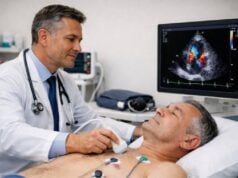
- Bedside ultrasound: in trauma, a FAST exam can look for free fluid suggesting internal bleeding; cardiac ultrasound can assess heart function and help distinguish hypovolemic from cardiogenic causes.
- Imaging: CT scanning may be used when the patient is stable enough; unstable patients often go straight to hemorrhage control rather than prolonged imaging.
- Urine output monitoring: a practical “organ perfusion meter,” especially in intensive care.
Clinicians also differentiate hypovolemic shock from other shock types because treatments diverge:
- Septic (distributive) shock can start with warm skin and wide pulse pressure, though later it can look similar.
- Cardiogenic shock may show lung congestion and signs of heart pump failure; giving large fluids can worsen breathing.
- Obstructive shock (for example, pulmonary embolism or tension pneumothorax) has different immediate fixes.
When bleeding is suspected, teams often use structured approaches:
- Rapid assessment for external bleeding (tourniquet candidates, pressure dressings).
- Evaluation for internal bleeding sites (chest, abdomen, pelvis, long bones).
- Ongoing reassessment every few minutes, because shock evolves quickly.
A key diagnostic principle: if a person looks like they are in shock, clinicians do not wait for “perfect confirmation” to begin resuscitation and source control. Tests refine decisions, but time and physiology drive the first actions.
Treatment steps: fluids, blood, and bleeding control
Treatment of hypovolemic shock follows a simple priority: restore life-sustaining circulation while stopping the ongoing loss. The specific tools depend on whether the loss is blood, fluid, or both.
Immediate actions (first minutes):
- Call emergency services and treat as time-critical.
- Positioning: lay the person flat if safe; raise legs modestly if it does not worsen breathing or pain.
- Control external bleeding: firm direct pressure; hemostatic dressings if available; tourniquet for life-threatening limb bleeding when trained to use one.
- Protect warmth: cover the person; prevent heat loss. Hypothermia worsens clotting and outcomes.
- Do not give food or drink if the person is drowsy, vomiting, or may need urgent surgery.
In emergency and hospital care, clinicians typically run an “ABC” pattern:
- Airway and breathing: oxygen and ventilation support when needed.
- Circulation: rapid IV or intraosseous access, continuous monitoring, and targeted resuscitation.
Fluids vs blood: choosing the right replacement
- In hemorrhagic shock, replacing lost blood early is often crucial because blood carries oxygen and clotting factors. Large volumes of clear IV fluid can dilute clotting proteins and cool the patient, making bleeding harder to stop.
- In dehydration or non-hemorrhagic fluid loss, balanced crystalloids are commonly used to restore circulating volume while the cause is treated.
Common hospital strategies for hemorrhagic shock include:
- Rapid hemorrhage control: surgery, interventional radiology, pelvic stabilization, or endoscopy depending on the source.
- Massive transfusion protocols: structured delivery of red cells, plasma, and platelets in balanced patterns when severe bleeding is suspected or confirmed.
- Early antifibrinolytic therapy: in selected bleeding contexts, medications that stabilize clots may be used early when indicated.
- Permissive hypotension (selected patients): temporarily aiming for lower-than-normal blood pressure until bleeding is controlled can reduce re-bleeding risk in some trauma patients; it is generally not used when brain injury is suspected because the brain needs higher perfusion pressures.
- Calcium and temperature management: transfusion and shock can lower calcium and body temperature; both are corrected because they affect heart function and clotting.
Monitoring “is it working?”
Clinicians track:
- Mental status improvement
- Pulse strength and skin warmth
- Blood pressure and shock index trends
- Urine output
- Lactate and acid-base normalization over time
- Bleeding control confirmation (clinical and procedural)
What about vasopressors?
Medications that tighten blood vessels may be used if blood pressure remains dangerously low despite adequate volume replacement and active source control, or in complex mixed shock states. They are typically not the first-line answer to pure volume loss because they do not replace missing blood or fluid.
The core principle is consistent across settings: stop the leak and refill the tank, while preventing the predictable spiral of cold, acid buildup, and impaired clotting.
Recovery, prevention, and when to seek care fast
Recovery from hypovolemic shock does not end when blood pressure stabilizes. People often need a structured plan to rebuild strength, correct anemia or nutrient deficits, monitor organ recovery, and reduce the chance of recurrence.
What recovery commonly involves:
- Monitoring kidney function: especially if urine output was low or lab values changed during the event.
- Checking for anemia and iron deficiency: after bleeding, fatigue and shortness of breath may persist for weeks if anemia is not addressed.
- Medication review: blood thinners, antiplatelet agents, blood-pressure medicines, and diuretics may need adjustment after a shock event, especially if dehydration or falls contributed.
- Nutrition and hydration planning: adequate protein, iron-rich foods when appropriate, and a realistic hydration routine.
- Reconditioning: graded activity to rebuild endurance; prolonged bed rest can worsen dizziness and weakness.
- Psychological support: severe medical emergencies can trigger insomnia, anxiety, or trauma symptoms; this is common and treatable.
Prevention depends on the risk profile:
For dehydration-prone individuals (older adults, athletes, people on diuretics):
- Drink steadily through the day; do not rely on “catch-up” hydration at night.
- During vomiting/diarrhea, use frequent small sips and consider oral rehydration solutions; seek care early if you cannot keep fluids down.
- In heat, plan for extra fluids and salt intake as appropriate for your medical conditions, and avoid alcohol.
For bleeding risk (blood thinners, ulcers, liver disease, prior GI bleed):
- Know warning signs: black stools, vomiting blood, unexplained fainting, sudden weakness.
- Avoid overuse of medications that increase bleeding risk unless medically necessary.
- Keep follow-up appointments and recommended screening for ulcers or liver complications.
For trauma risk:
- Use seat belts, helmets, and fall-prevention strategies at home (lighting, handrails, removing trip hazards).
- In high-risk jobs or remote activities, learn basic bleeding control and carry appropriate supplies.
When to seek care immediately (do not wait):
- Fainting, near-fainting, or collapse—especially with injury
- Confusion, unusual sleepiness, or difficulty staying awake
- Suspected internal bleeding: black tarry stools, vomiting blood, severe abdominal or pelvic pain, heavy vaginal bleeding
- Rapid breathing, gray/ashen skin, or cold clammy skin with weakness
- Severe vomiting/diarrhea with dizziness, minimal urination, or inability to keep fluids down
- Any shock symptoms in pregnancy or the postpartum period
A practical bystander reminder: if you suspect hypovolemic shock, prioritize emergency help and bleeding control. Do not try to “walk it off,” do not delay for home blood pressure checks, and do not offer food or drink if the person is drowsy or may need urgent procedures.
With timely treatment and good follow-up, many people recover well. The best outcomes come from two things: rapid early action and a prevention plan tailored to why the shock happened in the first place.
References
- Hypovolemia and Hypovolemic Shock – StatPearls – NCBI Bookshelf 2025 (Clinical Review)
- The European guideline on management of major bleeding and coagulopathy following trauma: sixth edition – PubMed 2023 (Guideline)
- Patient blood management guideline for adults with critical bleeding – National Blood Authority 2024 (Guideline)
- Whole Blood for Resuscitation of Traumatic Hemorrhagic Shock in Adults – PMC 2021 (Review)
Disclaimer
This article is for general educational purposes and does not provide medical advice, diagnosis, or treatment for any individual. Hypovolemic shock is a life-threatening emergency that can result from internal or external bleeding, severe dehydration, burns, or major fluid shifts. If you suspect shock—especially with fainting, confusion, gray/ashen skin, fast breathing, heavy bleeding, black stools, vomiting blood, severe abdominal pain, or inability to stay awake—seek emergency medical care immediately.
If you found this article helpful, please share it on Facebook, X (formerly Twitter), or any platform you prefer, and follow us on social media. Your support by sharing helps our team continue producing high-quality health content.