Iceland poppy is best known as a cool-climate ornamental with silky petals, but it also has a quieter medicinal story that deserves a careful, evidence-based look. In the research world, Papaver nudicaule has drawn attention for its isoquinoline alkaloids, unusual yellow pigments called nudicaulins, and early anti-inflammatory and antioxidant signals. In traditional Mongolian practice, it has also been described in wound and digestive formulas. Still, that does not make it a proven everyday remedy. The most important thing to understand is that Iceland poppy sits in an in-between category: more pharmacologically interesting than a simple garden flower, but far less clinically established than well-known medicinal herbs. That means its realistic value lies in understanding its chemistry, traditional context, and limits—not assuming it is a safe, well-standardized home treatment. This guide explains what Iceland poppy is, what compounds it contains, what benefits researchers are exploring, how it has been used historically, and why dosage and safety need extra caution.
Essential Insights
- Iceland poppy shows early anti-inflammatory and antioxidant potential, but the evidence is still mostly preclinical.
- Its best-known reported compounds are isoquinoline alkaloids and rare flower pigments called nudicaulins.
- Laboratory studies have used extracts at roughly 12.5 to 500 μg/mL, but no evidence-based human oral dose has been established.
- Avoid self-medicating with Iceland poppy if you are pregnant, breastfeeding, taking sedatives, or considering it for children.
Table of Contents
- What is Iceland poppy?
- Key compounds and medicinal properties
- Does Iceland poppy have benefits?
- Traditional uses and modern applications
- Is there a safe dosage?
- Side effects, interactions, and who should avoid it
- What the evidence actually shows
What is Iceland poppy?
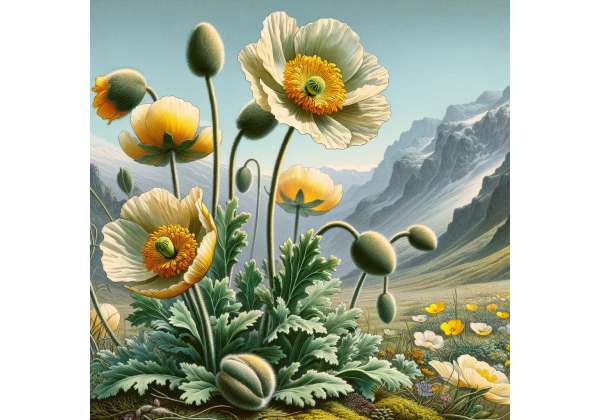
Iceland poppy is a flowering plant in the poppy family, Papaveraceae, and it is still commonly sold and discussed under the botanical name Papaver nudicaule. In current taxonomic databases, however, that name is often treated as a synonym of Oreomecon nudicaulis. In practical terms, most gardeners, supplement readers, and older research papers still use Papaver nudicaule, so that is the name you will see most often on labels, seed packets, and phytochemical studies. The plant is valued primarily as an ornamental species, especially in cool regions, where it produces delicate white, yellow, orange, or pale red flowers on slender stems.
That ornamental identity matters because it helps set realistic expectations. Iceland poppy is not the same thing as opium poppy, and it is not a recognized source of prescription opioid medicines. It belongs to the same broader family, but its modern profile is very different. Research interest in Iceland poppy focuses less on established clinical use and more on its unusual alkaloids, flower pigments, and possible anti-inflammatory activity. In other words, it is better understood as a bioactive botanical under investigation than as a mainstream medicinal herb with settled dosing rules.
Traditional use adds another layer. Recent reviews of Mongolian literature describe Iceland poppy as a long-used plant in traditional Mongolian medicine, especially in formulas connected with wounds and, in some texts, digestive complaints such as diarrhea, intestinal inflammation, and dysentery. Those records are useful because they show the plant was not only decorative. But traditional use is not the same as modern proof. It tells us where to look, not what has already been confirmed in humans.
From a reader’s point of view, the smartest way to think about Iceland poppy is this:
- It is a real medicinal research subject, not just a pretty flower.
- It contains alkaloids and other specialized compounds that may affect biology.
- It does not yet have the strong human evidence base that would justify casual self-treatment.
- Safety deserves more attention than marketing language usually gives it.
That last point is especially important. Plants in the poppy family can be chemically active in ways that are genuinely useful but also potentially risky. So, before asking whether Iceland poppy “works,” it is more helpful to ask what is actually in it, what the studies tested, and whether those findings translate into safe real-world use. If your main goal is gentle, better-known calming support, many readers are safer starting with chamomile’s calming chemistry rather than experimenting with a less-established poppy species.
Key compounds and medicinal properties
The medicinal interest in Iceland poppy centers on its alkaloids. Several studies have identified isoquinoline alkaloids in the aerial parts or capsules of Papaver nudicaule, including compounds such as allocryptopine, pseudoprotopine, protopine-related constituents, chelidonine, rotundine, muramine, and other structurally related metabolites. These are not just chemical curiosities. In the poppy family, alkaloids often help explain why a plant shows antimicrobial, anti-inflammatory, sedative, or neurologic effects in lab work. Iceland poppy appears to fit that pattern, even though its exact alkaloid profile varies by flower color, plant part, and extraction method.
One of the most useful findings from modern profiling work is that Iceland poppy is chemically variable. Profiling studies have reported broad differences in alkaloid abundance among cultivars with different flower colors. That matters because two products labeled “Iceland poppy” may not behave the same way if they were made from different chemotypes, harvest stages, or solvents. It also explains why dosage claims borrowed from one preparation should not be assumed to apply to another. In practical herbal use, chemical inconsistency is one of the biggest reasons early promise does not always translate into dependable results.
Iceland poppy is also unusual because of its flower pigments. Yellow and orange petals contain rare compounds called nudicaulins, which are flavoalkaloidal pigments formed through a fusion of flavonoid and indole-related chemistry. These pigments are botanically fascinating and help explain the plant’s bright coloration, but they are also part of what makes Iceland poppy chemically distinctive from better-known medicinal poppies. Their presence does not prove a direct health benefit on its own, yet it highlights how specialized this plant is.
When people use the phrase “medicinal properties,” they often mean one of three things:
- A plant contains compounds that can affect human biology.
- A plant has a long traditional record for certain complaints.
- A plant has been shown to improve outcomes in clinical use.
Iceland poppy clearly meets the first standard and partly meets the second. It does not yet strongly meet the third. So its medicinal properties are best described as plausible and emerging, not proven and standardized. The most defensible properties currently discussed are:
- Anti-inflammatory potential
- Antioxidant activity
- Possible antimicrobial or antiviral relevance at the compound level
- Neuroactive or enzyme-modulating potential from alkaloids
That is a meaningful list, but it should be read with restraint. A plant can contain promising molecules without being ready for confident home dosing. Readers interested in calming botanicals with a simpler safety profile may prefer lemon balm for mild relaxation and digestive support, especially when the goal is low-risk daily use rather than experimental phytochemistry.
Does Iceland poppy have benefits?
The honest answer is yes, potentially—but mostly at the level of early research rather than proven clinical benefit. The strongest modern signal comes from inflammation studies. In cell-based experiments, Iceland poppy extracts reduced inflammatory mediators such as nitric oxide, prostaglandin E2, NOS2, COX2, and several cytokines in activated immune cells. Later work also found that selected fractions of Papaver nudicaule showed antioxidant and anti-inflammatory activity in similar preclinical models. These results are scientifically interesting because they suggest the plant is not pharmacologically inert.
Still, benefit claims need translation. A reduction in inflammatory markers in cell studies does not automatically mean a person drinking a tea or taking a capsule will get the same effect. Human digestion, liver metabolism, product quality, and dose precision all change the equation. So while “anti-inflammatory potential” is a fair phrase, “proven anti-inflammatory herb” would go too far. This is one of the clearest places where careful language protects the reader from hype.
Traditional medicine sources add a second category of possible benefits. Mongolian literature describes Iceland poppy in wound-related and digestive mixtures, which suggests historical use for tissue injury, diarrhea, and inflammatory gut complaints. That does not prove efficacy by modern standards, but it gives context for why researchers continue to examine the plant. Traditional patterns often point to where pharmacology may be worth exploring, especially when they overlap with modern anti-inflammatory or antimicrobial signals.
A few compound-level observations also widen the conversation. Reported alkaloids from Iceland poppy and related Papaver research have been discussed for antiviral, enzyme-inhibiting, and neuroactive effects. But here, the gap between “interesting compound behavior” and “reliable human benefit” becomes even wider. Most readers should treat these findings as exploratory rather than actionable. They are best understood as a sign that the plant has medicinal chemistry, not as permission to self-prescribe it for infection, pain, mood, or cognitive issues.
So what are the most realistic benefit statements?
- It may have anti-inflammatory relevance in preclinical models.
- It may offer antioxidant activity in certain extracts.
- It has a meaningful traditional medicinal history in Mongolia.
- It has phytochemicals worth further study for wound, digestive, and possibly neuroactive applications.
What it does not yet justify is broad consumer language like “heals inflammation,” “natural painkiller,” or “safe daily detox herb.” Better-studied herbs are still stronger first choices for those goals. For stress-related sleep support, for example, passionflower for stress-related sleep support is a more familiar and clinically approachable option than Iceland poppy.
Traditional uses and modern applications
Traditional uses of Iceland poppy come through most clearly in Mongolian medical literature. Review work describes the plant as part of formulas for wounds, torn blood vessels, older and newer injuries, and certain gastrointestinal complaints. Some texts present it as a wound-healing herb, while others place it in multi-poppy mixtures prepared by boiling. This is important because it shows Iceland poppy was historically used in a practical, formula-based way rather than as a casual stand-alone folk tea. That formula context often gets lost when traditional uses are simplified for modern wellness marketing.
That detail changes how modern readers should interpret “uses.” A plant that historically appeared in professional or semi-professional compound formulas is not automatically suitable for unsupervised home use. Traditional systems often relied on herb pairing, dose moderation, preparation technique, and practitioner judgment. When those controls disappear, both benefits and safety become harder to predict. So even though Iceland poppy has a real medicinal history, the modern application is not as simple as steeping a handful of petals and hoping for the best.
In modern settings, there are really three ways Iceland poppy appears:
- As a research plant for phytochemistry and pharmacology
- As a traditional-medicine subject in Mongolian scholarship
- As an ornamental species that people become curious about medicinally
That third category creates the most confusion. Garden plants often look “natural” and therefore harmless, but ornamental access does not equal medicinal readiness. Iceland poppy may be biologically active enough to matter, yet still not be standardized enough for routine self-treatment.
If someone is exploring plant-based wound or skin support, it is also worth remembering that other herbs have much clearer topical traditions and safety norms. A more practical place to start is often calendula for skin healing and topical care, which fits modern home use more naturally than a lesser-studied poppy extract.
As for preparation, the modern literature does not give readers a well-established consumer roadmap. There is no widely accepted clinical monograph explaining the best form, ideal extract ratio, human dose, or routine timing for Iceland poppy. Most published work focuses on ethanol extracts, fractions, and laboratory methods rather than everyday herbal practice. That means the plant’s “uses” are more credible in research language than in supplement-label language.
A fair summary is this:
- Traditional use exists and should not be dismissed.
- Modern pharmacology gives some reasons to take those traditions seriously.
- Home use remains uncertain because preparation, dosing, and safety are not well standardized.
That uncertainty is not a weakness in the article. It is the central fact a careful reader needs. Many herbs are useful because they have long use, clear preparation methods, and modern human data. Iceland poppy has the first piece, part of the second, and very little of the third.
Is there a safe dosage?
This is the section where many articles overpromise. For Iceland poppy, there is no well-established evidence-based human oral dose for tea, tincture, powder, capsule, or standardized extract. That is the most important dosage fact. If a website gives you a neat daily amount without explaining that the evidence is thin, it is probably presenting confidence that the science does not yet support.
What we do have are research concentrations and traditional references. In laboratory studies, Iceland poppy extracts and fractions were tested in cell systems at concentrations ranging roughly from 12.5 to 500 μg/mL, depending on the experiment. Those numbers help researchers compare activity and toxicity in vitro, but they do not translate into a home dose for a person. A lab concentration in cultured cells is not a serving suggestion.
Traditional literature also points to decoctions and mixed formulas, yet modern publications do not provide a simple, validated adult range like “500 mg twice daily for two weeks.” That missing bridge matters. Without it, you cannot reliably answer the usual dosage questions:
- How much dried herb per day?
- Which preparation is safest?
- When should it be taken?
- How long can it be used?
- What body weight, age, or medication factors matter most?
Right now, the truthful answer to most of those questions is that they remain unsettled for general consumer use.
So what is the practical takeaway?
- There is no clinically validated self-care dose.
- Stronger extracts should not be assumed safer just because they are “natural.”
- Timing and duration are also not standardized.
- The absence of a dosage guide is itself a safety signal.
For readers who still want a rule of thumb, the safest one is not a milligram number. It is a decision rule: do not self-dose Iceland poppy medicinally unless you are working with a practitioner who understands both poppy-family alkaloids and the specific preparation being used. That is especially true if the product is concentrated, mixed with other sedatives, or intended for repeated use. If your goal is gentle daily calming rather than experimentation, a herb with clearer household dosing traditions is usually the wiser choice.
Side effects, interactions, and who should avoid it
Safety is where Iceland poppy deserves the most respect. The plant contains alkaloids, and some sources note potential toxicity if large amounts are ingested. There are also older reports of poisoning in grazing animals after heavy exposure. Those reports do not tell us exactly how a modern human supplement would behave, but they reinforce an important point: this is not a harmless decorative herb that should be used casually just because it comes from a flower bed.
Possible side effects are not fully mapped in human trials, but the chemistry suggests caution around sedation, neurologic effects, digestive upset, and additive reactions with other bioactive products. Because Iceland poppy shares the broader poppy-family pattern of alkaloid activity, it makes sense to avoid stacking it with substances that already affect alertness or central nervous system function. That includes sleep aids, sedating antihistamines, alcohol, benzodiazepines, strong calming botanicals, and some pain medicines. Even when a direct interaction study is missing, the combination logic is strong enough to justify caution.
The people who should avoid self-directed medicinal use are fairly easy to identify:
- Pregnant people
- Breastfeeding people
- Children and adolescents
- Anyone taking sedatives, sleep drugs, or anti-anxiety medications
- Anyone with liver concerns, unstable medical conditions, or a history of unusual reactions to alkaloid-rich plants
- Anyone trying to drive, work, or exercise precise judgment after use
The reason is simple: when a plant lacks well-established human safety data, the right default is not “probably fine.” The right default is “use a higher safety bar.”
A second safety issue is plant identity. “Poppy” is a broad common term, and consumers often blur together very different species. Iceland poppy is not opium poppy, not California poppy, and not red poppy. Those differences matter because each has its own chemistry, traditions, and risk profile. Confusing species is one of the easiest ways to misread dosage advice and one of the fastest ways to make an herbal product less safe.
A third safety issue is false reassurance from ornamental familiarity. People often trust flowers more than roots, barks, or bitter extracts. But from a pharmacologic point of view, a plant’s appearance tells you very little. Iceland poppy’s vivid petals are beautiful, yet the better question is whether the preparation is standardized, appropriately identified, and professionally chosen for a real reason.
The safest bottom line is this: Iceland poppy may one day earn a more defined place in herbal practice, but at present it belongs in the caution-first category. Readers looking for a calming or restorative herb with clearer household use patterns are usually better off with more established options than trying to improvise with Iceland poppy extracts.
What the evidence actually shows
The current evidence base for Iceland poppy is promising but clearly early. Most of the supportive literature falls into four buckets: phytochemical studies, cell-based anti-inflammatory experiments, fractionation work looking for active compounds, and review articles that connect those findings to traditional use. That is enough to justify scientific interest. It is not enough to claim that Iceland poppy is a proven treatment for inflammation, pain, wounds, digestive disease, anxiety, or infection in humans.
What the evidence supports reasonably well is that Iceland poppy contains distinctive bioactive chemistry. Alkaloid profiling studies have shown a broad alkaloid spectrum and cultivar-dependent variability. Anti-inflammatory studies have shown that selected extracts and fractions can suppress inflammatory mediators in experimental systems. Broader Papaver reviews place Iceland poppy within a genus known for rich alkaloid chemistry and preclinical pharmacologic interest. Taken together, these findings say the plant is scientifically credible as a candidate medicinal species.
What the evidence does not yet support is equally important:
- No strong human clinical trial base for routine medicinal use
- No standard consumer dosage
- No settled long-term safety profile
- No reliable proof that traditional indications translate directly into modern outcomes
- No reason to treat ornamental access as evidence of safe home practice
That gap between plausibility and proof is where most misunderstanding happens. Readers often see “contains active alkaloids” and hear “works like medicine.” Researchers hear “worth studying further.” Those are not the same statement. Iceland poppy has crossed the threshold into serious phytochemical interest, but not into everyday evidence-based self-care.
So how should a thoughtful reader act on the evidence today?
- View Iceland poppy as an emerging medicinal plant, not a settled one.
- Respect its traditional history without treating that history as automatic proof.
- Be skeptical of exact dose claims that are not tied to a specific study or monograph.
- Put safety ahead of novelty.
- Prefer better-studied herbs when your goal is routine home support rather than experimental use.
That may sound conservative, but it is the most useful conclusion. Good herbal writing should not only tell you what might help. It should also tell you when the evidence is not mature enough to justify confident use. For Iceland poppy, that honest middle ground is where the real value lies.
References
- Papaver nudicaule (Iceland poppy) alleviates lipopolysaccharide-induced inflammation through inactivating NF-κB and STAT3 2019 (Preclinical Study)
- Molecular Network-Guided Alkaloid Profiling of Aerial Parts of Papaver nudicaule L. Using LC-HRMS 2020
- Ethyl Acetate Fractions of Papaver rhoeas L. and Papaver nudicaule L. Exert Antioxidant and Anti-Inflammatory Activities 2021
- An Integrated-Omics/Chemistry Approach Unravels Enzymatic and Spontaneous Steps to Form Flavoalkaloidal Nudicaulin Pigments in Flowers of Papaver nudicaule L 2021
- Papaver Plants: Current Insights on Phytochemical and Nutritional Composition Along with Biotechnological Applications 2022 (Review)
Disclaimer
This article is for educational purposes only and is not a substitute for medical advice, diagnosis, or treatment. Iceland poppy is a bioactive plant with limited human safety and dosage data, and it should not be self-prescribed for inflammatory, digestive, pain, mood, or wound-related conditions without qualified professional guidance. Extra caution is warranted during pregnancy, breastfeeding, childhood, and alongside sedatives, sleep aids, or other neurologically active products.
Please share this article on Facebook, X (formerly Twitter), or your preferred platform if you think it could help someone make a safer, better-informed choice.