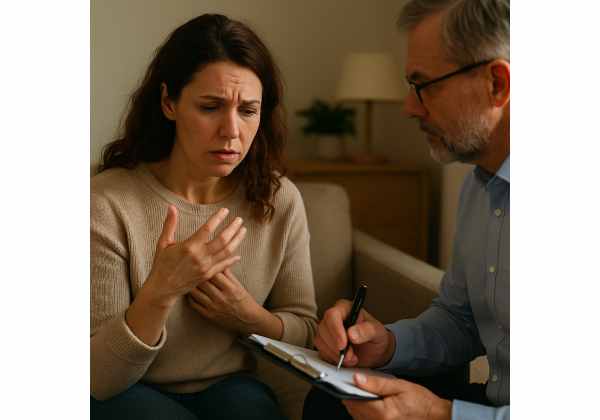
Illness anxiety disorder is a mental health condition in which fear of having or developing a serious illness becomes persistent, distressing, and hard to dismiss even when medical findings are reassuring. The worry is not “fake,” and it is not the same as pretending to be sick. The anxiety feels real, often urgent, and can take over attention, decisions, relationships, work, and daily routines.
A person with this condition may have few or no physical symptoms, or they may notice ordinary body sensations and interpret them as signs of a severe disease. The central problem is the level of fear, preoccupation, checking, reassurance-seeking, or avoidance around health. Understanding the condition clearly can help distinguish it from normal health concern, a medical illness, panic, obsessive-compulsive symptoms, and somatic symptom disorder.
At a glance
- Illness anxiety disorder involves persistent preoccupation with having or acquiring a serious illness, usually despite little or no medical evidence of that illness.
- Common signs include repeated body checking, frequent symptom searching, repeated reassurance-seeking, or avoiding doctors because of feared bad news.
- It is commonly confused with normal health worry, panic attacks, obsessive-compulsive disorder, somatic symptom disorder, and body dysmorphic disorder.
- The person’s distress is genuine, even when the feared disease is not found.
- Professional evaluation may matter when health fears last for months, impair functioning, cause repeated medical visits or avoidance, or occur with severe anxiety, depression, or suicidal thoughts.
Table of Contents
- What Illness Anxiety Disorder Means
- Symptoms and Signs
- Normal Health Concern vs Illness Anxiety
- Causes and the Anxiety Cycle
- Risk Factors and Common Triggers
- Conditions That Can Look Similar
- Diagnostic Context and Evaluation
- Complications and Daily Life Effects
What Illness Anxiety Disorder Means
Illness anxiety disorder means a person is persistently preoccupied with the possibility of having or acquiring a serious illness, even when symptoms are absent, mild, or medically explained in a reassuring way. The fear is usually centered on what a sensation might mean, rather than on the sensation itself.
For example, a brief headache may be interpreted as a brain tumor, a skipped heartbeat as a fatal rhythm problem, or a swollen lymph node as cancer. The person may understand, at least partly, that the fear is excessive, but the anxiety still feels difficult to set aside. Reassurance may help briefly, then doubt returns: “What if the test missed something?” “What if the doctor did not take me seriously?” “What if this new sensation changes everything?”
The diagnosis replaced much of what used to be called hypochondriasis or hypochondria. Those older terms are still used casually, but they can sound dismissive. Modern clinical language recognizes that persistent health anxiety can be severe, impairing, and deserving of careful assessment. A related lay term, health anxiety, is often used more broadly. Health anxiety can range from mild worry to a diagnosable disorder; illness anxiety disorder refers to a more persistent and impairing pattern.
A key feature is that physical symptoms are usually absent or mild. If the person has a medical condition, the anxiety is clearly out of proportion to the condition’s nature, severity, or current risk. Someone with a benign mole, a normal scan, or a stable chronic condition may still feel consumed by fear that something dangerous has been missed.
Illness anxiety disorder often involves one of two broad patterns:
- Care-seeking type: The person repeatedly seeks medical appointments, tests, reassurance, second opinions, or online explanations.
- Care-avoidant type: The person avoids doctors, hospitals, screening, health news, or even conversations about illness because the possibility of bad news feels unbearable.
Both patterns can cause harm. Care-seeking can lead to repeated appointments, escalating doubt, and frustration for both patient and clinician. Care avoidance can delay assessment of real symptoms. The same person may move between both patterns over time: seeking reassurance during one phase, then avoiding evaluation during another.
Illness anxiety disorder is not defined by being “wrong” about every symptom. People with this condition can still develop ordinary medical problems, and their concerns should not be dismissed automatically. The defining issue is the persistent, disproportionate fear and the way it dominates thinking, behavior, and functioning over time.
Symptoms and Signs
The main symptoms are ongoing fear, preoccupation, and health-related behaviors that are difficult to control. The signs often show up in how a person monitors the body, interprets uncertainty, searches for reassurance, or avoids anything that could trigger fear.
A person with illness anxiety disorder may frequently scan their body for changes. They may check their pulse, inspect skin, press on lymph nodes, look in the mirror, compare both sides of the body, monitor digestion, or repeatedly test strength, breathing, memory, or balance. These checks can feel protective in the moment, but they often increase awareness of normal fluctuations and make small sensations feel more suspicious.
Common symptoms and signs include:
- Persistent fear of having or developing a serious disease.
- High alarm in response to minor sensations, such as twitching, stomach noises, fatigue, mild pain, tingling, or a small rash.
- Repeatedly searching symptoms, diseases, prognosis statistics, medical forums, or test accuracy.
- Difficulty feeling reassured after normal exams, labs, scans, or clinician explanations.
- Frequent requests for reassurance from family, friends, clinicians, or online communities.
- Avoiding medical appointments, hospitals, health screenings, news about disease, or people who are ill.
- Repeatedly changing clinicians because reassurance does not feel convincing enough.
- Focusing on one feared condition, such as cancer, heart disease, neurological disease, infection, or dementia.
- Shifting from one feared illness to another after a new sensation, article, test result, or conversation.
- Distress that interferes with work, school, relationships, sleep, concentration, or daily decisions.
The anxiety may also create physical sensations of its own. Stress can cause muscle tension, nausea, sweating, dizziness, breathlessness, palpitations, headaches, stomach upset, and sleep disruption. These symptoms can then be misread as further evidence of disease, tightening the loop between fear and body awareness.
A common pattern is temporary relief followed by renewed doubt. A person may feel calmer after a normal blood test, but the relief fades when a new symptom appears or when they wonder whether the test was the “right” one. This is one reason reassurance alone often does not settle the condition for long. The mind keeps looking for certainty, but medicine rarely offers perfect certainty.
Illness anxiety disorder can be quiet and hidden. Some people do not tell others how much time they spend checking, searching, or worrying. They may appear calm at work while internally tracking every sensation. Others talk often about possible illnesses because the fear feels too urgent to hold alone.
The condition can also look different across age groups. Younger adults may worry about cancer, heart disease, infections, or neurological disorders. Older adults may become especially fearful about memory loss, frailty, or signs of serious disease. The theme may change, but the underlying pattern is similar: persistent health-related fear that becomes larger than the actual evidence available.
Normal Health Concern vs Illness Anxiety
Normal health concern is usually proportionate, flexible, and responsive to new information. Illness anxiety disorder is more persistent, consuming, and resistant to reassurance, even when the person has taken reasonable steps to check the concern.
It is healthy to notice symptoms, attend recommended screenings, ask questions, and seek medical evaluation when something is new, severe, or persistent. Concern becomes more suggestive of illness anxiety disorder when the fear continues for months, repeatedly overrides reassurance, and causes ongoing distress or impairment.
A useful distinction is the person’s relationship to uncertainty. In normal health concern, uncertainty may be uncomfortable but tolerable. In illness anxiety disorder, uncertainty can feel dangerous. The person may feel driven to eliminate doubt immediately by checking, searching, asking, or avoiding. Because complete certainty is rarely possible, the cycle continues.
| Feature | Normal health concern | Illness anxiety disorder |
|---|---|---|
| Response to symptoms | Notices symptoms and seeks evaluation when appropriate | Interprets mild or normal sensations as possible serious disease |
| Response to reassurance | Reassurance usually settles the concern | Reassurance helps briefly or not at all |
| Time spent thinking about health | Limited and situation-specific | Frequent, intrusive, or hard to redirect |
| Behavior pattern | Reasonable monitoring and routine care | Repeated checking, searching, reassurance-seeking, or avoidance |
| Effect on life | Little lasting disruption | Distress, impaired functioning, relationship strain, or repeated medical use |
Illness anxiety disorder is also different from being careful after a real diagnosis. A person who has recently had cancer, heart disease, an autoimmune flare, or a serious infection may naturally watch symptoms more closely for a time. That increased attention is not automatically a disorder. The question is whether the fear becomes persistent, disproportionate, and impairing compared with the person’s actual medical situation.
The condition can also overlap with high-functioning anxiety. Someone may keep appointments, work, and family obligations going while spending hours mentally reviewing symptoms. Others may lose time to repeated doctor visits, checking rituals, or avoidance. The outward picture can vary, but the inner experience often involves fear, doubt, and a search for certainty.
Because many people use online symptom checkers, illness anxiety can become intensified by internet searching. Online information often lists serious causes beside common, harmless ones. For someone already alarmed, rare but frightening explanations can feel more believable than likely ones. This does not mean a person should ignore health information; it means that repeated searching can become part of the disorder’s pattern when it increases fear rather than clarifies next steps.
Causes and the Anxiety Cycle
No single cause explains illness anxiety disorder. It usually develops from a mix of temperament, learning, past experiences, stress, beliefs about health, and the way the brain interprets body sensations and uncertainty.
Some people appear more sensitive to internal sensations. They may notice small changes in heartbeat, digestion, muscle tension, breathing, skin, or energy that others would not register. Sensitivity itself is not a disorder, but it can become distressing when paired with catastrophic interpretation: “This sensation must mean something serious.”
A common cycle looks like this:
- A body sensation, health story, test result, memory, or illness exposure triggers concern.
- The person interprets the trigger as a possible sign of serious disease.
- Anxiety rises and increases body sensations such as tension, nausea, dizziness, or palpitations.
- The person checks, searches, asks for reassurance, avoids, or seeks repeated evaluation.
- Relief may occur briefly, but doubt returns.
- The brain learns that the trigger was dangerous and that checking or reassurance was necessary.
Over time, the body can become a constant object of surveillance. The person may feel as if they are responsibly preventing disaster, but the repeated monitoring keeps threat signals active. Normal sensations become harder to ignore because attention makes them more noticeable.
Beliefs about illness can also shape the condition. A person may believe that any symptom must have a clear explanation, that missing a disease would be catastrophic, or that responsible people must keep checking until all doubt is gone. These beliefs can be understandable, especially after frightening experiences, but they can make ordinary uncertainty feel intolerable.
Family learning may play a role. A child raised around intense health worry, frequent medical crises, or repeated warnings about disease may learn that the body is dangerous and must be watched closely. This is not about blaming families; many such patterns develop in homes where people were trying to protect one another. Still, early experiences can influence how later sensations are interpreted.
Stress is another important contributor. During periods of grief, work pressure, relationship conflict, major life change, pregnancy or postpartum adjustment, caregiving, or exposure to illness, health fears may intensify. Anxiety often looks for a concrete focus, and the body can become that focus because it is always present and never completely predictable.
Current research also points to cognitive and behavioral mechanisms, including intolerance of uncertainty, threat-focused attention, memory for health-related information, safety-seeking behavior, and beliefs about worry itself. In plain language, the mind becomes highly tuned to possible danger in the body, then uses behaviors that seem protective but keep the alarm system activated.
Risk Factors and Common Triggers
Risk factors increase vulnerability, but they do not guarantee that someone will develop illness anxiety disorder. The condition can appear in people with no obvious history, and it can also emerge after a very understandable health scare.
Common risk factors include a personal or family history of anxiety disorders, serious illness during childhood, a loved one’s severe illness or death, high exposure to health-related fear, and difficulty tolerating uncertainty. Some people have a temperament that leans toward vigilance, perfectionism, or strong responsibility for preventing harm. Others develop intense health fear after an ambiguous medical episode or a period when symptoms were dismissed or poorly explained.
Several experiences can trigger or worsen illness anxiety disorder:
- A new or unexplained body sensation.
- A recent medical test, abnormal-but-nonspecific result, or need for follow-up.
- A family member’s diagnosis or death.
- Heavy exposure to disease-related news, social media, forums, or symptom checkers.
- A stressful life transition, such as becoming a parent, losing a job, moving, or caregiving.
- Aging-related changes, including memory lapses, aches, fatigue, or changes in stamina.
- A real medical condition that creates uncertainty, monitoring, or fear of recurrence.
- Panic symptoms, especially chest tightness, palpitations, dizziness, or shortness of breath.
Some triggers are subtle. A person may hear about someone their age developing cancer and begin checking their own body. Another may read about a rare disease and suddenly reinterpret old sensations through that lens. Someone else may become preoccupied with memory after misplacing keys or forgetting a word.
The condition is not limited to people who seek frequent medical care. Care-avoidant illness anxiety can be just as impairing. A person may avoid screening, skip appointments, refuse to open test results, or delay evaluation because the fear of confirmation feels overwhelming. This pattern can create a painful contradiction: the person is terrified of illness yet avoids the very information that could clarify risk.
Medical uncertainty can also act as a trigger. Some symptoms are real but nonspecific, such as fatigue, dizziness, pain, tingling, stomach discomfort, or brain fog. When tests are normal or inconclusive, a person may feel caught between relief and suspicion. Related concerns may overlap with questions about medical conditions that mimic anxiety and depression, especially when symptoms affect mood, energy, concentration, or the nervous system.
Risk may rise when health information is consumed without context. Search results often do not reflect probability. A rare disease may appear beside common causes, and a frightening anecdote may feel more memorable than a clinician’s explanation. For someone vulnerable to illness anxiety, this can make rare outcomes feel personally likely.
Conditions That Can Look Similar
Illness anxiety disorder can resemble several medical and mental health conditions, so careful distinction matters. The main question is not whether the person has anxiety, but what the anxiety is focused on, how physical symptoms are experienced, and whether another condition better explains the pattern.
Somatic symptom disorder is one of the closest comparisons. In somatic symptom disorder, the person has one or more physical symptoms that are distressing or disruptive, and the main focus is often the burden of the symptoms themselves. In illness anxiety disorder, physical symptoms are absent or mild, and the dominant fear is the meaning of sensations: “This means I have a serious disease.”
Panic disorder can also be confused with illness anxiety disorder. Panic attacks can cause chest pain, shortness of breath, dizziness, tingling, trembling, sweating, and a fear of dying. Some people with panic symptoms become afraid that the attacks indicate heart disease or another medical emergency. The distinction can be complex because panic and health anxiety can reinforce each other. A diagnostic assessment may consider whether the main fear is recurrent panic itself, a specific medical interpretation of symptoms, or both. Related distinctions may be explored in assessments of panic attacks and anxiety disorders.
Obsessive-compulsive disorder can overlap when health fears are intrusive and repetitive. In OCD, obsessions and compulsions may focus on contamination, harm, checking, certainty, or responsibility. Health-related obsessions can look similar to illness anxiety, especially when the person performs checking rituals or reassurance-seeking. However, OCD often includes a broader pattern of obsessions and compulsions, and the feared outcome may involve contamination, harm to others, or moral responsibility rather than having an undiagnosed illness. A comparison such as OCD versus anxiety can help clarify why clinicians look at the full pattern rather than one symptom alone.
Body dysmorphic disorder can also involve checking and reassurance, but the focus is perceived flaws in appearance rather than fear of disease. A person with body dysmorphic disorder may repeatedly inspect skin, hair, facial features, or body shape because of distress about appearance. A person with illness anxiety disorder may inspect the body for evidence of cancer, infection, neurological disease, or another medical threat.
Depression, generalized anxiety disorder, post-traumatic stress disorder, and grief can all include body vigilance or fear of bad outcomes. Some people develop health anxiety after trauma involving illness, medical procedures, sudden death, or feeling unsafe in the body. Others become more health-preoccupied during depression, when fatigue, pain, sleep disruption, and hopelessness make the body feel unreliable.
Real medical illness must also stay in the picture. Having illness anxiety disorder does not protect someone from developing medical conditions. New, severe, persistent, or clearly changing symptoms deserve appropriate medical attention. The diagnostic challenge is to avoid two errors: assuming every fear is a medical emergency, or dismissing every symptom because the person has anxiety.
Diagnostic Context and Evaluation
Illness anxiety disorder is diagnosed through clinical evaluation, not by a single blood test, scan, or questionnaire. The evaluation usually considers symptom history, medical findings, anxiety patterns, health-related behaviors, duration, functional impairment, and whether another condition better explains the concern.
Clinicians typically ask what illness the person fears, how long the fear has been present, what sensations or situations trigger it, and what the person does when anxiety rises. They may ask about checking, reassurance-seeking, internet searching, repeated appointments, avoided care, family history, past illness, trauma, depression, panic, OCD symptoms, substance use, and functional effects.
Diagnostic frameworks generally emphasize several features:
- Preoccupation with having or acquiring a serious illness.
- No physical symptoms, or only mild symptoms.
- High anxiety about health and being easily alarmed by health-related issues.
- Excessive health-related behaviors, such as checking, or maladaptive avoidance, such as avoiding appointments.
- Persistence over time, often at least six months, even if the specific feared illness changes.
- Symptoms not better explained by another mental disorder or by a medical condition alone.
This is why screening and diagnosis in mental health are not the same. A screening tool can identify anxiety or distress, but a diagnosis requires clinical judgment and context. Some people may score high on general anxiety measures, while others may appear medically preoccupied but have a legitimate unresolved medical problem. The evaluator’s task is to understand the whole pattern.
A primary care clinician may first consider whether medical evaluation is needed based on the person’s symptoms, risk factors, age, exam findings, and history. When serious medical explanations are unlikely or have been reasonably addressed, a mental health evaluation may help clarify whether illness anxiety disorder, panic, OCD, depression, trauma-related anxiety, or another condition is present. The process may overlap with a broader mental health evaluation, especially when symptoms affect sleep, mood, functioning, safety, or relationships.
Certain situations call for urgent evaluation rather than waiting to see whether anxiety passes. Examples include chest pain with concerning features, severe shortness of breath, fainting, sudden weakness or confusion, new neurological symptoms, signs of severe infection, suicidal thoughts, self-harm, psychosis, inability to care for oneself, or any rapidly worsening symptom. In those situations, the need is immediate assessment of safety and medical risk. A guide on ER-level mental health or neurological symptoms can be relevant when symptoms are acute or potentially dangerous.
A careful diagnosis should be respectful. People with illness anxiety disorder are not making up distress, and many have had frightening experiences that make their fear understandable. Good diagnostic wording separates the reality of distress from the feared disease: the anxiety is real, even when the evidence for the feared illness is not.
Complications and Daily Life Effects
Illness anxiety disorder can affect far more than medical appointments. It can shape attention, money, relationships, work, sleep, decision-making, and the person’s sense of safety in their own body.
One common complication is functional impairment. Health worry can consume hours of the day through symptom checking, internet searches, appointment scheduling, test interpretation, or mental review. Work may suffer because concentration keeps returning to the body. School performance may decline. A person may avoid travel, exercise, social events, certain foods, public places, hospitals, or people who might expose them to illness.
Relationships can become strained. Family members may feel pressured to provide reassurance, inspect symptoms, interpret test results, or answer repeated “Do you think I’m okay?” questions. The person with illness anxiety may feel misunderstood, dismissed, or embarrassed. Loved ones may become frustrated because reassurance never seems to last. This does not mean the person is being manipulative; reassurance-seeking is often an attempt to reduce intense fear, but it can become exhausting for everyone involved.
Medical complications can occur indirectly. Care-seeking patterns may lead to repeated tests, procedures, costs, and conflicting opinions. More testing can sometimes create incidental findings that are harmless but anxiety-provoking, leading to more uncertainty. Care-avoidant patterns can create the opposite risk: delayed evaluation of symptoms that do need attention. Both patterns can leave the person feeling trapped.
Financial strain may come from repeated visits, imaging, labs, specialist consultations, missed work, travel costs, or insurance issues. Even when costs are manageable, the emotional cost can be high. Waiting for results may become unbearable. Normal findings may feel suspiciously incomplete. Slightly abnormal findings may become the center of intense fear.
Mental health complications can include depression, generalized anxiety, panic symptoms, obsessive-compulsive symptoms, sleep problems, irritability, shame, and social withdrawal. Some research on hypochondriasis and severe health anxiety has also found increased risks of serious outcomes, including suicide, compared with people without the condition. This does not mean most people with illness anxiety disorder will harm themselves. It does mean persistent health anxiety should be taken seriously, especially when it occurs with hopelessness, severe depression, substance use, isolation, or thoughts of death.
Illness anxiety disorder can also change a person’s identity. Life may begin to revolve around staying safe, monitoring risk, and preparing for bad news. The body becomes a source of threat rather than a familiar part of daily life. Over time, the person may lose trust in ordinary sensations, medical reassurance, or their own judgment.
The most important practical point is that the disorder is real and potentially impairing, even when the feared disease is not found. A clear understanding of the signs, risk factors, diagnostic context, and possible complications can reduce stigma and make it easier to recognize when health worry has moved beyond normal concern into a persistent mental health condition.
References
- Illness Anxiety Disorder: A Review of the Current Research and Future Directions 2024 (Review)
- Illness Anxiety Disorder 2025 (Clinical Review)
- All-Cause and Cause-Specific Mortality Among Individuals With Hypochondriasis 2024 (Cohort Study)
- Mechanistic studies in pathological health anxiety: A systematic review and emerging conceptual framework 2024 (Systematic Review)
- Do metacognitions contribute to pathological health anxiety? A systematic review and meta-analysis 2025 (Systematic Review and Meta-analysis)
- Illness Anxiety Disorder – Psychiatry – MSD Manual Professional Edition 2024 (Clinical Reference)
Disclaimer
This article is for general educational purposes only and is not a substitute for professional medical advice, diagnosis, or treatment. Persistent health fears, new or worsening physical symptoms, or thoughts of self-harm should be discussed with a qualified healthcare professional.
Thank you for taking the time to read this sensitive topic with care; sharing it may help others recognize when health worry has become more than ordinary concern.