Immortelle, also called everlasting or curry plant, is the Mediterranean herb Helichrysum italicum, a fragrant yellow-flowered shrub prized in skincare, aromatherapy, and traditional herbal medicine. Most modern interest centers on its topical use, especially for easily irritated skin, post-blemish marks, minor bruising, and formulations meant to support repair. That reputation is not built on scent alone. Immortelle contains a chemically rich mix of essential-oil compounds and polyphenols that show antioxidant, anti-inflammatory, and antimicrobial activity in laboratory work.
What makes immortelle especially interesting is that its best-known modern use and its strongest scientific support are not exactly the same. Many people know it from beauty oils and scar serums, yet the evidence is more convincing for broad skin-protective and wound-supportive effects than for dramatic cosmetic claims. Traditional internal uses also exist, but they are less settled. To use immortelle well, it helps to know which form you have, what it is realistically good for, how much is sensible, and where the safety boundaries matter most.
Essential Insights
- May help calm irritated skin and support recovery after minor bruising or superficial redness.
- Shows anti-inflammatory and antioxidant activity, but skin use has stronger support than oral use.
- A cautious topical range is often about 0.5% to 2% essential oil in a finished product for short-term use.
- Avoid use near the eyes, on broken skin, and during pregnancy or breastfeeding unless a clinician advises it.
Table of Contents
- What is immortelle
- Key ingredients and medicinal properties
- Does immortelle help skin and bruising
- Can immortelle help beyond skin
- How to use and dose immortelle
- Who should avoid immortelle
- What the research actually shows
What is immortelle
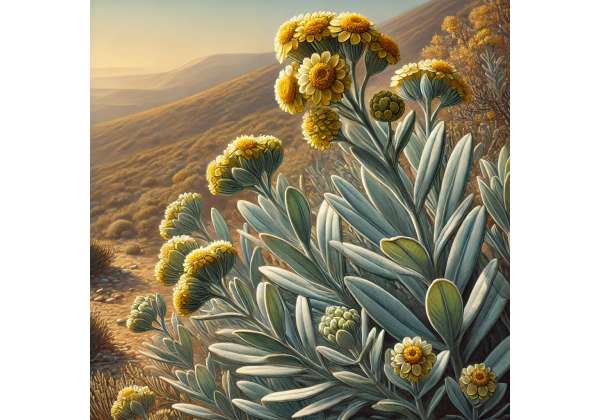
Immortelle is the common name for Helichrysum italicum, an aromatic perennial shrub in the daisy family. It grows naturally in dry, sunny Mediterranean landscapes and is known for its yellow flower heads, silver-green leaves, and warm scent that many people describe as herbal, honeyed, or curry-like. The name “immortelle” comes from the way the flowers hold their color and shape after drying, which made the plant symbolically linked with endurance and preservation long before it became a skincare trend.
The parts most commonly used are the flowering tops and the essential oil distilled from them. You will also see hydrosols, lipid extracts, tinctures, CO2 extracts, and dried herb for tea or decoction. These preparations are not interchangeable. That is one of the most important points for readers who are new to this herb. A hydrosol is much milder than an essential oil. A whole-plant extract contains compounds that a distilled essential oil does not. A tea made from the dried plant has a different chemistry again.
Traditionally, immortelle was used in Mediterranean folk practice for coughs, mild digestive complaints, skin discomfort, bruises, and inflammatory conditions. It also appears in older reports involving liver and gallbladder complaints. But there is an important caution here: some of the better-known digestive monographs in Europe relate to a different species, Helichrysum arenarium, not Helichrysum italicum. That distinction is often blurred online, and it can lead people to overgeneralize claims.
Today, immortelle is most often used in four ways:
- Topical skincare oils, serums, and creams
- Essential oil blends for massage or aromatherapy
- Hydrosols for misting or compresses
- Herbal infusions or extracts used more cautiously and far less consistently
If you want a simple mental model, immortelle is best thought of as a skin-centered aromatic herb with secondary traditional internal uses and a chemistry that changes sharply depending on preparation. That is why one product can feel gentle and floral while another is potent, resinous, and much more active. The plant is the same, but the delivery system changes the practical effect.
Key ingredients and medicinal properties
Immortelle’s medicinal character comes from two overlapping chemical worlds: its volatile aromatic fraction and its non-volatile polyphenol-rich fraction. Understanding that split explains why the herb is praised in both cosmetic oils and whole-plant extracts, yet not always for the same reason.
The essential oil contains terpenes and related volatile compounds, with profiles that often feature neryl acetate, gamma-curcumene, alpha-pinene, and other sesquiterpenes and monoterpenes. Some preparations also emphasize compounds called italidiones, which are widely discussed in cosmetic marketing, especially around bruising and scar care. These aromatic compounds are linked with anti-inflammatory, antimicrobial, and skin-supportive effects in lab and animal work. They also drive the scent, the skin feel, and the irritation potential.
The non-volatile fraction includes flavonoids and phenolic compounds such as arzanol, chlorogenic acid, gnaphaliin, and tiliroside. These compounds are especially interesting because they help explain why immortelle extracts often test well for antioxidant and anti-inflammatory activity even when the essential oil alone does not tell the whole story. In other words, an immortelle tea, tincture, or CO2 extract is not simply “essential oil in another form.” It can offer a broader chemistry.
This matters because different product types aim at different outcomes:
- Essential oil products lean toward aromatherapy, massage, and concentrated topical use.
- Hydrosols are gentler and more water-friendly for everyday skin application.
- Whole-plant extracts may deliver more of the polyphenol side.
- Teas and decoctions traditionally belong more to the internal-use side of the herb.
The main medicinal properties associated with immortelle are:
- Anti-inflammatory activity
- Antioxidant activity
- Antimicrobial effects in laboratory settings
- Skin-protective and wound-supportive potential
- Mild tissue-calming activity in irritated skin states
A useful real-world insight is that immortelle is not best judged by a single “star ingredient.” Its activity seems to come from a network of compounds that vary by subspecies, growing region, harvest timing, and extraction method. That means two bottles labeled Helichrysum italicum can smell different and behave differently. This is one reason serious readers should value transparent sourcing and standardized extracts over romantic marketing language.
If you enjoy comparing traditional skin herbs, immortelle sits in an interesting middle space between soothing botanicals and more aromatic actives. It is not as straightforwardly bland and calming as calendula for skin repair and irritation, but it often feels more complex and targeted in formulas designed for bruising, redness, or stressed skin.
Does immortelle help skin and bruising
This is where immortelle earns most of its reputation. The most realistic answer is yes, but in a measured way. Immortelle appears most useful for supporting irritated, reactive, or recovering skin rather than producing dramatic overnight transformation.
For skin, the herb is commonly used in products aimed at:
- Minor redness and visible irritation
- Skin that feels stressed after environmental exposure
- Recovery-focused formulas after blemishes or minor superficial damage
- Cosmetic support for the look of bruises and marks
- Massage blends for localized tension and tenderness
The strongest practical case is for skin protection and support during recovery. Laboratory work, animal studies, and a small amount of human topical evidence suggest that immortelle preparations can help create a better environment for skin repair. That does not mean every claim about wrinkles, scars, or “cell renewal” is proven. It means the herb seems to help the skin behave more calmly and repair more efficiently under certain conditions.
Bruising is a good example of where marketing often outruns evidence. Immortelle essential oil has long been used for post-impact discoloration and post-procedure swelling, and there are small observations that fit that tradition. Still, this is not the same as having a large clinical literature proving it out. It is more honest to say that immortelle may help the look and feel of a bruise during recovery, especially when used early and gently, than to promise that it will “erase” bruising or scars.
It also makes sense to separate three goals that people often blur together:
- Calming active irritation
This is the most plausible short-term use. - Supporting wound recovery
This has promising preclinical support and some early topical human relevance. - Reversing established scars or deep skin changes
This is where the evidence becomes much thinner.
For readers comparing options, immortelle is often grouped with bruise-care herbs like arnica for bruise care and topical recovery. That comparison is fair, but the two herbs are not identical. Arnica is usually more explicitly positioned for soreness and bruising, while immortelle often appears in gentler cosmetic or repair-oriented formulations.
A final practical point: immortelle is most believable when the target is mild to moderate skin stress. It is not a substitute for proper wound care, treatment of infection, or evaluation of unusual bruising. If a bruise appears without injury, spreads rapidly, or happens often while you take blood thinners, that is a clinical question, not an herbal one.
Can immortelle help beyond skin
Traditional medicine says yes. Modern evidence says maybe, but with important limits. Immortelle has been used internally for cough, digestive discomfort, inflammatory complaints, and even gallbladder support in some regional traditions. The problem is not that these uses are invented. The problem is that the evidence for Helichrysum italicum is still scattered, product-dependent, and much thinner than topical use.
One of the most interesting modern leads is the herb’s possible effect on inflammation and the gut environment when used as an infusion. A human study has suggested that daily immortelle tea may influence gut permeability and inflammatory markers in people with traits of metabolic syndrome. That is worth noticing, but it is not enough to treat immortelle as a proven metabolic herb. It is a signal, not a settled recommendation.
Similarly, older reports and mixed formulations have involved cough relief, upper respiratory symptoms, and internal comfort. Yet a repeated problem appears throughout the literature: immortelle is often used in combination products rather than as a single, clearly standardized herb. When a syrup contains honey and several botanicals, or an inhaler contains multiple essential oils, it becomes hard to say how much credit belongs to Helichrysum italicum alone.
This is why cautious readers should separate traditional plausibility from modern confidence.
Areas where immortelle may have broader interest include:
- Mild internal inflammatory support
- Digestive comfort in tea or decoction form
- Adjunctive upper respiratory comfort in mixed traditional formulas
- Aromatic use for relaxation and perceived tension release
Still, there are two reasons not to overreach. First, internal dosing is not standardized the way it is for many common herbs. Second, some claims online quietly borrow authority from other Helichrysum species or from isolated compounds rather than from Helichrysum italicum whole-herb data.
That matters because the leap from “interesting chemistry” to “good self-care choice” is not automatic. If your main goal is systemic anti-inflammatory support, readers often compare immortelle with herbs that have a more defined oral evidence base, such as boswellia extracts used for joint inflammation. The comparison is useful because it reminds you that not all “anti-inflammatory herbs” are supported in the same way.
So yes, immortelle may have a life beyond the skin. But that broader role should be treated as exploratory and secondary, not as the herb’s clearest modern strength.
How to use and dose immortelle
The best form of immortelle depends on your goal. If you want practical skin support, topical preparations are the clearest starting point. If you are thinking about internal use, the bar for caution should be higher.
For topical use, the most common forms are:
- Ready-made creams, serums, gels, and balms
- Diluted essential oil blends in carrier oil
- Hydrosols used as mists or compresses
- Massage oils for localized soreness or skin stress
For most people, a finished product is the safest entry point because the dilution is already set and the formula is designed for skin contact. In experimental topical work, a 0.5% immortelle essential oil concentration in gel or ointment has been used successfully, and higher concentrations may raise irritation risk. In real-world self-care, many cautious users stay in a modest range, often around 0.5% to 2%, especially on the face or on sensitive skin.
A practical routine looks like this:
- Patch test first on a small area for 24 hours.
- Apply a thin layer to intact skin once or twice daily.
- Use for a short, defined period rather than indefinitely.
- Stop if stinging, rash, or escalating redness appears.
Hydrosols are milder and useful when you want a less oily, less intense approach. They can be misted onto the skin or applied with a compress. They are often a better choice than essential oil for reactive complexions or frequent use.
For internal use, restraint matters. An infusion has been studied in humans at about 1 g of dried plant material daily for four weeks, but that does not create a universal self-care dose for all goals. It tells us only that internal use has at least some modern human relevance. It does not justify casual use of concentrated extracts or essential oil by mouth.
One of the biggest mistakes is treating the essential oil as though it were a food-like herbal tea. It is not. Essential oils are concentrated aromatic preparations, and immortelle oil is better thought of as a topical or inhalation tool than a casual oral supplement.
If you want the aromatic side without strong dermal exposure, diffusion or careful inhalation in a blended product may make more sense. Readers who like aromatic herbs often compare it with lavender for relaxation and topical comfort, but immortelle is generally used more sparingly and usually for a more targeted purpose.
Timing depends on the goal. Skin-supportive use is usually short term and consistent. Internal use should be clinician-guided if you plan to do more than a brief tea trial from a reputable source.
Who should avoid immortelle
Immortelle is often marketed as gentle, but that should not be confused with risk-free. Safety depends on the form, the concentration, the user’s sensitivity, and what the product is being used with.
The first group to be cautious is people with sensitive or allergy-prone skin. Immortelle belongs to the Asteraceae family, so anyone who reacts to related plants may be more likely to react here as well. That does not mean a reaction is guaranteed, but it does make patch testing more important.
The second group is pregnant or breastfeeding people. Safety data are not strong enough to recommend routine use of concentrated immortelle preparations during these periods, especially essential oil. The same caution applies to young children unless a qualified clinician specifically advises otherwise.
Other people who should be careful include:
- Anyone with active eczema, dermatitis, or broken skin in the intended area
- People using multiple fragranced actives or exfoliating skincare at the same time
- Those taking anticoagulants or dealing with unusual bruising
- People planning surgery, because bruise-related herbs and essential oils are often avoided in that window
- Anyone considering oral use of essential oil
Possible problems include:
- Local irritation
- Allergic contact dermatitis
- Headache or scent sensitivity
- Product oxidation over time, which can make old oils more irritating
A smart safety rule is to respect the difference between hydrosol, extract, and essential oil. Many avoidable reactions happen because someone assumes a concentrated essential oil can be used with the freedom of a flower water or tea. It cannot.
Storage also matters more than people think. Essential oils age. Heat, light, and oxygen can change their chemistry and sometimes increase their irritancy. Keep immortelle oil tightly closed, away from heat and light, and pay attention if an older bottle smells harsher than it used to.
Finally, do not let the “natural skincare” framing hide medical red flags. Seek proper care for infected wounds, rapidly spreading redness, severe burns, unexplained bruising, or persistent skin changes. An herb may support recovery, but it should never delay treatment when the situation has moved beyond self-care.
What the research actually shows
Immortelle’s research profile is promising, but still uneven. The broad pattern is clear: there is a substantial amount of laboratory, formulation, and animal research, a smaller amount of early human topical work, and a much thinner body of strong, standardized clinical evidence than product marketing often suggests.
What looks strongest so far is the case for skin-related support. Reviews and experimental studies consistently point toward anti-inflammatory, antioxidant, antimicrobial, and wound-supportive actions. Human testing on irritated skin and multiple preclinical wound-healing models make it reasonable to say that immortelle is more than a beauty fad. At the same time, the best-supported claim is not “anti-aging miracle” or “scar eraser.” It is that certain immortelle preparations may help protect stressed skin and support repair processes.
Internal use is the more complicated side of the evidence. A review focused on internal use found encouraging safety signals and some positive human findings, but also a major problem: most clinical data do not test Helichrysum italicum as a single, well-standardized intervention. That makes efficacy harder to judge. The available infusion study in people with metabolic syndrome traits is interesting, especially for inflammation and gut-barrier markers, but it is not enough to turn immortelle into a broadly recommended oral herb.
There are also several limitations that matter in real life:
- Chemical composition varies by origin, subspecies, and extraction method.
- Essential oil and whole-plant extracts can behave very differently.
- Cosmetic claims often outrun the actual outcome measures used in studies.
- Small studies do not always predict what a typical consumer product will do.
This last point is especially important. A carefully prepared supercritical extract, a standardized hydrosol, and a random essential oil from an unknown supplier are not evidence-equivalent just because all three say Helichrysum italicum on the label.
So where does that leave a sensible reader? In a balanced place. Immortelle has enough research to justify thoughtful, moderate use, especially in topical products for stressed or recovering skin. It does not have enough high-quality clinical evidence to justify sweeping claims about internal disease treatment or dramatic cosmetic transformation. In other words, it is a credible herb with real potential, but it still rewards restraint more than hype.
References
- A Review and Evaluation of the Data Supporting Internal Use of Helichrysum italicum 2021 (Review)
- Formulation and Evaluation of Helichrysum italicum Essential Oil-Based Topical Formulations for Wound Healing in Diabetic Rats 2021
- Helichrysum italicum (Roth) G. Don and Helichrysum arenarium (L.) Moench Infusion Consumption Affects the Inflammatory Status and the Composition of Human Gut Microbiota in Patients with Traits of Metabolic Syndrome: A Randomized Comparative Study 2022 (RCT)
- Towards a modern approach to traditional use of Helichrysum italicum in dermatological conditions: In vivo testing supercritical extract on artificially irritated skin 2023
- Helichrysum italicum: From Extraction, Distillation, and Encapsulation Techniques to Beneficial Health Effects 2023 (Review)
Disclaimer
This article is for educational purposes only and is not medical advice, diagnosis, or treatment. Immortelle products may help with mild skin irritation, superficial bruising, or recovery-focused skincare, but they are not a substitute for proper wound care or clinical evaluation. Do not use concentrated essential oil by mouth unless a qualified clinician specifically directs you. Seek medical care for infected skin, severe burns, rapidly spreading redness, unusual bruising, breathing difficulty, or any symptom that is worsening rather than improving.
If this guide helped you, please share it on Facebook, X, or any platform you prefer.