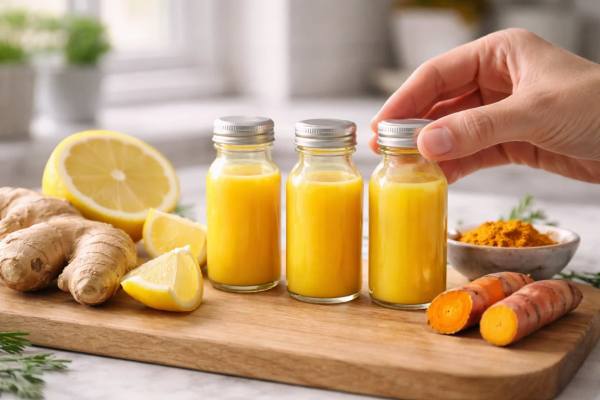
Wellness shots—those small, intense blends of ginger, turmeric, and lemon—have become a popular ritual during cold and flu season. They’re quick, portable, and they feel like you’re doing something proactive. But what do they actually do for immune health, and what claims drift into wishful thinking?
These ingredients contain bioactive compounds that can influence inflammation, oxidative stress, saliva production, and even how your throat and nasal passages perceive irritation. That can translate into real, practical benefits: comfort when you feel run down, a gentler cough, or a slightly easier time staying hydrated. What they rarely do is “boost immunity” in a dramatic, infection-proof way—especially at the small doses found in most homemade shots.
This guide breaks down mechanisms, realistic outcomes, smart recipes, and the situations where caution matters most.
Essential Insights
- Wellness shots can support comfort and symptom management, but they are unlikely to prevent infections on their own.
- Ginger and turmeric may help modulate inflammatory signaling and throat irritation, yet clinical evidence for treating common colds is limited.
- Lemon adds flavor and small amounts of vitamin C, but typical shot amounts are far below the gram-level doses studied for cold severity.
- Avoid wellness shots or modify them if you have reflux, gallbladder issues, kidney stone risk, or take certain blood thinners.
- Use a 30–60 mL shot once daily (or short-term at symptom onset), store cold, and prioritize food safety with fresh juices.
Table of Contents
- Immune-boosting claims and what shots can and cannot do
- Ginger and turmeric: what the compounds actually target
- Lemon, vitamin C, and acid: why they feel helpful
- Popular add-ins: honey, cayenne, and black pepper
- Making a wellness shot that is effective and safe
- Who should skip or modify wellness shots
Immune-boosting claims and what shots can and cannot do
“Boosting” the immune system sounds appealing, but the immune system is not a single dial you turn up. It’s a network that needs balance: strong enough to clear viruses, measured enough to avoid unnecessary inflammation. Many symptoms people want to avoid—congestion, sore throat, body aches—are partly the immune response itself, not just the virus.
A wellness shot is best understood as a supportive tool, not a shield. It can help in three realistic ways:
- Symptom comfort: Spicy, acidic ingredients increase saliva and throat lubrication. That can temporarily reduce the “raw” feeling that makes you swallow or cough.
- Behavior support: A shot can be a consistent reminder to hydrate, eat, and rest—habits that matter more than any single ingredient.
- Nutrient and polyphenol “top-up”: You may get small amounts of vitamin C and plant compounds that play roles in antioxidant activity and inflammatory signaling.
What wellness shots usually cannot do:
- Prevent infection by themselves. Exposure level, hand hygiene, sleep, stress, vaccination status (where appropriate), and underlying health have larger effects.
- Replace proven treatments. If you have influenza, COVID-19, pneumonia, asthma flare, or severe sinus infection, a shot is not a substitute for medical care.
- Deliver “clinical trial” doses. Many studies on nutrients or extracts use standardized, higher-dose preparations over weeks—not a single daily sip of fresh juice.
If you like the ritual, keep it—but aim for accurate expectations: think comfort, consistency, and nutrition support, not guaranteed immunity. If you want the most practical payoff, pair shots with basics that move the needle: adequate protein, regular sleep, and a plan for symptom care (saline rinse, honey for cough when appropriate, and OTC medicines used safely). You can also jump ahead to Making a wellness shot that is effective and safe to avoid common mistakes that make shots harsher than helpful.
Ginger and turmeric: what the compounds actually target
Ginger and turmeric earned their reputation because they contain biologically active compounds, not because they’re magical. Their effects are most believable in the lanes of inflammation, irritation, and digestion, which can overlap with respiratory comfort.
Ginger (Zingiber officinale) contains gingerols and shogaols—compounds linked to anti-inflammatory and antioxidant activity in lab and human research. In everyday terms, ginger can:
- Soothe nausea and support appetite. When you’re sick, appetite and fluid intake often drop; ginger’s anti-nausea reputation can indirectly support recovery by making intake easier.
- Reduce throat “tickle.” Ginger’s pungency can increase salivation and create a warming sensation that temporarily changes how the throat and upper airway perceive irritation.
- Support comfort rather than cure. The strongest day-to-day expectation is feeling a bit more “opened up” or settled, not ending an infection.
Clinical evidence specifically for ginger as a stand-alone treatment for acute respiratory infections is limited. That matters because it keeps claims grounded: ginger is plausible for comfort, but not well-proven as a reliable cold treatment.
Turmeric (Curcuma longa) is best known for curcumin, a compound studied for inflammatory pathways. The key complication is bioavailability: curcumin is poorly absorbed on its own. Many studies that show meaningful effects use enhanced forms (for example, specialized formulations) or consistent dosing over time. That does not mean turmeric in food is useless—it means a typical wellness shot may deliver modest amounts compared with research settings.
A more realistic way to frame turmeric in shots is:
- A small daily exposure to anti-inflammatory plant compounds
- Potential support for inflammatory balance over time
- Not an immediate “immune power-up”
If you’re using shots at the first sign of a cold, ginger is the ingredient most likely to provide noticeable, short-term comfort. Turmeric is more of a “long game” ingredient—better aligned with steady dietary patterns than emergency symptom relief.
One more practical point: both ginger and turmeric can be irritating in concentrated form. If your shot makes you cough sharply, feel burning in the chest, or triggers reflux, reduce the dose, dilute it, or take it with food. If you’re unsure whether it fits your health situation, start with Who should skip or modify wellness shots.
Lemon, vitamin C, and acid: why they feel helpful
Lemon plays two roles in wellness shots: chemistry (acidity and vitamin C) and compliance (it makes strong roots taste better). Both matter, but in different ways than most “immune shot” marketing suggests.
Vitamin C: Vitamin C is essential for immune function and tissue repair. In research on common colds, benefits—when they appear—tend to be modest, and often involve gram-level supplementation taken consistently. A typical wellness shot made with the juice of half a lemon might provide only a small fraction of that. So if the goal is “match the doses studied in trials,” lemon juice alone usually won’t get you there.
Still, lemon has meaningful value:
- Flavor that increases consistency. People are more likely to stick with a supportive habit if it tastes bright rather than bitter.
- Saliva and swallowing support. Sour flavors stimulate saliva, which can temporarily ease a dry throat and make coughing less frequent.
- Hydration encouragement. Lemon pairs naturally with water, warm tea, or diluted shots, nudging fluid intake upward.
Acidity: Lemon’s acidity can be a double-edged sword:
- Helpful if you feel “sticky” or dry in the throat.
- Not helpful if you have reflux, gastritis, mouth ulcers, or a very irritated sore throat—acid can sting.
If you notice burning in the chest, sour regurgitation, or a sore throat that feels worse after a lemon-heavy shot, consider these adjustments:
- Use less lemon (start with 1 tablespoon instead of 2).
- Dilute with warm water or take the shot after food.
- Rinse your mouth with plain water afterward to protect tooth enamel (especially if you sip slowly rather than take it quickly).
A subtle but important point: many people interpret the sharp, cleansing sensation of lemon as proof of “killing germs.” In reality, the sensation mostly reflects sensory effects—saliva, nerve stimulation, and acidity—not a reliable ability to stop a respiratory virus.
Used wisely, lemon is the “delivery system” that helps you actually take the shot—often the most important ingredient for real-world adherence.
Popular add-ins: honey, cayenne, and black pepper
Add-ins can make a wellness shot more tolerable—or more irritating. The best approach is to choose extras based on a specific goal: cough soothing, turmeric absorption support, or congestion sensation.
Honey: Honey is one of the most defensible add-ins for respiratory comfort. It coats the throat and can reduce cough frequency, especially at night. If your shot is meant for cough support, honey can be more than “just flavor.” Practical notes:
- Use 1 teaspoon in a 30–60 mL shot, or stir honey into warm water or tea if you prefer gentler delivery.
- Do not give honey to infants under 12 months.
Black pepper: Black pepper contains piperine, which can increase absorption of certain compounds, including curcumin. A “pinch” is enough; more is not better. Pepper also increases heat and may worsen reflux. If you take medications with narrow dosing margins, pepper and concentrated extracts can be a consideration because of how they interact with drug metabolism in the body—another reason moderation matters.
Cayenne or chili: Capsaicin can create a temporary “clearing” feeling by stimulating nerves in the nose and throat. This is largely sensory—useful for short-term relief, not a cure. If you are prone to heartburn, skip it.
Other common add-ins (choose cautiously):
- Cinnamon: Adds warmth and taste; can be irritating in large amounts.
- Garlic: Strong flavor and tradition; often hard on the stomach in concentrated shots.
- Apple cider vinegar: Highly acidic; more likely to irritate the throat or reflux than to help respiratory symptoms.
A practical way to build your shot is to pick one functional add-in and keep the rest simple:
- For cough comfort: ginger + lemon + honey
- For turmeric support: turmeric + tiny pinch of pepper + take with food
- For a gentler daily habit: ginger + lemon + warm water (no pepper, no chili)
If you’re making shots for a household, keep the base the same and let each person add honey, pepper, or spice at the end. That avoids “one-size-fits-all” shots that are too harsh for kids, too acidic for reflux, or too spicy for an irritated throat.
Making a wellness shot that is effective and safe
A good wellness shot is small, consistent, and not punishing. The goal is a dose you can repeat safely—not a burn-you-once challenge.
A balanced 30–60 mL base recipe (single serving):
- Fresh ginger: 10–20 g (about a 1–2 inch knob), peeled and chopped
- Fresh turmeric: 5–10 g (optional), or turmeric powder 1/4–1/2 teaspoon
- Lemon juice: 1–2 tablespoons
- Water: 2–4 tablespoons (more if you want it gentler)
- Optional honey: 1 teaspoon
- Optional black pepper: a small pinch
Blend with a small amount of water, then strain if you want a smoother shot. If you do not strain, sip slowly and rinse your mouth after.
How often to use it:
- For a routine habit: once daily, ideally with or after food.
- At the first hint of symptoms: once daily for 2–3 days, then reassess.
- If you get stomach burning, reflux, or diarrhea: reduce ginger and acid, dilute, or stop.
Wellness shots can backfire when people “stack” them with other concentrated products (high-dose vitamin C powders, multiple herbal extracts, spicy tonics). If you also take supplements, keep your shot simple and avoid doubling up on the same ingredient in multiple forms.
Storage and food safety (especially important):
Fresh juices and blended shots are perishable. Treat them like cut fruit:
- Refrigerate promptly in a clean, sealed container.
- Aim to use within 24–48 hours for quality and safety.
- If you batch-prep, freeze in small portions (ice cube trays work well), then thaw one serving at a time.
If you are immunocompromised, pregnant, older with frailty, or caring for someone at higher risk, be extra careful with unpasteurized juices from restaurants or shops. In those settings, pasteurized options or freshly made preparations with strict hygiene are safer choices.
Finally, consider the “gentle version” for sore throats: blend ginger and lemon into warm water instead of a concentrated shot. The benefits often come from consistency and comfort—not maximum intensity.
Who should skip or modify wellness shots
Wellness shots are food-based, but “food-based” is not the same as “risk-free,” especially when ingredients are concentrated. Use extra caution—or choose a diluted version—if any of these apply.
Reflux, gastritis, or ulcers: Lemon, ginger, pepper, and chili can aggravate burning, nausea, or chest discomfort. Try reducing lemon to 1 tablespoon, skipping pepper and chili, diluting with warm water, and taking it after food.
Gallbladder issues: Turmeric can stimulate bile flow in some people. If you have gallstones, biliary colic, or a history of gallbladder problems, turmeric-heavy shots may not be a good fit.
Kidney stone risk: High-dose vitamin C supplements can raise stone risk for some people, and turmeric contains oxalates. A small culinary amount is often tolerated, but concentrated daily turmeric shots may be worth avoiding if you have recurrent calcium-oxalate stones or have been advised to limit oxalate.
Blood thinners and bleeding risk: Ginger and turmeric are often discussed for potential effects on platelet function and bleeding tendency. If you take anticoagulants or antiplatelet medications, have a bleeding disorder, or have surgery planned, keep doses conservative and discuss regular use with a clinician.
Diabetes medications: Ginger may modestly lower blood glucose in some people. If you use insulin or other glucose-lowering medications, monitor for patterns—especially if you add honey or drink shots on an empty stomach.
Pregnancy and breastfeeding: Ginger is commonly used for nausea, but concentrated herbal habits should still be discussed with an obstetric clinician—particularly if you have reflux, gestational diabetes, or are using other supplements. When in doubt, choose a diluted, food-level approach.
Young children: Concentrated shots can irritate the stomach and throat. For kids, think “warm diluted tea-like” rather than “shot.” And remember: no honey under 12 months.
When to stop self-care and seek medical guidance: Contact a healthcare professional urgently if you have shortness of breath, chest pain, confusion, dehydration, a fever that persists, coughing up blood, or symptoms that rapidly worsen—especially if you are pregnant, immunocompromised, or have chronic lung or heart disease.
Used thoughtfully, wellness shots can be a comforting tool. Used aggressively, they can irritate the very tissues you’re trying to soothe. If your body consistently dislikes them, that is useful feedback—switch to warm fluids, soups, and gentle symptom care rather than pushing through.
References
- Safety and effectiveness of ginger for acute respiratory infections: A systematic review of randomized controlled clinical trials – ScienceDirect 2026 (Systematic Review)
- Vitamin C reduces the severity of common colds: a meta-analysis – PMC 2023 (Meta-analysis)
- Effects of Highly Bioavailable Curcumin Supplementation on Common Cold Symptoms and Immune and Inflammatory Functions in Healthy Japanese Subjects: A Randomized Controlled Study – PubMed 2024 (RCT)
- Honey for acute cough in children — a systematic review – PMC 2023 (Systematic Review)
- Safer Food Choices for People With Weakened Immune Systems | Food Safety | CDC 2024 (Guidance)
Disclaimer
This article is for general educational purposes and does not provide medical advice, diagnosis, or treatment. Wellness shots are not a substitute for vaccinations, prescribed medications, or care from a licensed clinician—especially for influenza, COVID-19, pneumonia, asthma or COPD flare-ups, or other serious respiratory conditions. If you are pregnant, immunocompromised, have a chronic medical condition, or take medications that affect bleeding or blood sugar, talk with a healthcare professional before using concentrated ginger, turmeric, or supplement-like preparations regularly. Seek urgent care for severe symptoms such as breathing difficulty, chest pain, confusion, dehydration, or rapidly worsening illness.
If you found this helpful, consider sharing it on Facebook, X (formerly Twitter), or any platform you prefer so others can make safer, more informed choices.