Incense Root, commonly associated with the galbanum-producing plant Ferula galbaniflua, sits at the crossroads of herbal medicine, sacred incense, and perfumery. It is not a leafy kitchen herb or a simple tea plant. Its main medicinal material is the aromatic oleo-gum-resin collected from incisions near the lower stem and root crown, which is why the common name can be a little misleading. What people usually use is the resin, not the plain dried root.
That distinction helps explain both its appeal and its limits. Traditionally, galbanum has been used for respiratory congestion, sluggish digestion, spasmodic discomfort, skin applications, and ritual fumigation. Modern research adds promising data on key compounds such as beta-pinene, sesquiterpene coumarins, and galbanic acid, along with antioxidant, antimicrobial, and anti-inflammatory activity. Still, the strongest evidence remains preclinical, and naming overlaps with Ferula gummosa complicate the picture.
So the best way to approach Incense Root is with curiosity and restraint: it may offer useful support, especially in aromatic and topical forms, but it is not a casually dosed everyday herb.
Quick Overview
- Incense Root is most plausibly useful for aromatic respiratory support and selective topical skin care.
- Its most interesting properties are anti-inflammatory, antimicrobial, and resin-based digestive support.
- A cautious starting range for aromatherapy is 1 to 2 drops per diffusion session.
- Avoid medicinal use during pregnancy, breastfeeding, in children, or if you have fragrance-triggered asthma or very reactive skin.
Table of Contents
- What is Incense Root
- Key ingredients and properties
- What can it help with
- How is it used
- How much should you use
- Side effects and who should avoid it
- What the evidence actually shows
What is Incense Root
Incense Root refers to Ferula galbaniflua, an aromatic member of the carrot family valued for its oleo-gum-resin, commonly called galbanum. In older herb writing, Persian medicine sources, and trade discussions, the plant may also be discussed alongside Ferula gummosa. That naming overlap matters because some modern sources treat them as closely related or even overlapping galbanum sources, while metabolomic work suggests there are still meaningful chemical differences between them. For readers, the practical lesson is simple: when a product says “galbanum,” it may not always reflect one perfectly stable botanical identity.
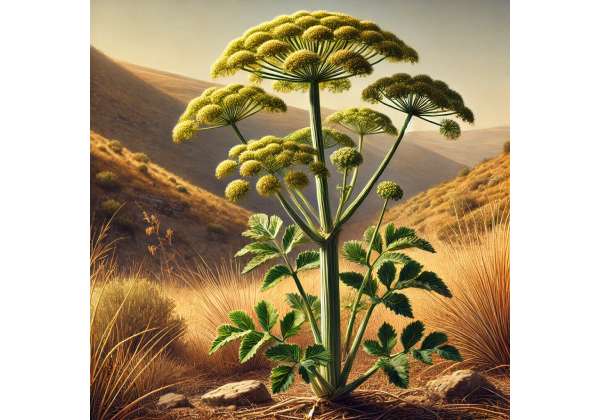
The plant is native to western and central Asia and develops a strong taproot, umbrella-shaped flowering structure, and resin-rich tissues. When the lower stem or root crown is cut, the plant exudes a thick aromatic material that hardens into the resin used in perfumery, incense, and traditional medicine. That resin has a sharp, green, balsamic, earthy scent unlike sweet floral oils. It is often described as deep, medicinal, and penetrating.
Historically, galbanum occupied a rare place. It was not only a medicine but also an incense ingredient and ritual material. This gave it a double identity: it was used for bodily complaints such as congestion, spasm, sluggish digestion, and localized pain, while also being burned for purification, religious practice, and scent. That long cultural record is one reason modern readers still encounter galbanum in herbal lists even though it is less familiar than ginger, mint, or chamomile.
Another important point is that Incense Root is best understood as a resin medicine rather than a simple herb tea. That affects how it behaves. Resinous plants tend to be chemically dense, aromatic, and more preparation-sensitive than leafy herbs. A drop of essential oil, a resin tear, a tincture, and a diluted ointment are not interchangeable forms. They contain different fractions of the plant, and each one changes both effect and safety.
That is also why Incense Root is best compared with other classical aromatic resins, such as frankincense as another medicinal resin, rather than with everyday culinary herbs. The shared theme is not only aroma. It is the way resin medicines combine ritual history, potent chemistry, and a need for careful handling.
In plain terms, Incense Root is an old medicinal resin plant with genuine pharmacological promise, a distinctive aromatic profile, and an evidence base that is suggestive but still incomplete. That makes it worth understanding, but not worth overselling.
Key ingredients and properties
The chemistry of Ferula galbaniflua helps explain why it has held attention for so long. Galbanum is not built around one famous compound. Instead, it contains a layered mix of volatile aroma molecules, resin acids, and sesquiterpene coumarins that likely work together.
One of the clearest recent findings is that the volatile fraction is rich in beta-pinene, with smaller but meaningful amounts of compounds such as bulnesol and guaiol. That matters because beta-pinene is associated with the crisp, green, penetrating scent that makes galbanum so recognizable in perfumery and aromatherapy. Guaiol and bulnesol add a more woody, grounded quality. From a practical standpoint, these compounds help explain why the aroma feels clearing, sharp, and somewhat bitter rather than sweet or soothing in the usual floral sense.
The non-volatile fraction is just as important. Modern profiling has identified sesquiterpene coumarin derivatives such as galbanic acid, farnesiferol A, gummosin, and feselol among the major compounds. These constituents are especially interesting because Ferula species are often studied for anti-inflammatory, antimicrobial, cytotoxic, and enzyme-modulating actions linked to this broader chemical family.
For a reader trying to connect chemistry to real-world use, the key properties can be grouped like this:
- volatile terpenes that drive aroma and inhalation effects
- resin constituents that shape bitter, warming, and sticky topical behavior
- sesquiterpene coumarins associated with much of the plant’s laboratory bioactivity
- antioxidant compounds that may support skin-focused and protective applications
This mixed profile leads to a useful insight: galbanum is chemically better suited to concentrated aromatic and resin preparations than to casual food-like use. It is not the kind of plant people usually benefit from by tossing a large amount into tea. Its medicinal identity is more about concentrated resin intelligence than gentle herbal bulk.
That distinction also explains why product form changes everything. A resin extract emphasizes different compounds than an essential oil. An essential oil is heavier in volatile aromatics. A resin extract keeps more of the heavier, less fragrant constituents. A salve made from a resin infusion behaves differently from a diffuser oil even when both are sold under the same plant name.
In practice, the core medicinal properties most often associated with Incense Root are:
- anti-inflammatory potential
- antimicrobial activity
- aromatic respiratory support
- carminative and antispasmodic tradition
- selective topical skin support
Still, a good herb profile does not stop at listing properties. It asks how strong those effects really are in humans. That is where caution enters. The chemistry is strong enough to justify interest, but not strong enough to justify broad medical promises. For readers who want a gentler digestive and respiratory herb with a far simpler use profile, peppermint for digestive and respiratory support is often easier to use and easier to tolerate.
What can it help with
The most honest answer is that Incense Root can probably help in a few traditional and practical ways, but the strength of evidence depends heavily on form, preparation, and how closely the product matches the galbanum literature. The most grounded benefits are not dramatic. They are supportive.
The first likely area is respiratory comfort. Galbanum’s sharp, resinous aroma makes it a classic candidate for inhalation-style use. In traditional systems, it has been associated with cough, chest congestion, thick mucus, and a sense of respiratory heaviness. Modern readers should understand this as support, not treatment. It may help open the sensory experience of breathing or complement steam and aromatic routines, but it is not a substitute for medical care in asthma, pneumonia, or severe shortness of breath.
The second area is digestion. Traditional uses often describe galbanum as warming, bitter, carminative, and antispasmodic. That profile fits complaints such as gas, sluggish digestion, post-meal fullness, and intestinal cramping more than severe gastrointestinal disease. It makes sense for resin medicines like this to show up in older formulas for stagnation-type symptoms rather than as gentle daily tonics.
The third area is topical skin support. Recent research on Ferula galbaniflua points to antioxidant and antimicrobial activity, along with effects on collagen-related healing markers in experimental settings. This does not mean galbanum cures wounds or inflammatory skin disorders on its own, but it does give a more modern reason for why the resin has been used externally. The best fit is probably localized support in well-formulated products, not direct application of strong resin or undiluted oil.
The fourth area is general inflammatory discomfort. Traditional sources describe galbanum as a pain-relieving and inflammation-relieving resin. Modern Ferula research gives that claim some mechanistic plausibility, but the evidence is still not strong enough to put Incense Root in the same category as well-studied anti-inflammatory supplements.
Realistic outcomes matter here. With Incense Root, readers should expect:
- a stronger aroma effect than a nutrient effect
- a more situational role than a daily wellness role
- better fit for congestion, topical support, and sluggish digestion than for long-term disease treatment
- promise in lab and traditional use that is larger than the current human trial evidence
It is also worth saying what it is not. It is not a validated cancer treatment, not a proven brain booster, and not a standard respiratory medicine. Galbanum appears in these conversations mostly because the chemistry is interesting and some older use patterns are broad. That is very different from having a clear clinical recommendation.
A practical benchmark helps. If your goal is simple skin soothing, a more forgiving herb such as calendula for topical skin support may be easier to use. If your goal is digestive comfort, there are simpler options. Incense Root is best reserved for readers who specifically want a resin-based aromatic herb and understand its limits.
How is it used
Incense Root is one of those plants where the form decides the outcome. The same botanical source can show up as raw resin tears, essential oil, tincture, aromatic blend, ointment, or a component in traditional compound formulas. That range is useful, but it also creates confusion.
The most traditional form is the resin itself. Small hardened pieces of galbanum have historically been burned, softened, infused, or blended into complex preparations. Burning emphasizes aroma and atmosphere. Resin-water or resin-alcohol preparations emphasize medicinal use. Chewing or swallowing crude resin has a history in some traditions, but it is not the most practical or beginner-friendly modern approach because quality and dose vary so much.
Essential oil is the most common modern use. This form captures the aromatic fraction and is especially relevant for diffusion, inhalation, and highly diluted topical application. It is often chosen for respiratory rituals, tense environments, and perfumery. The main advantage is intensity. The main downside is that essential oils are easy to overuse and much easier to irritate skin with than many people expect.
Topical blends are another important use case. Galbanum oil or resin may be incorporated into ointments, massage oils, or salves aimed at stiff areas, congested chests, or minor skin support. In this setting, formulation matters more than brand mystique. A carefully diluted product in a bland base is usually wiser than a highly fragrant, multi-oil blend used aggressively on sensitive skin.
A simple way to think about the practical uses is this:
- Use diffusion or inhalation when the goal is aromatic respiratory support.
- Use a diluted topical preparation when the goal is localized skin or muscle support.
- Use internal products only when the species, preparation, and dose are clearly described.
- Avoid treating every galbanum product as though it delivers the same chemistry.
That last point is crucial. Resin and essential oil are related, but not identical. A diffuser blend may be useful for scent and respiratory ritual while offering very little of the heavier resin compounds linked to some anti-inflammatory discussions. By contrast, a resin extract may be pharmacologically richer but less pleasant to inhale.
Another good practical rule is not to confuse antiquity with usability. Just because galbanum is old does not mean every old use translates well into modern self-care. Some historical preparations belonged to professional traditions, not casual household routines. That is why modern readers should prefer clearer, lower-risk forms over improvised home extraction.
If your interest is mainly localized skin comfort, many people do better starting with plants that are easier to formulate and easier to patch-test. Incense Root is more specialized. It can be useful, but it rewards precision and tends to punish guesswork.
How much should you use
Dosage is the most difficult part of any honest Incense Root guide because there is no universally accepted, evidence-based human dosing standard for Ferula galbaniflua across all forms. That does not mean the herb cannot be used. It means the user has to think in terms of form-specific caution rather than one neat universal number.
For inhalation, less is usually better. A cautious starting range is 1 to 2 drops of essential oil in a diffuser for about 15 to 30 minutes. This is enough for most people to judge tolerance and scent strength. Because galbanum is intense, more is not always more effective. Stronger diffusion can become harsh or headache-provoking instead of helpful.
For topical use, dilution matters most. A practical starting range is about 0.25% to 1% essential oil in a carrier oil, balm, or unscented cream. This means roughly 1 drop per 20 mL at the low end up to about 5 or 6 drops per 30 mL at the higher end, depending on the drop size and the product. That is not a license to self-treat broken skin or inflammatory rashes. It is simply a safer range for localized external use on intact skin.
For internal use, the picture is much less clear. Resin-based capsules, tinctures, and traditional preparations do exist, but they vary in species identity, resin fraction, and strength. Because of that, there is no well-validated oral dose readers can apply confidently across products. Any oral use should stay conservative and ideally be guided by a clinician or an experienced herbal professional who knows the exact preparation.
Timing depends on the goal:
- diffusion is often best in short sessions during congestion or in the evening
- topical use fits targeted, short-term application rather than constant reapplication
- oral use, when used at all, should begin with the lowest labeled amount and be reassessed after several days
There is also a strategic reason to stay modest. Resin herbs tend to be better for a clearly defined need than for “more is better” wellness routines. Incense Root is not the sort of plant that usually rewards aggressive self-dosing. It is more like a strong spice or aromatic resin than a daily tonic tea.
If you want an herb with easier day-to-day dosing, simpler digestive use, and a much larger comfort zone, ginger for digestive support and active compounds is a much easier benchmark. That comparison is helpful because it reminds readers that not every medicinal plant is designed for routine, highly flexible home use.
The safest dosing mindset for Incense Root is therefore modest, form-specific, and reversible: start low, use briefly, and stop if the product feels harsher than helpful.
Side effects and who should avoid it
Incense Root is not one of the gentlest herbal materials. That does not make it unsafe by definition, but it does mean side effects are easier to trigger when the wrong form or dose is used. The two biggest concerns are irritation and uncertainty.
The most common side effects are likely to be sensory and local:
- skin irritation
- burning or stinging with undiluted topical use
- headache from overly strong diffusion
- nausea or bitter stomach upset with internal preparations
- throat or airway irritation in fragrance-sensitive users
Because galbanum is aromatic and chemically dense, the same traits that make it useful can also make it harsh. Essential oil is the highest-risk form for everyday self-use. It is concentrated, potent, and easy to overapply. Direct skin use without dilution is a poor idea. So is prolonged inhalation in a closed room for someone who already reacts badly to strong scents.
Another safety issue is product ambiguity. Some items sold as galbanum or Ferula extracts do not clearly separate Ferula galbaniflua from related species, and the literature itself sometimes overlaps with Ferula gummosa. That matters because safety depends partly on knowing what material you are actually using. A vague label means a vaguer safety profile.
Who should avoid medicinal use, or use it only with professional supervision?
- pregnant people
- breastfeeding people
- children
- people with fragrance-triggered asthma
- those with eczema-prone or highly reactive skin
- anyone with a history of contact allergy to essential oils or resins
- people taking multiple daily medicines and using other concentrated botanicals at the same time
Pregnancy deserves special caution. Traditional resin medicines have sometimes been used in ways that modern readers should not imitate, and there is not enough reassuring evidence to recommend casual use in pregnancy or breastfeeding.
Interaction data are also limited. That does not prove there are no interactions. It means readers should be more careful, not less. If someone is already using several supplements, anti-inflammatory herbs, medicated creams, or fragrance-heavy products, adding galbanum increases complexity.
A good practical rule is to patch-test any topical product, use short diffusion sessions first, and treat oral use as the most uncertain form. Readers sometimes assume that because a plant has sacred or ancient status, it must be gentle. Resin herbs often prove the opposite: they may be deeply traditional precisely because they are potent enough to matter.
When safety is a priority, it helps to compare Incense Root with better-known resin herbs such as Boswellia-style resin use and safety. The point is not that they are identical. It is that resin medicines demand more precision than many casual plant remedies do.
What the evidence actually shows
The evidence for Incense Root is promising but uneven. The strongest parts of the record are chemistry, traditional use, and preclinical activity. The weakest parts are standardized human dosing and condition-specific clinical proof.
On the chemistry side, the case is solid. Modern profiling of galbanum clearly shows a meaningful mix of volatile aromatics and non-volatile sesquiterpene coumarins. This gives the plant a credible pharmacological basis rather than a purely folkloric one. It also helps explain why older traditions associated galbanum with congestion, pain, digestion, and skin use.
On the experimental side, the data are encouraging. Ferula galbaniflua and related galbanum literature point to antioxidant, antimicrobial, and anti-inflammatory effects. Recent work even suggests topical relevance for skin inflammation models and collagen-related healing markers. That is enough to justify real scientific interest.
Where things become more limited is human research. There is some clinical signal, including topical galbanum oil used alongside dry cupping in hospitalized COVID-19 patients, but this is not the kind of clean, condition-specific, stand-alone evidence that would justify firm recommendations for routine use. The intervention was combined, the context was unusual, and it does not establish a broad standard of care.
The taxonomy issue also affects the evidence. Some literature discusses Ferula gummosa as a galbanum source, while other work separates it metabolically from Ferula galbaniflua. That means claims can drift across names too easily. Readers should be careful with articles that speak as though all galbanum research refers to one perfectly uniform plant source.
A balanced evidence ranking looks like this:
- Strongest support: phytochemistry and traditional-use plausibility.
- Moderate support: laboratory antimicrobial, antioxidant, and anti-inflammatory activity.
- Early but limited support: topical and aromatic human use in specialized settings.
- Weak support: standardized oral dosing, disease-specific therapeutic claims, and broad supplement-style promises.
That ranking leads to a practical conclusion. Incense Root is best viewed as a specialized aromatic resin with selective supportive value, not as a first-line everyday herb. It makes sense in focused topical or inhaled applications and in historically informed traditions, but the evidence does not justify casual all-purpose claims.
For readers who mainly want a plant for predictable aromatic respiratory rituals, a more familiar option such as eucalyptus often has a much clearer self-care path. Incense Root remains interesting because it is older, denser, and more chemically complex. But complexity is not the same thing as proof.
In the end, the science supports respect more than hype. Ferula galbaniflua is a real medicinal plant with real activity, but it still belongs in the category of carefully used traditional resin, not broad modern cure-all.
References
- Chemical Profiling of Volatile and Non‐Volatile Fractions of Galbanum (Ferula galbaniflua Boiss.) Used in Perfumery 2025
- Treatment of Skin Inflammation: Antioxidant and Antimicrobial Properties of Ferula galbaniflua Boiss and Its Active Compounds 2025
- Metabolic Profile, Bioactivities, and Variations in the Chemical Constituents of Essential Oils of the Ferula Genus (Apiaceae) 2021 (Review)
- Metabolic differences of two Ferula species as potential sources of galbanum: An NMR-based metabolomics study 2021
- Efficacy of topical galbanum oil with dry cupping in hospitalized COVID-19 patients: A randomized open-label clinical trial 2023 (Clinical Trial)
Disclaimer
This article is for educational purposes only and does not replace medical advice, diagnosis, or treatment. Incense Root and galbanum preparations are chemically active, can irritate skin and airways, and do not have a well-established universal dosing standard. Essential oil should be used with particular caution, especially on sensitive skin or around people with asthma, pregnancy, or fragrance intolerance. Do not use this herb to self-treat persistent respiratory symptoms, significant pain, skin infections, or chronic digestive disease without qualified guidance.
If this article was helpful, please share it on Facebook, X, or your preferred platform so other readers can find a careful, evidence-aware guide to Incense Root.