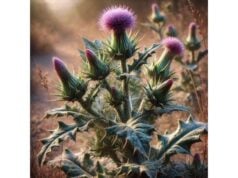
Indian elecampane, Inula racemosa, is a fragrant Himalayan root herb best known in Ayurveda as pushkarmool. For generations it has been valued for breathlessness, cough, chest discomfort, sluggish digestion, and inflammatory complaints, especially when cold weather or heavy mucus seemed to worsen symptoms. Modern interest in the plant centers on its sesquiterpene lactones, especially alantolactone and isoalantolactone, along with its broader aromatic and bitter root chemistry. These compounds help explain why the herb has drawn attention for respiratory support, cardioprotective potential, antimicrobial effects, and metabolic activity in laboratory research.
Yet Indian elecampane is not a simple everyday supplement. Its strongest reputation comes from traditional practice and preclinical studies, while human evidence remains limited and uneven. It is also a plant that raises practical issues around allergy, sourcing, and adulteration. The most useful way to approach it is with respect for both its long history and its current limits: promising, distinctive, and worth knowing, but not a free pass for casual self-prescribing.
Quick Summary
- Indian elecampane is traditionally used for cough, breathlessness, and chest discomfort.
- Its root contains alantolactone and isoalantolactone, compounds linked to anti-inflammatory and antimicrobial activity.
- Experimental oral extract studies often use about 100 to 500 mg/kg, but this is not a validated human dose.
- People with ragweed-family allergies, pregnancy concerns, or heart and diabetes medicines should avoid self-medicating.
- Sourcing matters because Indian elecampane is sometimes confused or traded alongside similar aromatic roots.
Table of Contents
- What is Indian elecampane
- Key compounds and actions
- Does Indian elecampane help
- How Indian elecampane is used
- How much to use
- Safety and who should avoid it
- What the evidence really says
What is Indian elecampane
Indian elecampane is a perennial medicinal herb from the daisy family, Asteraceae, and grows mainly in the western Himalayas. It is known in Ayurveda as pushkarmool, a name often associated with the plant’s thick aromatic root and its long use in disorders of the chest and circulation. In older herbal traditions, the root and rhizome are the medicinal parts most often discussed. Their scent, bitterness, and warming character help explain why the herb became linked with cold, heavy, congestive patterns rather than with delicate tonic use.
One of the first things worth understanding about Indian elecampane is that it is not the same as European elecampane, even though the names sound similar. The plants are related, but Inula racemosa has its own Ayurvedic identity, its own geographic story, and a different clinical emphasis. In practice, Indian elecampane is more strongly associated with precordial chest pain, cough, dyspnoea, digestive stagnation, and certain cold-weather complaints. That makes it a more specialized root than many general wellness herbs.
The traditional picture of the herb is unusually broad. Classical and regional sources describe it for:
- breathlessness and cough,
- chest pain and heaviness,
- digestive weakness and gas,
- inflammatory pain,
- some metabolic and circulatory complaints,
- external use for wounds in certain traditions.
That list can sound almost too broad to be credible, but it becomes more understandable when the plant is viewed as an aromatic bitter with both respiratory and cardiovascular associations. In herbal practice, those categories often overlap. A herb that opens breathing, eases tightness, stimulates digestion, and reduces stagnation can acquire a wide reputation over time.
There is also a practical modern issue many readers never hear about: authenticity. Indian elecampane is a high-value Himalayan medicinal root, and recent quality-control research shows that confusion and substitution with similar roots remain real concerns. That matters because a person can only judge a herb fairly if the raw material is genuine. With a plant like this, sourcing is not a small side issue. It shapes safety, potency, and credibility from the start.
Another reason Indian elecampane stands out is ecological. It is now frequently described as a critically endangered or at least conservation-sensitive medicinal species in parts of its native range. That makes sustainable sourcing more than an ethical detail. It is part of responsible herbal use.
Taken together, Indian elecampane is best understood as a potent traditional Himalayan root medicine: aromatic, bitter, warming, and increasingly studied, but also limited by inconsistent product quality and incomplete modern standardization.
Key compounds and actions
The best-known active compounds in Indian elecampane are alantolactone and isoalantolactone, two sesquiterpene lactones that appear again and again in both older phytochemical work and recent extraction studies. These are the names most readers will see in scientific papers, and they help explain why the herb has drawn attention for anti-inflammatory, antimicrobial, cardiometabolic, and even experimental anticancer research. They also explain why the plant deserves caution: sesquiterpene lactones are often biologically active enough to be useful and irritating at the same time.
Indian elecampane does not depend on those two compounds alone. The root also contains a wider mix of sesquiterpenes, volatile and semi-volatile aromatic constituents, and minor metabolites that may contribute to its traditional respiratory and digestive actions. More recent compound-isolation research has shown that the herb contains a broader sesquiterpene profile than older simplified summaries suggest. That is important because it means Indian elecampane is not a one-molecule remedy. It is a layered medicinal root whose character comes from a cluster of related compounds.
From a practical standpoint, the chemistry points toward several plausible action patterns:
- Anti-inflammatory activity
Sesquiterpene lactones often interact with inflammatory signaling pathways, and Indian elecampane fits that pattern well. - Antimicrobial activity
Experimental work suggests that some root constituents have activity against selected microbes, especially those relevant to respiratory or mucosal use. - Cardiovascular effects
Traditional claims around chest pain and circulation have been partly explored through studies looking at beta-blocking-like behavior, ischemic protection, and lipid-related stress. - Digestive and carminative effects
The aromatic, bitter root profile supports the old idea that the herb can help move stagnant digestion and reduce heaviness. - Potential metabolic effects
Some older and newer work suggests effects on glucose handling and oxidative stress, though this remains far from routine clinical use.
This chemical story helps place the herb beside other roots known for strong, bitter, physiologically active profiles. In that sense, Indian elecampane behaves more like a focused medicinal root than a gentle daily tea herb. Readers who know the tradition of bitter digestive roots will recognize the same general principle: strong roots often do many things at once because they act through aroma, bitterness, and secondary metabolites rather than through one simple nutrient effect.
A useful caution follows from the same chemistry. Potent compounds can create both benefits and side effects. Alantolactone and isoalantolactone are part of what makes the herb valuable, but they are also part of what makes it unsuitable for casual overuse. The chemistry supports its reputation, yet it also argues for moderation. Indian elecampane is best respected as a pharmacologically interesting root with real traditional depth, not as a harmless all-purpose botanical.
Does Indian elecampane help
Indian elecampane may help in several traditional problem areas, but the strongest case still comes from a blend of historical use and preclinical research rather than from large modern human trials.
Its most distinctive traditional role is in respiratory support. The root has long been used for cough, dyspnoea, chest congestion, and heavy breathing, especially when symptoms feel tight, cold, or mucus-laden. This makes sense in herbal terms. A bitter, aromatic, warming root can stimulate movement, ease heaviness, and support a clearer airway sensation. It is not identical to modern expectorant drugs, but its traditional logic is coherent.
The second major traditional role is chest discomfort and circulatory strain. Indian elecampane has one of the more unusual reputations among Ayurvedic herbs because it is often described for precordial pain and heart-related complaints. Older human work and animal studies have helped keep that reputation alive, though not enough to turn it into a standard evidence-based cardiac therapy. That is an important distinction. The herb is interesting here, not definitive.
The third realistic area is digestive heaviness and gas. Many respiratory herbs in traditional systems also support digestion, especially when the digestive tract is seen as part of the same cold, damp, stagnant pattern driving cough and breathlessness. Indian elecampane fits that logic well. It is often described as carminative and digestive, which makes its broader use easier to understand.
Experimental benefits that appear plausible include:
- reduced inflammatory stress,
- support against ischemic or oxidative injury in animal models,
- mild antimicrobial activity,
- digestive stimulation,
- support for tight, congestive respiratory patterns.
What it probably does not justify is the kind of oversized marketing often found around niche roots. Indian elecampane is not a proven cure for angina, asthma, chronic bronchitis, or diabetes. It should not replace cardiac evaluation, inhaler therapy, or standard treatment when symptoms are significant. Its role is much better framed as supportive and traditional than as definitive and modern.
A good comparison is with other herbs used for thick, stuck respiratory complaints. Some people may be more familiar with great mullein for traditional lung support, which is gentler and softer in character. Indian elecampane is different. It is more pungent in intention, more root-based, and historically closer to chest tightness with circulatory overtones than to a simple soothing demulcent.
So does it help? Quite possibly, especially for the pattern it was traditionally chosen for. But the strongest answer is a careful one: it may help as a focused traditional root for respiration, chest heaviness, and digestion, while the broader disease-level claims still wait for better human evidence.
How Indian elecampane is used
Indian elecampane is almost always used as a root herb, and the form matters. The root and rhizome are the main medicinal parts in traditional practice, and they are usually prepared in ways that fit the herb’s strong, aromatic, warming nature rather than in delicate infusions.
Traditional forms include:
- Powdered root
This is one of the most familiar Ayurvedic formats. The powder may be taken on its own or combined with other herbs. - Decoction
Because the root is dense and aromatic, a decoction is often more logical than a light infusion. Boiling helps pull out the bitter and warming constituents. - Polyherbal formulas
Indian elecampane is commonly combined with other herbs for breathing, congestion, digestion, or circulation. - External paste
Some traditional sources describe external use of the root paste for wounds or local applications.
The way the herb is paired in formulas says a lot about how it is traditionally understood. It is not usually used as a bland background herb. Instead, it is placed beside other active roots, aromatics, or resins when the goal is to shift a stuck condition. For respiratory work, it may be blended with herbs that soften mucus, warm the chest, or support easier breathing. For digestive stagnation, it may be paired with warming carminatives. This pattern suggests that Indian elecampane is often used as a directional herb, one that pushes movement where things feel tight, heavy, or obstructed.
That also means it is not always the best first choice for sensitive individuals. A very dry, overheated, irritated person may not respond to it the way someone with cold, damp, congestive symptoms might. Traditional systems often make these distinctions intuitively even when modern readers do not.
For practical modern use, a few rules help:
- choose authenticated root material,
- prefer clearly labeled products,
- use it for specific goals rather than general daily wellness,
- avoid improvising if you have heart or medication concerns.
It may also help to compare Indian elecampane to more familiar respiratory herbs such as licorice in traditional chest formulas. Licorice is softer, sweeter, and more coating. Indian elecampane is more aromatic, bitter, and driving. The difference matters in both effect and safety.
The biggest mistake is treating the herb like a generic powder that can be added casually to any wellness routine. Its traditional use is purposeful. It is usually brought in because there is a reason: heaviness, breathlessness, chest discomfort, sluggish digestion, or a cold-pattern complaint that needs more than a soothing tea. That focused use is part of its identity, and it is also part of what keeps it from being overused.
How much to use
There is no well-established modern human dose for Indian elecampane that is supported by strong contemporary clinical trials. That fact should frame the whole dosage conversation.
What exists instead is a combination of traditional use patterns, older human data, and animal-study dosing. In experimental work, root extracts have often been studied in the range of 100 to 500 mg/kg, depending on the model. For example, recent liver-protection work examined three oral doses in that range, while other cardioprotective and mechanistic studies used extract pretreatment rather than a consumer-style dose. These numbers are useful scientifically, but they are not a safe direct conversion for self-treatment.
Traditional practice is more flexible and less standardized. Root powder and decoction are the usual forms, but the exact amount often depends on the formula, the constitution of the person, and the experience of the practitioner. That is one reason the herb should not be handled like a plug-and-play supplement. The preparation method changes the strength, and the therapeutic intent changes the context.
A practical way to think about dose is by category:
- Research dose
Often reported in animals at 100 to 500 mg/kg extract equivalents. - Traditional human use
Usually based on root powder or decoction, but not standardized by modern trial methods. - Commercial product use
Best followed according to the label only when the root is clearly identified and the product is reputable. - Self-experimentation
Least advisable when the person has cardiac, respiratory, blood sugar, or allergy concerns.
Timing may matter as much as quantity. Traditionally, Indian elecampane is not usually treated as an indefinite daily tonic. It is more often used for a phase of symptoms: cough with heaviness, chest tightness, weak digestion, or a related complaint. Once the target problem shifts, the herb often does too. That is a more intelligent model than taking it daily for months without a clear reason.
Another useful insight is that the herb’s intensity is partly qualitative. A well-prepared aromatic root decoction can feel stronger than a label suggests because bitterness and warmth affect the body quickly. That is one more reason to stay cautious.
For readers who want a clear answer, it is this: use only a clearly identified product, avoid making human dose assumptions from animal studies, and treat traditional powder or decoction use as practitioner-guided rather than self-validating. With Indian elecampane, the lack of a modern dose standard is not a minor missing detail. It is a central safety fact.
Safety and who should avoid it
Indian elecampane is best approached as a potent traditional root, not a casual wellness herb. Its root chemistry gives it interest, but it also creates meaningful safety questions.
The first concern is allergy and sensitivity. Because the herb belongs to the Asteraceae family and contains sesquiterpene lactones such as alantolactone and isoalantolactone, it may trigger irritation or allergic responses in susceptible people. Anyone with known sensitivity to ragweed-family plants or to sesquiterpene-lactone–rich herbs should be especially careful.
The second concern is cardiovascular interaction potential. Older human and animal work suggests beta-blocking-like and negative chronotropic effects may contribute to the herb’s traditional reputation for chest symptoms. That is exactly why self-medicating with it alongside prescription heart medicines, blood-pressure medicines, or anti-anginal therapies is not a small decision. Traditional does not mean automatically compatible.
The third concern is metabolic effects. Some studies suggest effects on glucose handling. That may sound attractive to readers interested in cardiometabolic herbs, but it also means the herb could theoretically complicate diabetes treatment or interact with glucose-lowering medications.
People who should be especially cautious include:
- pregnant or breastfeeding people,
- anyone with ragweed-family allergies,
- people using cardiac or blood-pressure medicines,
- people taking diabetes medicines,
- those with chronic reflux or strong gastric sensitivity,
- anyone with unstable chest pain or shortness of breath.
Possible side effects may include:
- digestive irritation,
- heartburn-like discomfort from strong root preparations,
- allergy or skin sensitivity,
- lightheadedness if combined unwisely with other active remedies,
- unpredictable effects from poor-quality or substituted raw material.
Product authenticity is a safety issue too. Recent quality-control work shows that Indian elecampane can be confused in trade with other aromatic roots. A mislabeled product does not just reduce effectiveness. It may change the entire risk profile.
A useful comparison can be made with other Asteraceae herbs such as chamomile and related ragweed-family plants, where family-level sensitivity can matter more than people expect. Indian elecampane is not as commonly discussed in this way, but the principle still applies.
The bottom line is simple: do not use Indian elecampane casually if symptoms are cardiac, unexplained, or medication-sensitive. Its strongest traditional uses are also the ones most likely to overlap with conditions that deserve professional evaluation. That is not a reason to dismiss the herb. It is a reason to use it intelligently.
What the evidence really says
The evidence for Indian elecampane is intriguing, but it is uneven. It is strongest where traditional use, phytochemistry, and animal studies point in the same direction, and weakest where readers want modern human certainty.
The most convincing evidence base sits around three areas:
- traditional respiratory use,
- traditional chest and circulatory use,
- anti-inflammatory and oxidative-stress protection in experimental models.
That is a meaningful foundation. Indian elecampane is not a herb being kept alive by vague folklore alone. It has been studied for cardioprotective activity, ischemic protection, liver protection, glucose effects, antimicrobial potential, and sesquiterpene-lactone chemistry. Recent work has also improved the quality-control discussion, which matters because modern herbal use fails quickly when plant identity is unstable.
Still, several limits remain. Much of the promising research is preclinical. Even the more interesting cardioprotective findings often come from rat hearts, extract pretreatment models, or mechanism-driven studies rather than modern randomized trials in people. Older human work exists, and it is valuable as a signal, but it is too limited and dated to act like present-day clinical proof. The same pattern applies to metabolic and liver findings: interesting, plausible, but not ready to justify sweeping self-treatment claims.
A fair summary of the evidence would look like this:
- Strongest support: traditional use for cough, breathlessness, and chest heaviness, backed by plausible phytochemistry.
- Good experimental support: anti-inflammatory, cardioprotective, and tissue-protective effects in animal or mechanistic models.
- Useful modern insight: better awareness of compound identity and product authenticity.
- Weakest area: contemporary human dosing, long-term safety, and indication-specific clinical proof.
This leaves Indian elecampane in a familiar herbal position: more compelling than a trend herb, less clinically settled than a standardized botanical medicine. For readers, that is actually useful. It means the herb can be appreciated for what it is rather than forced into either hype or dismissal.
A good comparison is with other traditional cardiovascular-support herbs such as hawthorn in circulation-focused herbal practice. Hawthorn has a deeper modern clinical literature. Indian elecampane has a more distinctive traditional chest-respiratory overlap, but less human trial support. That difference matters when choosing how confident to be.
So what does the evidence really say? Indian elecampane is a serious traditional root with credible pharmacological promise, especially for respiratory and cardiometabolic patterns, but it still needs better human data before it can be used with the certainty many supplement articles imply.
References
- Ethnopharmacology, phytochemistry, agrotechnology, and conservation of Inula racemosa Hook f. – A critically endangered medicinal plant of the western Himalaya 2022 (Review)
- Modulation of Inula racemosa Hook Extract on Cardioprotection by Ischemic Preconditioning in Hyperlipidaemic Rats 2022
- New Insights into the Quality Control Strategies of Inula racemosa Hook. F. (Pushkarmula) and Saussurea lappa Decne. (Kuth): Medicinal Crops of Alpine Himalaya 2025
- Ameliorative effect of Inula racemosa Hook. F root extract against diethylnitrosamine induced hepatic damage in murine model 2025
- Assessment of the adrenergic beta-blocking activity of Inula racemosa 1988
Disclaimer
This article is for educational purposes only and does not replace medical advice, diagnosis, or treatment. Indian elecampane is a traditionally important medicinal root, but it does not have a well-established modern human dosing standard, and its active constituents may interact with health conditions or medicines. Seek professional guidance before using it if you are pregnant, breastfeeding, have heart disease, asthma, diabetes, unexplained chest pain, or known allergies to ragweed-family plants.
Please share this article on Facebook, X, or your preferred platform if you found it useful.