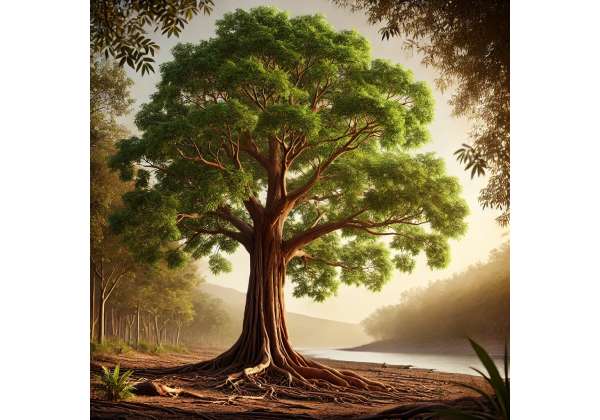
Indian rosewood, or Dalbergia sissoo, is best known as a prized timber tree, yet its medicinal history is just as compelling. In Ayurveda and regional folk practice, its leaves, bark, wood, and occasionally pods have been used for joint discomfort, skin complaints, digestive upset, and wound care. Modern research has added a more detailed picture by identifying isoflavones, flavonoids, tannins, phenolic compounds, and other phytochemicals that may help explain its anti-inflammatory, antioxidant, antimicrobial, bone-supportive, and tissue-protective effects. At the same time, this is not a simple everyday herb with a long list of large human trials. Much of the evidence remains preclinical, and even the more interesting human data are still limited to small studies of standardized leaf extracts. That makes Dalbergia sissoo a plant worth understanding with care. It has real pharmacologic promise, especially for inflammation and bone-related research, but it should be approached as a specialized traditional medicinal tree rather than a casual self-treatment for chronic disease.
Core Points
- Indian rosewood shows the strongest support for anti-inflammatory, antioxidant, and bone-supportive effects in early research.
- Standardized leaf extracts may help musculoskeletal comfort and bone turnover markers, but human data remain limited.
- A studied standardized leaf-extract dose is 300 mg twice daily, although traditional crude preparations are not directly equivalent.
- Pregnant or breastfeeding people, children, and anyone taking multiple chronic medicines should avoid unsupervised internal use.
- Simple topical or traditional uses do not guarantee the same safety or effect as a standardized extract.
Table of Contents
- What is Indian rosewood
- Key ingredients and medicinal properties
- Does Indian rosewood help joints and bones
- Other potential benefits and traditional uses
- How to use Indian rosewood
- How much Indian rosewood per day
- Safety side effects and interactions
- What the evidence actually shows
What is Indian rosewood
Dalbergia sissoo, commonly called Indian rosewood, sheesham, or shisham, is a deciduous tree in the Fabaceae family. It grows widely across the Indian subcontinent and nearby regions and is valued in agriculture, woodworking, and traditional medicine. Most people know it for dense, durable wood used in furniture and carpentry, but medicinally the tree has a broader identity. Traditional systems describe uses for the leaves, bark, wood, and at times other parts of the plant in conditions linked with pain, swelling, skin irritation, bowel disturbance, and general inflammatory discomfort.
That breadth of use reflects the way older medical traditions often approached tree medicines. A single species could have cooling, cleansing, topical, and internal roles depending on the part used and the method of preparation. With Indian rosewood, bark and wood have often been linked with digestive and skin-related uses, while leaves have become especially important in modern pharmacologic work. In fact, many of the most interesting contemporary studies focus not on crude bark preparations but on standardized leaf extracts and leaf-derived isoflavones.
This is an important distinction for readers. A medicinal tree is not automatically a routine tea herb. Trees often contain stronger tannins, more variable chemistry, and broader part-to-part differences than softer culinary plants. That is true here. The chemistry of a leaf extract, a bark decoction, and a wood-based traditional preparation may overlap, but they are not identical. That is one reason modern research on Dalbergia sissoo is easier to interpret when it focuses on clearly defined extracts.
Another useful way to think about Indian rosewood is as a plant with two lives. One life is traditional and practical: folk use for inflammation, wounds, skin problems, diarrhea, and discomfort. The other is modern and pharmacologic: antioxidant assays, anti-inflammatory animal models, osteogenic studies, and a small number of human trials. The overlap between these two lives is real, especially around inflammation and musculoskeletal support, but it is not complete.
For readers looking for a quick summary, Indian rosewood is best described as a medicinally relevant timber tree whose leaves and bark have a documented traditional role and a growing preclinical research profile. It is neither a forgotten miracle cure nor just a furniture tree with folklore attached. Its value lies in the combination of longstanding traditional use and a focused, still-developing body of phytochemical and pharmacologic evidence.
Key ingredients and medicinal properties
Indian rosewood contains a chemically diverse mixture of compounds, but the best-known medicinal interest centers on its flavonoids and isoflavones. This matters because the plant’s benefits are not based on vague “plant energy” claims. They are tied to identifiable constituents that show measurable biologic activity in laboratory and animal work.
Among the most important compounds discussed in modern research is caviunin 7-O-β-D-apiofuranosyl-(1-6)-β-D-glucopyranoside, often shortened to CAFG. This isoflavonoid has attracted attention for bone-forming and fracture-repair research, especially because it appears to influence signaling pathways involved in osteoblast activity and bone remodeling. Standardized leaf extracts studied in humans have also contained biochanin A, genistein, and pratensein, which adds another useful clue: the best-studied leaf products are not generic powders but extracts with a defined isoflavone profile.
Beyond those named molecules, Dalbergia sissoo also contains broader groups of flavonoids, tannins, quinones, coumarins, phenolic compounds, sterols, and terpenoid-related substances. These classes help explain why the herb keeps showing up in discussions of antioxidant, anti-inflammatory, antimicrobial, gastroprotective, and tissue-protective activity. In a practical sense, the plant behaves less like a single-compound herb and more like a layered botanical with several different active fractions.
That layered chemistry supports a cluster of medicinal properties:
- Anti-inflammatory activity, especially in leaf and bark studies
- Antioxidant activity across several extract types
- Analgesic or antinociceptive potential
- Osteogenic and fracture-healing interest
- Mild antimicrobial and skin-supportive potential
- Neuroprotective and metabolic research signals in experimental models
A helpful comparison is ginger’s better-known active-compound profile. Ginger is more familiar, more widely used, and far better standardized in consumer practice, but the logic is similar: the plant’s traditional reputation becomes easier to understand once its bioactive chemistry is mapped clearly. Indian rosewood is simply earlier in that process.
One of the more original insights from the recent Dalbergia sissoo literature is that leaf extracts may deserve more attention than many readers expect. Traditional tree medicines are often thought of mainly in terms of bark or wood, yet with this species the leaf has become central to bone, inflammation, and standardized-extract research. That is a practical shift. It suggests that the most relevant modern medicinal form may not always match the part that folk memory highlights first.
Still, key ingredients alone do not prove human benefit. They tell us the plant has real pharmacology. They do not guarantee that every homemade preparation will be effective, safe, or equivalent to a studied extract. That boundary is essential for understanding Indian rosewood honestly.
Does Indian rosewood help joints and bones
This is where Indian rosewood becomes especially interesting. Of all the possible benefits linked to Dalbergia sissoo, joint comfort, inflammation control, bone turnover, and fracture repair have some of the strongest combined traditional and modern support. That does not mean the case is closed, but it does mean this area deserves more attention than many other claimed uses.
The anti-inflammatory side of the story is older and broader. Animal studies on leaf extracts have shown significant anti-inflammatory effects in acute, subacute, and chronic models, with less gastric irritation than many conventional anti-inflammatory drugs cause in those same experimental settings. That alone makes the plant noteworthy, because an herb that appears to reduce inflammation without strong ulcerogenic effects is naturally going to attract attention.
The bone-supportive side is more specialized and arguably more original. In preclinical work, ethanolic leaf extracts and isolated compounds from Dalbergia sissoo have shown effects on osteoblast function, callus formation, cortical bone repair, and markers of bone turnover. CAFG, in particular, has been studied as a lead compound that may support bone formation through BMP2 and Wnt-β-catenin signaling. That sounds technical, but the practical meaning is simple: some Indian rosewood constituents appear to do more than merely blunt inflammation. They may also influence how bone is built and repaired.
Human evidence, while limited, makes this more than a laboratory curiosity. In a small open-label study of postmenopausal osteoporosis, a standardized leaf extract of Dalbergia sissoo taken at 300 mg twice daily for one year was associated with improved inflammatory and bone-turnover markers, with bone mineral density remaining stable at most measured sites rather than declining as might be expected over time. That is encouraging, especially because the extract was reportedly well tolerated. Still, the study was small and not strong enough to justify sweeping treatment claims.
This distinction matters for real-world readers. If someone asks whether Indian rosewood can replace osteoporosis drugs, the answer is no. If the question is whether it has enough early evidence to justify further research as a supportive bone-health botanical, the answer is yes. The same applies to joint discomfort. It may contribute to a broader plan, but it is not yet a mainstream first-line option in the same consumer category as boswellia for joint comfort.
A realistic summary would be this:
- The anti-inflammatory signal is credible and repeated.
- The osteogenic signal is unusually interesting for a tree leaf extract.
- The human evidence is promising but still small.
- The safest interpretation is supportive potential, not proven disease treatment.
That is a strong position for an herb, even if it is not yet a conclusive one.
Other potential benefits and traditional uses
Indian rosewood’s traditional use extends well beyond joints and bones. Ethnomedicinal reports describe the plant in skin disorders, wounds, diarrhea, dyspepsia, blood-related complaints, sore throat, and inflammatory bowel discomfort. Some systems also describe topical uses for cleansing or soothing irritated tissue. As always, the key is to separate longstanding use from level of proof. Tradition gives the direction of interest. Research decides how strong the case really is.
Skin support is one of the more plausible traditional-modern bridges. The plant has documented antioxidant and antimicrobial activity in extract studies, which helps explain why it appears in wound and skin-use traditions. That does not mean people should start applying raw bark or leaf pastes casually, but it does make the old external uses more intelligible. In broad style, Indian rosewood’s external role is closer to soothing botanical care than to harsh caustic treatment, though it is far less familiar in consumer skin products than aloe vera for skin support.
Digestive use is another long-running theme. Traditional references describe bark and wood use for diarrhea, dyspepsia, and bowel irritation. Experimental work also suggests antidiarrheal and gastroprotective potential, which supports the plausibility of this old use pattern. Still, chronic digestive symptoms always deserve more caution than a folk label like “stomach problems” implies. A plant with interesting antidiarrheal activity in mice does not automatically become the right answer for persistent diarrhea, ulcer disease, or inflammatory bowel illness in people.
Neuroprotective research has added a newer dimension. A 2021 rat study on ethanolic leaf extract found protection against amyloid-related memory impairment, oxidative stress, and neuroinflammation. This is one of those findings that is scientifically exciting but easily overstated online. It does not prove that Indian rosewood prevents dementia in humans. It does suggest the plant has enough antioxidant and anti-inflammatory central nervous system activity to justify more study.
Antimicrobial and antioxidant properties also appear repeatedly across the literature. These may be the most general benefits of all, though they are also the easiest to exaggerate. Many plant extracts can inhibit bacteria in vitro or score well in antioxidant assays. What matters is whether that activity translates meaningfully into safe human use. With Dalbergia sissoo, that translation is still incomplete.
The most sensible way to describe the herb’s wider benefits is this:
- Traditional use supports digestive, skin, and inflammatory applications.
- Laboratory work supports antioxidant and antimicrobial plausibility.
- Neuroprotective and metabolic signals are emerging but early.
- None of these uses is yet backed by large, modern clinical evidence.
That is not a weakness. It is simply what honest herbal interpretation looks like.
How to use Indian rosewood
How Indian rosewood is used depends heavily on whether you are talking about traditional practice or modern research. In traditional settings, bark, leaves, and wood may be prepared as decoctions, infusions, powders, washes, or pastes. In modern research, however, the emphasis often shifts to standardized leaf extracts or isolated compounds. This difference is more important than it first appears, because most positive human and mechanistic data do not come from loosely prepared household remedies.
The simplest traditional use is a decoction or infusion of the relevant plant part, usually bark or leaves, depending on the indication. Bark tends to fit digestive or cleansing traditions, while leaves are more strongly associated with inflammation and the forms that have entered modern study. Topical uses have historically included washes or paste-like applications for irritated skin or wound-related care. These older formats make sense within herbal practice, but they do not give the same dosing precision as a standardized capsule.
Modern commercial use is much narrower. The clearest studied format is a hydroalcoholic standardized leaf extract, especially the kind used in bone and fracture research. That style of preparation matters because it controls the concentration of compounds such as CAFG, biochanin A, genistein, and pratensein. A raw powdered leaf or homemade bark tea may not resemble that profile closely enough to predict the same effect.
Practical use forms include:
- Dried bark or leaf decoctions in traditional settings
- Powdered preparations with variable strength
- Standardized leaf-extract capsules
- External washes or localized traditional applications
The choice should match the goal. Someone interested in general traditional use may gravitate toward simple decoctions. Someone interested in the most research-aligned modern use would look first at standardized leaf extracts, especially for musculoskeletal questions. That makes Indian rosewood different from gentler, more everyday infusion herbs such as chamomile, where casual tea use already overlaps reasonably well with the plant’s traditional identity.
A useful caution is not to confuse “natural” with interchangeable. A bark decoction, a leaf capsule, and an isolated isoflavone-rich extract are not just different strengths of the same thing. They are chemically different preparations with different levels of evidence behind them.
So if the question is “How should this herb be used today?” the best answer is: conservatively, purposefully, and with respect for preparation type. If the goal is serious symptom management, the most responsible route is the most standardized one available, not the most improvised.
How much Indian rosewood per day
There is no single universal dose for Indian rosewood because the plant is used in several forms, and the evidence base is uneven across them. Still, one dosage range stands out because it comes from human study rather than guesswork: a standardized leaf extract has been studied at 300 mg twice daily. That is the clearest evidence-linked internal dose currently available for Dalbergia sissoo.
In the postmenopausal osteoporosis study, this 300 mg twice-daily regimen was used for one year alongside calcium and vitamin D. The product was not a generic crude powder. Each capsule contained a defined hydroalcoholic leaf extract with a measured content of caviunin glycoside, biochanin, genistein, and pratensein. That level of standardization is exactly why this dose has more meaning than a vague traditional instruction such as “take some bark decoction.”
That does not mean 300 mg twice daily is automatically the right dose for every purpose. It means it is the most defensible reference point for a modern oral standardized product. A traditional decoction may deliver a very different phytochemical pattern, and a crude powder may require larger amounts while still not matching the extract used clinically.
A practical dosing framework looks like this:
- Standardized leaf extract: 300 mg twice daily is the clearest human-studied range
- Traditional decoctions or powders: variable and not well standardized
- Topical use: usually external and preparation-specific rather than mg-based
- Isolated compounds such as CAFG: research use, not general consumer self-dosing
Timing is usually flexible. In the clinical context, the extract was given twice daily, which is a reasonable pattern for maintaining steady exposure and improving tolerance. Taking it with food is sensible, especially for people with sensitive stomachs. Duration matters just as much as dose. Short exploratory use is very different from a year-long regimen in a monitored clinical setting.
This is where many herbal articles become sloppy. They either invent a traditional daily gram range without explaining the preparation, or they present an animal dose as if it were a human recommendation. Indian rosewood deserves better than that. The honest approach is to say that modern dosing is strongest for standardized leaf extract, while traditional crude preparations remain harder to quantify.
For readers who want a simple rule, here it is: if you are not using a clearly identified, reputable preparation with defined dosing, there is no confident way to assume equivalence. With this plant, standardization is not a luxury. It is part of safe and meaningful use.
Safety side effects and interactions
Indian rosewood appears reasonably well tolerated in the limited human and animal work available, but “promising safety” is not the same as “proven safe for everyone.” This herb sits in the middle zone that many medicinal plants occupy: reassuring enough for careful interest, but not established enough for casual long-term self-prescribing across all populations.
The most reassuring safety point comes from the small human studies of standardized leaf extract, where a 300 mg twice-daily regimen was reported as well tolerated over extended use. Animal toxicology on leaf extracts is also encouraging, with some studies showing low acute toxicity even at very high doses. That said, these data apply to specific preparations under study conditions. They do not automatically cover every bark decoction, home powder, or mixed commercial product sold under the plant’s name.
The main practical safety concerns are the ones you would expect with an active botanical:
- Digestive upset in sensitive users
- Product-quality variation between preparations
- Unknown interactions with prescription medicines
- Insufficient pregnancy and breastfeeding data
- Limited long-term human safety across diverse groups
Because Indian rosewood shows anti-inflammatory, metabolic, antimicrobial, and possible neuroactive effects, it is wise to use extra caution alongside blood-sugar medicines, anti-inflammatory drugs, and other chronic medications. Not every herb-drug interaction needs a dramatic published case report to deserve respect. Sometimes the chemistry alone is enough to justify a more careful approach.
A second safety point is preparation source. Tree medicines can vary significantly by plant part, age, solvent, and manufacturing quality. A standardized clinical leaf extract is one thing. Raw bark powder bought from an unclear source is another. Readers often underestimate how much this matters.
A third point is special populations. Pregnancy and breastfeeding should be treated as avoid zones unless a qualified clinician specifically recommends the herb, because there is not enough high-quality safety data to justify routine internal use. Children also belong in the caution category for the same reason. People with chronic liver disease, kidney disease, autoimmune conditions, or polypharmacy deserve more supervision, not less.
A helpful final principle is to distinguish between topical and internal use. A carefully prepared external application on intact skin does not carry the same systemic risk as regular oral dosing. But even topical use should not be treated as risk-free, especially if the skin is broken or the preparation is crude.
In short, Indian rosewood does not read like a highly toxic plant, but it also does not yet qualify as a carefree daily herb. The safest path is reputable sourcing, standardized products when possible, conservative dosing, and clinical guidance when medical conditions or prescription drugs are part of the picture.
What the evidence actually shows
The evidence for Indian rosewood is stronger than many obscure medicinal trees receive, but it is still uneven. That is the most useful summary for serious readers. There is enough research to take the plant seriously, especially around inflammation, pain modulation, antioxidant activity, bone metabolism, and tissue protection. There is not enough research to present it as a fully proven therapeutic herb across all of its traditional uses.
The strongest evidence zones are preclinical. Anti-inflammatory effects have been shown repeatedly in animal models. Antioxidant, antimicrobial, and neuroprotective signals are also credible in laboratory and animal work. Bone research is particularly notable because it includes mechanistic studies on CAFG and small human studies using standardized leaf extract. That combination of mechanistic detail and early clinical data is one of the herb’s biggest strengths.
The human evidence, though, remains narrow. The postmenopausal osteoporosis study was encouraging, but it was small and open-label. That means it can generate interest, not settle the question. The fracture-healing work is also promising, yet still not large enough to anchor mainstream clinical guidance. This is why the plant is best described as “clinically suggestive” rather than “clinically established.”
What the evidence supports reasonably well:
- Indian rosewood has authentic anti-inflammatory and antioxidant activity.
- Standardized leaf extracts deserve further study for bone and musculoskeletal support.
- The plant has enough pharmacologic depth to justify its traditional medicinal reputation.
- Standardized preparations are more meaningful than crude generic products.
What the evidence does not yet support strongly:
- Broad disease-treatment claims for arthritis, osteoporosis, dementia, or infections
- Confident long-term safety claims in general populations
- Direct equivalence between folk preparations and studied extracts
- Routine unsupervised use in pregnancy, breastfeeding, childhood, or complex chronic illness
This balance is actually a strength. It keeps the article close to reality. Many herbs fail because they are oversold before their evidence matures. Indian rosewood is more interesting when it is described honestly: a medicinal tree with real anti-inflammatory and osteogenic promise, limited but notable human data, and several good reasons for further study.
If readers want the plain-language version, it is this: Indian rosewood is not just folklore, but it is not yet settled science either. It sits in the productive middle, where traditional medicine, pharmacology, and careful clinical curiosity still have meaningful work to do.
References
- Dalbergia sissoo Roxb. ex-DC. – A Monograph 2024 (Review)
- Dalbergia sissoo Ethanolic Extract: A Natural Source of Antioxidant, Antibacterial, and Anticorrosive Agents 2025 (Preclinical study)
- Protective Effect of Dalbergia sissoo Extract Against Amyloid-β (1-42)-induced Memory Impairment, Oxidative Stress, and Neuroinflammation in Rats 2021 (Preclinical study)
- A Clinical Study of a Standardized Extract of Leaves of Dalbergia sissoo (Roxb ex DC) in Postmenopausal Osteoporosis 2019 (Clinical study)
- A novel therapeutic approach with Caviunin-based isoflavonoid that en routes bone marrow cells to bone formation via BMP2/Wnt-β-catenin signaling 2014 (Mechanistic study)
Disclaimer
This article is for educational purposes only and is not medical advice. Indian rosewood has a meaningful traditional history and growing research interest, but most of its reported benefits still come from preclinical work or small human studies using specific standardized extracts. It should not replace diagnosis, prescribed treatment, or professional care for osteoporosis, fractures, joint disease, memory problems, skin disorders, or digestive illness. If you are pregnant, breastfeeding, taking prescription medicines, or managing a chronic medical condition, speak with a qualified healthcare professional before using internal preparations of Dalbergia sissoo.
If you found this article helpful, please share it on Facebook, X, or any other platform your audience prefers.