Inferior vena cava obstruction happens when the body’s largest vein (the inferior vena cava) becomes narrowed or blocked. This vein carries blood from the legs, pelvis, and abdomen back to the heart, so even a partial blockage can create wide-reaching problems—most often swelling, heaviness, and discomfort in both legs. Some people notice new surface veins on the abdomen, while others develop belly swelling or reduced kidney function, depending on where the blockage sits. The cause may be a blood clot, pressure from a tumor, scarring, or (less commonly) a congenital vein abnormality. Because symptoms can resemble many other conditions, timely evaluation matters. With the right imaging and treatment plan, many patients improve quickly, and long-term complications can often be reduced. This article explains what inferior vena cava obstruction is, why it occurs, how it is diagnosed, and what treatment and ongoing care usually involve.
Table of Contents
- What is inferior vena cava obstruction?
- What causes IVC obstruction and who is at risk?
- Symptoms, complications, and red flags
- How IVC obstruction is diagnosed
- Treatments that relieve the blockage
- Long-term management, prevention, and when to seek care
What is inferior vena cava obstruction?
The inferior vena cava (often shortened to IVC) is the main “return highway” for blood coming from the lower half of the body. It begins in the lower abdomen where the two large iliac veins join, travels up alongside the spine, receives blood from the kidneys and liver region, and then enters the heart. When the IVC becomes narrowed or blocked, blood has trouble flowing back to the heart. Pressure builds in the veins below the blockage, and fluid can leak into tissues—most commonly causing swelling in the legs and sometimes the abdomen.
Obstruction can be partial (a tight narrowing) or complete (a full blockage). It can also be acute (sudden) or chronic (slowly developing). These differences shape symptoms and urgency. Acute obstruction is more likely to cause sudden pain and swelling; chronic obstruction may develop gradually as the body creates “detours” called collaterals (alternate veins that enlarge to bypass the blockage). Collaterals can reduce symptoms, but they rarely restore normal flow, and they can create visible new veins across the belly or flanks.
Clinicians often describe the obstruction by location, because that predicts which organs are affected:
- Infrarenal (below the kidney veins): often causes leg swelling, pelvic congestion, and prominent superficial veins.
- Suprarenal (near or above the kidney veins): can affect kidney drainage, raising the risk of kidney-related symptoms.
- Hepatic/upper IVC (near the liver): may contribute to abdominal swelling, liver congestion, or fluid buildup.
IVC obstruction is not one single disease—it is a final pathway caused by different problems. The major buckets are:
- Thrombotic obstruction: a thrombus (blood clot inside a vessel) forms in the IVC or extends upward from a deep vein thrombosis in the legs or pelvis.
- External compression or invasion: a mass presses on the vein from outside, or grows into it.
- Scar-related narrowing: prior inflammation, surgery, or long-term devices can lead to stiff, narrowed segments.
- Congenital variants: some people are born with a narrowed or absent IVC segment, which can become evident after a clot forms.
Understanding the “how” and “where” matters because treatment differs: a fresh clot is managed differently than a tumor pressing on the vein, and both differ from long-standing scarring.
What causes IVC obstruction and who is at risk?
Most IVC obstructions come from either clotting within the vein or pressure on the vein from nearby structures. Sometimes both are present—compression slows flow, and slow flow encourages clot formation.
Common causes
- Deep vein thrombosis extending upward: Clots that start in the legs or pelvis can propagate into the IVC, especially if the clot is large, bilateral, or untreated.
- Primary IVC thrombosis: A clot forms in the IVC itself, sometimes linked to an underlying anatomic narrowing, prior injury, or a strong clotting tendency.
- Cancer-related obstruction: Tumors in the kidney, liver, adrenal glands, or retroperitoneum (the deep space behind the abdomen) can compress the IVC. Some cancers can also form tumor thrombus (tumor tissue growing into the vein), which behaves differently from a standard blood clot.
- IVC filters and device-related narrowing: A filter placed to trap clots can, in some people, become a focus for clotting or scarring, especially if it remains in place long-term or becomes tilted or embedded.
- Pregnancy and postpartum: The enlarged uterus can compress veins, and the clotting system is naturally more active in pregnancy, increasing thrombosis risk.
- Inflammation and scarring in the retroperitoneum: Chronic inflammatory conditions can “wrap” and tighten around the IVC, narrowing it over time.
- Trauma or major surgery: Vessel injury, immobility, and inflammation can combine to increase clot risk.
- Congenital IVC anomalies: A small or absent segment can create turbulent flow and raise the risk of clots, often presenting in younger adults with unexplained extensive DVT.
Key risk factors for thrombotic IVC obstruction
- Prior DVT or pulmonary embolism
- Recent surgery, immobilization, or long-distance travel
- Active cancer or cancer treatment
- Estrogen exposure (combined oral contraceptives, hormone therapy)
- Inherited or acquired clotting disorders (thrombophilias)
- Chronic inflammatory disease, severe infection, or dehydration
- Central venous catheters or repeated femoral venous access
- Obesity and smoking
A practical way to think about risk is “flow, vessel wall, and blood tendency.” Slow flow (compression or immobility), a damaged vessel lining (surgery, devices), and a pro-clot environment (cancer, pregnancy, thrombophilia) can stack together. When more than one is present, clinicians lower the threshold for urgent imaging and preventive steps.
Some people ask whether exercise or minor dehydration can “cause” an IVC obstruction. These are rarely the sole cause. They are more often triggers that reveal an underlying vulnerability—like a silent narrowing, an unrecognized clotting disorder, or an active cancer. That is why evaluation focuses not only on fixing today’s blockage, but also on finding and treating the reason it happened.
Symptoms, complications, and red flags
Symptoms depend on how quickly the obstruction develops and where it sits. A sudden blockage leaves little time for the body to build alternate pathways, so symptoms can be dramatic. A slow narrowing may produce milder signs at first, but it can still lead to significant long-term problems.
Common symptoms
- Bilateral leg swelling: Often the most noticeable sign, typically worse by the end of the day.
- Heaviness, aching, or tightness in the legs: Especially after standing or walking.
- Skin changes from chronic venous pressure: Darkening around the ankles, itchy irritation, or thickened skin.
- Visible surface veins: New, prominent veins across the lower abdomen, flanks, groin, or upper thighs can signal collateral flow.
- Pelvic symptoms: A sense of fullness, pelvic discomfort, or worsening varicose veins in the pelvis or genital area can occur when pelvic veins cannot drain normally.
Symptoms that suggest higher (suprarenal or hepatic) involvement
- Abdominal swelling or ascites (fluid in the belly)
- Reduced urine output or changes in kidney function (when renal veins are affected)
- Right upper abdominal discomfort or signs of liver congestion in select cases
Potential complications
- Pulmonary embolism (PE): A clot can break off and travel to the lungs. This is one reason urgent assessment matters.
- Post-thrombotic syndrome: Chronic pain, swelling, skin changes, and ulcers can develop after extensive venous thrombosis, especially when obstruction persists.
- Venous ulcers: Open sores near the ankles may occur after months to years of high venous pressure.
- Kidney-related complications: When renal drainage is impaired, kidney function can worsen, and swelling may become more generalized.
- Recurrent thrombosis: Without addressing the cause (ongoing cancer, persistent narrowing, or untreated thrombophilia), new clots can form.
Red flags that need urgent care
- Sudden shortness of breath, chest pain with breathing, coughing blood, or unexplained rapid heart rate (possible PE)
- New severe leg pain, tense swelling, bluish discoloration, or numbness (possible severe outflow blockage)
- Fainting, severe weakness, or confusion
- Rapidly increasing abdominal swelling or severe new belly pain
- Any major bleeding if you are already on anticoagulation (blood thinners)
A subtle but important point: IVC obstruction can be mistaken for heart failure, kidney disease, liver disease, or lymphedema because all can cause swelling. Clues that favor venous obstruction include new surface veins on the abdomen, swelling that is strongly positional (worse with standing), a history of clotting, recent surgery, or cancer. Still, you cannot reliably sort these out at home, and imaging is often required.
If symptoms appear in pregnancy, evaluation must balance safety for the fetus and mother. Clinicians can often use ultrasound first and choose imaging approaches that limit radiation or contrast exposure when possible.
How IVC obstruction is diagnosed
Diagnosis aims to answer three questions quickly: Is the IVC truly blocked? Where is the blockage? What caused it (clot, compression, scarring, or a mix)? The answers guide both urgency and the safest treatment plan.
1) History and physical exam
Clinicians look for timing (sudden vs gradual), triggers (recent travel, surgery, pregnancy), and associated symptoms (shortness of breath, abdominal swelling). On exam, they check:
- Whether swelling is one-sided or both-sided
- Skin temperature and color changes
- Tenderness along deep veins
- New superficial abdominal or pelvic veins
- Signs of fluid overload from other causes (lung crackles, heart findings)
2) Blood tests (supportive, not definitive)
Tests may include:
- Complete blood count and kidney/liver function (to guide imaging and medication choices)
- Coagulation tests if anticoagulation is planned
- D-dimer in selected low-to-moderate risk situations (helpful mainly to rule out clot when probability is low)
- Cancer-related labs only when indicated by clinical findings
Blood tests alone cannot confirm IVC obstruction. Imaging is the key.
3) Imaging options
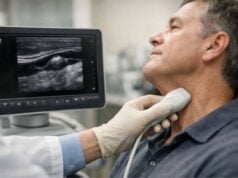
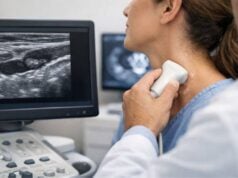
- Duplex ultrasound: Often the first test for leg DVT. It can suggest upstream blockage if both legs show extensive clot or if venous flow patterns look abnormal. However, ultrasound can be limited for viewing the deep abdominal IVC.
- CT venography (CTV): A common, fast way to map the IVC and surrounding structures. It can show clot, narrowing, compression by a mass, and collateral veins. It also helps evaluate possible cancer-related causes.
- MR venography (MRV): Useful when radiation avoidance matters or when soft-tissue detail is important. It may be preferred in some younger patients or when iodinated contrast cannot be used.
- Catheter venography: An invasive “road-map” test where dye is injected through a catheter to show flow and pressure gradients. It is often done when treatment (like stenting or clot removal) may happen in the same session.
- Intravascular ultrasound (IVUS): A small ultrasound probe inside the vein that gives detailed information about the vessel’s true diameter and the degree of narrowing. It can improve sizing decisions during stent procedures.
4) Finding the underlying cause
If imaging shows a clot, clinicians consider why it formed: cancer, pregnancy, hormonal therapy, thrombophilia, or an anatomic narrowing. If imaging shows compression, the next step is usually identifying the source (tumor, fibrosis, or enlarged structures) and coordinating care across specialties.
5) Distinguishing look-alike conditions
Because swelling can come from heart, liver, or kidney disease, clinicians interpret imaging alongside the overall clinical picture. The presence of extensive collaterals, abrupt caliber change in the IVC, or a clear obstructing lesion strongly supports a venous cause.
Diagnosis is not only about naming the condition—it is about mapping a route to restore flow safely and prevent the next clot.
Treatments that relieve the blockage
Treatment depends on whether the obstruction is mainly a blood clot, external compression, or a fixed narrowing from scarring. Many patients need more than one approach: for example, anticoagulation to prevent new clot plus a procedure to reopen a narrowed segment.
1) Anticoagulation (blood thinners)
For thrombotic IVC obstruction, anticoagulation is usually the foundation. It helps prevent clot growth and reduces the risk of pulmonary embolism. Options may include direct oral anticoagulants, low-molecular-weight heparin, or warfarin, chosen based on kidney function, cancer status, pregnancy, bleeding risk, and drug interactions.
Typical decisions include:
- How long to treat (often at least 3–6 months for a first event, longer when risk persists)
- Whether a reversible trigger exists (surgery) versus an ongoing trigger (active cancer)
- Whether additional clot-removal strategies are appropriate
2) Catheter-directed thrombolysis and thrombectomy
If the clot burden is large, symptoms are severe, and the risk profile is acceptable, clinicians may use:
- Catheter-directed thrombolysis: medication delivered directly into the clot to dissolve it.
- Mechanical thrombectomy: devices that break up and remove clot.
These strategies aim to restore flow faster and may reduce long-term complications in selected patients. They are not right for everyone because bleeding risk must be carefully weighed.
3) Venoplasty and stenting
When imaging shows a tight narrowing or chronic obstruction, balloon expansion (venoplasty) and a stent can hold the vein open. Stenting is especially considered when:
- Symptoms are significant and persistent
- The obstruction is fixed (scar-related) or due to chronic thrombotic narrowing
- Malignant compression is causing severe quality-of-life impairment and rapid relief is needed
Stents can improve venous return quickly, but they require careful sizing and follow-up. Anticoagulation or antiplatelet therapy may be used afterward depending on the cause and the clinician’s strategy.
4) Treating external compression
If a tumor is compressing or invading the IVC, treatment often combines:
- Cancer-directed therapy (surgery, systemic therapy, radiation, or a combination)
- Endovascular stenting for faster symptom relief in appropriate cases
- Anticoagulation when bland clot is present or risk is high
The goal may be curative or palliative depending on cancer stage, but symptom relief and prevention of PE remain central.
5) IVC filters (select situations)
Filters are designed to trap clots before they reach the lungs. They are generally reserved for situations where anticoagulation is not possible or has failed in a high-risk setting. Because filters can contribute to thrombosis or long-term narrowing, clinicians often prefer retrievable filters and plan removal when safe.
6) Supportive measures
Supportive care does not remove the blockage, but it can reduce symptoms:
- Graduated compression stockings (when appropriate)
- Leg elevation and frequent walking breaks
- Skin care to prevent breakdown in chronically swollen legs
- Judicious diuretics only when fluid overload is part of the picture (they are often less effective when venous pressure is the primary driver)
The best treatment plans are individualized: restoring flow, preventing new clot, and addressing the underlying cause—without increasing bleeding or procedural risk.
Long-term management, prevention, and when to seek care
Long-term management focuses on three goals: keep the vein open (or keep collaterals functioning well), prevent recurrent clots, and protect the skin and tissues from chronic venous pressure. Many patients do best with a written plan that covers medication, activity, follow-up imaging, and clear “what to do if” instructions.
Medication follow-through
If you are prescribed anticoagulation:
- Take doses consistently; missed doses can raise recurrence risk.
- Ask what bleeding signs matter: black stools, vomiting blood, severe bruising, heavy menstrual bleeding, or persistent nosebleeds.
- Review drug interactions, including certain pain relievers and supplements.
- Keep scheduled lab monitoring if warfarin is used.
Duration often depends on the cause:
- A temporary trigger (surgery) may allow a time-limited course.
- Ongoing risks (active cancer, persistent narrowing, strong thrombophilia) may require extended therapy.
Compression and mobility
Many people benefit from compression stockings once acute swelling stabilizes, often in the 20–30 mmHg range (your clinician will advise what is safe). Daily movement supports venous return:
- Break up sitting time every 30–60 minutes with a short walk.
- Build toward regular aerobic activity as symptoms allow.
- Add calf and thigh strengthening, because muscle contraction helps “pump” blood upward.
Skin protection
Chronic venous pressure can injure skin over time. Helpful habits include:
- Moisturizing dry skin to reduce cracking
- Treating itching early to prevent scratching and infection
- Watching for redness, warmth, or drainage that could signal cellulitis
- Seeking wound care early if an ulcer begins
Follow-up and surveillance
Follow-up may include:
- Repeat ultrasound or cross-sectional imaging when symptoms change or after interventions
- Monitoring kidney function if suprarenal segments were involved
- Stent surveillance if a stent was placed, especially in the first year
- Cancer follow-up when malignancy is the driver
Prevention in high-risk situations
If you have a history of IVC thrombosis or obstruction, talk with your clinician before:
- Long-distance travel (you may need mobility plans or medical prophylaxis)
- Major surgery (perioperative VTE prevention is critical)
- Pregnancy or hormonal therapy (risk may change substantially)
When to seek urgent care
Call emergency services for symptoms of pulmonary embolism (sudden shortness of breath, chest pain with breathing, fainting, coughing blood) or for rapidly worsening leg swelling with severe pain or color change. Seek urgent medical advice for any major bleeding on anticoagulation, new abdominal swelling with significant discomfort, or sudden drop in urine output.
Long-term outcomes are often better when treatment is proactive rather than reactive. Even when the IVC cannot be fully restored to normal, symptom control and complication prevention can improve quality of life in meaningful, measurable ways.
References
- Inferior and Superior Vena Cava Reconstruction – PMC 2024 (Review)
- Management strategies and clinical outcomes in patients with inferior vena cava thrombosis: Data from GARFIELD‐VTE – PMC 2021 (Observational Study)
- A Systematic Review of the Safety and Efficacy of Inferior Vena Cava Stenting – PubMed 2023 (Systematic Review)
- Malignant obstruction of the inferior vena cava: clinical experience with the self-expanding Sinus-XL stent system – PMC 2022 (Clinical Study)
Disclaimer
This article is for educational purposes only and does not replace professional medical advice, diagnosis, or treatment. Inferior vena cava obstruction can be serious and may require urgent evaluation, especially if you have sudden leg swelling, chest pain, or shortness of breath. If you think you might have a pulmonary embolism or any life-threatening symptoms, call emergency services immediately. Always discuss testing, medications (including anticoagulants), and procedure choices with a qualified clinician who can consider your personal history and risks.
If this article helped you, please share it on Facebook, X (formerly Twitter), or any platform you prefer, and follow us on social media. Your support through sharing helps our team continue producing clear, trustworthy health content.