Inferior vena cava thrombosis is a blood clot in the body’s largest vein that returns blood from the legs and abdomen to the heart. Because this vein handles so much flow, a clot can cause sudden, uncomfortable swelling in both legs, new visible veins across the abdomen, and sometimes abdominal or back pain. The bigger concern is that part of the clot can travel to the lungs and cause a pulmonary embolism. The condition is uncommon, but it is easy to miss because symptoms can resemble other causes of swelling. The right imaging tests can confirm the diagnosis and show how extensive the clot is. Treatment usually centers on blood thinners, with selected patients benefiting from clot-removal procedures or stenting. This guide explains what to watch for, how doctors diagnose it, and what recovery and prevention look like.
Table of Contents
- What is inferior vena cava thrombosis?
- What causes IVC thrombosis and who is at risk?
- Symptoms, complications, and emergency signs
- How IVC thrombosis is diagnosed
- Treatment options and what to expect
- Long-term management, prevention, and when to seek care
What is inferior vena cava thrombosis?
The inferior vena cava (IVC) is the main “return vein” that carries blood from the legs, pelvis, and much of the abdomen back to the heart. Inferior vena cava thrombosis (often shortened to IVC thrombosis) means a clot has formed inside that vein, partly blocking or fully blocking the flow. It can happen as a clot that starts in the leg or pelvic veins and grows upward, or as a clot that forms directly within the IVC.
A useful way to understand the symptoms is to think about pressure and drainage. Veins are low-pressure vessels. When a major vein is blocked, pressure rises behind the blockage, and fluid seeps into nearby tissues. That is why many people develop swelling in both legs, a tight heavy feeling, or discomfort that worsens through the day.
IVC thrombosis is often described by location, because location predicts which body systems are affected:
- Below the kidney veins (infrarenal): most likely to cause swelling in both legs, pelvic vein congestion, and visible surface veins across the lower abdomen.
- At the kidney vein level (juxtarenal): can reduce kidney drainage and sometimes affects kidney function, especially if clot extends into renal veins.
- Above the kidney veins (suprarenal) or near the liver segment: may cause more abdominal symptoms and can be linked to broader swelling patterns.
Timing matters too:
- Acute thrombosis (hours to days): symptoms can appear suddenly because the body has not had time to build backup pathways.
- Chronic thrombosis (weeks to months): the body may enlarge alternate veins (collaterals), which can reduce symptoms but also produce prominent veins on the abdomen or flanks.
People often ask whether this is “the same as DVT.” It is related, but the stakes can be higher. A standard deep vein thrombosis (DVT) is usually in one leg vein. IVC thrombosis is central, and it often represents a larger clot burden. That can raise the chance of a pulmonary embolism and can increase the risk of long-term venous damage, including persistent swelling and skin changes.
Another important distinction is what the clot is made of. Most clots are typical blood clots. In some cancers, however, material inside the IVC can include tumor growing into the vein. That changes planning because tumor material does not respond to blood thinners in the same way, and treatment must target the cancer as well as the blocked flow.
Finally, IVC thrombosis is not only about stopping symptoms today. It is also about preventing two major downstream problems: clot travel to the lungs and long-term venous insufficiency that can impair mobility and skin health. The best care plans address both.
What causes IVC thrombosis and who is at risk?
Most IVC thrombosis develops when several risk factors stack together. Clinicians often organize causes using three themes: slowed blood flow, injury to the vein lining, and a blood-clotting tendency. You do not need to memorize the framework, but it explains why certain life events (surgery, cancer, pregnancy) show up so often in real cases.
1) Clot extending from the legs or pelvis
A common pathway is a large DVT in the iliac veins (deep pelvic veins) that propagates upward into the IVC. This is more likely when clots are extensive, untreated, or when there is a narrowing that slows flow near the pelvis.
2) Primary clot forming within the IVC
Clot can form directly in the IVC when flow is sluggish or the vein wall has been irritated. Examples include:
- Long-term or complex IVC filters
- Prior abdominal surgery with vein injury or scarring
- Repeated venous access through the groin region
- Significant dehydration combined with other risk factors
3) External compression that triggers clotting
A mass in the abdomen or retroperitoneum can compress the IVC. Compression does two things: it reduces flow (making clot more likely) and can cause symptoms even before a clot forms. Compression may come from tumors (kidney, liver, lymph nodes), large benign masses, or dense scar tissue.
4) Cancer and cancer treatment
Cancer increases clot risk through inflammation, clotting factor changes, reduced mobility, and vein compression. Some tumors also extend into the IVC as tumor material, which can look like thrombosis and can coexist with standard clot.
5) Pregnancy and postpartum
Pregnancy naturally increases clotting tendency and slows venous return from the legs due to pressure from the uterus. Risk remains elevated after delivery, especially with cesarean birth, prolonged bed rest, dehydration, or inherited clotting tendencies.
6) Inherited and acquired clotting disorders
Some people have genetic or immune-related conditions that make clots more likely. This becomes more important when IVC thrombosis occurs in a younger person, recurs, or occurs without a clear trigger.
Common risk factors clinicians ask about
- Recent surgery, trauma, or hospitalization
- Long-distance travel or long periods of sitting
- Prior DVT or pulmonary embolism
- Active cancer or recent cancer therapy
- Estrogen-containing contraception or hormone therapy
- Pregnancy and the weeks after delivery
- Obesity, smoking, and severe inflammatory illness
- Long-term indwelling venous devices or IVC filter history
A practical insight: IVC thrombosis often has a “why now?” component. A person may have a mild anatomic narrowing for years without symptoms. Then a trigger—like a long flight, surgery, pregnancy, or a new cancer—tips the balance and a clot forms. That is why evaluation is not only about finding the clot. It is about identifying the trigger, deciding whether risk is temporary or ongoing, and building a prevention plan that matches that risk.
Symptoms, complications, and emergency signs
Symptoms of IVC thrombosis come from two main problems: blocked venous return (pressure backing up into the legs and abdomen) and the risk of clot migration to the lungs. Many people feel symptoms in the legs first, but abdominal or back discomfort can also occur, especially when clot is higher in the IVC.
Typical symptoms
- Swelling in both legs, often fairly symmetric
- Heaviness, aching, or “bursting” tightness in the calves, thighs, or groin
- Pain that worsens with standing and improves somewhat with elevation
- New visible veins across the lower abdomen, flanks, or upper thighs (collateral veins)
- Warmth or tenderness along deep veins, especially if clot started in the legs or pelvis
Symptoms that can occur when clot is higher
- Lower back or abdominal discomfort
- A sense of abdominal fullness
- Swelling that extends above the legs (for example, groin or lower abdominal swelling)
- Reduced urine output or signs of kidney stress when renal veins are affected
Complications to understand
- Pulmonary embolism (PE): A portion of clot can break off and travel to the lungs. This can be life-threatening.
- Post-thrombotic syndrome: After a large clot, valves in the leg veins can be damaged. Over months to years, this can lead to chronic swelling, pain with walking, skin darkening, itching, and sometimes ulcers.
- Venous claudication: Some people develop aching or heaviness during walking that forces frequent stops, caused by limited venous outflow capacity.
- Skin breakdown and ulcers: Persistent high venous pressure can cause fragile skin and slow-healing wounds, commonly near the ankles.
- Recurrent thrombosis: Risk is higher when the underlying driver (like cancer, a persistent narrowing, or an unretrieved filter) remains.
Emergency warning signs (call emergency services)
- Sudden shortness of breath, chest pain that worsens with breathing, fainting, or coughing blood (possible PE)
- Rapid heartbeat with unexplained breathlessness or anxiety-like symptoms that are new and severe
- A leg that becomes suddenly very painful, markedly swollen, blue or dusky, numb, or cold
- Severe weakness, confusion, or collapse
When to seek urgent same-day evaluation
- New swelling in both legs with pain or rapid progression over hours to days
- New prominent abdominal veins combined with leg swelling
- Swelling plus fever, severe tenderness, or skin redness (possible infection on top of venous congestion)
- Any significant bleeding if you are already on blood thinners
A common and important confusion is the difference between IVC thrombosis swelling and swelling from heart, liver, or kidney disease. Those conditions can cause swelling too, but IVC thrombosis more often causes leg heaviness and pain, visible collateral veins, and a pattern that worsens with standing. Still, symptoms overlap, and self-diagnosis is risky. If the swelling is new, painful, rapidly worsening, or paired with breathing symptoms, prompt medical evaluation is the safest choice.
How IVC thrombosis is diagnosed
Diagnosis is about confirmation and mapping. Clinicians need to confirm there is clot, determine how far it extends, and identify why it formed. Those details decide whether standard anticoagulation is enough or whether more aggressive intervention is needed.
1) History and exam
Clinicians start with timing (sudden vs gradual), prior clot history, recent travel or surgery, pregnancy status, hormone use, cancer history, and IVC filter history. On exam, they look for:
- Bilateral leg swelling and tenderness patterns
- Surface abdominal veins suggesting collateral flow
- Skin changes that suggest chronic venous pressure
- Signs of lung involvement (fast breathing, low oxygen, chest discomfort)
2) Blood tests (supportive, not diagnostic)
Blood tests help with safety and planning rather than confirming the clot by themselves:
- Kidney function tests to guide contrast imaging choices and medication dosing
- Blood count to check for anemia or infection clues
- Coagulation tests to plan anticoagulation and procedures
- D-dimer in selected situations when the clinical probability is low and the goal is to rule out clot (not a stand-alone test for high-risk cases)
3) Ultrasound as a starting point
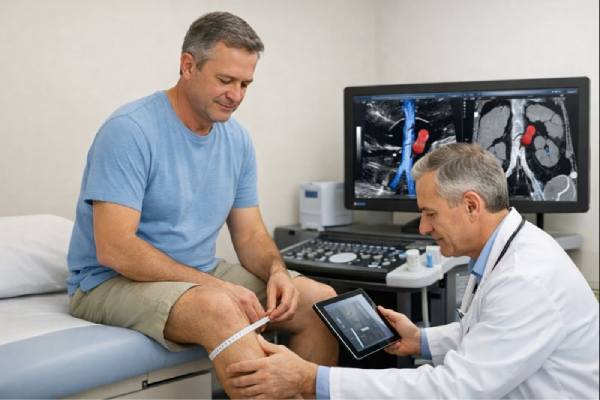
A duplex ultrasound is often the first test because it can detect DVT in the legs and sometimes pelvic veins. Ultrasound can also show indirect signs of central obstruction, such as abnormal flow patterns or clot in proximal veins. However, ultrasound may not fully visualize the abdominal IVC, especially in larger bodies or when bowel gas blocks the view.
4) Cross-sectional imaging to map the IVC
When IVC thrombosis is suspected or when ultrasound suggests extensive clot, clinicians typically use imaging that can visualize the abdomen:
- CT venography can rapidly show clot location, degree of blockage, collateral veins, and external compression by masses.
- MR venography can provide strong detail without ionizing radiation and may be preferred in selected situations where radiation avoidance is important.
These tests also help distinguish a typical blood clot from tumor material inside the vein, which matters because management differs.
5) Catheter venography and intravascular ultrasound (when intervention is likely)
If a procedure is being considered—such as thrombectomy, thrombolysis, or stenting—clinicians may use:
- Catheter venography to show real-time flow and pressure changes across narrowed segments.
- Intravascular ultrasound to measure the true vein diameter and pinpoint tight, scarred areas that might not be obvious on other scans.
6) Searching for the cause
A thorough workup often includes asking “Is there an ongoing risk?” Examples include:
- Persistent compression from a mass
- A clotting disorder
- An IVC filter that has become a focus for clotting
- Cancer that has not yet been diagnosed
Not every patient needs every test. The evaluation should match the situation: acute severe symptoms, suspected pulmonary embolism, kidney involvement, or extensive clot usually requires faster and more detailed imaging. A careful diagnosis saves time later by guiding the right treatment intensity from the start.
Treatment options and what to expect
Treatment aims to prevent clot growth, reduce the risk of pulmonary embolism, restore venous flow when appropriate, and reduce long-term vein damage. The plan depends on how extensive the clot is, whether symptoms are severe, and whether the obstruction is fresh clot, chronic narrowing, or a mix.
1) Anticoagulation (the foundation for most patients)
Blood thinners are the core treatment for IVC thrombosis caused by typical clot. They do not “melt” the clot instantly, but they reduce the chance that the clot will enlarge and give the body time to break it down gradually. The specific medication is individualized based on kidney function, bleeding risk, cancer status, pregnancy status, and drug interactions.
Duration often follows a practical logic:
- A clear temporary trigger may lead to a time-limited course, commonly at least 3 to 6 months.
- Ongoing risk factors (active cancer, persistent narrowing, strong clotting tendency) may require longer treatment.
2) Symptom relief and tissue protection
Supportive care helps while anticoagulation does its work:
- Leg elevation and frequent walking breaks to aid venous return
- Compression therapy when appropriate and properly fitted (many clinicians use 20–30 mmHg as a common starting range, adjusted to patient tolerance and arterial status)
- Skin care to prevent cracking, itching, and infection in swollen areas
- Pain control strategies that do not increase bleeding risk unnecessarily
3) Catheter-directed thrombolysis (selected patients)
For severe symptoms, extensive clot burden, or threatened limb/organ function, clinicians may consider delivering clot-dissolving medication directly into the clot. This can speed up restoration of flow, but it increases bleeding risk, so it is reserved for carefully selected patients.
4) Mechanical thrombectomy (selected patients)
Mechanical thrombectomy uses specialized devices to remove clot. It may be chosen when:
- Symptoms are severe and rapid relief is important
- There is a large clot burden
- Bleeding risk makes prolonged thrombolysis less attractive
- There is concern about significant long-term venous damage if flow is not restored
5) Venoplasty and stenting (when narrowing persists or chronic obstruction dominates)
If imaging reveals a tight narrowing or chronic occlusion (sometimes from old clot and scarring), balloon expansion and stenting can improve venous outflow. Stenting is more likely when:
- Symptoms persist despite adequate anticoagulation and conservative care
- There is a clear anatomic bottleneck (for example, an iliocaval narrowing)
- The patient has disabling venous claudication, recurrent swelling, or ulcers linked to outflow obstruction
After stenting, clinicians often use a structured antithrombotic plan and follow-up imaging to confirm the vein remains open.
6) IVC filters (narrow indications)
Filters are generally reserved for situations where anticoagulation cannot be used or has failed in a high-risk setting. Filters can save lives in select cases, but they also carry tradeoffs, including the possibility of filter-related thrombosis. If a filter is used, many teams aim for retrieval when it is safe and no longer needed.
What to expect in the hospital
Many patients are admitted for initial treatment and monitoring, especially if symptoms are severe, if pulmonary embolism is suspected, or if procedures are planned. Expect repeated assessments of swelling, pain, oxygen levels, and sometimes kidney function. Discharge planning usually includes a clear anticoagulation plan, safety instructions for bleeding, follow-up timing, and a gradual activity plan.
Long-term management, prevention, and when to seek care
Long-term care for IVC thrombosis is about protecting your future, not just solving today’s swelling. The main goals are preventing recurrence, preserving mobility, and avoiding chronic skin and tissue damage from ongoing venous pressure.
Medication follow-through
If you are on anticoagulation:
- Take it consistently; missed doses can raise recurrence risk.
- Learn the bleeding warning signs: black stools, vomiting blood, severe or unexplained bruising, prolonged nosebleeds, or unusually heavy menstrual bleeding.
- Check with a clinician before adding new medications or supplements, especially certain pain relievers that can increase bleeding risk.
- If you are on a medication that requires monitoring, keep lab appointments on schedule.
If you have a stent or a history of complex clot burden:
- Ask what symptoms should trigger earlier reassessment (return of swelling, new heaviness, new abdominal surface veins, or reduced walking tolerance).
Compression and movement: daily habits that matter
Venous return depends heavily on muscle action, especially in the calves:
- Break up sitting every 30–60 minutes with a short walk.
- Build toward regular aerobic activity as tolerated; consistency matters more than intensity.
- Add calf and thigh strengthening, which can improve the “muscle pump.”
- Elevate legs when resting, especially later in the day.
- Use compression stockings if recommended and properly fitted; replace them when elasticity declines.
Skin care and ulcer prevention
Chronic swelling can injure skin over time:
- Moisturize daily to prevent cracking.
- Treat itching early to avoid scratching and breaks in the skin.
- Watch for redness, warmth, and tenderness, which can signal infection.
- Seek wound care early if a sore appears near the ankles; early ulcers are much easier to heal.
Preventing recurrence in high-risk situations
Ask for a prevention plan before:
- Major surgery or hospitalization
- Long-distance travel or prolonged immobility
- Pregnancy or postpartum care planning
- Starting estrogen-containing therapy
Prevention may include early mobilization plans, hydration strategies, compression, or medical prophylaxis when appropriate.
When to seek immediate medical care
Call emergency services for:
- Sudden shortness of breath, chest pain with breathing, fainting, or coughing blood
- Rapidly worsening leg swelling with severe pain, numbness, or blue/dusky skin
- Severe bleeding while on anticoagulation
Contact your clinician urgently (same day to a few days) for:
- Gradual return of swelling after improvement
- New abdominal surface veins with leg swelling
- Medication side effects that make adherence difficult
- Skin breakdown, oozing, or worsening discoloration
A final, practical insight: recovery is usually measured in function. Track what changes—how far you can walk, whether swelling decreases overnight, how often discomfort interrupts the day. Those details help your care team decide whether anticoagulation alone is succeeding or whether you need additional evaluation for persistent narrowing, recurrent clot, or another driver that requires treatment.
References
- Management strategies and clinical outcomes in patients with inferior vena cava thrombosis: Data from GARFIELD-VTE – PubMed 2022 (Observational Study)
- Review article inferior vena cava thrombosis: a case series of patients observed in Taiwan and literature review – PMC 2021 (Review/Case Series)
- A Systematic Review of the Safety and Efficacy of Inferior Vena Cava Stenting – PubMed 2023 (Systematic Review)
- Contemporary rates of inferior vena cava filter thrombosis and risk factors – PubMed 2022 (Observational Study)
Disclaimer
This article is for general educational purposes and does not replace medical advice, diagnosis, or treatment. Inferior vena cava thrombosis can be life-threatening, especially if a clot travels to the lungs. If you have sudden shortness of breath, chest pain, fainting, rapidly worsening leg swelling, or severe bleeding while taking blood thinners, seek emergency care immediately. For personalized decisions about imaging, anticoagulation, procedures, pregnancy considerations, cancer-related care, or long-term prevention, consult a qualified clinician who can evaluate your full medical history and risks.
If this article helped you, please consider sharing it on Facebook, X (formerly Twitter), or any platform you prefer, and follow us on social media. Your support through sharing helps our team continue producing clear, trustworthy health content.