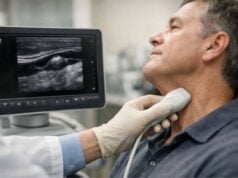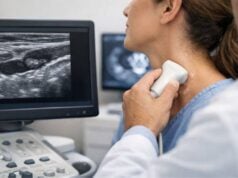
Infiltrative cardiomyopathy is a group of conditions in which an abnormal substance builds up inside the heart muscle and makes it stiff. Over time, the heart may still squeeze normally, but it cannot relax and fill well—so pressure backs up into the lungs and body. Many people first notice shortness of breath with routine activity, ankle swelling, or unusual fatigue. Others present with rhythm problems, fainting, or chest discomfort that does not fit the typical pattern of coronary disease. Because these disorders can mimic more common causes of heart failure, they are often missed early—exactly when targeted treatment works best. The good news is that modern imaging and blood tests can often identify the cause without delay, and several infiltrative diseases now have specific therapies. This article walks through what infiltrative cardiomyopathy is, how it’s diagnosed, and what treatment and long-term care usually involve.
Table of Contents
- What is infiltrative cardiomyopathy?
- Causes and risk factors you should know
- Symptoms and complications to watch for
- How doctors diagnose the underlying cause
- Treatment options and what recovery looks like
- Day-to-day management, prevention, and when to seek care
What is infiltrative cardiomyopathy?
Infiltrative cardiomyopathy means the heart muscle is affected by material that should not be there—most often misfolded proteins, inflammatory cells, or stored minerals. The heart’s pumping chamber walls may look thick on an ultrasound, but the “thickness” can come from infiltration rather than true muscle growth. The key functional problem is usually stiffness: the heart has trouble relaxing and filling, so even small increases in fluid or heart rate can cause shortness of breath.
A practical way to understand it is to separate how the heart looks from how it behaves:
- Structure: the heart muscle may appear thickened; the atria (upper chambers) may enlarge; valves can look mildly thick; fluid may accumulate around the heart in some cases.
- Function: filling pressures rise; lungs can become congested; exercise capacity drops; the electrical system may become unreliable.
Several clues make clinicians think “infiltrative” rather than typical hypertension-related thickening:
- Mismatch signs: thick walls on heart imaging but surprisingly low electrical voltage on an ECG.
- Medication intolerance: standard heart-failure drugs that lower blood pressure can cause pronounced dizziness because some infiltrative diseases also affect nerves.
- Multi-organ hints: numbness, carpal tunnel symptoms, kidney issues, liver enlargement, skin changes, or a long history of unexplained inflammation.
These conditions are sometimes grouped with “restrictive cardiomyopathy,” which describes the stiff-filling behavior. Infiltrative cardiomyopathy is a common reason restrictive physiology develops, but not the only one.
Why early recognition matters: several infiltrative diseases are now treatable in ways that slow or stop progression (and sometimes improve symptoms). Even when disease-specific therapy is not curative, correctly identifying the cause changes decisions about rhythm monitoring, anticoagulation, implantable devices, and family screening.
Finally, infiltrative cardiomyopathy is not one diagnosis—it is an umbrella. The most common modern causes include cardiac amyloidosis (protein deposition), cardiac sarcoidosis (granulomatous inflammation), iron overload (iron storage), and Fabry disease (lysosomal storage). The best evaluation strategy aims to quickly narrow to the specific cause, because the treatments differ sharply.
Causes and risk factors you should know
Infiltrative cardiomyopathy can arise from several distinct diseases. A helpful mental model is: what is accumulating (protein, cells, iron, fat-like molecules), and why is it accumulating (genetic, immune/inflammatory, age-related, or systemic disease)?
1) Cardiac amyloidosis (protein deposition)
Amyloidosis occurs when misfolded proteins form deposits in tissues. In the heart, this often causes wall thickening and stiff filling.
- AL (light-chain) amyloidosis: linked to abnormal plasma cells in the bone marrow. It can progress quickly and is a medical urgency once suspected.
- ATTR amyloidosis: caused by transthyretin protein—either age-related (wild-type) or inherited (variant). It often progresses more slowly but can be highly disabling over time.
Common risk signals:
- Older age (especially for wild-type ATTR)
- History of bilateral carpal tunnel syndrome, biceps tendon rupture, spinal stenosis, or unexplained neuropathy (often clues for ATTR)
- Monoclonal protein in blood/urine or unexplained kidney issues (clues for AL)
2) Cardiac sarcoidosis (inflammatory cell infiltration)
Sarcoidosis is an inflammatory disease that can form granulomas in organs. In the heart it often affects the electrical system and can cause scarring.
Risk signals:
- Known sarcoidosis in lungs/lymph nodes/skin/eyes
- Unexplained heart block, ventricular arrhythmias, or fainting in a relatively young or middle-aged adult
3) Iron overload cardiomyopathy (iron storage)
Iron can accumulate due to hereditary hemochromatosis or repeated transfusions. Iron is directly toxic to heart cells and can cause rhythm problems and pump failure.
Risk signals:
- Family history of iron overload, liver disease, diabetes, bronze skin
- Long-term transfusion therapy for blood disorders
4) Fabry disease and other storage disorders
Fabry is inherited and leads to buildup of sphingolipids in multiple organs, including the heart. It can look like hypertrophic cardiomyopathy but has different treatment options.
Risk signals:
- Family history of early kidney disease, stroke, neuropathic pain, or unexplained thickened heart muscle
- Early-onset heart thickening, arrhythmias, or conduction disease
Other less common causes include certain glycogen storage disorders, eosinophilic infiltration, and some cancer-related processes.
A key point: “risk factors” are often disease-specific rather than lifestyle-related. High blood pressure and diabetes can coexist, but they may not explain the whole picture. If someone has heart-failure symptoms plus out-of-proportion thickening, rhythm problems, and non-cardiac clues, clinicians should widen the differential early—because the wrong label (“just hypertension”) can delay therapies that work best before advanced scarring occurs.
Symptoms and complications to watch for
Symptoms often start subtly because the heart may still pump with a near-normal ejection fraction early on. Many people compensate until a stressor—an infection, dehydration, anemia, or a new arrhythmia—pushes them into noticeable heart failure.
Common symptoms
- Shortness of breath with exertion (walking uphill, climbing stairs)
- Reduced exercise tolerance and unusual fatigue
- Swelling of ankles, legs, or abdomen
- Waking up breathless or needing extra pillows to sleep
- Chest pressure or tightness, sometimes triggered by exertion
- Palpitations, skipped beats, or episodes of rapid heartbeat
- Lightheadedness, near-fainting, or fainting (especially with conduction disease)
Clues that point toward specific infiltrative causes
- Amyloidosis: carpal tunnel symptoms, numbness/tingling, easy bruising, unintentional weight loss, low blood pressure, or dizziness when standing; some people have alternating diarrhea and constipation.
- Sarcoidosis: episodic palpitations, fainting, or unexplained heart block; symptoms can flare and calm over time.
- Iron overload: fatigue plus rhythm problems; sometimes joint pain or liver-related symptoms.
- Fabry disease: burning pain in hands/feet (often earlier in life), heat intolerance, skin spots (angiokeratomas), kidney issues, and later-onset thickened heart muscle.
Complications clinicians try to prevent
- Atrial fibrillation and stroke risk: stiff hearts enlarge the atria, which promotes atrial fibrillation and blood clot formation.
- Conduction disease: slow heart rhythms or heart block may require a pacemaker.
- Ventricular arrhythmias and sudden cardiac death: particularly important in cardiac sarcoidosis and in advanced scarring from several infiltrative diseases.
- Progressive heart failure: congestion can become difficult to control, especially when blood pressure runs low and limits medication options.
- Organ involvement beyond the heart: kidney decline (notably in AL amyloidosis and Fabry), nerve dysfunction (amyloidosis and Fabry), and liver involvement (iron overload).
Emergency warning signs
Seek urgent care for chest pain with severe breathlessness, fainting, a fast or irregular heartbeat that does not settle, sudden worsening swelling, or new confusion. If you have known infiltrative cardiomyopathy and develop rapidly worsening shortness of breath at rest, that is also an emergency.
A practical insight: infiltrative cardiomyopathy often creates a “fragile balance.” Small changes—missing diuretics, taking an anti-inflammatory that causes fluid retention, developing atrial fibrillation, or becoming dehydrated—can cause outsized symptoms. Recognizing triggers early and having a clear action plan can prevent many hospitalizations.
How doctors diagnose the underlying cause
The diagnostic goal is twofold: confirm that the heart is behaving like an infiltrative process, and identify the specific disease driving it. Modern workups are often faster than people expect, especially when clinicians follow a structured pathway.
1) First-line heart testing
- ECG: may show low voltage, conduction delays, heart block, or rhythm abnormalities. A mismatch between a “thick” heart on imaging and low voltage on ECG is a classic clue for amyloidosis.
- Echocardiogram: evaluates wall thickness, filling pressures, valve appearance, atrial size, and fluid around the heart. Many clinicians also use strain imaging; certain strain patterns can raise suspicion for amyloidosis.
- Blood tests for heart stress: natriuretic peptides and troponin can help gauge severity and prognosis, although they do not identify the cause alone.
2) Imaging that clarifies tissue type
- Cardiac MRI: provides high-detail anatomy and tissue characterization. It can detect scarring and infiltration patterns and measure extracellular expansion, which can strongly support amyloidosis or other infiltrative processes.
- Nuclear bone-tracer scanning (for ATTR suspicion): in the right clinical context, this can support ATTR cardiac amyloidosis without needing a heart biopsy—provided AL amyloidosis is carefully excluded.
3) Cause-specific blood and urine testing
To avoid missing treatable systemic disease, clinicians often test for:
- Monoclonal proteins and free light chains (to evaluate for AL amyloidosis)
- Iron studies (ferritin and transferrin saturation) for iron overload; imaging-based iron quantification may follow
- Kidney and liver function to assess organ involvement and guide treatment safety
- Inflammatory markers and targeted testing when sarcoidosis is suspected
4) Sarcoidosis-focused evaluation
If cardiac sarcoidosis is suspected, the workup may include:
- Advanced imaging to detect active inflammation and scar
- A search for easier-to-biopsy sites (like lymph nodes) to confirm systemic sarcoidosis
- Rhythm monitoring to detect intermittent block or ventricular arrhythmias
5) Genetic and family evaluation
When ATTR variant amyloidosis, Fabry disease, or other inherited disorders are possible, genetic testing can clarify diagnosis and guide family screening. This is not just a paperwork step—it can change treatment choices and identify at-risk relatives before symptoms begin.
6) When biopsy is needed
A biopsy can be necessary when results are ambiguous, when AL amyloidosis is still on the table, or when clinicians must distinguish scarring from active inflammation. Sometimes biopsy is done from a non-cardiac site (fat pad, kidney, lymph node) if it is safer and still diagnostic.
A practical expectation-setting point: diagnosis is rarely one test. It is usually a short sequence that narrows possibilities quickly—often within days to a few weeks—so that disease-specific therapy can start as early as possible.
Treatment options and what recovery looks like
Treatment has two parallel tracks: manage heart failure and rhythm risks, and treat the underlying infiltrative disease. The best outcomes come from doing both, not choosing one.
1) Heart failure symptom control
Because many patients have low blood pressure and stiff filling, treatment is often “low and slow”:
- Diuretics are the main tool to reduce congestion and swelling. Clinicians adjust dose based on weight trends, symptoms, and kidney function.
- Salt and fluid strategy is individualized; many patients benefit from moderate sodium restriction and careful hydration rather than extremes.
- Some standard heart failure medications may be poorly tolerated in advanced amyloidosis because they lower blood pressure without improving filling. Clinicians tailor therapy to the individual rather than forcing a standard template.
2) Rhythm and conduction management
- Atrial fibrillation: rate control can be challenging; anticoagulation is often important because clot risk may be higher than expected for the degree of symptoms.
- Pacemaker may be needed for heart block or significant conduction delay.
- ICD consideration: depends on the disease, scar burden, and arrhythmia history; it is particularly important in cardiac sarcoidosis where ventricular arrhythmias can occur even when overall pump function is not severely reduced.
- Ambulatory monitoring (patch monitors or implantable monitors) is common when symptoms are intermittent.
3) Disease-specific therapy
Examples of cause-directed treatment include:
- AL amyloidosis: therapy targets the abnormal plasma cells producing light chains. Because AL can progress rapidly, treatment is often urgent and coordinated between cardiology and hematology.
- ATTR amyloidosis: therapies aim to stabilize transthyretin or reduce its production, slowing further deposition. Earlier treatment tends to preserve function better.
- Cardiac sarcoidosis: treatment often uses corticosteroids and steroid-sparing immunosuppressants in a tiered approach, especially when imaging suggests active inflammation. Rhythm protection is a major focus.
- Iron overload: therapeutic phlebotomy or iron chelation reduces total body iron and can improve cardiac function when done early enough.
- Fabry disease: enzyme replacement or chaperone therapy can slow progression; management also targets arrhythmias and fibrosis risk.
4) Advanced therapies
When symptoms remain severe despite optimal care, referral to an advanced heart failure team can be appropriate. Options may include mechanical support in select cases and transplantation evaluation. Suitability depends heavily on the underlying disease and whether extra-cardiac involvement is controllable.
What recovery often looks like
Many patients see symptom improvement first (less swelling, better breathing) once congestion is controlled. Disease-modifying therapies usually aim to slow or halt progression rather than create an overnight change. A realistic short-term goal is improved daily function and fewer “crash” episodes; a realistic long-term goal is stability—preserving independence and reducing hospitalizations.
Day-to-day management, prevention, and when to seek care
Living with infiltrative cardiomyopathy is often about consistency and early response to small changes. Because the heart may be sensitive to shifts in fluid, heart rate, and blood pressure, a simple routine can prevent many setbacks.
Daily self-management habits
- Track weight at the same time each morning. A sudden increase over a few days can signal fluid buildup before symptoms feel dramatic.
- Notice breathing changes (walking distance, stairs, sleep position). Small declines are meaningful.
- Follow your diuretic plan exactly, and ask for a written “sick-day” strategy if vomiting, diarrhea, fever, or poor intake occurs.
- Limit sodium thoughtfully. Many people do well aiming for roughly 2,000 mg/day, but the right target depends on blood pressure, kidney function, and overall nutrition.
- Exercise with guardrails. Gentle-to-moderate activity is often beneficial. A practical target is building toward 150 minutes/week of moderate activity, adjusted to symptoms and rhythm risk; supervised cardiac rehab can be especially helpful.
Medication safety
- Review over-the-counter medicines. Some anti-inflammatory drugs can worsen fluid retention or kidney function.
- If you take anticoagulants, know the bleeding warning signs (black stools, vomiting blood, persistent nosebleeds, severe bruising) and when to seek urgent care.
- Keep vaccination and infection-prevention habits current, because infections commonly destabilize heart failure.
Follow-up that improves outcomes
Many patients benefit from:
- Periodic rhythm monitoring, especially when palpitations or near-fainting occur
- Repeat imaging at intervals (often every 6–12 months, or sooner if symptoms change)
- Disease-specific follow-up (hematology for AL, neurology/genetics for Fabry or ATTR variants, pulmonology or rheumatology for sarcoidosis, hepatology for iron overload)
- Family screening when an inherited condition is identified
When to seek urgent care
Call emergency services for fainting, chest pain with severe breathlessness, a sustained fast or irregular heartbeat with dizziness, or sudden worsening shortness of breath at rest. Also seek immediate care for signs of stroke (facial droop, arm weakness, speech difficulty), especially if atrial fibrillation is present.
When to contact your clinician promptly
- Rapid weight gain, rising swelling, or increasing shortness of breath over days
- New or worsening dizziness, especially with medication changes
- New palpitations, near-fainting, or reduced exercise tolerance
- Any side effect that makes you consider stopping a key medication
A useful mindset is to treat infiltrative cardiomyopathy like a partnership between you and your care team. The condition can be complex, but the day-to-day signals are often simple. When you catch changes early and adjust quickly, you protect heart function and reduce the risk of emergency events.
References
- Multimodality imaging for the diagnosis of infiltrative cardiomyopathies 2022 (Review)
- 2023 ACC Expert Consensus Decision Pathway on Comprehensive Multidisciplinary Care for the Patient With Cardiac Amyloidosis: A Report of the American College of Cardiology Solution Set Oversight Committee 2023 (Guideline)
- Diagnosis and Management of Cardiac Sarcoidosis: A Scientific Statement From the American Heart Association 2024 (Guideline)
- 2023 ESC Guidelines for the management of cardiomyopathies 2023 (Guideline)
Disclaimer
This article is for educational purposes only and does not provide medical advice, diagnosis, or treatment. Infiltrative cardiomyopathy can involve serious rhythm problems, heart failure, and multi-organ disease, and it requires individualized evaluation. If you have chest pain with severe shortness of breath, fainting, sudden weakness, symptoms of stroke, or a rapid irregular heartbeat with dizziness, seek emergency care immediately. For personal guidance on testing, medications (including diuretics and anticoagulants), implantable devices, genetic questions, and disease-specific therapies, consult a qualified clinician who can review your full history and risks.
If you found this article helpful, please share it on Facebook, X (formerly Twitter), or any platform you prefer, and follow us on social media. Your support through sharing helps our team continue producing clear, trustworthy health content.