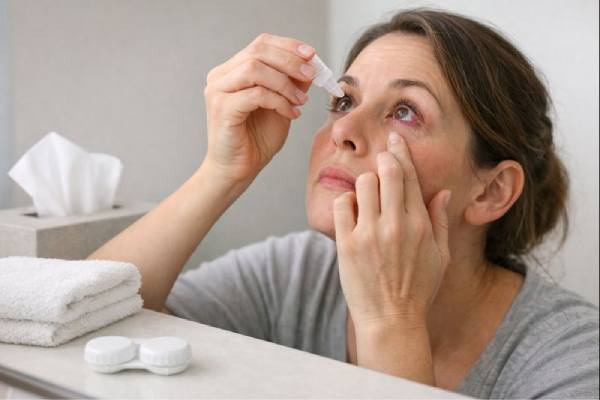
Influenza B is often described as “the flu that spreads in schools,” but it can affect anyone—and it can come with surprises beyond cough, fever, and body aches. One of those surprises is a red, watery, irritated eye that looks like pink eye (conjunctivitis). Sometimes the flu virus is directly involved; other times the eye becomes inflamed from congestion, rubbing, or a second virus circulating at the same time. Either way, the overlap creates practical questions: How contagious am I? Do I need antibiotic drops? When is it safe to return to work or school? And what symptoms mean this is more than a simple irritated eye?
This article focuses on the patterns that matter most: what flu-related conjunctivitis tends to look like, how long you should act as if you are contagious, and how to care for your eyes at home without missing warning signs that need medical attention.
Top Highlights
- Pink eye can occur during Influenza B, but many cases are viral and improve with supportive care.
- Watery tearing and gritty discomfort usually fit viral conjunctivitis, while thick pus-like discharge is more suggestive of bacterial infection.
- You are typically most contagious early in the flu illness, and eye secretions can spread conjunctivitis through hands, towels, and shared items.
- Stop contact lenses immediately with any red eye and do not restart until the eye is white and comfortable again.
Table of Contents
- How Influenza B connects to pink eye
- Symptoms that fit flu-related conjunctivitis
- Contagious period and return to school
- Home care that soothes and prevents spread
- When to seek care and what to expect
- Prevention for households and future flu seasons
How Influenza B connects to pink eye
Influenza B is one of the main types of seasonal influenza that circulates each year. Unlike Influenza A, which is divided into many subtypes, Influenza B is discussed in lineages and evolves a bit differently over time. What matters for your eyes is simpler: the flu is a respiratory virus, but the eyes are exposed mucosal tissue, and the tear drainage system links the eye surface to the nose. That connection makes conjunctival irritation and infection possible during a flu illness.
Three common pathways to a red eye during flu
When someone develops “pink eye with Influenza B,” it typically happens through one or more of these routes:
- Viral inflammation of the conjunctiva: Some influenza infections are associated with conjunctivitis, causing redness, watering, and a gritty feeling.
- Congestion and tear-duct backup: Swollen nasal passages can interfere with tear drainage. The eye may water excessively, feel sticky, or burn from surface dryness and irritation.
- Hand-to-eye spread: Flu makes people touch their face more—wiping the nose, coughing into hands, rubbing tired eyes. Viral particles on fingers can inflame the conjunctiva and can also spread other viruses that commonly cause conjunctivitis.
Why timing can mislead
A red eye appearing during flu symptoms does not prove Influenza B is the direct cause. Many respiratory viruses circulate at the same time, and some (notably adenoviruses) are very good at causing conjunctivitis. It is also possible to have influenza confirmed by a test and still develop conjunctivitis from irritation or secondary infection. That is why symptom pattern matters more than the calendar.
What “flu-related pink eye” usually means clinically
In everyday seasonal flu settings, conjunctivitis is often:
- Mild to moderate
- Watery rather than pus-like
- Accompanied by other upper-respiratory symptoms
- Self-limited, improving as the overall illness improves
The main clinical goal is to identify the minority of cases that are not routine conjunctivitis: corneal inflammation, contact lens–related infection, or internal eye inflammation. Those conditions can begin with redness but behave differently as hours and days pass.
A useful mindset: if your eye symptoms stay in the “irritation and watering” zone and improve gradually, home care is usually appropriate. If you develop significant pain, strong light sensitivity, or blurred vision, treat it as a separate eye problem that deserves assessment.
Symptoms that fit flu-related conjunctivitis
Conjunctivitis is best understood as a pattern—redness plus irritation—rather than a single diagnosis. Influenza B can overlap with viral conjunctivitis, but bacterial and allergic causes can look similar at first. The details of discharge, discomfort, and progression are often the most useful clues.
Typical viral-pattern symptoms
A viral conjunctivitis pattern is common during respiratory illnesses and usually includes:
- Redness in the white of the eye
- Watery tearing or a thin, clear mucus
- Gritty, scratchy, or burning sensation
- Mild eyelid puffiness
- One eye starting first, with the second eye sometimes following within a few days
- Mild light sensitivity that feels like “the eye is irritated,” not severe pain with light
People often describe their eye as “tired,” especially when fever and fatigue are present. The eye may feel worse in the evening or after screen time because flu tends to reduce blinking quality and dehydrates the ocular surface.
Symptoms that lean more bacterial
Bacterial conjunctivitis is less common than viral in many adult settings, but it can happen, especially with close-contact spread in families and childcare. Consider a bacterial pattern when you see:
- Thick yellow or green discharge that returns soon after wiping
- Eyelids repeatedly stuck together on waking
- A sticky, “goopy” feel throughout the day
- Noticeably increasing discharge over 24 to 48 hours rather than gradual improvement
Even these clues are not perfect—viral infections can create morning crusting too. The difference is persistence and thickness: bacterial discharge tends to be heavier and more continuous.
Symptoms that suggest allergy or irritation
Not all red eyes during flu season are infectious:
- Allergic conjunctivitis usually features itching as the main symptom and often affects both eyes equally from the start.
- Irritant redness can come from dry indoor air, smoke exposure, fever-related dehydration, frequent wiping, or accidental contact with products like hand sanitizer.
If the eye is mildly red but comfortable, with minimal discharge and no progression, irritation is a reasonable possibility.
Signs it is not “simple pink eye”
These symptoms should change your plan from home care to evaluation:
- Moderate or severe eye pain (not just scratchiness)
- Strong light sensitivity that makes you want to keep the eye closed
- Blurred vision that does not clear with blinking
- A white spot, haze, or “film” on the cornea
- A persistent foreign-body sensation that does not improve with lubrication
Contact lens wearers: treat symptoms as higher-risk
If you wear contact lenses, stop lens wear immediately with any red eye and be cautious about pain, light sensitivity, and blurred vision. Contact lens–related corneal problems can imitate conjunctivitis early and can worsen quickly if lenses are continued.
Your symptoms are a message. Look for the pattern, track the trend, and be stricter about safety if you are in a higher-risk group.
Contagious period and return to school
When Influenza B and conjunctivitis overlap, the contagious period becomes a two-part question: contagiousness from the flu and contagiousness from the eye secretions. Both matter, because influenza spreads efficiently through close contact and droplets, while viral conjunctivitis spreads easily through hands and shared items.
How long Influenza B is typically contagious
Seasonal influenza (including Influenza B) is often contagious starting about one day before symptoms appear and for about five to seven days after you become sick, with the highest contagiousness commonly in the first several days. Children and people with weakened immune systems can remain contagious longer. This is why a household can feel like it “catches up” all at once: contagiousness peaks when symptoms are strongest and care tasks involve a lot of close contact.
How conjunctivitis spreads in a household
Viral conjunctivitis spreads through:
- Touching eye secretions and then touching another person or surface
- Shared towels, washcloths, pillowcases, and cosmetics
- Contaminated eye drops if the bottle tip touches lashes or skin
- High-touch objects such as phones, remote controls, and door handles
If you have both flu symptoms and conjunctivitis symptoms, it is safest to assume you could spread both and to use layered precautions.
Return to work, school, and childcare
Policies vary, but a practical, health-focused approach is symptom-based:
- For influenza symptoms: stay home until you are improving and fever-free for at least 24 hours without fever-reducing medication. If you never had a fever, you should still aim for clear symptom improvement and avoid close contact in the early days.
- For conjunctivitis: return is often reasonable once discharge is controlled and you can reliably avoid eye rubbing and practice hand hygiene. For young children who cannot keep hands away from their eyes, staying home longer may reduce spread.
What to do if one person has both symptoms
A short-term “containment plan” helps during the most infectious window:
- Assign one towel per person, or use disposable paper towels for hand drying.
- Do not share pillows or pillowcases while eye discharge is present.
- Clean high-touch surfaces daily for several days, especially phones and bathroom fixtures.
- Encourage frequent handwashing, particularly after nose blowing and before meals.
A realistic timeline mindset
You do not need to wait for every symptom to vanish. The goal is to avoid peak contagiousness and reduce behaviors that spread infection. Once fever has resolved (if present), respiratory symptoms are clearly improving, and eye discharge is minimal and manageable, most people can return to normal routines with careful hygiene.
If you are caring for a vulnerable person—an infant, an older adult, or someone immunocompromised—extend precautions longer and prioritize masking and separation during the first several days of illness.
Home care that soothes and prevents spread
Most viral conjunctivitis episodes are mild and improve with supportive care. Home care has two jobs: relieve symptoms and prevent spread. The safest plan is gentle, consistent, and conservative with medications that can cause rebound redness or hide worsening disease.
Step-by-step eye comfort plan
These measures are appropriate for most mild cases:
- Use lubricating tears: Artificial tears calm burning and grittiness. If you need drops more than 4 times per day, preservative-free options are often more comfortable.
- Apply cool compresses: Use a clean, cool compress for 5 to 10 minutes, 2 to 4 times daily to reduce irritation and eyelid puffiness.
- Clean lids gently: If crusting occurs, soften it with a warm damp cloth and wipe gently along the lashes. Avoid scrubbing.
- Rest the eye surface: Take screen breaks, blink deliberately, and keep your environment less drying if possible.
Flu care that indirectly helps the eyes
Your eyes often improve when the overall illness improves. Supportive flu care can reduce eye rubbing and dryness:
- Hydrate steadily, especially if fever is present.
- Rest more than you think you need.
- Manage fever and aches as directed by your clinician or local guidance.
Contact lens rules that prevent complications
If you wear contacts:
- Remove lenses immediately with any redness, tearing, or discomfort.
- Do not restart lenses until the eye is white, comfortable, and stable.
- Replace disposable lenses that were worn around symptom onset.
- Replace the contact lens case to reduce reinfection risk.
If pain, light sensitivity, or blurred vision is present, do not treat it as routine conjunctivitis—seek evaluation.
Medication cautions
These common missteps can prolong symptoms:
- Redness-relief drops: They can cause rebound redness and do not treat infection.
- Using leftover antibiotic drops: Old prescriptions may be contaminated or inappropriate and can delay correct diagnosis.
- Steroid eye drops without supervision: Steroids can worsen some viral eye infections and raise eye pressure.
Hygiene that prevents household spread
Use “do not share” rules until symptoms are improving:
- No shared towels, pillows, cosmetics, or eye drops.
- Wash hands for 20 seconds before and after touching the face or applying drops.
- Keep eye drop bottle tips from touching lashes, skin, or the eye.
- Change pillowcases every 1 to 2 days if discharge is present.
Home care should produce gradual improvement over several days. If your eye is steadily worsening, not just “annoying,” treat that as a reason to step up to medical evaluation.
When to seek care and what to expect
Most conjunctivitis is uncomfortable rather than dangerous, but a small subset of red-eye conditions can threaten vision if care is delayed. Influenza symptoms can make it tempting to wait, so it helps to use clear thresholds.
Seek urgent care the same day if
These symptoms raise concern for corneal inflammation, internal eye inflammation, or pressure-related problems:
- Moderate or severe eye pain
- Significant light sensitivity that makes you avoid opening the eye
- Blurred vision, haze, or reduced clarity that does not clear with blinking
- A white spot or visible haze on the front surface of the eye
- Rapidly worsening redness or swelling
- Severe headache with nausea and a very red eye
If you are unsure, it is safer to be assessed than to gamble on time.
Be seen promptly within 24 to 48 hours if
These scenarios are higher-risk even if symptoms are not dramatic:
- You wear contact lenses and have a red eye
- You have a weakened immune system or poorly controlled diabetes
- You have had recent eye surgery or a known corneal condition
- Discharge is thick and persistent, or eyelids are repeatedly stuck shut
- Symptoms are not improving by about a week, or they worsen after initial improvement
What a clinician may do
Evaluation often includes:
- Checking visual acuity in each eye
- Examining the conjunctiva and eyelids for patterns of inflammation
- Using fluorescein dye to look for corneal involvement
- Assessing pupil response and looking for signs of internal inflammation
Based on findings, the plan may be:
- Supportive care only, with hygiene guidance and a clear follow-up timeline
- Antibiotic drops if bacterial infection is likely or risk is higher
- Referral to an eye specialist if corneal findings, severe pain, or diagnostic uncertainty is present
When to ask about antiviral flu treatment
If your influenza illness is early, severe, or you are in a higher-risk group for complications, ask a clinician whether antiviral treatment is appropriate. Eye symptoms alone do not determine that decision, but the overall severity and timing of flu symptoms can.
A simple safety checklist
Seek evaluation if any of the following are true:
- Vision is worse today than yesterday.
- Light feels painful rather than mildly bothersome.
- The eye hurts rather than feels gritty.
- You wear contact lenses.
- You are not clearly improving over several days.
This approach keeps you from over-treating mild cases while protecting you from the scenarios where delay is costly.
Prevention for households and future flu seasons
Prevention is where you can make the biggest difference. The same habits that reduce influenza transmission also reduce the chance of viral conjunctivitis spreading through a household. Think of prevention as “less virus exposure” plus “less face touching,” repeated consistently during peak season.
Flu prevention that indirectly protects eyes
Reducing influenza reduces the cascade of tissues, rubbing, and eye irritation:
- Stay current with seasonal influenza vaccination according to local guidance.
- Avoid close contact with others when you are sick, especially in the first days of symptoms.
- Improve airflow indoors when possible, especially in crowded settings.
- Cover coughs and sneezes and wash hands immediately afterward.
These steps lower the chance of flu infection and can shorten the number of days you are performing high-risk behaviors like frequent wiping and face touching.
Eye-specific hygiene habits
To reduce conjunctivitis spread:
- Avoid rubbing your eyes, especially when you have respiratory symptoms.
- Wash hands before and after applying eye drops or touching the eyelids.
- Do not share towels, pillowcases, cosmetics, or eye drops.
- Clean high-touch objects daily during active illness: phones, remotes, faucets, and door handles.
If you have children, focus on the moments that drive spread: after wiping the nose, after coughing, before meals, and before bedtime. Simple routines beat perfect routines.
School and daycare strategies
If a child develops flu symptoms with a red eye:
- Keep them home during the fever and peak illness phase.
- Emphasize handwashing and provide their own towel and bedding.
- Teach “tissue then trash then hands” as a repeatable habit.
If conjunctivitis is spreading in a classroom, it is often because children touch their eyes frequently. Consistent hand hygiene and discouraging eye rubbing can reduce transmission more effectively than most other measures.
Protecting contact lens wearers long term
If you wear contact lenses, reduce future red-eye episodes by:
- Replacing cases regularly and cleaning them correctly
- Avoiding sleeping in lenses unless specifically prescribed
- Taking breaks from lenses when you are sick or sleep-deprived
- Using lubricating drops when dryness is predictable, such as during long screen days
What prevention success looks like
Success is not “never getting sick.” It is fewer household infections, shorter outbreaks, and fewer eye complications because you handled red-eye symptoms early, avoided risky lens use, and reduced hand-to-eye spread. Over a season, those small decisions add up to a meaningful reduction in discomfort and missed days.
References
- Influenza-Associated Ocular Complications: A Comprehensive Review of Viral Subtypes, Clinical Presentations, and Vaccination Risks – PMC 2025 (Review)
- About Influenza | Influenza (Flu) | CDC 2024
- Types of Influenza Viruses | Influenza (Flu) | CDC 2024
- How to Treat Pink Eye | Conjunctivitis (Pink Eye) | CDC 2024
- Conjunctivitis Preferred Practice Pattern – PubMed 2024 (Guideline)
Disclaimer
This article is for educational purposes and does not replace personalized medical advice. Eye redness during influenza is often mild, but some causes of red eye can threaten vision if treatment is delayed. Seek prompt medical evaluation if you have eye pain, significant light sensitivity, blurred vision, intense redness, a visible corneal spot or haze, a red eye while wearing contact lenses, recent eye injury or chemical exposure, or symptoms that worsen or do not improve.
If you found this guide helpful, please consider sharing it on Facebook, X (formerly Twitter), or any platform you prefer so others can recognize flu-related eye symptoms and know when to seek care.