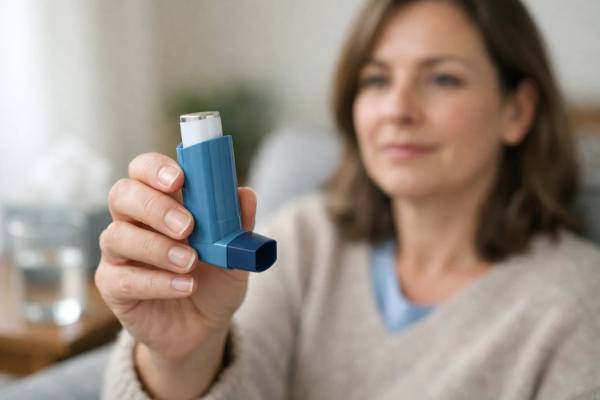
Viral wheeze can feel alarming: a child (or sometimes an adult) catches a routine cold and suddenly breathing sounds tight, noisy, and effortful. Inhalers are often suggested because they can quickly relax airway muscles and ease the “air won’t move” sensation. Yet viral wheeze is not one single condition, and not every episode responds the same way. Some people get rapid relief from a reliever inhaler, while others see little change because swelling and mucus—not muscle spasm—are doing most of the blocking.
This article explains what viral wheeze is, which inhalers help most, and how to tell when an inhaler is unlikely to be the right tool. You’ll also learn practical technique details (because delivery matters as much as the medicine), common side effects, and clear red flags that should prompt urgent medical care.
Quick Overview
- Reliever inhalers can reduce wheeze and breathlessness within minutes when bronchospasm is a major driver of symptoms.
- Inhaled corticosteroid plans may reduce severe flare-ups in some people with recurrent viral-triggered episodes, but they are not a quick fix in the moment.
- Inhalers often help less when symptoms come mainly from mucus, airway swelling, bronchiolitis in very young infants, or non-asthma problems like croup.
- Overuse of reliever inhalers can mask worsening illness and cause side effects such as tremor, fast heart rate, and agitation.
- If a reliever is not lasting close to 4 hours, or breathing is hard work, treat it as urgent and seek same-day medical assessment.
Table of Contents
- What viral wheeze usually means
- Reliever inhalers: when they work well
- Times inhalers are unlikely to help
- Preventer inhalers and episode plans
- Spacer technique and safe home use
- When to escalate and what follow-up looks like
What viral wheeze usually means
Viral wheeze is a pattern: wheezing (a musical, whistling sound) appears during a viral respiratory infection and often improves as the infection settles. It is especially common in preschool-aged children because their airways are smaller and more reactive. When the airway lining becomes inflamed and mucus increases, even a modest narrowing can create turbulence and noise.
It helps to think of “wheeze” as a symptom with multiple possible drivers:
- Bronchospasm: airway muscles tighten, narrowing the tubes that carry air.
- Airway lining swelling: inflammation thickens the airway wall from the inside.
- Mucus plugging: sticky secretions partially block airflow, especially on exhale.
Reliever inhalers mainly target bronchospasm. If bronchospasm is a big part of the picture, a reliever can be noticeably helpful. If swelling and mucus are dominant, improvement may be smaller and slower.
Viral wheeze and asthma overlap
Viral wheeze is not automatically asthma. Many children wheeze only with colds and have no symptoms between illnesses. Others gradually develop a broader pattern: wheeze with exercise, laughing, allergens, smoke exposure, or at night, plus repeated need for relievers. That wider pattern fits asthma more closely.
A practical way to distinguish the two is to look for symptoms between colds. If breathing is completely normal between viral infections, clinicians often describe this as episodic viral wheeze. If symptoms persist or recur outside infections, asthma becomes more likely.
Why “viral wheeze” can still be serious
Even if episodes are “just viral,” breathing can become difficult quickly—especially in young children. The danger is not the label; it’s the work of breathing, oxygen levels, hydration, and alertness. In the later section on escalation, you’ll see specific signs that matter more than any name. If you want to jump ahead, see when to escalate and what follow-up looks like.
Reliever inhalers: when they work well
Reliever inhalers (often called “blue inhalers” in some countries) typically contain a short-acting beta-2 agonist, such as salbutamol (albuterol). They relax smooth muscle around the airways, which can widen the airway tubes and improve airflow. When a reliever works, the change is usually quick—often within 5–15 minutes—because the medication acts directly in the lungs.
Signs a reliever is likely to help
Relievers tend to be most useful when bronchospasm is prominent. Clues include:
- Wheeze that is louder on exhale and accompanied by a tight, “can’t get air out” feeling
- Symptoms that improve noticeably after previous reliever doses
- A pattern of wheeze that comes and goes during the day rather than steadily worsening
- A history of similar episodes with colds, especially in children older than 12–18 months
Even when mucus and swelling are present (which is common with viral infections), bronchospasm can still contribute. In those cases, a reliever may not eliminate symptoms, but it can reduce breathing effort and buy time while the infection runs its course.
What “good response” should look like
A realistic expectation is not “silent breathing forever,” but a meaningful shift in comfort and function. After a well-delivered dose, you might see:
- Easier speaking or less breathlessness during feeding or activity
- Reduced chest tightness
- Less audible wheeze, or wheeze that returns later rather than immediately
- Improved sleep because breathing feels less laborious
Relievers typically do not treat nasal congestion, fever, sore throat, or cough frequency on their own. A cough may persist even when the airways are more open because cough is often driven by upper-airway irritation and mucus drainage.
Side effects that signal the dose is “real”
Common short-term side effects include tremor, jitteriness, fast heart rate, and restlessness. These are uncomfortable but often temporary. They can also be a warning sign that repeated dosing is stacking up without improving breathing enough. If someone needs repeated doses to stay comfortable, that is a signal to seek medical guidance rather than continuing at home indefinitely.
One more key point: delivery method matters. A reliever sprayed into the mouth without a spacer often delivers far less medication to the lungs than people expect. If a reliever seems “ineffective,” technique and device choice should be checked before concluding the medicine cannot help.
Times inhalers are unlikely to help
Inhalers are powerful when they match the problem they can treat. They are frustrating—and sometimes risky—when they are used for the wrong cause of noisy breathing. Viral infections can trigger many airway patterns that sound similar, especially to an anxious listener in the middle of the night.
Very young infants with bronchiolitis
In infants, especially under 12 months, wheeze-like sounds can come from bronchiolitis. The main issues are airway swelling and mucus plugging in very small airways. A reliever inhaler may not produce clear improvement because bronchospasm is not the main driver. Some clinicians will still trial a bronchodilator dose to assess response, but lack of benefit is common in this age group.
Croup and upper-airway noise
Croup creates a harsh barking cough and a high-pitched sound on inhalation (stridor), not classic wheeze on exhalation. A reliever inhaler aimed at the lower airways will not address the swollen upper airway. If the noise is loudest when breathing in, or a child seems scared to inhale, treat it as an urgent evaluation rather than “more puffs.”
Pneumonia, dehydration, and fatigue
If fever is high, breathing is fast, and there is marked tiredness or poor fluid intake, the priority is medical assessment. An inhaler may temporarily reduce wheeze without addressing the underlying infection severity. The risk is delay: a partial response can create false reassurance while illness progresses.
Foreign body, allergy, and other “do not miss” causes
Sudden onset wheeze after choking, eating, or playing with small objects can signal aspiration. Similarly, wheeze plus hives, lip swelling, vomiting, or rapid deterioration can signal an allergic reaction. These situations require urgent care; inhalers should not be the only response.
When “no effect” is still useful information
A non-response can guide next steps. If a properly delivered reliever dose produces no improvement—especially if breathing effort remains high—this is a meaningful data point for clinicians. It suggests either a different diagnosis, a severity level that needs supervised treatment, or a type of obstruction that is not bronchospasm-dominant.
If you are unsure whether the sound is wheeze or something else, focus on observable signs: breathing rate, chest retractions, ability to drink or speak, color around lips, and alertness. Those markers are more reliable than the sound alone.
Preventer inhalers and episode plans
Preventer inhalers are designed to reduce airway inflammation over time. The most common are inhaled corticosteroids. They are not the “instant relief” tool, but they can change the trajectory of recurrent viral-triggered wheeze for some people—especially children with frequent episodes or severe flare-ups.
Daily preventers: who they fit best
A daily inhaled corticosteroid plan is more likely to be considered when there is:
- Persistent or recurrent wheeze beyond viral infections
- Regular need for a reliever inhaler (for example, multiple days most weeks)
- Night symptoms (cough or breathlessness)
- Severe episodes that require urgent care, emergency visits, or hospital care
For these patients, the goal is fewer flare-ups, less airway sensitivity, and less reliance on relievers. Benefits are usually assessed over weeks to a few months rather than days.
Intermittent inhaled steroid “start of cold” plans
Some clinicians use an intermittent plan in children with episodic viral wheeze: a higher-dose inhaled corticosteroid is started at the first signs of a cold and continued for a short course. The intent is to blunt the inflammatory surge that can lead to severe wheeze.
This approach can be helpful in selected cases, but it has trade-offs:
- It requires good caregiver recognition of early symptoms and reliable technique.
- If respiratory infections are frequent, repeated courses may add up to substantial steroid exposure.
- It should be clinician-directed, with clear limits and follow-up, rather than improvised at home.
Where oral steroids fit in
Oral corticosteroids have a role in severe exacerbations for some patients, but routine use for mild-to-moderate preschool viral wheeze is controversial. In many real-world settings, they are reserved for children who are significantly unwell or require emergency-level care. That distinction matters: inhalers and oral steroids are not interchangeable tools, and “more medication” is not the same as “better care.”
Practical safety with preventers
Inhaled corticosteroids can cause hoarseness and oral thrush, especially with higher doses or poor technique. Rinsing the mouth (or brushing teeth) after use and using a spacer can reduce this risk. The bigger safety concept is not fear of steroids; it’s using the right regimen for the right pattern and reassessing when the pattern changes.
If you’re managing repeated viral wheeze episodes, the most useful next step is often a written plan: what to start, what to watch, and when to seek help. That plan only works if the inhaler is delivered effectively, which is where technique becomes central.
Spacer technique and safe home use
When inhalers “don’t work,” technique is often the hidden reason. A pressurized metered-dose inhaler releases medication fast; without a spacer, much of it hits the mouth and throat rather than reaching the lungs. A spacer holds the medication cloud long enough to inhale it properly, and a mask helps younger children seal the system.
A reliable spacer routine
The goal is simple: one puff into the spacer, then calm breaths to draw it into the lungs.
- Shake the inhaler well.
- Insert inhaler into the spacer.
- Place the mouthpiece or mask to form a good seal.
- Press one puff into the spacer.
- Breathe in and out slowly for several breaths (many plans use about 4–10 normal breaths).
- Wait briefly before the next puff, and repeat one puff at a time.
One common mistake is firing multiple puffs into the spacer at once. That increases medication loss to the spacer walls and reduces the dose delivered to the lungs.
Reasonable home dosing principles
Dosing should follow an individualized action plan whenever possible. If you do not have one, many clinicians start with a conservative approach and escalate based on response and severity. Practical safety guardrails include:
- Use the smallest dose that clearly improves breathing.
- If a dose provides relief, note how long it lasts; a reliever that wears off quickly is a warning sign.
- Needing reliever doses very frequently (for example, sooner than roughly every 4 hours) should prompt medical advice the same day.
- If breathing is hard work or the person cannot talk, drink, or settle, treat it as urgent regardless of dosing schedule.
Common errors that reduce effectiveness
- A loose mask seal that leaks medication out the sides
- A spacer that is not cleaned appropriately (or is coated with static)
- Spraying and waiting too long before inhaling
- Crying or struggling through the mask (the breaths become shallow and less effective)
- Using an empty or nearly empty inhaler without realizing it
If your household relies on inhalers during colds, it is worth practicing technique when everyone is calm and well. In the moment, a familiar routine is easier to execute correctly.
When nebulizers enter the picture
Nebulizers can be useful in severe episodes or when a spacer setup is not practical, but they are not automatically stronger. With good technique, an inhaler plus spacer can deliver medication very effectively. The choice is often about severity, cooperation, and clinical setting rather than superiority.
When to escalate and what follow-up looks like
The most important decision in viral wheeze is not “inhaler or no inhaler.” It is knowing when home care has reached its limit. Viral wheeze can worsen quickly, and the safest plans are built around observable signs, not wishful timelines.
Red flags that need urgent assessment
Seek urgent medical care if any of the following are present:
- Breathing is visibly hard work (deep chest retractions, marked belly breathing, nasal flaring)
- Lips or face look bluish or gray, or there is unusual paleness with exhaustion
- The person is too breathless to speak in full sentences (or a child cannot feed or drink)
- There is drowsiness, confusion, or difficulty staying awake
- A reliever provides little benefit, or benefit fades quickly
- Symptoms are rapidly worsening over hours, not slowly improving over days
If you ever feel unsure, treat uncertainty itself as a reason to seek help—especially for infants and young children.
What a typical episode timeline can look like
Many viral-triggered wheeze episodes peak over the first 1–3 days of a cold and then improve gradually, but cough can linger longer. A helpful mindset is to track function: sleep quality, hydration, play, and breathing effort. If those are improving, the sound of an occasional wheeze may be less concerning. If function is declining, the sound is only one piece of the story.
When to ask about asthma evaluation
Consider follow-up for possible asthma or a broader wheeze disorder when:
- Wheeze occurs without colds, or is triggered by exercise, allergens, smoke, or strong odors
- Night cough or breathlessness is recurring
- Reliever inhaler use becomes frequent across many weeks
- There are repeated severe episodes requiring urgent care
- There is a strong atopic background (eczema, allergic rhinitis, food allergy) or family history
A clinician may suggest a trial of controller therapy, review environmental triggers, and check inhaler technique. They may also consider whether the “wheeze” is actually a different noise pattern or a structural issue in the airway.
What to prepare for a follow-up visit
It helps to bring concrete details:
- How many episodes occurred in the last 6–12 months
- What triggers preceded each episode (cold symptoms, smoke exposure, exercise)
- How quickly the reliever worked and how long the effect lasted
- Whether there were nighttime symptoms, urgent visits, or steroid courses
- A short video of breathing during symptoms (if safe to record)
That information makes treatment more precise and reduces trial-and-error. Viral wheeze management works best when the plan is specific, rehearsed, and updated as the pattern evolves.
References
- Management of Preschool Wheezing: Guideline from the Emilia-Romagna Asthma (ERA) Study Group – PMC 2022 (Guideline)
- Short-term efficacy of inhaled short-acting beta-2-agonists for acute wheeze/asthma symptoms in preschool-aged children: a systematic review and meta-analysis – PubMed 2025 (Systematic Review and Meta-analysis)
- Efficacy of oral corticosteroids for acute preschool wheeze: a systematic review and individual participant data meta-analysis of randomised clinical trials – PubMed 2024 (Systematic Review and IPD Meta-analysis)
- European Respiratory Society statement on preschool wheezing disorders: updated definitions, knowledge gaps and proposed future research directions – PubMed 2024 (Position Statement)
- Clinical Practice Guidelines : Preschool asthma (1-5 years) 2025 (Guideline)
Disclaimer
This article is for general educational purposes and does not provide medical advice, diagnosis, or treatment. Wheeze and breathing difficulty can become serious quickly, especially in infants and young children. Medication choice and dosing should follow an individualized plan from a licensed clinician, particularly for anyone with recurrent wheeze, chronic lung disease, heart disease, immune compromise, or pregnancy. Seek urgent medical care if breathing is hard work, lips or face appear bluish or gray, there is unusual sleepiness or confusion, fluids cannot be kept up, or a reliever inhaler provides little benefit or wears off quickly.
If you found this article useful, consider sharing it on Facebook, X (formerly Twitter), or any platform you prefer.