An inlet ventricular septal defect is a type of “hole between the pumping chambers” in a very specific spot—near the heart’s inlet valves. Ventricular septal defect (VSD) means an opening in the wall between ventricles. Because of its location, an inlet VSD can behave differently from more common VSD types: it may affect nearby valves, complicate blood flow patterns, and sometimes travel with other congenital heart changes.
For some babies, the first clue is a heart murmur found at a routine visit. For others, feeding becomes tiring, breathing looks fast, or weight gain slows. In older children and adults, symptoms can be subtle until exercise or pregnancy increases the heart’s workload.
This article explains what an inlet VSD is, why it happens, who is at higher risk, what symptoms to watch for, how it’s diagnosed, and what treatment and long-term care usually involve.
Table of Contents
- What an inlet VSD does to the heart
- What causes inlet ventricular septal defects?
- First signs, symptoms, and complications
- How inlet VSD is diagnosed
- Treatment options and typical timelines
- Long-term management and when to seek care
What an inlet VSD does to the heart
A ventricular septal defect is an opening in the wall between the left and right ventricles. In an inlet VSD, that opening sits in the part of the septum closest to where blood enters the ventricles—right next to the tricuspid and mitral valves. That neighborhood matters. An inlet VSD can be close to the heart’s electrical “wiring,” and it can also influence how the inlet valves close and seal.
Why location changes the physics
Blood normally leaves the left ventricle at higher pressure than the right. With a VSD, blood can pass from left to right. This is called a left-to-right shunt (extra blood crossing to the right side). The practical consequences depend on size and resistance:
- Small inlet VSD: The opening is restrictive, so only a small amount crosses. The heart may be otherwise healthy, and the main finding is often a murmur.
- Moderate to large inlet VSD: More blood crosses, sending extra volume to the lungs and back to the left heart. Over time, this can stretch the left atrium and left ventricle and raise lung pressures.
How the lungs and heart respond over time
In the first weeks of life, lung blood vessels naturally relax. As lung resistance falls, a larger shunt may appear “worse,” and symptoms often become clearer—especially in larger defects. If a large shunt persists without correction, the lung vessels can thicken and stiffen. That process can lead to pulmonary hypertension (high pressure in lung arteries). Once lung vessel changes become advanced, closing the defect may no longer be safe, which is why timing is such a central theme in care.
Relationship to atrioventricular septal defects
Inlet VSDs can appear as isolated defects, but they are also commonly discussed alongside atrioventricular septal defects (AVSD), where the center of the heart (including valves and septal structures) develops differently. Even when the inlet VSD is “isolated,” your cardiology team will usually look carefully for subtle valve anatomy differences that affect treatment plans.
What causes inlet ventricular septal defects?
An inlet VSD forms during early fetal development, when the heart’s internal walls and valves are assembling. Most families want a simple reason—one event, one exposure—but congenital heart defects are more often the result of a combination of genetic susceptibility and developmental chance. In many cases, no single cause can be proven.
How the defect develops
The “inlet” region is closely tied to the structures that become the atrioventricular valves and the central septum. If this area doesn’t fuse completely, an opening can remain. Because inlet VSDs sit near valve tissue, they can sometimes be associated with:
- Valve leaflet “clefts” or mild valve leakage
- Abnormal attachment of valve tissue near the defect
- Changes in nearby conduction pathways (the system that carries electrical signals)
Genetic and chromosomal associations
Risk increases when certain genetic factors are present. The strongest day-to-day clinical association is with chromosomal conditions—especially trisomy 21 (Down syndrome)—in which atrioventricular canal–type anatomy and inlet-region defects occur more often. Not every baby with an inlet VSD has a chromosomal condition, and not every chromosomal condition leads to an inlet VSD, but the link is common enough that clinicians will often recommend genetic counseling or testing based on the overall heart anatomy and exam findings.
Family history can matter too. If a parent or sibling has a congenital heart defect, the chance of another family member having a defect is higher than the background rate, even if the exact type differs.
Maternal and pregnancy-related risk factors
Some exposures and conditions are associated with higher congenital heart defect risk overall. They do not guarantee a defect, but they can influence screening decisions:
- Poorly controlled pre-gestational diabetes
- Certain infections during pregnancy
- Some medications (risk depends on the specific drug and timing)
- Heavy alcohol use
- Smoking and significant secondhand smoke exposure
If an inlet VSD is diagnosed prenatally, many teams focus on two goals: checking for additional heart findings (valves, outflow tracts, rhythm) and planning delivery and early newborn monitoring in a center equipped for pediatric cardiology care.
A helpful perspective for families
Parents often carry guilt that doesn’t belong to them. For most inlet VSDs, there is no evidence that a typical daily activity caused the defect. The more constructive focus is on what the anatomy looks like now, how it affects blood flow, and what timeline best protects the child’s lungs and growth.
First signs, symptoms, and complications
Symptoms from an inlet VSD range from none at all to clear signs of heart strain. The pattern depends on defect size, valve involvement, and whether there are other congenital findings. Many infants look well at birth and become more symptomatic over the first 4–12 weeks as lung resistance drops and shunting increases.
Common early signs in babies
Parents and clinicians often notice a combination of feeding, breathing, and growth clues:
- A heart murmur found on routine exam
- Fast breathing, especially during feeds or sleep
- Sweating with feeding
- Taking a long time to finish a bottle or tiring at the breast
- Poor weight gain or falling off growth curves
- Frequent respiratory infections or prolonged colds
A useful practical marker: if feeding routinely takes longer than about 30 minutes and the baby seems breathless or sweaty, clinicians take that seriously—especially if weight gain slows.
Symptoms in older children and adults
Smaller defects may be discovered later because there are few symptoms. When symptoms do occur, they may include:
- Reduced exercise tolerance compared with peers
- Shortness of breath with exertion
- Palpitations (a sense of fluttering or racing heartbeat)
- Easy fatigue or chest discomfort during activity
In adults, pregnancy can also unmask symptoms by increasing blood volume and cardiac output.
Complications clinicians watch for
The key complications relate to blood flow overload, lung pressure, and valve effects:
- Pulmonary hypertension: long-standing high blood flow to lungs can injure lung vessels.
- Heart failure symptoms: the heart works harder to handle extra circulating volume.
- Atrioventricular valve leakage: because the defect sits near the inlet valves, some patients develop mitral or tricuspid regurgitation that adds to volume load.
- Arrhythmias: rhythm issues can arise from chamber enlargement or surgical scarring later in life.
- Conduction problems: the electrical system is nearby; this affects both procedural planning and follow-up.
- Infective endocarditis (uncommon, but important): risk varies with defect type, residual defects after repair, and other features.
When symptoms suggest urgent evaluation
Seek prompt care if a baby has blue lips or tongue, repeated pauses in breathing, marked chest retractions, poor feeding with dehydration (few wet diapers), or extreme sleepiness. In older children and adults, urgent symptoms include fainting, chest pain at rest, new severe breathlessness, or rapid palpitations with dizziness.
How inlet VSD is diagnosed
Diagnosis is built from anatomy (where the opening is), hemodynamics (how much blood crosses), and impact (what the heart and lungs are doing in response). Many inlet VSDs are detected after a clinician hears a murmur, but prenatal ultrasound can also identify them before birth.
What the physical exam can tell—and what it can’t
A murmur raises suspicion, but it does not reveal the full story. Paradoxically, very large VSDs can sometimes create a softer murmur than small restrictive ones. Clinicians also check:
- Breathing rate and work of breathing
- Liver size (can enlarge with heart strain)
- Growth patterns and feeding history
- Oxygen saturation (especially if other defects are possible)
Echocardiography as the main test
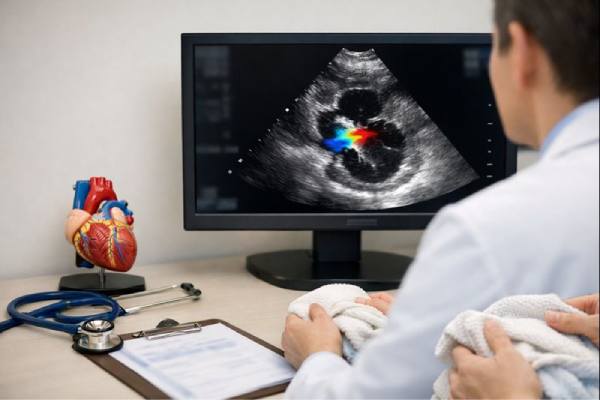
An echocardiogram (ultrasound of the heart) is the central tool because it can show both structure and flow. For an inlet VSD, an echo typically aims to define:
- Exact location (confirming inlet region involvement)
- Size and shape of the defect
- Direction and amount of shunting
- Pressure estimates in the right heart and lung arteries
- Any atrioventricular valve abnormalities or leakage
- Presence of additional defects that alter management
Teams often repeat echocardiograms over time, because the clinical picture can change as the baby grows and as lung resistance evolves.
Other tests that may be used
Depending on age and symptoms, clinicians may add:
- Electrocardiogram (ECG) to look for chamber strain or rhythm issues
- Chest X-ray to assess heart size and lung blood flow patterns
- Cardiac MRI in older children/adults when detailed volumes or anatomy are needed without radiation
- Cardiac catheterization when noninvasive tests can’t answer key questions, such as exact lung vascular resistance or operability in advanced pulmonary hypertension
Common “look-alike” situations
A careful diagnosis also considers other causes of murmurs and similar symptoms, such as patent ductus arteriosus, atrial septal defects, valve stenosis, or lung disease unrelated to the heart. The inlet position is a clue that pushes clinicians to look closely at the valve plane and the center of the heart for AVSD-spectrum anatomy.
Treatment options and typical timelines
Treatment is individualized, but the decision-making usually revolves around three questions: Is the defect causing symptoms now? Is it enlarging the heart or raising lung pressures? Is valve involvement adding risk? The overall approach often includes monitoring, medical support, and—when indicated—closure.
When observation is reasonable
If the inlet VSD is small and the child is growing well, clinicians may recommend watchful follow-up. Even when spontaneous closure is less common for some inlet-region defects than for certain muscular defects, a small defect can remain stable and harmless. Follow-up visits typically focus on growth, breathing, and echocardiographic measures of chamber size and pressures.
Medical management to support growth and comfort
For babies with symptoms of over-circulation or heart strain, medical therapy may help while planning the right timing for repair. Common strategies include:
- Diuretics to reduce fluid overload and ease breathing
- Nutrition support to improve weight gain (higher-calorie feeds, feeding plans that reduce fatigue)
- Treating reflux or respiratory triggers that worsen work of breathing
Medication details (including mg/kg dosing) must be prescribed and adjusted by a pediatric cardiology team, because dosing depends on age, kidney function, electrolytes, and symptom response.
When closure is recommended
Closure is usually considered when there is clear evidence of significant shunting or risk to the lungs or heart, such as:
- Persistent symptoms despite medical support
- Poor weight gain or feeding intolerance tied to cardiac workload
- Enlargement of the left-sided chambers from volume overload
- Rising pulmonary pressures or signs of pulmonary vascular disease
- Relevant valve leakage that needs surgical correction
Because inlet VSDs sit near valves and conduction tissue, surgical repair is commonly favored when closure is needed. Device closure through a catheter may be an option for selected VSD locations, but inlet anatomy and proximity to key structures can make catheter approaches less suitable.
What surgery usually involves
Surgical repair typically closes the opening with a patch. If valve tissue is involved—such as a cleft or regurgitation—surgeons may repair the valve during the same operation. Hospital recovery varies with age, defect size, and associated findings, but the early plan often includes:
- Intensive monitoring for rhythm or conduction changes
- Gradual weaning of breathing support
- Pain control and careful feeding advancement
- Echo confirmation that the repair is stable and valves function well
Timing in real life
There is no single perfect age for every patient. Many symptomatic infants are repaired in early infancy to protect lung vessels and support growth. Children with smaller defects and no strain may have a more flexible timeline. The best timing is the one that prevents pulmonary vascular injury while minimizing procedural risk for that child’s anatomy.
Long-term management and when to seek care
Whether an inlet VSD is monitored without surgery or repaired in infancy, long-term care is about protecting heart function, valves, rhythm, and lung pressures across changing life stages. Many patients do extremely well—especially when follow-up is steady and individualized.
Follow-up after diagnosis or repair
A typical follow-up plan may include:
- Periodic echocardiograms to check chamber size, residual shunt, and valve function
- ECGs to monitor rhythm and conduction
- Exercise guidance tailored to heart size, pressures, and symptoms
- In some cases, advanced imaging in adolescence or adulthood for detailed valve and ventricular assessments
If repair was performed, clinicians also watch for late issues such as residual leaks, valve regurgitation progression, or narrowing in nearby flow pathways.
Endocarditis prevention and everyday health
Most people with uncomplicated VSDs do not need antibiotics before routine dental work, but some higher-risk situations do. Because recommendations depend on defect status and repair details, it’s important to ask your cardiology team what applies to you or your child specifically.
Regardless of antibiotic rules, excellent oral hygiene matters because gum disease can increase bloodstream bacteria. Practical steps include:
- Regular dental care and daily brushing/flossing habits
- Avoiding tobacco and vaping
- Prompt evaluation of unexplained fevers, especially with known residual defects
Living with an inlet VSD: school, sports, and adulthood
Many children participate fully in school and sports. Restrictions, when needed, are usually tied to symptoms, pulmonary hypertension risk, rhythm issues, or significant valve leakage. Adults with repaired or unrepaired inlet VSD should seek care in congenital heart disease–experienced clinics when possible, especially if planning pregnancy or major surgery.
Pregnancy deserves special planning because blood volume and heart output rise significantly. A pre-pregnancy visit can clarify whether the defect is safe to carry through pregnancy, whether medications need adjustment, and what delivery setting is best.
When to call urgently
Call urgent services or seek emergency evaluation for:
- Blue lips or tongue, severe breathing difficulty, or repeated pauses in breathing
- Fainting, new chest pain at rest, or severe shortness of breath
- Rapid palpitations with dizziness or near-fainting
- Sudden swelling, extreme fatigue, or a dramatic change in exercise tolerance
- In infants: poor feeding with dehydration (very few wet diapers) or marked sleepiness that is out of character
For non-emergency concerns—new cough that lingers, slower growth, feeding fatigue, or reduced activity—contact your clinician promptly. Early evaluation can prevent small problems from becoming bigger ones.
References
- 2025 ACC/AHA/HRS/ISACHD/SCAI Guideline for the Management of Adults With Congenital Heart Disease: A Report of the American College of Cardiology/American Heart Association Joint Committee on Clinical Practice Guidelines 2025 (Guideline)
- Diagnosis and Management of Ventricular Septal Defects 2024 (Review)
- Imaging of ventricular septal defect: Native and post-repair 2022 (Expert Consensus)
- Middle to long-term outcomes of surgical repair for atrioventricular septal defect: a single-center study 2022 (Outcomes Study)
Disclaimer
This content is for education and does not replace personalized medical advice, diagnosis, or treatment from a licensed clinician. Congenital heart defects vary widely in anatomy and severity, and treatment decisions depend on imaging findings, symptoms, growth, lung pressures, and other medical conditions. If you or your child has blue discoloration, severe breathing difficulty, fainting, chest pain, coughing up blood, or sudden weakness, seek emergency care immediately. For medication changes—especially diuretics or heart medicines—follow your clinician’s guidance, since dosing and monitoring must be individualized.
If this article helped you, please consider sharing it on Facebook, X (formerly Twitter), or any platform you prefer, and follow us on social media. Your support through sharing helps our team continue producing high-quality, trustworthy health content.