Innominate artery stenosis is a narrowing in the first major branch off the aortic arch that feeds blood to the right arm and the right side of the brain. Because the innominate artery sits “upstream” of both the right carotid and right subclavian arteries, even a single tight narrowing can create a mixed set of clues—arm fatigue with use, dizziness, or short-lived neurologic symptoms that come and go.
Some people learn about it only after a clinician finds a large blood-pressure difference between arms or hears a bruit (a “whooshing” sound) above the collarbone. Others present after a transient ischemic attack (TIA), a brief stroke-like episode that resolves.
This guide explains what the condition is, why it happens, who is most at risk, what symptoms matter, how clinicians confirm the diagnosis, which treatments work best, and how to reduce future vascular events through long-term management.
Table of Contents
- What this narrowing does to blood flow
- Causes and risk factors to know
- Symptoms, red flags, and complications
- How innominate artery stenosis is diagnosed
- Treatments: medications, stents, and surgery
- Management, prevention, and when to seek urgent care
What this narrowing does to blood flow
The innominate artery (also called the brachiocephalic artery) is the first large vessel that branches from the aorta. It quickly splits into the right common carotid artery (to the brain) and the right subclavian artery (to the arm). When the innominate artery narrows, it can reduce or disturb flow to two critical territories at once.
Why symptoms can be “arm plus brain”
A tight narrowing can limit blood supply during higher demand—like carrying groceries, climbing stairs, or even turning the head. Because the right arm and right carotid share the same upstream source, symptoms may appear together:
- Right arm fatigue, cramping, or heaviness with use (claudication)
- Lightheadedness, unsteadiness, or visual disturbance—especially during arm exertion
- Brief neurologic events (TIA), such as one-sided weakness, numbness, or trouble speaking
Not everyone gets all three. The pattern depends on how severe the narrowing is and whether collateral pathways (alternate routes) can compensate.
The “steal” phenomenon, explained simply
With significant proximal narrowing, blood may be pulled (“stolen”) from other arteries to supply the right arm, especially during exercise. In some people, flow can reverse in nearby vessels as the body tries to reroute blood around the blockage. This helps the arm but can shortchange the brain’s posterior circulation, leading to dizziness, imbalance, or faint feelings during arm activity.
Why clinicians take it seriously
Innominate artery stenosis is not just a plumbing issue. It is often a marker of systemic atherosclerosis, meaning plaque may also be present in the coronary arteries (heart) or other arteries to the brain and legs. That broader context changes management: clinicians treat the narrowing itself when indicated, but they also treat the person’s overall vascular risk for years to come.
How severity is judged in practice
Severity is not based only on “percent narrowing.” Clinicians also consider:
- Symptoms and how reproducible they are
- Evidence of reduced perfusion (blood pressure difference, abnormal Doppler signals)
- Impact on brain circulation (TIA/stroke risk, cerebral perfusion concerns)
- Coexisting carotid disease, which can raise procedural complexity and urgency
Causes and risk factors to know
Most innominate artery stenosis is caused by atherosclerosis—plaque buildup inside the artery wall. However, the innominate artery is close to the aortic arch, so a few less common causes also matter. Identifying the cause is not academic; it affects treatment choices, recurrence risk, and the need for broader testing.
Most common cause: atherosclerosis
Atherosclerosis develops over years when cholesterol-rich plaque, inflammation, and scar tissue thicken the artery wall. Plaque near the arch can be more complex and calcified, and it may coexist with disease in the carotids, subclavian arteries, or coronary arteries. Risk rises with age and classic vascular risk factors.
Other important causes
While less common, these should be on the radar—especially if the patient is younger or has atypical features:
- Large-vessel vasculitis (such as Takayasu arteritis): inflammation thickens the wall and can cause long segments of narrowing.
- Radiation-associated vasculopathy: prior chest or neck radiation can accelerate narrowing years later.
- Aortic dissection or arch pathology: a tear in the aorta’s wall can narrow the branch vessel opening.
- Iatrogenic injury: rare narrowing after prior vascular procedures or surgical manipulation near the arch.
- Congenital anatomy and arch variants: can change flow patterns and complicate imaging interpretation.
Risk factors that meaningfully increase odds
If the cause is atherosclerosis, risk factors look familiar—but they add up:
- Smoking (current or past), including heavy secondhand exposure
- High blood pressure
- High LDL cholesterol or low HDL cholesterol
- Diabetes or insulin resistance
- Chronic kidney disease
- Known coronary artery disease, carotid stenosis, or peripheral artery disease
- Sedentary lifestyle, central obesity, and poor sleep patterns (often linked through blood pressure and metabolic effects)
Why symptoms can appear “late”
Many people compensate well until the narrowing becomes severe. Collateral channels gradually enlarge, masking symptoms. Problems often show up when demand rises (arm exertion), another artery worsens (for example, a carotid lesion), or blood pressure drops from dehydration or new medications. This is why clinicians ask detailed questions about triggers, timing, and whether symptoms reliably appear with right-arm activity.
Symptoms, red flags, and complications
Innominate artery stenosis can be silent, mildly annoying, or dangerous—depending on how tight the narrowing is and which territory is most affected. People often describe symptoms as “on-and-off,” which can delay care because the body seems to recover. With vascular disease, intermittent symptoms can be a warning, not reassurance.
Common symptoms people notice
Symptoms tend to cluster into arm-related, brain-related, and mixed exertional patterns:
- Right arm fatigue, aching, cramping, or weakness during use
- Coldness or numbness in the right hand, especially in cooler environments
- Dizziness, unsteadiness, or near-fainting, sometimes triggered by arm exertion
- Visual blurring, double vision, or “graying out” with activity
- Short episodes of one-sided numbness, weakness, or speech difficulty (TIA-like events)
A simple but useful clue is an arm blood pressure difference that persists. Some people discover this at home with a cuff, but clinicians confirm it carefully because technique can mislead.
Physical signs clinicians look for
During exam, clinicians may find:
- Weaker pulse on the right compared with the left
- A bruit near the base of the neck or above the collarbone
- Delayed capillary refill in the right hand in more advanced cases
- Neurologic deficits if a stroke has occurred
No single sign proves the diagnosis, but the combination often points strongly to a proximal arch-branch problem.
Complications that drive urgency
The most important complications are related to emboli (plaque debris traveling) and low flow:
- Stroke or TIA: either from plaque embolization or reduced perfusion
- Chronic cerebral hypoperfusion: uncommon, but can contribute to persistent dizziness or cognitive slowing in select cases
- Arm ischemia: worsening pain at rest, tissue injury, or nonhealing wounds (rare, but serious)
- Progressive atherosclerosis elsewhere: heart attack risk rises because the disease is usually systemic
Red flags that should not wait
Seek urgent evaluation if any of the following occur:
- Sudden facial droop, arm weakness, numbness, or speech difficulty (even if it resolves)
- New severe dizziness with inability to walk straight, new double vision, or fainting
- New right arm pain at rest, sudden coolness, or color change of fingers
- Chest pain, severe shortness of breath, or other signs that could indicate cardiac disease alongside vascular disease
These symptoms may reflect an evolving stroke, limb-threatening ischemia, or a broader aortic or cardiac problem.
How innominate artery stenosis is diagnosed
Diagnosis is about confirming both anatomic narrowing (what the artery looks like) and hemodynamic significance (whether it meaningfully reduces blood flow). Because the innominate artery sits deep and close to the chest, clinicians often use a stepwise approach: bedside clues first, then noninvasive imaging, and finally detailed vessel mapping when planning intervention.
Step 1: history and focused exam
A careful history helps distinguish innominate stenosis from more common problems like shoulder disease, cervical spine issues, or inner ear disorders. Clinicians ask:
- Does dizziness reliably occur with right-arm exertion?
- Are neurologic symptoms brief and stereotyped (suggesting TIA)?
- Is there known carotid disease, coronary disease, or leg claudication?
On exam, they often measure blood pressure in both arms, compare pulses, and listen for bruits.
Step 2: duplex ultrasound when feasible
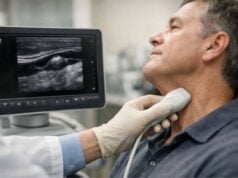
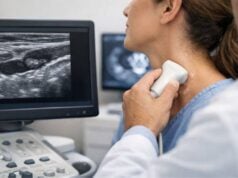
Duplex ultrasound (Doppler) can provide flow velocities and waveforms that suggest proximal stenosis. Direct visualization of the innominate artery can be technically challenging, but experienced labs can often infer disease from:
- Elevated peak systolic velocities in accessible segments
- Abnormal waveforms in the right carotid or right subclavian that suggest upstream resistance
- Evidence of altered or reversed flow in related vessels
Ultrasound is attractive because it is noninvasive and repeatable for surveillance.
Step 3: CTA or MRA for anatomy and planning
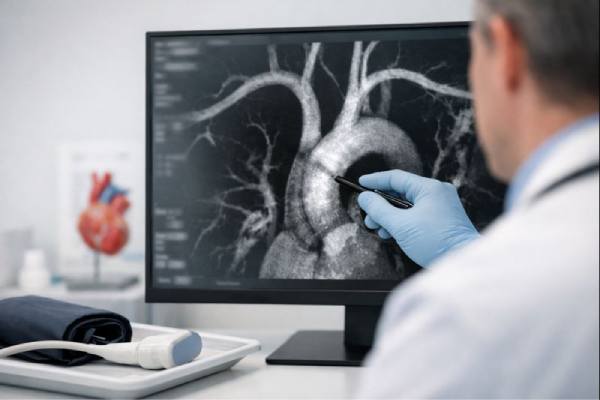
Computed tomography angiography (CTA) and magnetic resonance angiography (MRA) map the lesion’s location, length, and calcification and clarify nearby arch anatomy. These tests help clinicians decide whether the anatomy is better suited to:
- Endovascular stenting
- Hybrid approaches (open exposure plus retrograde stenting)
- Surgical bypass or reconstruction
CTA uses iodinated contrast and radiation; MRA avoids radiation but may be limited by certain implants, kidney function constraints with some contrast agents, or motion artifact.
Step 4: catheter angiography when intervention is likely
Catheter angiography provides the highest-detail view of the lumen and can measure pressure gradients across a lesion. It’s typically used when a procedure is planned or when noninvasive tests conflict with symptoms. Because it is invasive, the decision is individualized, balancing diagnostic value against risks like bleeding, contrast reaction, or embolization.
Ruling out look-alikes
Clinicians also consider:
- Subclavian stenosis without innominate disease
- Carotid bifurcation stenosis as the primary cause of TIA
- Cardiac arrhythmias or valve disease causing dizziness or syncope
- Orthostatic hypotension, medication effects, or anemia
A correct diagnosis often requires putting imaging results back into the real-world symptom story.
Treatments: medications, stents, and surgery
Treatment has two goals: prevent stroke and vascular events long-term, and restore reliable blood flow when the stenosis is causing symptoms or threatens critical circulation. Many patients need both—risk-reduction therapy for life, plus a targeted procedure for the innominate lesion when indicated.
Medical therapy for everyone with atherosclerotic disease
If the stenosis is atherosclerotic, clinicians typically recommend aggressive vascular risk reduction, even when symptoms are mild:
- Antiplatelet therapy (commonly a daily single agent, tailored to bleeding risk and comorbidities)
- High-intensity statin therapy when appropriate, with LDL goals individualized to overall risk
- Tight blood pressure control, avoiding overly rapid drops that can worsen low-flow symptoms
- Diabetes optimization and kidney-protective management when relevant
- Smoking cessation support (often the single highest-impact change)
Medical therapy reduces the chance of stroke and heart attack and also improves outcomes after procedures.
When revascularization is considered
Intervention is often considered when there is:
- Clear neurologic symptom linkage (TIA/stroke attributable to the lesion)
- Disabling right arm claudication or ischemic symptoms
- Evidence of significant hemodynamic compromise on imaging/testing
- Need to secure cerebral perfusion when other arch-branch lesions coexist
- Situations where reliable inflow is essential for planned procedures (case-dependent)
Asymptomatic lesions are handled more selectively; many are treated medically with surveillance unless risk is judged high.
Endovascular stenting
Stenting can provide rapid restoration of lumen diameter with relatively short recovery. Typical procedural themes include careful embolic protection strategies (case-dependent), precise sizing, and meticulous antithrombotic planning after the procedure.
Key tradeoffs:
- Advantages: less invasive, faster recovery, often preferred in higher surgical-risk patients
- Limitations: restenosis (re-narrowing) can occur and requires ongoing surveillance
Hybrid approaches
For some proximal lesions, teams use a hybrid strategy—surgical exposure of a carotid artery with retrograde stenting into the innominate artery. This can improve control of access and reduce certain arch-navigation challenges, especially when tandem carotid disease is present.
Open surgical reconstruction or bypass
Surgery may be chosen for complex anatomy, failed prior stenting, long occlusions, heavily calcified lesions, or when durable long-term patency is prioritized. Options vary by anatomy and center expertise and may include extra-anatomic bypass techniques or reconstruction strategies.
Because open procedures can carry higher upfront physiologic stress, the decision weighs symptom severity, stroke risk, anatomy, and overall health status.
What to expect after a procedure
Most care plans include:
- Short-interval neurologic monitoring immediately after revascularization
- Antiplatelet regimen tailored to the procedure type and patient bleeding risk
- Follow-up imaging (often duplex ultrasound) to detect restenosis early
- Continued risk-factor management, because the underlying disease process remains
Management, prevention, and when to seek urgent care
Long-term management is where outcomes are won. Even after a successful stent or bypass, the main threat often becomes the broader vascular disease process—plaque progression in other arteries, clotting risk, and preventable triggers like smoking and uncontrolled blood pressure.
Follow-up monitoring that actually matters
A typical surveillance plan may include:
- Symptom check-ins focused on neurologic events and exertional right-arm symptoms
- Periodic blood pressure checks in both arms (especially if symptoms change)
- Duplex ultrasound schedules after stenting or surgery to watch for restenosis
- Periodic lipid panels and medication review to ensure risk targets are being met
A practical tip: record a short “baseline” for yourself—usual right-arm endurance, usual dizziness frequency (if any), and home BP values. Changes become easier to spot early.
Lifestyle actions with high return
These steps are not generic wellness advice; they directly reduce vascular events:
- Stop smoking and avoid relapse triggers (nicotine replacement, medications, or counseling when needed)
- Aim for regular aerobic activity most days, adjusted to symptoms and clinician guidance
- Choose a heart-healthy eating pattern emphasizing fiber, unsaturated fats, and low sodium
- Prioritize sleep and treat obstructive sleep apnea if present (important for blood pressure control)
Medication adherence without guesswork
Many vascular medications work best when taken consistently for years. If side effects occur (muscle aches with statins, bruising with antiplatelets, dizziness with blood pressure medicines), the safer approach is adjustment—not self-discontinuation. Clinicians can often switch agents or dosing strategies while preserving protection.
Special situations: surgery, dental work, and travel
If you have had a stent or bypass, ask your clinician about:
- Antiplatelet management before elective surgery or procedures
- Whether you need specific dental precautions (varies by individual risk)
- Travel plans if you have recent symptoms or a recent intervention
The key is coordination—especially around stopping or restarting antiplatelet therapy.
When to seek urgent care
Treat these as urgent, even if they resolve:
- Sudden weakness, numbness, facial droop, or trouble speaking
- New severe dizziness with inability to walk, new double vision, or fainting
- Sudden right hand coldness, color change, severe pain, or loss of function
- New chest pain, severe shortness of breath, or signs of an aortic emergency (sudden tearing back pain)
For non-emergency changes—worsening right-arm exertional pain, more frequent dizziness during activity, or new headaches with exertion—contact your clinician promptly. Early reassessment can prevent a stroke or a more complex intervention later.
References
- Systematic Review and Meta-Analysis of the Outcome of Different Treatments for Innominate Artery Stenosis or Occlusion 2024 (Systematic Review)
- Open Retrograde Stenting of Proximal Innominate and Common Carotid Artery Stenosis 2024 (Clinical Study)
- Color Duplex Ultrasonography for the Evaluation of Innominate, Subclavian, and Common Carotid Artery Stenosis 2024 (Diagnostic Study)
- 2024 ESC Guidelines for the management of peripheral arterial and aortic diseases 2024 (Guideline)
Disclaimer
This article is for educational purposes and does not replace medical advice, diagnosis, or treatment from a licensed clinician. Innominate artery stenosis can raise the risk of stroke and may require urgent evaluation, especially if you have sudden neurologic symptoms, fainting, or severe arm ischemia. Treatment decisions depend on your symptoms, imaging findings, other vascular disease, kidney function, and bleeding risk. If you develop signs of stroke (face droop, arm weakness, speech difficulty), sudden severe dizziness with inability to walk, chest pain, or a suddenly cold and painful arm, seek emergency care immediately.
If you found this article useful, please share it on Facebook, X (formerly Twitter), or any platform you prefer, and follow us on social media. Your support through sharing helps our team continue producing high-quality, trustworthy health content.