Innominate artery thrombosis is a sudden or progressive blockage in the first major branch off the aortic arch—the vessel that supplies blood to the right side of the brain and the right arm. Thrombosis means a blood clot inside an artery. Because the innominate artery sits “upstream” of both the right carotid and right subclavian arteries, a single clot can trigger two very different emergencies: stroke-like symptoms and limb-threatening arm ischemia.
Some people first notice a dramatic event—weakness, speech trouble, or a cold and painful arm. Others have warning episodes that come and go, such as brief neurologic symptoms or exertional dizziness. The key is speed: when brain or limb blood flow is threatened, delays can leave permanent damage.
This article explains what innominate artery thrombosis is, why it happens, who is at risk, how it presents, how it’s diagnosed, and how treatment and long-term management are planned.
Table of Contents
- What innominate artery thrombosis does
- Why clots form and who is at risk
- Symptoms and dangerous complications
- How it is diagnosed fast and safely
- Treatment options in the ER and beyond
- Long-term management, prevention, and when to seek help
What innominate artery thrombosis does
The innominate artery (also called the brachiocephalic artery) is the first large branch off the aorta. It divides into the right common carotid artery (to the brain) and the right subclavian artery (to the arm). When a clot forms inside the innominate artery, it can reduce or cut off blood flow to one or both territories—sometimes abruptly.
Thrombosis vs stenosis: why the difference matters
People often confuse thrombosis with stenosis. Stenosis is a gradual narrowing, usually from plaque. Thrombosis is a clot that can:
- Form on top of an existing plaque (a “clot on a rough surface”)
- Form because blood flow becomes sluggish (stasis)
- Arrive from elsewhere as an embolus (a traveling clot that lodges)
Clinically, thrombosis tends to be more time-sensitive because symptoms can escalate quickly, and clot fragments can break off and travel into the brain or arm.
How the clot harms tissue
Damage happens in three main ways:
- Low flow (ischemia): Tissue downstream does not get enough oxygen. In the brain, that can mean stroke. In the arm, it can mean severe pain, nerve injury, or tissue loss.
- Embolization: Small pieces can detach and travel into smaller arteries, causing multiple “hit-and-run” blockages.
- Inflammation and vessel spasm: The artery can react to clot and plaque by tightening, worsening obstruction.
Why symptoms can be mixed or misleading
Because the right arm and right carotid share the same upstream source, symptoms can overlap. A person might have arm fatigue with use plus brief dizziness, or sudden arm pain plus neurologic symptoms. Some patients compensate through collateral vessels (alternate routes), which can partially mask symptoms until a tipping point is reached—dehydration, low blood pressure, anemia, or exertion can reveal how limited flow really is.
Where innominate thrombosis fits among arch emergencies
Clinicians also consider nearby, high-stakes look-alikes such as aortic dissection, aortic arch thrombus, and severe carotid disease. The anatomy is close, symptoms can overlap, and the treatment pathways differ. That’s why the early evaluation often focuses on rapid imaging and careful neurologic and pulse assessment—not guesswork based on symptoms alone.
Why clots form and who is at risk
Innominate artery thrombosis is uncommon, but the risk rises sharply when a person has conditions that damage artery walls, slow blood flow, or increase clotting tendency. In practice, clinicians look for both an immediate trigger and an underlying “soil” that makes thrombosis more likely.
Most common pathway: plaque plus clot
A frequent mechanism is thrombosis forming on atherosclerotic plaque at the innominate origin. Plaque can become ulcerated or rupture, exposing material that activates clotting. This is especially relevant in people with widespread vascular disease, such as known coronary artery disease, carotid stenosis, or peripheral artery disease.
Embolic sources: clots that travel
Sometimes the clot originates elsewhere and lodges in the innominate artery. Common sources include:
- Atrial fibrillation or other rhythm disorders that allow clots to form in the heart
- Recent heart attack with clot formation inside the left ventricle
- Prosthetic heart valves or valve infection (endocarditis)
- Aortic arch atheroma or aortic mural thrombus
This distinction matters because embolic disease often requires long-term anticoagulation and a focused search for the source.
Hypercoagulable states: “sticky blood” situations
A hypercoagulable state means the blood clots too easily. In arterial thrombosis, clinicians consider:
- Active cancer or cancer-associated clotting
- Severe inflammation or infection (including some viral illnesses)
- Antiphospholipid syndrome (an autoimmune clotting disorder)
- Inherited thrombophilias (less commonly the main driver in arterial clots, but considered in select patients, especially younger individuals)
- Hormonal factors (for example, estrogen therapy) in the presence of other risks
Testing is usually targeted rather than broad, because results can be distorted during acute illness or while on anticoagulants.
Procedure-related and structural triggers
Less common but important contributors include:
- Prior vascular interventions near the aortic arch (stents, grafts, branched devices)
- Central line complications or iatrogenic injury in adjacent vessels
- Trauma to the chest or neck (rare, but possible)
- Radiation-associated vascular injury years after treatment
Risk factors that stack the odds
Across causes, the most consistent risk amplifiers are:
- Smoking (current or recent)
- Hypertension
- Diabetes or insulin resistance
- High LDL cholesterol
- Chronic kidney disease
- Older age and male sex (for atherosclerosis-driven cases)
- Prior stroke/TIA or known systemic atherosclerosis
A practical takeaway: innominate artery thrombosis is usually not “random.” If it happens, clinicians nearly always find at least one major driver—atherosclerosis, an embolic source, or a hypercoagulable condition—and long-term prevention depends on naming that driver clearly.
Symptoms and dangerous complications
Symptoms depend on how quickly the clot forms, how complete the blockage is, and whether clot fragments travel downstream. Some presentations are dramatic and unmistakable; others are subtle, intermittent, and easy to dismiss. The safest approach is to treat any stroke-like symptoms as urgent, even if they improve.
Brain-related symptoms
When the right carotid territory is under-supplied or embolized, symptoms may include:
- Sudden weakness or numbness on one side of the body
- Face droop
- Trouble speaking or understanding speech
- Vision changes (especially sudden loss or “curtain” sensations)
- Confusion or severe imbalance
Symptoms that resolve within minutes to hours can represent a transient ischemic attack (TIA), a brief blockage that clears. A TIA is a warning that a larger stroke may be next.
Right arm ischemia symptoms
Reduced flow to the right arm can present as:
- Sudden arm pain, heaviness, or cramping
- Coldness, pallor, or bluish discoloration of fingers
- Numbness or tingling that progresses
- Weak grip or inability to use the hand normally
- A noticeably weaker pulse on the right compared with the left
A classic emergency pattern in limb ischemia is “pain out of proportion,” especially when the hand is cool and pulses are diminished.
Mixed exertional patterns and “steal” symptoms
Some people experience dizziness, unsteadiness, or visual disturbance during right arm activity. This can happen when blood is diverted toward the working arm through collateral pathways, temporarily reducing brain perfusion. These exertional symptoms matter most when they are reproducible and paired with objective findings like a major blood pressure difference between arms or abnormal vascular waveforms on testing.
Complications clinicians worry about most
The highest-stakes complications are:
- Ischemic stroke from embolization or low flow
- Recurrent emboli causing multiple small infarcts
- Limb-threatening ischemia with tissue injury or gangrene if not restored quickly
- Compartment syndrome after reperfusion (swelling that threatens nerves and muscle)
- Progression of systemic vascular disease (heart attack risk often travels with this diagnosis)
Red flags that should trigger emergency care
Seek urgent evaluation immediately for:
- Any sudden stroke-like symptom (even if it resolves)
- A cold, painful, weak, or numb right arm with reduced pulses
- New severe dizziness with inability to stand or walk straight
- Fainting, new chest pain, or sudden tearing back pain (possible aortic emergency)
When these symptoms appear, time matters. Brain and muscle tolerate ischemia poorly, and delays can turn a reversible problem into permanent injury.
How it is diagnosed fast and safely
Diagnosis aims to answer four urgent questions: Is there a clot? Where exactly is it? Is the brain or arm threatened right now? And what caused the clot in the first place? Because innominate thrombosis sits near the aortic arch, clinicians usually rely on rapid, high-quality imaging rather than a single bedside finding.
Step 1: focused exam and bedside comparisons
Early evaluation often includes:
- Blood pressure in both arms (large differences raise suspicion)
- Pulse comparison at the wrists and upper arms
- Hand temperature, color, capillary refill, and strength testing
- A brief neurologic exam for facial symmetry, speech, vision, coordination, and limb strength
- Listening for bruits above the collarbone or in the neck
These steps do not prove the diagnosis, but they shape urgency and guide imaging choices.
Step 2: CTA as a common first-line map
Computed tomography angiography (CTA) is frequently used because it is fast and provides a detailed view of the aortic arch, innominate artery, carotids, and subclavian arteries in one study. It helps clinicians see:
- Whether the innominate artery is partially occluded or fully blocked
- The clot’s length and proximity to branch points
- Associated plaque, calcification, or arch anatomy variants
- Evidence of emboli or downstream vessel compromise
CTA can also help evaluate for aortic dissection when symptoms raise concern.
Step 3: duplex ultrasound and brain imaging
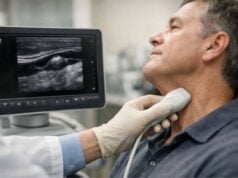
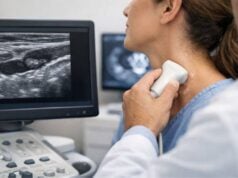
Ultrasound can provide valuable hemodynamic information, especially in carotid and subclavian segments. Even if the innominate artery itself is difficult to image directly, ultrasound can reveal upstream obstruction through abnormal waveforms.
If neurologic symptoms are present, clinicians also evaluate the brain with CT or MRI to identify ischemic injury and determine eligibility for stroke therapies.
Step 4: catheter angiography when intervention is likely
When a procedure is planned, catheter angiography provides high-resolution detail and can measure pressure gradients. It can also transition directly into treatment (thrombectomy, thrombolysis, stenting) when appropriate. Because angiography is invasive, teams weigh benefits against risks such as bleeding, contrast kidney injury, and embolization.
Step 5: finding the cause to prevent recurrence
Identifying the driver often includes:
- ECG and rhythm monitoring for atrial fibrillation
- Echocardiography to assess heart sources of emboli
- Basic labs (blood count, kidney function, coagulation profile)
- Targeted testing for hypercoagulable states when suspicion is high (younger age, recurrent clots, cancer signals, autoimmune history)
A key point: the “cause workup” is not an afterthought. If the underlying mechanism is missed, the clot can recur—even after technically successful revascularization.
Treatment options in the ER and beyond
Treatment decisions depend on symptom severity, clot location, and whether the immediate threat is stroke, limb ischemia, or both. In many cases, care involves a coordinated team: emergency clinicians, vascular surgery, interventional radiology or cardiology, and stroke specialists. The priorities are to stabilize the patient, prevent clot extension and embolization, and restore flow when tissue is at risk.
Immediate stabilization and anticoagulation
In suspected arterial thrombosis, clinicians often start systemic anticoagulation (commonly intravenous heparin) unless there is a clear contraindication such as active bleeding or certain brain hemorrhage risks. Anticoagulation helps prevent clot growth and reduces the risk of new emboli, but it does not always dissolve the existing obstruction quickly enough when organs are threatened.
Supportive steps may include oxygen if needed, careful blood pressure management (avoiding abrupt drops), pain control, and correction of dehydration or severe anemia that can worsen ischemia.
Revascularization: restoring blood flow
When neurologic symptoms, threatened limb findings, or critical low-flow states are present, clinicians consider revascularization strategies such as:
- Endovascular thrombectomy: mechanical removal of clot using catheters, often favored when rapid restoration is needed and anatomy is suitable.
- Catheter-directed thrombolysis: medication delivered directly to the clot to dissolve it; used selectively because bleeding risk can be significant and time-to-effect may be longer.
- Stenting: placing a scaffold to keep the artery open, especially when the clot formed on a tight plaque or when there is a residual fixed narrowing after clot removal.
- Surgical thrombectomy or bypass: chosen for complex occlusions, unfavorable anatomy, failed endovascular attempts, or when a durable reconstruction is needed.
Because the innominate artery feeds the brain, procedural planning often emphasizes embolic protection and careful technique to minimize stroke risk during intervention.
When stroke protocols drive the timeline
If the patient presents with an acute ischemic stroke, stroke treatment timelines may determine what is possible (for example, eligibility windows for intravenous thrombolysis or mechanical thrombectomy in brain vessels). In these cases, teams decide whether the arch-branch clot is the primary driver and whether treating it immediately improves cerebral perfusion or reduces recurrent emboli risk.
After the acute phase: tailoring long-term antithrombotic therapy
Long-term therapy depends on the cause:
- If an embolic heart source is found (such as atrial fibrillation), long-term anticoagulation is often central.
- If atherosclerosis is primary, antiplatelet therapy plus intensive lipid lowering and risk-factor control is usually emphasized; anticoagulation may be used selectively based on clot burden and clinician judgment.
- If hypercoagulability or cancer is driving thrombosis, the plan may focus on anticoagulation strategies that match the patient’s bleeding risk and cancer treatment path.
What “success” looks like
Successful treatment is not only reopening the artery. It also includes:
- No new neurologic deficits
- Stable or improving hand function and perfusion
- A clear plan to prevent recurrence
- Structured surveillance imaging to detect restenosis or re-thrombosis early
Long-term management, prevention, and when to seek help
After the acute event, the most important work is preventing the next one. Innominate artery thrombosis is often a signal that the vascular system is vulnerable—whether from plaque instability, an embolic heart rhythm, or a clotting tendency. Long-term care should feel specific and measurable, not vague.
Follow-up and surveillance
Most care plans include repeat imaging and structured monitoring, especially after a procedure:
- Duplex ultrasound schedules to check flow patterns and detect early restenosis
- CTA or MRA when ultrasound windows are limited or anatomy is complex
- Ongoing neurologic and arm symptom checks that focus on recurrence patterns
- Monitoring of blood pressure in both arms when relevant
A practical tip: keep a short symptom log for 2–4 weeks after discharge—arm endurance, hand temperature changes, dizziness triggers, and any brief neurologic symptoms. Patterns help clinicians adjust therapy faster.
Risk-factor control that reduces real events
If atherosclerosis contributed, prevention usually centers on:
- Smoking cessation support (often the highest-impact change)
- High-intensity statin therapy when appropriate, with LDL targets personalized to overall risk
- Blood pressure control that avoids both sustained hypertension and overly aggressive lowering that can worsen low-flow symptoms
- Diabetes management with attention to cardiovascular benefit, not only glucose numbers
- Regular aerobic activity most days, scaled to safety and supervised when needed
Dietary goals that matter most tend to be consistent: lower sodium, higher fiber, and replacing saturated fats with unsaturated fats.
Medication adherence and safety checks
Antiplatelet or anticoagulant therapy only protects when taken consistently. If side effects occur—bruising, nosebleeds, stomach upset, dizziness—clinicians can often adjust dosing, timing, or agent choice rather than stopping therapy abruptly.
Ask your clinician about:
- Bleeding warning signs specific to your regimen
- Drug interactions (especially with NSAIDs, herbal supplements, and alcohol)
- How long dual therapy is needed if you received a stent
- The plan for procedures or surgery (when to pause and restart safely)
Special populations and life stages
People with cancer, autoimmune disease, kidney disease, or pregnancy considerations often need individualized antithrombotic planning. In pregnancy or planned pregnancy, anticoagulant choice and timing require specialist oversight. In older adults, fall risk and bleeding risk may shape the safest regimen without losing protective benefit.
When to seek urgent care
Seek emergency evaluation immediately for:
- Any new stroke-like symptom (face droop, arm weakness, speech trouble), even if it resolves
- Sudden right arm coldness, severe pain, numbness, weakness, or color change
- New severe dizziness with inability to stand or walk
- Fainting, severe chest pain, or sudden tearing back pain
For non-emergency concerns—worsening exertional right arm symptoms, new episodic dizziness during right-arm activity, or recurrent brief neurologic episodes—contact your clinician promptly. Early reassessment can prevent a second, more damaging event.
References
- Presentation, Diagnosis and Management of Innominate Artery Thromboembolism 2022 (Clinical Review/Case-Based Discussion)
- Brachial thromboembolectomy and retrograde innominate artery stenting 2024 (Case Report)
- 2021 Guideline for the Prevention of Stroke in Patients With Stroke and Transient Ischemic Attack: A Guideline From the American Heart Association/American Stroke Association 2021 (Guideline)
- 2024 ACC/AHA/AACVPR/APMA/ABC/SCAI/SVM/SVN/SVS Guideline for the Management of Patients With Lower Extremity Peripheral Artery Disease 2024 (Guideline)
Disclaimer
This article is for educational purposes and does not replace medical advice, diagnosis, or treatment from a licensed clinician. Innominate artery thrombosis can cause stroke or limb-threatening ischemia and may require emergency evaluation and urgent procedures. Treatment choices depend on imaging findings, symptom timing, bleeding risk, kidney function, and the underlying cause of clot formation (such as atrial fibrillation, atherosclerosis, or cancer-related clotting). If you develop stroke-like symptoms, a suddenly cold or painful arm, fainting, severe chest pain, or sudden tearing back pain, seek emergency care immediately.
If you found this article helpful, please share it on Facebook, X (formerly Twitter), or any platform you prefer, and follow us on social media. Your support through sharing helps our team continue producing high-quality, trustworthy health content.