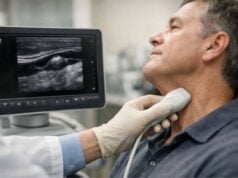
An interatrial septal aneurysm is a “floppy” area in the wall that separates the heart’s upper chambers. It usually sits where a small opening existed before birth, and it can bow into one atrium, the other, or gently sway between both. Many people never feel it and only learn about it after an ultrasound of the heart for an unrelated reason.
Even when it causes no symptoms, it matters because it can travel with other findings—especially a small passage between the atria—and that pairing may raise the chance of blood clots reaching the brain. The good news: most cases are manageable with careful evaluation, attention to stroke risk, and treatment tailored to your history, not just the scan.
Table of Contents
- What it is and why it matters
- Causes and risk factors
- Symptoms and possible complications
- How it’s diagnosed
- Treatment options and what to expect
- Living with it, prevention, and when to seek care
What it is and why it matters
The interatrial septum is the thin wall between the right and left atrium. An interatrial septal aneurysm (often called an atrial septal aneurysm, or ASA) is an area of that wall—most commonly at the fossa ovalis—that bulges more than expected and may move with each heartbeat. Different labs use slightly different cutoffs, but many define ASA by a protrusion of about 10 mm or more beyond the septal plane, or a larger “to-and-fro” motion across the midline.
Most ASAs are found incidentally during echocardiography. By themselves, many are harmless. What makes an ASA clinically important is context—especially whether it is associated with:
- Patent foramen ovale (PFO): a small flap-like opening that can persist after birth.
- Atrial septal defect (ASD): a true hole in the septum (different from a PFO).
- Atrial arrhythmias: abnormal rhythms such as atrial fibrillation or atrial flutter.
- Prior stroke or transient ischemic attack (TIA): a “warning stroke” with symptoms that resolve.
Why does that context matter? In some people, an ASA plus a PFO can create conditions that favor paradoxical embolism (a clot crossing from the venous side to the arterial side and traveling to the brain). The ASA may also be a marker of a more “stretchy” septum that permits larger shunts or more intermittent opening of a PFO.
A practical way to think about ASA is this: it is not automatically a diagnosis that demands a procedure. It is a finding that triggers a careful risk assessment—especially for stroke risk—so that treatment is based on your personal history, not the label alone.
Causes and risk factors
Most interatrial septal aneurysms are congenital (present from birth), related to how the atrial septum forms and seals after delivery. During fetal life, blood bypasses the lungs through the foramen ovale. After birth, rising left-sided pressures usually press this flap shut. In some people, the tissue remains unusually flexible or redundant, creating a bulge that behaves like an aneurysm (in this setting, “aneurysm” means a bulging membrane, not a ballooning artery).
Key contributors and associations include:
- Coexisting PFO: common alongside ASA and often the most important partner finding when assessing stroke risk.
- Atrial septal defect (ASD): less common than PFO but can produce significant left-to-right shunting, right-sided enlargement, and symptoms over time.
- Connective tissue tendencies: some people have generally more elastic tissue; only a minority have a defined connective tissue disorder, but tissue “laxity” can be a theme.
- Atrial enlargement or pressure changes: longstanding high pressures, valve disease, or lung disease can change atrial geometry; this does not “cause” most ASAs, but it can influence how noticeable the bulge is and how it moves.
Risk factors that matter clinically are often less about “getting” an ASA and more about whether it becomes risky:
- History of stroke/TIA, especially when no other cause is found (often called cryptogenic stroke).
- Venous clot risk: recent surgery, prolonged immobility, estrogen therapy, pregnancy/postpartum, active cancer, or prior deep vein thrombosis (DVT).
- Thrombophilia: inherited or acquired clotting tendencies (your clinician may test selectively).
- Atrial fibrillation risk: older age, high blood pressure, sleep apnea, obesity, thyroid disease, or heavy alcohol use.
- High-risk PFO anatomy: large shunt on bubble study, or ASA plus PFO together.
A helpful takeaway: you can’t change the septal tissue you were born with, but you can reduce the add-on risks that turn an anatomic finding into an event—by preventing clots, controlling rhythm triggers, and managing vascular risk factors.
Symptoms and possible complications
An interatrial septal aneurysm often causes no direct symptoms. When people feel unwell, it is usually because of an associated condition (like an arrhythmia, a meaningful shunt, or a clot-related event) rather than the bulge itself.
Possible symptom patterns include:
- No symptoms at all: the most common scenario.
- Palpitations: fluttering, racing, or irregular heartbeat—often reflecting atrial arrhythmias.
- Shortness of breath or reduced stamina: more likely if there is a significant ASD, right-heart strain, or another heart/lung condition.
- Migraine with aura: sometimes reported in people with PFO/ASA, though migraine alone is not proof of a dangerous shunt.
- Neurologic symptoms suggesting TIA/stroke: sudden weakness or numbness on one side, facial droop, trouble speaking, vision loss in one eye, severe imbalance, or a new “worst” dizziness with neurologic signs.
Complications clinicians watch for include:
- Stroke or TIA (embolism): The main concern when ASA coexists with a PFO or when prior unexplained stroke has occurred. The mechanism is often presumed to be a traveling clot rather than plaque in an artery.
- Atrial arrhythmias: ASA can be seen alongside atrial vulnerability. Arrhythmias matter because they can cause symptoms and, in the case of atrial fibrillation, increase stroke risk through a different mechanism (clot formation inside the atrium).
- Right-heart effects (when ASD is present): A true ASD can create chronic extra blood flow to the right side of the heart, leading over years to right atrial/right ventricular enlargement and sometimes pulmonary hypertension.
- Incidental clot on the septum (rare): Occasionally, imaging detects thrombus attached near the septum; this is uncommon but changes management quickly.
Red flags require urgent action. Call emergency services if stroke symptoms appear—even if they last only minutes. Many people hesitate because symptoms resolve; with TIA, that is exactly the warning sign.
A grounded perspective helps: having an ASA does not mean a stroke is inevitable. It means your care team should make a disciplined search for other causes, define whether a shunt is present and clinically meaningful, and then choose prevention that fits your risk profile.
How it’s diagnosed
Diagnosis starts with echocardiography, an ultrasound test that shows heart structure and blood flow. The goal is not only to confirm the aneurysm-like motion of the septum, but also to answer the higher-stakes questions: Is there a shunt (PFO or ASD)? Is there right-heart enlargement? Are there clots or valve problems? Are there rhythm issues that could explain symptoms or stroke?
Common tests and what they add:
- Transthoracic echocardiogram (TTE): Standard echo done from the chest wall. It can identify many ASAs and evaluate chamber size and valve function. It is noninvasive and often the first step.
- Transesophageal echocardiogram (TEE): An ultrasound probe in the esophagus provides clearer images of the atrial septum. TEE is often more sensitive for defining ASA anatomy, identifying small ASDs, and assessing PFO characteristics.
- Bubble study (contrast echo): Agitated saline is injected into a vein during echo while you perform maneuvers such as a Valsalva. Bubbles appearing in the left atrium suggest a right-to-left shunt, consistent with PFO (or less commonly ASD). The amount and timing of bubbles help estimate shunt size.
- Electrocardiogram (ECG) and rhythm monitoring: A single ECG may miss intermittent arrhythmias. Holter monitors (24–48 hours) or longer patch/event monitors can be used when palpitations, unexplained fainting, or cryptogenic stroke is involved.
- Stroke-focused evaluation (when relevant): Brain imaging, vascular imaging of neck/head arteries, and careful review of risk factors help determine whether a stroke likely came from the heart. Many patients benefit from a structured search for atrial fibrillation and clot sources.
How results are interpreted matters. An ASA finding on a report should trigger follow-up questions such as:
- Is there PFO or ASD, and is shunting present at rest or only with Valsalva?
- Is the shunt large, and does it look “high risk” (for example, ASA plus a large shunt)?
- Are the right atrium and right ventricle enlarged (suggesting chronic left-to-right flow through an ASD)?
- Is there any thrombus or spontaneous echo contrast (“smoke”) suggesting blood stasis?
- Are there alternative stroke mechanisms, including atrial fibrillation, carotid disease, or small-vessel disease?
A diagnosis is not complete until it is paired with a risk story. The same echo finding can mean “no action needed” in one person and “stroke-prevention strategy needed” in another.
Treatment options and what to expect
Treatment depends on symptoms, associated anatomy, and—most importantly—whether you’ve had a stroke/TIA or have another strong reason to prevent emboli. Many people need no procedure and do well with observation and risk-factor control.
Typical pathways include:
1) Observation only (common)
If the ASA is isolated, you have no stroke/TIA history, no significant shunt, and no arrhythmia, clinicians may recommend:
- Periodic follow-up (often repeat echo if symptoms change or if the initial study was limited).
- Management of cardiovascular risk: blood pressure, lipids, diabetes, smoking, sleep apnea, and activity.
2) Antithrombotic medication (selected cases)
Medication choices depend on why treatment is being considered:
- After an ischemic stroke/TIA: many patients receive antiplatelet therapy; anticoagulation may be chosen if atrial fibrillation is found or another strong clotting tendency exists.
- With atrial fibrillation: anticoagulation is often used based on stroke-risk scoring and clinical judgment.
- With venous clot risk: the priority is preventing DVT/PE; paradoxical embolism risk becomes relevant when a PFO is present.
3) PFO closure (for carefully selected patients)
When a person has had a PFO-associated stroke and features suggesting higher risk—often including ASA and/or large shunt—transcatheter PFO closure may be recommended. This is a catheter-based procedure (usually through a leg vein) to place a device that seals the opening. What to expect:
- Most procedures are done with short hospital stays.
- Short-term antiplatelet therapy is commonly prescribed afterward.
- A known tradeoff is a small risk of inducing atrial fibrillation, particularly in the early period after closure.
4) ASD closure or repair (when ASD is present and significant)
A true ASD with right-heart enlargement or symptoms often warrants closure, by catheter device or surgery depending on anatomy and size. The goal is to prevent long-term right-heart strain and pulmonary vascular disease.
5) Arrhythmia management
If palpitations or atrial arrhythmias are present, treatment may include:
- Rate or rhythm-control medications.
- Catheter ablation in selected patients.
- Lifestyle triggers: alcohol moderation, sleep apnea treatment, weight management, and stimulant review.
A practical, patient-centered point: “ASA” on a report can sound alarming. In reality, the most effective treatment plans focus on the mechanism you are trying to prevent (stroke from a shunt, stroke from atrial fibrillation, or symptoms from an ASD), not the bulge itself.
Living with it, prevention, and when to seek care
Living well with an interatrial septal aneurysm is usually about smart prevention—reducing the odds of clots and rhythm problems—while avoiding unnecessary restrictions. Many people can exercise, travel, work, and live normally once their clinician confirms the risk category.
Day-to-day prevention that meaningfully helps
- Move to prevent clots: On long flights or car trips, stand/walk periodically, flex calves/ankles, and stay hydrated. If you have prior DVT/PE or high clot risk, follow your clinician’s plan for compression or medication.
- Control blood pressure and cholesterol: These don’t “fix” an ASA, but they reduce overall stroke risk and protect blood vessels.
- Treat sleep apnea if present: It reduces atrial fibrillation risk and improves blood pressure control.
- Use alcohol and stimulants carefully: Heavy alcohol and certain stimulants can trigger atrial arrhythmias in susceptible people.
- Know your medications: If you take antiplatelets or anticoagulants, learn the bleeding warning signs and how to handle missed doses (ask your prescribing clinician for individualized guidance).
Monitoring that’s worth discussing
- New palpitations, shortness of breath, fainting, or exercise intolerance should prompt re-evaluation and possibly rhythm monitoring.
- If you’ve had an unexplained stroke/TIA, ask about the plan for extended atrial fibrillation monitoring, since intermittent episodes can be silent.
- If you undergo PFO/ASD closure, keep follow-up appointments for device checks and guidance on activity, dental procedures, and antithrombotic duration.
When to seek urgent care
Get emergency help immediately for possible stroke symptoms:
- Face drooping, arm weakness, speech difficulty
- Sudden vision loss or severe imbalance
- New one-sided numbness, confusion, or severe headache with neurologic signs
Seek same-day medical advice for:
- New or sustained rapid/irregular heartbeat
- Chest pain, fainting, or severe shortness of breath
- Signs of DVT (one-leg swelling/pain/warmth) or pulmonary embolism (sudden shortness of breath, chest pain, coughing blood)
Questions that lead to better visits
- Do I have a PFO or ASD, and is the shunt large?
- Did my testing look for atrial fibrillation long enough?
- If I had a stroke/TIA, how confident are we about the cause—and what prevention strategy fits that cause?
- What is the follow-up plan (echo timing, rhythm monitoring, medication duration)?
The goal is calm clarity: understand whether your ASA is an incidental finding or a stroke-risk marker in your situation, then commit to the few prevention steps that deliver the most benefit.
References
- Atrial Septal Aneurysms – A Clinically Relevant Enigma? – PubMed 2022 (Review)
- Association of Atrial Septal Aneurysm and Shunt Size With Stroke Recurrence and Benefit From Patent Foramen Ovale Closure – PMC 2022 (Meta-analysis)
- Atrial septal aneurysm contribution to the risk of cryptogenic stroke in patients with patent foramen ovale: A brief updated systematic review and meta-analysis – PubMed 2023 (Systematic Review/Meta-analysis)
- European Stroke Organisation (ESO) Guidelines on the diagnosis and management of patent foramen ovale (PFO) after stroke – PMC 2024 (Guideline)
Disclaimer
This article is for general education and does not replace medical care. An interatrial septal aneurysm can be harmless in one person and clinically important in another—especially after stroke/TIA or when a PFO, ASD, or atrial fibrillation is present. If you have new neurologic symptoms, chest pain, fainting, severe shortness of breath, or a fast/irregular heartbeat, seek urgent medical attention. Decisions about antiplatelet therapy, anticoagulation, and PFO/ASD closure should be made with a qualified clinician who can review your imaging, stroke workup, rhythm monitoring, and bleeding/clotting risks.
If you found this helpful, please consider sharing it on Facebook, X (formerly Twitter), or any platform you prefer—and follow us on social media. Your support through sharing helps our team keep producing high-quality, trustworthy health content.