An interatrial septal defect (often called an atrial septal defect, or ASD) is a gap in the wall between the heart’s two upper chambers. Because pressure is usually higher on the left side of the heart, blood tends to cross the opening from left to right, creating a shunt (blood flowing the “wrong” way). Over years, that extra flow can stretch the right side of the heart and irritate the heart’s electrical system. Many children feel well and grow normally, so the condition may be found during a routine exam. In others, symptoms show up later—often in adulthood—when the heart and lungs have carried the extra workload for a long time. The good news is that many ASDs can be closed safely, and the earlier the right problem is identified, the better the long-term outlook tends to be.
Table of Contents
- What it is and why it matters
- Why it happens and who is at risk
- Symptoms and possible complications
- How doctors confirm the diagnosis
- Treatment options and what to expect
- Living well, prevention, and when to seek care
What it is and why it matters
An interatrial septal defect (ASD) is an opening in the interatrial septum—the tissue separating the right and left atria (the heart’s upper chambers). In most people, the left atrium runs at a higher pressure than the right, so blood flows across the opening from left to right. This left-to-right flow increases the amount of blood the right atrium and right ventricle must handle, and it sends extra blood into the lungs. The heart can adapt for a long time, which is why many people have no symptoms early on. But “tolerated” is not the same as “harmless,” especially when the defect is moderate or large.
Over time, several changes can develop:
- Right-sided enlargement: The right atrium and right ventricle may stretch and enlarge from chronic volume overload. This can reduce efficiency and raise the chance of rhythm problems.
- Increased lung blood flow: Extra flow can raise pressure in the pulmonary arteries in some people, especially if the defect goes untreated for decades.
- Electrical instability: Stretching of atrial tissue can promote atrial flutter or atrial fibrillation, particularly later in life.
- “Hidden” strain: Even if you feel fine, a sizable ASD can gradually reduce exercise capacity and lead to fatigue or shortness of breath with activity.
ASDs are not all the same. The most common subtype is ostium secundum ASD, located in the middle portion of the septum. Other subtypes include:
- Ostium primum ASD: Lower in the septum and often associated with atrioventricular valve abnormalities.
- Sinus venosus ASD: Near where the superior or inferior vena cava connects; often linked with abnormal pulmonary venous drainage.
- Coronary sinus defect: Rare, involving the coronary sinus region.
A common point of confusion is ASD vs patent foramen ovale (PFO). A PFO is a flap-like remnant of normal fetal circulation that may open under certain pressure conditions; an ASD is a structural hole that more consistently allows blood flow. The difference matters because the likelihood of right-heart enlargement, symptoms, and the need for closure are generally higher with an ASD than with an isolated PFO.
Why it happens and who is at risk
Most interatrial septal defects are congenital, meaning they form during fetal development. The interatrial septum develops through a carefully timed sequence of growth and fusion of tissues. If that process is incomplete or altered, an opening can remain. In many cases, there is no single identifiable cause—rather, a mix of genetic tendencies and environmental factors likely influences risk.
Common contributors and associations include:
- Sporadic developmental variation: Many ASDs occur without a family history or a clear trigger.
- Genetic factors: Some people inherit a predisposition to congenital heart differences. Certain gene variants can be associated with atrial septation and conduction abnormalities, which is one reason a family history of congenital heart disease can matter.
- Syndromes and chromosomal conditions: Some ASDs—especially primum defects—can be seen more often in specific genetic syndromes. When multiple congenital differences are present, clinicians may recommend genetic counseling or testing.
- Maternal and pregnancy-related factors: Conditions that affect fetal development (such as poorly controlled diabetes) and some infections or exposures during early pregnancy can increase the risk of congenital heart defects in general. Not every exposure leads to a defect, and many people with ASDs have no known prenatal risk factor.
Risk is also shaped by the ASD subtype, because different subtypes behave differently and are treated differently:
- Secundum ASDs are most likely to be suitable for catheter-based closure (device closure) if the surrounding tissue rims are adequate.
- Primum and sinus venosus ASDs more often require surgery because of their location and associated structural issues (such as valve abnormalities or anomalous pulmonary veins).
Age is not a “cause,” but it influences how an ASD presents. In childhood, a moderate defect may show up as a murmur with normal energy and growth. In adulthood, the same defect may present with reduced stamina, palpitations, shortness of breath, or complications like atrial fibrillation—because the right side has been overloaded for years.
Finally, it helps to understand what does not typically cause an ASD: it is not created by stress, exercise, or diet in adulthood. Those factors can affect symptoms and overall cardiovascular health, but the opening itself generally forms before birth.
Symptoms and possible complications
Symptoms vary widely, and they often depend on the size of the defect, the direction and amount of blood flow, and how long the right side of the heart has carried the extra volume. Many infants and children with an ASD have no obvious symptoms, and the defect is discovered during a routine exam. Others develop symptoms gradually, often in the teen years or adulthood.
Possible symptoms include:
- Shortness of breath with exertion: Often subtle at first—such as getting winded on stairs or during sports more easily than peers.
- Fatigue or reduced exercise tolerance: A feeling that you “run out of steam” sooner than expected.
- Frequent respiratory infections in childhood: Not specific to ASD, but sometimes seen when lung blood flow is higher.
- Palpitations: Fluttering, racing, or irregular heartbeat, which may suggest atrial flutter or atrial fibrillation.
- Swelling in the legs or abdomen: A later sign that the right side of the heart is struggling (right-sided heart failure).
A classic physical clue is a heart murmur plus a “fixed” splitting of the second heart sound, but these findings are not always obvious and can be missed without careful listening.
Complications clinicians watch for include:
- Atrial arrhythmias: Atrial fibrillation and atrial flutter become more common as people age with an unrepaired ASD, especially when the atria are enlarged. These rhythms can cause fatigue, shortness of breath, dizziness, or no symptoms at all.
- Stroke or transient ischemic attack (TIA): Most strokes are not from ASDs, but an ASD can allow a clot to cross from the right side to the left side (a “paradoxical embolus”) under certain pressure conditions. This risk increases if atrial fibrillation is present.
- Pulmonary hypertension: Some people develop high pressure in the pulmonary arteries after years of increased flow. If severe and long-standing, it can reverse the direction of shunting (right-to-left), leading to low oxygen levels and cyanosis.
- Right ventricular dysfunction: Chronic overload can reduce right ventricular efficiency and contribute to exercise limitation or heart failure symptoms.
- Pregnancy-related strain: Many people with repaired ASDs do well in pregnancy, but an unrepaired ASD with arrhythmias or pulmonary hypertension raises risk and requires specialized care.
Urgent warning signs that deserve immediate medical attention include sudden one-sided weakness, face droop, or speech difficulty (possible stroke); fainting; chest pain; severe shortness of breath at rest; new bluish lips or fingertips; or sustained rapid or irregular heartbeat with dizziness.
How doctors confirm the diagnosis
Diagnosis usually starts with history and examination—often after a clinician hears a murmur or notices a pattern of symptoms such as reduced exercise capacity or palpitations. Because an ASD can be silent for years, the goal of testing is not only to “see the hole,” but also to measure its impact on heart size, lung pressures, and rhythm.
Common evaluation steps include:
- Physical exam
- Clinicians listen for murmurs and specific heart sound patterns.
- They look for signs of right-sided strain, such as swelling, neck vein fullness, or liver enlargement in more advanced cases.
- Electrocardiogram (ECG/EKG)
- May show right atrial enlargement, right ventricular strain patterns, or rhythm abnormalities.
- It can detect atrial fibrillation or flutter, which strongly influences treatment decisions.
- Echocardiography (ultrasound of the heart)
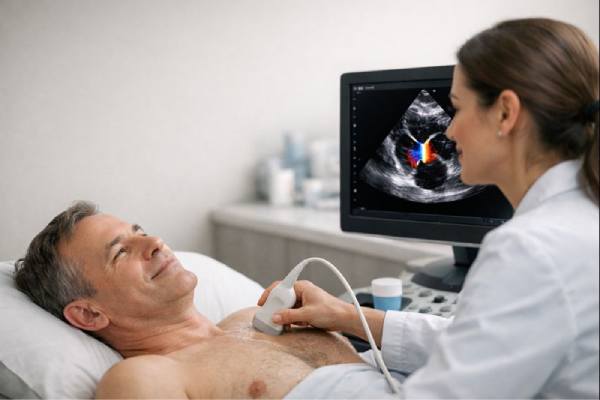
- Transthoracic echocardiogram (TTE) is usually the first-line test. It can estimate defect size, direction of flow, and right-heart enlargement.
- Transesophageal echocardiogram (TEE) may be used when images are limited or when planning a device closure, because it provides clearer detail of the defect’s rims and nearby structures.
- A bubble study (agitated saline) may help detect abnormal communication between atria and clarify shunting patterns.
- Cardiac MRI or CT
- Helpful when anatomy is complex (for example, sinus venosus defects or abnormal pulmonary veins).
- MRI can precisely measure right ventricular size and function and estimate shunt burden.
- Cardiac catheterization (selected cases)
- Not needed for every patient, but crucial when pulmonary hypertension is suspected or when noninvasive tests leave uncertainty.
- It measures pressures directly and can estimate pulmonary vascular resistance, which helps determine whether closure is safe.
A key part of the work-up is deciding whether the ASD is hemodynamically significant—meaning it is large enough to cause meaningful right-heart volume overload or other problems. Clinicians often focus on evidence like right atrial or right ventricular enlargement, estimated shunt size, symptoms, exercise limitation, and rhythm complications. The decision is rarely based on defect diameter alone.
Treatment options and what to expect
Treatment is tailored to the defect type, its impact on the heart, symptoms, age, and lung pressures. Some small ASDs—especially in infants—may close on their own. Others remain stable and do not cause right-heart enlargement, allowing careful monitoring. But when an ASD causes right-sided dilation, symptoms, or significant shunting, closure is often recommended to prevent long-term complications.
1) Watchful waiting (monitoring)
Monitoring may be appropriate when:
- The ASD is small and not enlarging the right side of the heart.
- Symptoms are absent and the heart’s structure and pressures look normal.
- There are no concerning rhythm problems.
Follow-up typically includes periodic echocardiograms and attention to symptoms over time.
2) Catheter-based (transcatheter) closure
This is most commonly used for secundum ASDs with suitable anatomy. A cardiologist threads a catheter through a vein (often in the groin) to the heart and deploys a closure device that seals the opening. Over time, heart tissue grows over the device.
What to expect:
- Usually a short hospital stay (sometimes same-day discharge, depending on the center and patient factors).
- Temporary restrictions on strenuous activity during healing.
- Short-term medications such as antiplatelet therapy (often aspirin) to reduce clot risk while tissue grows over the device.
- Follow-up imaging to confirm position and rule out residual shunt.
3) Surgical repair
Surgery is often recommended when:
- The ASD is primum, sinus venosus, or another subtype not suitable for devices.
- The anatomy lacks adequate rims for secure device placement.
- There are associated problems that need repair, such as abnormal pulmonary veins or valve issues.
Modern surgical outcomes are generally excellent, and minimally invasive approaches may be available depending on the case. Surgical closure may use stitches for small defects or a patch for larger ones.
4) Medical management (supportive care)
Medication does not “close the hole,” but it can help manage complications:
- Diuretics for fluid overload symptoms in selected patients.
- Rate or rhythm control medications for atrial fibrillation/flutter.
- Anticoagulation when atrial fibrillation is present or stroke risk is elevated.
- Pulmonary hypertension therapy in specialized scenarios, especially when pulmonary pressures are high and closure decisions require expert input.
Important nuance: Closure is not automatically safe for everyone. In advanced pulmonary hypertension with very high pulmonary vascular resistance, closing the ASD can worsen right-heart failure. That is why careful measurement and specialist evaluation matter when lung pressures are elevated.
Living well, prevention, and when to seek care
Living well with an ASD—repaired or unrepaired—often comes down to three things: staying engaged with appropriate follow-up, protecting heart rhythm and lung health, and responding quickly to warning signs.
Ongoing follow-up
- If your ASD is repaired, you may still need periodic checkups to monitor rhythm, heart chamber size, and any residual leak.
- If your ASD is unrepaired, regular surveillance helps detect right-heart enlargement, rising lung pressures, or new arrhythmias early.
- Adults with congenital heart disease often benefit from care in a specialized adult congenital heart clinic, especially when anatomy is complex or pulmonary hypertension is present.
Lifestyle and daily management
- Exercise: Many people can exercise safely, but the best plan depends on defect size, symptoms, and lung pressures. If you experience chest pain, dizziness, fainting, or unusual shortness of breath with activity, stop and seek evaluation.
- Heart rhythm awareness: Track palpitations, irregular pulse, or sudden drops in stamina. Short episodes can be the first sign of atrial fibrillation or flutter.
- Stroke risk reduction: If you have atrial fibrillation, take anticoagulation exactly as prescribed and discuss bleeding risks and interactions with your clinician.
- Blood clot prevention: On long flights or during prolonged inactivity, use common-sense clot prevention strategies (hydration, periodic walking, calf movement), especially if you have other clot risks.
- Dental and infection considerations: Routine dental care is important. Endocarditis prevention recommendations vary by situation; your clinician will advise whether any special precautions apply after closure and for how long.
Pregnancy and family planning
Many people with an isolated repaired ASD tolerate pregnancy well. However, an unrepaired ASD with arrhythmias, heart failure symptoms, or pulmonary hypertension requires pre-pregnancy counseling and coordinated care. If pregnancy is possible, discuss medications in advance because some rhythm drugs and anticoagulants are not appropriate in pregnancy.
When to seek urgent care
Call emergency services immediately for:
- Stroke-like symptoms (face droop, arm weakness, speech trouble)
- Fainting or near-fainting with palpitations
- Severe shortness of breath at rest, new cyanosis, or chest pain
- Rapid, sustained irregular heartbeat with dizziness or weakness
Prevention, in the practical sense
You cannot prevent a congenital ASD from forming, but you can prevent many downstream problems with timely evaluation, appropriate closure when indicated, and good rhythm management. If you take away one practical rule: don’t judge an ASD by symptoms alone—judge it by what it is doing to the right side of the heart over time.
References
- 2025 ACC/AHA/HRS/ISACHD/SCAI Guideline for the Management of Adults With Congenital Heart Disease: A Report of the American College of Cardiology/American Heart Association Joint Committee on Clinical Practice Guidelines 2025 (Guideline)
- Transcatheter closure of atrial septal defect in the elderly 2023 (Systematic Review/Meta-analysis)
- Surgical Treatment of Atrial Septal Defects 2024 (Review)
- 2022 ESC/ERS Guidelines for the diagnosis and treatment of pulmonary hypertension 2022 (Guideline)
Disclaimer
This article is for general education and does not replace personalized medical advice, diagnosis, or treatment. Heart conditions can vary widely in cause and severity, and decisions about monitoring, medications, catheter procedures, or surgery should be made with a qualified clinician who knows your history and test results. If you have symptoms such as chest pain, fainting, severe shortness of breath, stroke-like symptoms, or a sustained rapid or irregular heartbeat, seek urgent medical care.
If you found this article helpful, please consider sharing it on Facebook, X (formerly Twitter), or any platform you prefer—and follow us on social media. Your support by sharing helps our team keep producing trustworthy health content.