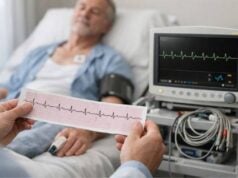
Intermittent complete heart block can feel like your body “cuts out” for a moment—lightheadedness, a pause in awareness, or sudden weakness that comes and goes. It happens when the heart’s electrical signal fails to travel from the upper chambers to the lower chambers for short periods. In complete heart block—atria and ventricles stop coordinating beats—the ventricles may rely on a slower backup rhythm. Because episodes can be brief, symptoms may be mistaken for anxiety, dehydration, or simple fatigue. But intermittent episodes can still be dangerous, especially if they cause fainting, falls, or long pauses. The key is to treat it as a timing problem with real consequences: capture the rhythm during symptoms, look for reversible triggers, and decide early whether pacing support is needed to keep blood flow steady and prevent sudden collapse.
Table of Contents
- What it is and why it comes and goes
- Common causes and risk factors
- Symptoms, warning signs, and complications
- How it’s diagnosed and captured
- Treatment options and what to expect
- Management, prevention, and when to seek care
What it is and why it comes and goes
Intermittent complete heart block means the electrical messages that normally travel from the atria (top chambers) to the ventricles (bottom chambers) sometimes fail completely—then later return. During an episode, the atria may keep their own steady rhythm, while the ventricles either beat very slowly from a backup “escape” pacemaker or pause for several seconds. That pause is what often causes sudden dizziness or fainting: the brain briefly receives less blood flow.
To understand why it can be intermittent, it helps to know that “heart block” is not one single disease. It’s a description of where a signal gets interrupted. The interruption may happen in the AV node (a natural electrical relay) or lower in the specialized wiring of the heart. These locations matter because they behave differently:
- Higher-up block (often in the AV node): may be more sensitive to medications, sleep-related vagal tone, or temporary inflammation, and can sometimes improve when the trigger is removed.
- Lower-down block (below the AV node): tends to be less stable and more likely to progress, because the wiring system is more fragile and less influenced by everyday nervous system swings.
Intermittent episodes also occur because the underlying problem can be variable. A diseased pathway might conduct normally at some heart rates but fail at others. Some people develop block when the heart speeds up (for example, during exertion), while others develop it when the heart slows down (for example, during sleep). A small change in oxygen supply to the heart muscle, body temperature, or electrolyte levels can tip a borderline system into failure.
One practical point: complete heart block does not always mean “no heartbeat.” Many people have a backup rhythm that prevents immediate collapse—but the backup can be too slow to keep blood pressure stable. Even short episodes can cause injury if they lead to fainting while driving, climbing stairs, or operating machinery.
Because intermittent complete heart block can look like many other problems, the most important first goal is confirming the rhythm during symptoms. Once the pattern is documented, treatment decisions become clearer and more confident.
Common causes and risk factors
Intermittent complete heart block can be caused by reversible problems, long-term wear-and-tear of the conduction system, or damage from heart disease. A careful cause search matters because it can change treatment—from “remove the trigger” to “place a permanent pacemaker.”
Common causes
- Age-related conduction system degeneration: A frequent cause in older adults. The heart’s electrical fibers can scar and stiffen over time, making signal passage unreliable.
- Coronary artery disease and heart attack: Reduced blood supply—especially involving areas that feed the conduction system—can cause intermittent or persistent block. Some blocks occur during an acute heart attack and may improve; others reflect permanent injury.
- Medications that slow conduction: Beta blockers, certain calcium channel blockers (non-dihydropyridines), digoxin, and some antiarrhythmic drugs can tip a vulnerable conduction system into complete block, especially with dose changes or drug interactions.
- Electrolyte and metabolic problems: High potassium, severe low thyroid or thyroid storm states, and other metabolic disturbances can disrupt electrical signaling.
- Inflammation or infection of the heart: Myocarditis, endocarditis-related complications, rheumatic disease, and specific infections (such as Lyme disease in relevant regions) can produce fluctuating block that may improve with treatment.
- Infiltrative or inflammatory conditions: Sarcoidosis and related disorders can affect the heart’s wiring in patches, causing unpredictable episodes.
- After cardiac procedures or surgery: Valve surgery, transcatheter valve procedures, ablation, or septal interventions may temporarily or permanently disturb conduction.
- Congenital or inherited conditions: Less common, but important in younger patients, especially when there’s a family history of sudden death or conduction disease.
Risk factors that raise suspicion
- Older age, prior heart attack, heart failure, or known structural heart disease
- A history of fainting without warning or injuries from sudden falls
- Baseline ECG abnormalities (for example, bundle branch block) found previously
- Kidney disease, diabetes, or long-standing high blood pressure (often traveling with vascular disease)
- Recent medication changes, dehydration, vomiting/diarrhea, or use of multiple rate-slowing drugs
A useful “cause mindset” is to think in layers. First, ask: could this be drug- or electrolyte-driven right now? Second, ask: is there an underlying conduction system disease that will still be there tomorrow? Third, ask: is there a specific treatable condition—like infection, inflammation, or ischemia—that needs urgent therapy?
This layered approach prevents two common mistakes: missing a reversible trigger, or assuming reversibility when the conduction system is actually failing progressively.
Symptoms, warning signs, and complications
Symptoms of intermittent complete heart block range from mild to dramatic, depending on how long the pause lasts, how slow the backup rhythm is, and what you’re doing at the time. Some people feel nothing between episodes and only recognize a pattern in hindsight.
Typical symptoms
- Sudden lightheadedness or “gray-out” when standing, walking, or exerting
- Near-fainting or fainting (syncope), often without much warning
- Unusual fatigue that feels out of proportion to sleep or workload
- Shortness of breath on exertion or reduced exercise tolerance
- Chest pressure or a sense of “heart stopping” or “skipping”
- Confusion or trouble focusing during episodes, especially in older adults
A hallmark clue is abrupt onset and abrupt resolution. People often say: “I was fine, then suddenly I wasn’t, then it passed.” That pattern can help separate it from anxiety, vertigo, or gradual dehydration—though overlap is common, and only rhythm monitoring can confirm the cause.
Why intermittent episodes can still be serious
Even if your heart “recovers” between episodes, intermittent complete heart block can cause:
- Falls and injuries: fainting on stairs, in the bathroom, or outdoors can lead to fractures or head injury.
- Driving risk: a brief loss of consciousness can be catastrophic behind the wheel.
- Low blood pressure episodes: repeated drops can worsen kidney function or cause chest pain in people with coronary disease.
- Heart failure worsening: if the ventricular rate stays slow for longer stretches, fluid retention and breathlessness can increase.
- Rare sudden collapse: longer pauses, especially without a reliable escape rhythm, can be life-threatening.
Red flags that need urgent evaluation
Seek emergency care right away if you have:
- Fainting, especially if it is new, recurrent, or causes injury
- Symptoms with chest pain, severe shortness of breath, or one-sided weakness
- Episodes that occur at rest and feel like prolonged near-blackouts
- A very slow pulse with weakness, confusion, or cool/clammy skin
- A new medication change followed by severe dizziness or near-fainting
If symptoms are milder—brief dizziness, “spells” without full fainting—prompt outpatient evaluation is still important. Intermittent complete heart block can progress unpredictably, and waiting for a “bigger episode” is not a safe strategy.
A practical safety tip while awaiting evaluation: avoid heights, ladders, swimming alone, and driving if you have unexplained fainting or near-fainting. Document triggers, time of day, and any medication doses around episodes—those details often speed up diagnosis.
How it’s diagnosed and captured
Diagnosis hinges on one thing: recording the rhythm during symptoms or during an episode. Because intermittent complete heart block can disappear by the time you reach a clinic, testing strategy is often about matching the tool to how often episodes occur.
Step one: history, exam, and baseline ECG
Clinicians start by clarifying what the episode looked like (sudden vs gradual), whether there was full loss of consciousness, and what was happening right before it started. They review all medications and supplements, with special attention to rate-slowing drugs and recent dose changes. A physical exam may reveal a slow pulse, low blood pressure, or signs of underlying heart disease. A standard ECG can show clues even between episodes, such as conduction delays that suggest higher risk of future block.
Rhythm monitoring options
- Holter monitor (24–48 hours): best if symptoms happen daily.
- Patch monitor (often 1–2 weeks): useful for weekly symptoms, and easier for many people to wear continuously.
- Event monitor (weeks): you trigger recordings when symptoms occur, and some devices auto-detect pauses.
- Implantable loop recorder (months to years): ideal for rare but dangerous episodes like unexplained fainting that occurs every few months.
The goal is to capture a strip that shows atrial activity continuing while ventricular beats pause or become independent—confirming complete block during the event.
Tests that look for causes
Once block is suspected or documented, clinicians often check for reversible or treatable triggers:
- Blood tests: electrolytes (especially potassium), kidney function, thyroid function, and medication levels when relevant.
- Echocardiogram: assesses heart structure and pumping function, and can reveal valve disease or cardiomyopathy.
- Ischemia evaluation: in appropriate patients, clinicians may look for coronary disease or recent injury, especially if there is chest pain or risk factors.
- Imaging for inflammation/infiltration: when sarcoidosis, myocarditis, or other inflammatory causes are suspected, advanced imaging may be recommended.
- Exercise testing or electrophysiology testing: occasionally used to clarify rate-related block patterns or conduction system location.
A subtle but important point: intermittent complete heart block can be mis-labeled as seizures or “just fainting.” If someone has convulsive movements during a faint, it may still be a rhythm problem—brief lack of brain blood flow can cause jerking. That’s why rhythm documentation is so valuable.
If you’ve had unexplained syncope, insist on a plan to capture the rhythm—because once the diagnosis is firm, treatment can be highly effective.
Treatment options and what to expect
Treatment depends on how unstable the episodes are, whether a reversible cause is found, and whether the block is likely to return. Many care plans have two parallel tracks: stabilize now and prevent recurrence.
Immediate care when symptoms are significant
If intermittent complete heart block causes fainting, long pauses, very low blood pressure, chest pain, or confusion, clinicians treat it as urgent. In monitored settings they may:
- Stop or reverse contributing medications (when safe to do so)
- Correct electrolyte or metabolic abnormalities
- Use short-term medicines that support heart rate and blood pressure when appropriate
- Apply temporary pacing support if pauses are dangerous (external pads at first, then a temporary pacing wire in some cases)
The immediate goal is preventing injury and keeping blood flow stable to the brain and heart.
Addressing reversible causes
When a clear trigger is identified, treatment focuses on that root cause. Examples include adjusting rate-slowing drugs, treating infections, addressing thyroid disease, managing myocarditis, or correcting potassium abnormalities. Even when an episode resolves, clinicians often remain cautious: a “reversible” event can still uncover an underlying vulnerable conduction system.
Permanent pacemaker: the most common long-term solution
If intermittent complete heart block is documented and symptoms are meaningful—or if the block is likely to recur—clinicians often recommend a permanent pacemaker, a device that prevents dangerous slow rates or pauses. For many people, this is the turning point from unpredictable episodes to stable day-to-day life.
What to expect:
- The procedure is usually performed under local anesthesia with sedation.
- Many devices use one or two leads placed through a vein into the heart; in selected patients, a leadless device may be considered.
- Recovery typically involves a short activity restriction for the arm/shoulder on the implant side to allow healing.
- Follow-up includes device checks, often with remote monitoring.
Choosing the pacing approach
Pacing is not “one-size-fits-all.” Clinicians consider:
- Whether you need support in one chamber or two
- Whether you have atrial rhythm problems
- Your heart’s pumping function and the expected amount of pacing
- Anatomy, infection risk, kidney function, and lifestyle needs
Some patients may benefit from pacing strategies that better preserve natural heart activation when a high amount of ventricular pacing is expected. Your team will balance durability, symptom relief, and long-term heart function.
A realistic outlook: a pacemaker does not remove the underlying disease, but it can reliably prevent the slow-rate consequences that make complete heart block dangerous. Many people return to normal routines with improved energy, fewer “spells,” and much lower risk of sudden collapse.
Management, prevention, and when to seek care
Long-term management focuses on three priorities: staying safe from sudden pauses, reducing triggers that worsen conduction, and protecting overall heart health.
Living with intermittent block while evaluation is ongoing
If you are still in the diagnostic phase:
- Avoid driving if you’ve had unexplained fainting or near-fainting.
- Don’t swim alone, climb ladders, or work at heights.
- Keep a symptom log with time, activity, hydration status, and medication timing.
- Bring a complete medication list, including over-the-counter cold remedies and supplements.
This “safety bridge” matters because the most dangerous events are often injuries from sudden loss of consciousness, not the rhythm abnormality itself.
After pacemaker implantation: habits that protect outcomes
Most people can return to daily activities, exercise, and travel. Practical priorities include:
- Wound care: keep the site clean and watch for redness, warmth, drainage, or fever in the first weeks.
- Activity steps: follow arm-motion and lifting limits for the recommended period to prevent lead movement.
- Device checks: attend in-clinic or remote follow-ups; they help optimize settings and detect lead or battery issues early.
- Medication review: confirm which rate-slowing drugs are safe again and at what doses—especially if you also have high blood pressure, angina, or arrhythmias.
- Emergency plan: know what symptoms should prompt urgent care (new fainting, sustained chest pain, severe shortness of breath, or signs of infection).
Prevention: reducing future triggers and heart risk
Even though pacing addresses slow rhythm risk, prevention still matters:
- Manage blood pressure, cholesterol, and diabetes to reduce vascular strain.
- Treat sleep apnea if present, since it can worsen nighttime rhythm instability.
- Limit excessive alcohol and avoid stimulant misuse.
- Ask about drug interactions when starting new prescriptions, especially antibiotics or medications that can alter drug levels.
When to seek care promptly
Contact your clinician quickly if you notice:
- New or returning fainting, near-fainting, or repeated unexplained falls
- A clear decline in exercise tolerance over days to weeks
- Palpitations with dizziness or chest discomfort
- Pacemaker site swelling, warmth, drainage, or fever
- A sudden cluster of symptoms after a new medication or dose change
Intermittent complete heart block is a condition where “watch and wait” can be risky. With the right monitoring and timely treatment—often pacing plus cause management—most people achieve stable rhythm control and can return to a predictable, safer daily life.
References
- 2021 ESC Guidelines on cardiac pacing and cardiac resynchronization therapy 2021 (Guideline)
- 2023 HRS/APHRS/LAHRS guideline on cardiac physiologic pacing for the avoidance and mitigation of heart failure 2023 (Guideline)
- Atrioventricular Block – StatPearls – NCBI Bookshelf 2024 (Clinical Review)
- A systematic review of the clinical characteristics and course of atrioventricular blocks in hyperthyroidism 2024 (Systematic Review)
- 2018 ACC/AHA/HRS Guideline on the Evaluation and Management of Patients With Bradycardia and Cardiac Conduction Delay: A Report of the American College of Cardiology/American Heart Association Task Force on Clinical Practice Guidelines and the Heart Rhythm Society 2019 (Guideline)
Disclaimer
This article is for education only and does not replace medical evaluation, diagnosis, or treatment. Intermittent complete heart block can cause fainting, injury, and serious complications. If you have syncope, recurrent near-fainting, chest pain, severe shortness of breath, new confusion, or a sudden very slow pulse, seek urgent medical care. Decisions about monitoring, medication changes, and pacemaker treatment should be made with a qualified clinician who can assess your symptoms, ECG findings, and overall health.
If you found this article useful, please share it on Facebook, X (formerly Twitter), or any platform you prefer, and follow us on social media. Your support through sharing helps our team continue producing high-quality health content.