Intrapartum cardiomyopathy is a rare but serious form of pregnancy-related heart weakness that shows up during labor or around delivery. It is closely related to peripartum cardiomyopathy (heart muscle weakness that appears late in pregnancy or after birth) and is often treated the same way—fast, carefully, and with both mother and baby in mind.
The hardest part is that early signs can look like “normal” pregnancy or labor strain—breathlessness, swelling, fatigue—until they suddenly don’t. When the heart can’t keep up, fluid can back up into the lungs, oxygen levels can drop, and blood pressure may become unstable. The good news is that many people improve significantly with prompt diagnosis, the right medicines, and thoughtful delivery planning—especially when a cardio-obstetrics team is involved.
Table of Contents
- What is intrapartum cardiomyopathy?
- How labor can trigger heart failure
- Who is most at risk?
- Early symptoms and red flags
- How it is diagnosed in real time
- Treatment, delivery planning, and recovery
What is intrapartum cardiomyopathy?
Cardiomyopathy means weakened heart muscle. In intrapartum cardiomyopathy, that weakness becomes clear during labor, delivery, or immediately after birth, when the heart is under its highest short-term strain. Many clinicians use the broader term peripartum cardiomyopathy for the same condition, because the underlying disease process is similar; “intrapartum” mainly points to timing—the onset is during the intrapartum window.
In practical terms, intrapartum cardiomyopathy is a type of new-onset heart failure that appears when there is no better explanation (such as a pre-existing heart condition, severe valve disease, a major heart attack, or a massive blood clot in the lungs). Heart failure does not mean the heart has stopped. It means the heart can’t pump efficiently enough to meet the body’s needs, so fluid backs up—often into the lungs—causing shortness of breath and low oxygen.
A key measurement doctors watch is ejection fraction—the percent pumped out each beat. In pregnancy-related cardiomyopathy, this number is often reduced, which is why an ultrasound of the heart (an echocardiogram) is so central to diagnosis.
Why can labor be the moment things unravel? Labor and delivery involve intense swings in:
- Heart rate and blood pressure (pain, stress hormones, pushing)
- Blood volume shifts (fluid given through an IV, blood loss, and rapid “autotransfusion” from the uterus after delivery)
- Oxygen demand (work of labor plus anemia if present)
- Afterload (the resistance the heart pumps against, especially with hypertensive disorders)
This condition is uncommon, but it matters because the intrapartum setting is time-sensitive: decisions about oxygen support, fluids, medications, and even the safest mode of delivery may need to happen quickly. With early recognition and coordinated care, many patients stabilize and later recover much or most of their heart function—though recovery can take months, and close follow-up is essential.
How labor can trigger heart failure
Intrapartum cardiomyopathy is best understood as a perfect-storm moment: an underlying vulnerability meets the most demanding cardiovascular hours of pregnancy.
Hemodynamic stress: the “load” changes fast
During labor, the body releases stress hormones (like adrenaline), which can raise heart rate and blood pressure. Each contraction also pushes blood back toward the heart. After delivery, the uterus rapidly shrinks and sends additional blood back into circulation—an effect clinicians sometimes describe as an internal “autotransfusion.” If the left ventricle is already struggling, these shifts can overwhelm it, leading to pulmonary edema (fluid in the lungs) and sudden breathlessness.
Hypertensive disorders and vascular injury
Preeclampsia and gestational hypertension increase the resistance the heart must pump against. When that resistance spikes, a weakened ventricle can fail abruptly. These disorders also involve blood-vessel dysfunction and inflammatory signaling, which may overlap with mechanisms thought to contribute to pregnancy-related cardiomyopathy.
Hormonal, inflammatory, and oxidative pathways
Researchers have proposed multiple biological pathways for peripartum cardiomyopathy—many of which can be relevant intrapartum:
- Oxidative stress: an imbalance that can injure heart cells during late pregnancy and early postpartum.
- Hormone-related effects: late pregnancy and postpartum shifts in hormones may influence blood vessels and heart muscle function.
- Inflammation and immune activation: pregnancy is an immune balancing act; in some patients, inflammatory signaling may contribute to myocardial dysfunction.
These theories don’t change bedside urgency, but they do explain why the condition can appear even in people without classic “heart disease” risk factors.
Genetic predisposition and “unmasking”
Some patients have an underlying genetic tendency toward dilated cardiomyopathy that only becomes obvious when pregnancy and labor increase cardiovascular demand. In these cases, pregnancy doesn’t “cause” the gene, but it can reveal the weakness.
Why it can look sudden
Labor is noisy physiology. Breathlessness, swelling, fast heart rate, and fatigue are common—even normal. The line is crossed when symptoms become out of proportion, progress rapidly, or come with objective warning signs like falling oxygen saturation, crackling sounds in the lungs, frothy cough, new chest pressure, fainting, or a marked inability to lie flat.
The most important takeaway: intrapartum cardiomyopathy isn’t about one single trigger. It’s about timing—when multiple stresses converge—and that’s why the response needs to be rapid, structured, and team-based.
Who is most at risk?
Intrapartum cardiomyopathy can occur without warning, but certain factors make it more likely. Risk factors don’t guarantee the condition will happen—they simply raise the odds, and they can guide how closely a pregnancy is monitored and where delivery is planned.
Pregnancy and demographic factors
Commonly reported associations include:
- Age over 30–35
- Multiple gestation (twins or higher)
- Prior peripartum cardiomyopathy (highest-risk group for recurrence)
- Hypertensive disorders of pregnancy (gestational hypertension or preeclampsia)
- African ancestry (higher reported incidence in several datasets)
- High parity (multiple prior births)
Health factors that increase strain
These can compound the stress of late pregnancy and labor:
- Obesity
- Diabetes
- Chronic hypertension
- Kidney disease
- Significant anemia
- Sleep-disordered breathing
- Smoking or stimulant exposure
Medication and obstetric context
Certain situations may raise risk or make decompensation more likely:
- Prolonged use of beta-agonist tocolytics (used to suppress preterm labor in some settings)
- Large fluid volumes given quickly (for example, around hemorrhage or anesthesia-related blood-pressure drops)
- Severe preeclampsia, especially with pulmonary edema
- Rapid labor plus major blood loss, which can create instability from both directions (too much fluid shift and too little oxygen-carrying capacity)
How risk changes the delivery plan
If a patient has known heart dysfunction, suspicious symptoms, or multiple major risk factors, it may be safer to deliver in a hospital with:
- On-site cardiology and maternal–fetal medicine
- Anesthesia experienced in high-risk cardiac obstetrics
- Intensive care capabilities
- Access to urgent echocardiography and advanced circulatory/respiratory support
What prevention can realistically do
There is no guaranteed prevention, but risk-aware care helps:
- Tight control of blood pressure
- Early evaluation of breathlessness that seems “too much”
- Avoiding unnecessary fluid overload
- A clear escalation plan if oxygen levels fall or pulmonary edema is suspected
If you’re pregnant and have a history of cardiomyopathy, the most protective step is preconception counseling and a shared plan for pregnancy monitoring, delivery, and postpartum follow-up.
Early symptoms and red flags
Intrapartum cardiomyopathy is dangerous mainly because the early phase can be mistaken for ordinary pregnancy discomfort or labor exhaustion. The goal isn’t to alarm—it’s to recognize patterns that don’t fit.
Symptoms that can be easy to dismiss
These deserve attention when they are new, worsening, or severe:
- Shortness of breath with minimal activity
- Needing extra pillows to sleep, or can’t lie flat
- Waking up gasping for air
- Persistent cough, especially if it’s worse when lying down
- Rapid weight gain over days with swelling in legs, hands, or face
- Unusual fatigue that feels abrupt and limiting
- Palpitations (heart racing or irregular beats)
- Chest tightness or pressure
Red flags during labor or right after delivery
These should trigger urgent evaluation:
- Low oxygen saturation or a new need for oxygen
- Breathlessness at rest, difficulty speaking full sentences
- Pink frothy sputum or a wet, bubbling cough (can signal pulmonary edema)
- Fast heart rate that remains high even when pain is controlled
- New fainting, confusion, or extreme weakness
- Blue lips or fingertips
- Sudden chest pain or one-sided leg swelling (concern for clot)
- Very high blood pressure with severe headache or visual changes
- Low blood pressure, cool clammy skin, or reduced urine output (possible shock)
Complications clinicians watch for
In severe cases, intrapartum cardiomyopathy can lead to:
- Pulmonary edema and respiratory failure
- Dangerous arrhythmias
- Blood clots forming in a poorly pumping ventricle, with risk of stroke or other embolism
- Cardiogenic shock (organ under-perfusion because the pump fails)
- Need for intensive care, mechanical ventilation, or mechanical circulatory support
What “normal labor” usually doesn’t do
Typical labor pain can make breathing feel harder—but it usually does not cause persistent low oxygen, frothy cough, inability to lie flat, or signs of fluid overload in the lungs. When those appear, clinicians treat it as a medical emergency until proven otherwise.
If you are supporting someone in labor, a simple rule helps: rapidly worsening breathlessness is never “just anxiety” until a clinician has checked oxygen levels and listened to the lungs.
How it is diagnosed in real time
Diagnosis during labor or immediately postpartum has one priority: separate heart failure from other obstetric emergencies quickly, because the treatments can differ dramatically.
Step 1: Stabilize while assessing
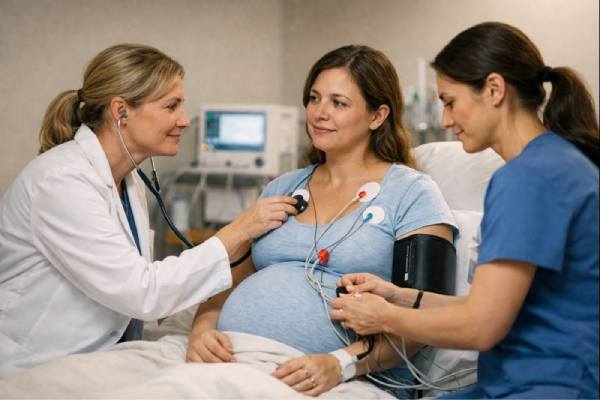
Clinicians often begin oxygen support immediately and monitor:
- Oxygen saturation, respiratory rate, blood pressure, heart rate
- Urine output and mental status
- Lung sounds (crackles can suggest fluid)
- Signs of severe preeclampsia or hemorrhage
A careful history matters even in urgent moments: symptoms that started before labor, inability to lie flat, worsening swelling, prior heart disease, and any recent viral illness can shift the probability.
Step 2: Key tests that move fast
Common tools include:
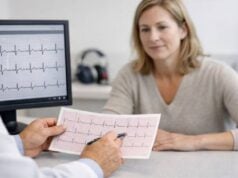
- Electrocardiogram (ECG) to look for rhythm problems or ischemic patterns
- Blood tests, often including:
- BNP or NT-proBNP (markers that tend to rise with heart strain)
- Troponin (can rise in heart injury; also helps evaluate heart attack or myocarditis)
- Complete blood count (anemia, infection)
- Kidney and liver function (organ effects of shock or preeclampsia)
- Chest imaging when needed (often a chest X-ray) to check for pulmonary edema or alternative causes
Step 3: Echocardiogram is the centerpiece
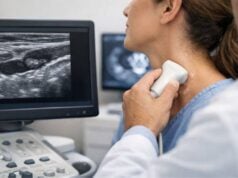
A bedside echocardiogram can rapidly show:
- Reduced pumping function (reduced ejection fraction)
- Ventricular size and wall motion
- Valve function
- Right-heart strain (which may suggest pulmonary embolism)
- Possible ventricular clot
This is typically the deciding test: it distinguishes cardiomyopathy-related heart failure from purely respiratory causes and guides medication choices.
Step 4: Rule out other dangerous look-alikes
Shortness of breath in labor has a wide differential. Teams consider:
- Pulmonary embolism (blood clot in the lungs)
- Amniotic fluid embolism (rare, sudden collapse with bleeding/clotting issues)
- Acute coronary syndrome (heart attack, including pregnancy-related coronary dissection)
- Severe preeclampsia with pulmonary edema
- Sepsis or pneumonia
- Asthma exacerbation
- Aspiration
Sometimes additional imaging (such as CT pulmonary angiography) is needed; clinicians weigh speed and accuracy against radiation considerations, especially if the baby has already been delivered.
Why diagnosis is team-based
Because delivery decisions may hinge on maternal stability, ideal care often involves a coordinated group: obstetrics, cardiology, anesthesiology, critical care, and neonatology. This is not “extra”—it is often the difference between a controlled stabilization and a cascade of conflicting interventions.
Treatment, delivery planning, and recovery
Treatment has two phases: urgent stabilization (minutes to hours) and recovery-focused care (weeks to months). The best plan is individualized, because pregnancy status, blood pressure, breastfeeding goals, and illness severity all matter.
Urgent stabilization: oxygen, fluids, and circulation
In the acute setting, clinicians may use:
- Oxygen (and sometimes noninvasive ventilation) to treat low oxygen and reduce the work of breathing
- Diuretics to remove excess fluid if pulmonary edema is present (carefully, to avoid dropping placental blood flow if still pregnant)
- Vasodilators (when blood pressure allows) to reduce the resistance the heart pumps against
- Inotropes (in severe cases) to support heart contractility
- Mechanical circulatory support in refractory shock (specialized centers)
Fluid strategy is critical: some patients need cautious diuresis; others may have blood loss and require balanced resuscitation. The decision is guided by exam findings, ultrasound, blood pressure, and response to initial treatment.
Medication choices: what changes with pregnancy
Standard heart failure therapies are adapted:
- During pregnancy, clinicians often rely on beta-blockers, hydralazine and nitrates, diuretics, and sometimes digoxin, depending on the situation.
- Some cornerstone therapies for heart failure in non-pregnant adults—such as ACE inhibitors, ARBs, and ARNI therapy—are generally avoided during pregnancy and often started postpartum if appropriate.
- Anticoagulation may be used if pumping function is very low or if a ventricular clot is seen, because clot risk rises when blood moves slowly through a weakened ventricle.
Delivery planning: safest birth is the one that matches physiology
When the mother is stable, many guidelines and expert groups favor:
- Vaginal delivery with early epidural, to blunt pain-driven blood pressure and heart rate surges
- Assisted second stage (reducing prolonged pushing) in selected cases
- Careful monitoring of fluids and oxygenation
A cesarean delivery may be the safest choice when there is:
- Ongoing instability or shock
- Severe respiratory failure
- An obstetric indication requiring surgery
- A need for rapid delivery to improve maternal resuscitation options
Anesthesia planning is not a detail—it affects blood pressure, heart rate, and fluid needs in real time.
Postpartum recovery: what happens after discharge matters
Recovery often includes:
- Guideline-directed heart failure therapy when safe and tolerated
- Repeat echocardiograms (commonly around 6 weeks and again later, depending on severity)
- Cardiac rehabilitation or structured activity progression
- Salt-aware nutrition and daily weight monitoring early on
- A clear plan for contraception and future pregnancy counseling
Some patients recover heart function substantially within months; others have persistent dysfunction and need long-term cardiology care. Future pregnancy decisions should be made with a specialist team, because recurrence risk can be significant—especially if heart function has not normalized.
When to seek urgent help after going home
After delivery, seek emergency care for:
- Breathlessness at rest, low oxygen, or worsening inability to lie flat
- Fainting, new confusion, or severe weakness
- Chest pain, one-sided leg swelling, or sudden severe headache with high blood pressure
- Rapid weight gain over days with swelling plus shortness of breath
The overarching goal is simple: stabilize early, deliver safely, and keep follow-up tight—because the postpartum weeks are still part of the danger window.
References
- ESC Guidelines on Cardiovascular Diseases during Pregnancy (Management of) 2025 (Guideline)
- Living with peripartum cardiomyopathy: A statement from the Heart Failure Association and the Association of Cardiovascular Nursing and Allied Professions of the European Society of Cardiology – PubMed 2024 (Statement)
- Peripartum Cardiomyopathy: Risks Diagnosis and Management – PMC 2023 (Review)
- Peripartum cardiomyopathy: a comprehensive and contemporary review – PMC 2024 (Review)
- Peripartum cardiomyopathy: a clinical review 2025 (Review)
Disclaimer
This article is for general education and does not replace personalized medical care. Intrapartum or peripartum heart failure symptoms can become life-threatening quickly, and evaluation should be urgent—especially during labor and the first weeks after delivery. If you or someone near you has severe shortness of breath, chest pain, fainting, blue lips, confusion, or low oxygen readings, seek emergency care immediately. Treatment decisions in pregnancy and breastfeeding depend on individual risks, exam findings, and local protocols, so always follow guidance from your obstetric and cardiology team.
If you found this article helpful, please consider sharing it on Facebook, X (formerly Twitter), or any platform you prefer—and follow us on social media. Your support through sharing helps our team continue producing high-quality, trustworthy health content.