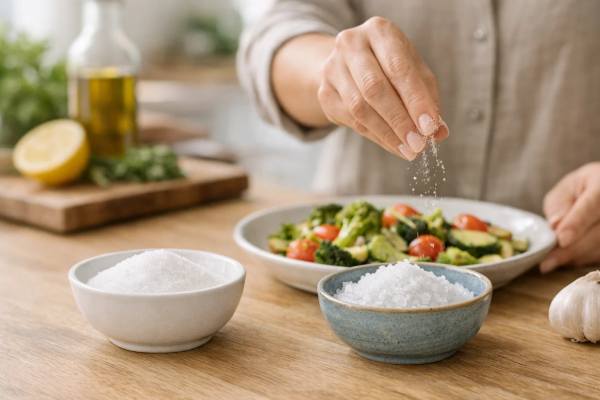
Salt has become a surprisingly emotional food. For some people, sea salt feels cleaner and more natural. For others, iodized salt sounds old-fashioned or overly processed. But when thyroid health enters the conversation, the choice stops being about color, texture, or marketing language and starts being about one small nutrient with outsized importance: iodine.
The thyroid needs iodine to make thyroid hormones, yet the body needs only a modest amount each day. That makes salt choice more nuanced than many headlines suggest. Sea salt is not automatically better for the thyroid, and iodized salt is not a free pass to eat more sodium. In fact, the most useful question is often not “Which salt is healthiest?” but “How do I get enough iodine without overshooting sodium?” The answer depends on what else you eat, whether you are pregnant, how much dairy or seafood you consume, and whether specialty salts have quietly replaced iodized salt in your kitchen.
Quick Overview
- Iodized salt can help prevent iodine deficiency, which supports normal thyroid hormone production.
- Sea salt and iodized salt usually contain similar amounts of sodium by weight, so sea salt is not a lower-sodium thyroid fix.
- Trace minerals in sea salt are usually too small in amount to meaningfully replace iodine or change overall nutrition.
- More iodine is not always better, especially for people with certain thyroid conditions or those using high-dose kelp products.
- A practical approach is to keep overall sodium modest while using iodized salt at home if your diet is otherwise low in iodine-rich foods.
Table of Contents
- What Actually Differs
- Why Iodine Matters
- How Much Iodine You Need
- When Sea Salt Falls Short
- Sodium Tradeoffs and Blood Pressure
- Best Choice for Different Situations
What Actually Differs
At first glance, iodized salt and sea salt seem like very different foods. One is associated with pantry staples and public health programs. The other is linked to gourmet cooking, larger crystals, and a more natural image. But nutritionally, the biggest difference is often much simpler than people expect: iodized salt has added iodine, while most sea salt does not unless the label specifically says it is iodized.
Iodized salt is usually refined table salt that has been fortified with iodine, often in the form of potassium iodide or potassium iodate. This was a major public health step because iodine deficiency used to be far more common, especially in inland and mountainous regions. Sea salt, by contrast, comes from evaporated seawater. It may contain small amounts of other minerals such as magnesium, calcium, or potassium, but those trace amounts are usually too low to create a major health advantage in the quantities people should realistically eat.
That last point matters. Salt is not eaten in cup-sized portions. It is eaten in pinches and teaspoons. So even if sea salt contains trace minerals, the actual nutritional effect is usually minor. The same logic applies to pink salt and other specialty salts. They may offer differences in taste, texture, and cooking behavior, but they are generally not dependable iodine sources.
The sodium side of the comparison is also widely misunderstood. By weight, sea salt and table salt are both mostly sodium chloride. They usually provide a similar sodium load gram for gram. What can change is the amount that fits into a spoon. Coarser crystals can make a teaspoon of sea salt look lighter in sodium than a teaspoon of fine table salt, but that is a crystal-size issue, not a sign that sea salt is inherently gentler on blood pressure or better for thyroid support.
In practical terms, the real comparison is not “processed versus natural.” It is “iodine-fortified versus usually not iodine-fortified.” That distinction becomes especially important for people who have replaced table salt with sea salt, cook mostly at home, eat little dairy or seafood, or assume that all salt naturally supplies iodine. It does not.
People who want a broader understanding of thyroid enlargement linked to low iodine may find it helpful to review the basics of goiter and its common causes. That context makes it easier to see why a small nutrient in a small amount of salt can have a meaningful endocrine role.
Why Iodine Matters
Iodine is essential because the thyroid cannot make thyroid hormones without it. Thyroxine, known as T4, and triiodothyronine, known as T3, both depend on iodine being available in the diet. These hormones help regulate metabolism, temperature control, energy use, heart function, and growth and brain development during pregnancy and early life. When iodine intake stays too low for long enough, the thyroid has to work harder to trap iodine from the bloodstream, and that strain can lead to gland enlargement and, over time, altered thyroid function.
This is why iodine deficiency is not just a nutrition footnote. In adults, it can contribute to goiter, hypothyroidism, fatigue, reduced concentration, and lower work capacity. During pregnancy, the stakes are higher because fetal brain development depends on adequate maternal thyroid hormone production and iodine supply. Mild deficiency may go unnoticed for a long time, especially because symptoms can overlap with everyday issues like low energy, dry skin, constipation, or poor focus.
At the same time, iodine is a “Goldilocks” nutrient. Too little is a problem, but too much can also disturb thyroid function. Large iodine exposures, especially from supplements, kelp powders, or seaweed-heavy diets, can trigger thyroid dysfunction in susceptible people. That can include hypothyroidism, hyperthyroidism, or autoimmune thyroid changes, depending on the person’s thyroid history and baseline iodine status. This is an important corrective to the idea that more iodine automatically means more thyroid support. It does not.
For most healthy adults, the goal is adequacy rather than excess. That is where iodized salt can be useful. It provides a predictable source of iodine in a food people already use. Public health experts have long treated salt iodization as one of the most effective ways to lower iodine deficiency at the population level. The logic is simple: salt is widely consumed, but it does not need to be consumed in large amounts to serve as a delivery vehicle for iodine.
A second nuance is that sodium reduction and iodine sufficiency are not opposites. They can coexist. The smart target is not eating more salt for the thyroid. It is getting the iodine you need while keeping total sodium intake reasonable. In other words, the thyroid argument supports choosing the right salt, not adding extra salt to everything on the plate.
When symptoms are vague and the question is whether thyroid function may be involved, some readers benefit from a plain-language overview of how hormone testing is typically approached. It can help frame why symptoms alone rarely tell the whole story.
How Much Iodine You Need
The body’s iodine needs are real but not huge. For most adults, the recommended intake is about 150 micrograms per day. Needs rise during pregnancy and breastfeeding because thyroid hormone production changes and the developing baby relies on maternal iodine supply. In the United States, pregnancy needs are typically set at 220 micrograms per day and lactation at 290 micrograms per day. Those numbers help explain why a salt choice that barely matters for one person may matter a great deal for another.
People often assume they can judge iodine intake by how much salt they use. That is only partly true. Iodized salt can contribute meaningfully, but several other foods matter too. Dairy products, seafood, eggs, and some breads can provide iodine, although the amount varies by region, farming practices, food processing, and brand. Seaweed can be extremely high in iodine, but that is not always helpful because the amount can swing widely and sometimes overshoot what the thyroid tolerates well.
The main groups more likely to run short on iodine include:
- People who do not use iodized salt
- People who eat little or no dairy, seafood, or eggs
- Vegans and some plant-based eaters
- Pregnant people with limited iodine-rich foods
- People who use only specialty salts such as sea salt, kosher salt, or pink salt
- People following sodium restriction without another reliable iodine source
A subtle but important modern issue is that most sodium in many countries comes from packaged, restaurant, and processed foods, and those foods do not always use iodized salt. So someone can eat a high-sodium diet and still have a less-than-ideal iodine intake. That surprises many people. It also explains why simply saying “I eat a lot of salt” does not answer the thyroid question.
Another common misunderstanding is that low iodine is the explanation for every low-thyroid symptom. In reality, fatigue, weight changes, brain fog, hair shedding, and cold intolerance can have many causes. Iodine deficiency is one possibility, but not the only one. Chasing iodine without context can blur the real issue, especially if someone already has adequate intake.
If tiredness, poor concentration, or low mood are the main complaints, it is often worth stepping back and considering other hormone-related causes of persistent fatigue instead of assuming the pantry salt is the whole story. Thyroid support is important, but it is not the same as self-diagnosing iodine deficiency.
When Sea Salt Falls Short
Sea salt falls short when it is treated as a nutritional upgrade that automatically covers iodine needs. In reality, most sea salt is prized for flavor, crystal structure, and culinary feel, not for dependable iodine content. Unless a sea salt product is specifically labeled iodized, it should not be assumed to protect against iodine deficiency. That gap matters most in people whose diets are already light on iodine-rich foods.
This is where the popularity of “clean eating” patterns can create an unintended thyroid problem. A person may cut processed foods, switch from table salt to sea salt, reduce dairy, eat little seafood, and avoid fortified products. On paper, that pattern can look very health-conscious. In practice, it may slowly chip away at iodine intake. The issue is not that sea salt is harmful. It is that sea salt often displaces one of the simplest reliable iodine sources without replacing it.
Sea salt also gets credit for trace minerals that sound more impressive than they function. Yes, sea salt may contain tiny amounts of magnesium, calcium, or potassium. But the quantities are generally far too small to meaningfully improve mineral status at sodium intakes recommended for long-term cardiovascular health. A nutrient only matters if the dose is relevant. In this case, the trace mineral argument is often more of a branding story than a meaningful endocrine advantage.
Another situation where sea salt can fall short is pregnancy planning. Someone may be doing many things right but still miss the fact that pregnancy raises iodine needs. Because thyroid hormone is so important for fetal development, this is not an area where guessing is ideal. Prenatal vitamins sometimes contain iodine, but not all do, and diet quality can vary from week to week. Relying on noniodized sea salt during this period may quietly narrow the margin of safety.
There is also a different kind of overcorrection: swapping sea salt for kelp, iodine drops, or “thyroid support” supplements. That is rarely the better answer. Supplements can deliver much larger and less predictable iodine loads than food and may aggravate thyroid dysfunction in susceptible people. The practical lesson is that sea salt does not need to be demonized, but it should be viewed honestly. It is a culinary salt first. It is not a reliable thyroid-support strategy unless it has been specifically iodized.
For people with ongoing symptoms, abnormal labs, pregnancy questions, or a family history of thyroid disease, knowing when to see an endocrinologist can be more useful than endlessly comparing salt brands. Nutrition choices matter, but they work best when the bigger clinical picture is clear.
Sodium Tradeoffs and Blood Pressure
The phrase “iodized salt supports the thyroid” can accidentally send the wrong message. It can make people think more salt is protective. It is not. The real benefit is that the salt you already use can be a better iodine vehicle. From a blood pressure standpoint, excessive sodium remains excessive sodium whether it comes from iodized salt, sea salt, kosher salt, or pink salt.
That is why sodium tradeoffs matter. For most adults, general guidance is to keep sodium below about 2,300 milligrams per day, and some people benefit from going lower depending on blood pressure, kidney disease, heart failure, or clinician advice. A teaspoon of salt contains roughly a day’s sodium limit. Once that fact lands, it becomes obvious why the healthiest salt strategy is not about adding more shakes from the salt cellar.
A practical way to reconcile sodium and iodine goals is this:
- Keep total sodium intake moderate rather than chasing “healthy” salt labels.
- Use iodized salt for at least some home cooking if your diet is otherwise low in iodine.
- Avoid assuming restaurant and packaged foods will supply enough iodine.
- Be cautious with high-iodine supplements, seaweed powders, and kelp-heavy products.
- Check medical conditions and medications before using lower-sodium salt substitutes rich in potassium.
That last point deserves attention. People sometimes jump from a sea-salt versus iodized-salt comparison to salt substitutes. Those are a separate category. Many lower-sodium products replace part of the sodium chloride with potassium chloride. They can be useful for some people, but not everyone. Those with kidney disease or people taking certain medications, including some blood pressure drugs, may need to be careful about extra potassium.
The bigger public health message is reassuring: sodium reduction and iodine sufficiency are compatible. You do not need a high-salt diet to get enough iodine. You need a thoughtful diet. That may mean a modest amount of iodized salt at home, combined with other iodine sources, while still keeping an eye on packaged foods that drive up sodium without reliably solving the iodine question.
For readers wondering whether persistent blood pressure issues may have an endocrine dimension beyond diet alone, it can be useful to understand how hormones can influence blood pressure regulation. Salt sensitivity is common, but it is not the only factor that affects the numbers on the cuff.
Best Choice for Different Situations
The best salt choice depends less on ideology and more on context. For many people, the most practical answer is not to choose one salt forever and declare it superior. It is to match salt use to actual nutritional needs. Someone who eats seafood, dairy, and eggs regularly may have an easier time meeting iodine needs without relying heavily on iodized salt. Someone on a dairy-free, seafood-light, mostly home-cooked diet may benefit much more from keeping iodized salt in regular rotation.
Here is a useful way to think about it:
- If you want reliable iodine support: iodized salt is usually the safer default for home use.
- If you prefer sea salt for flavor or texture: that can be fine, but check whether it is iodized and make sure iodine is coming from somewhere else.
- If you are pregnant, breastfeeding, or trying to conceive: be more intentional, because iodine needs are higher and the consequences of deficiency matter more.
- If you have thyroid disease: avoid assuming either deficiency or excess iodine will help. Large swings can be unhelpful.
- If you are lowering sodium for blood pressure: the goal is still lower sodium overall, not switching to a prettier salt.
One balanced household strategy is to use iodized salt in everyday cooking, then use a finishing sea salt occasionally for texture and taste. That approach respects both nutrition and cooking preferences without turning salt choice into a false either-or decision. It also helps prevent a common trap: using gourmet salt everywhere while quietly losing a dependable iodine source.
It is also worth remembering that salt is only one piece of thyroid health. Thyroid function is shaped by overall nutrition, autoimmune patterns, medications, pregnancy status, and broader health conditions. Salt can support or undermine iodine intake, but it is not a cure-all. People who feel unwell should not assume that changing salts will fix symptoms that deserve proper evaluation.
The most grounded conclusion is simple. Iodized salt is not “better” because it is more natural or more modern. It is often better because it is more useful for a specific micronutrient problem. Sea salt is not unhealthy by definition. It is just nutritionally incomplete if it replaces iodized salt in a diet that is already low in iodine. Once that is clear, the smartest choice becomes much easier: keep sodium reasonable, make iodine intake deliberate, and use salt as a tool rather than a health identity.
References
- Iodine – Health Professional Fact Sheet 2024 (Official Reference)
- Thyroid function and iodine intake: global recommendations and relevant dietary trends – PubMed 2024 (Review)
- Iodine Deficiency and Iodine Prophylaxis: An Overview and Update – PMC 2023 (Review)
- Salt Reduction and Iodine Fortification Policies Are Compatible: Perspectives for Public Health Advocacy – PMC 2024 (Review)
- Sodium in Your Diet | FDA 2024 (Official Reference)
Disclaimer
This article is for educational purposes only and does not replace personal medical advice, diagnosis, or treatment. Thyroid symptoms, iodine deficiency, and sodium-related health concerns can overlap with other medical conditions, and the safest approach depends on your diet, medications, pregnancy status, blood pressure, kidney health, and thyroid history. Do not start high-dose iodine supplements or make major diet changes for suspected thyroid problems without appropriate medical guidance.
If this article helped clarify the difference between iodized salt and sea salt, consider sharing it on Facebook, X, or another platform you use.