Iron deficiency is one of the most common reversible contributors to diffuse hair shedding, yet it is also one of the most misunderstood. Many people hear the word ferritin, see a “normal” hemoglobin, and assume iron cannot be part of the story. In practice, hair may be affected before anemia becomes obvious, especially when iron stores are running low over time. That is why this topic matters: it sits at the intersection of scalp biology, nutrition, blood work, and the body’s broader energy economy.
Hair follicles are fast-turnover structures. They do not need perfect health to function, but they do depend on reliable nutrient supply, including iron, to keep cycling normally. When iron stores fall, the follicle may shift more hairs into shedding phase or struggle to maintain strong, sustained growth.
The encouraging part is that iron-related shedding is often manageable when the cause is identified early, the right labs are checked, and recovery is approached with patience rather than panic.
Key Takeaways
- Low iron stores can contribute to diffuse shedding even before severe anemia is present.
- Ferritin is often the most useful starting marker, but it must be interpreted alongside symptoms, blood counts, and inflammation.
- Hair recovery usually lags behind blood-work improvement, so treatment helps most when it is consistent over months rather than days.
- Do not start high-dose iron blindly; confirm the problem, look for the cause, and recheck labs after treatment begins.
Table of Contents
- How Iron Deficiency Affects Hair
- Ferritin Levels and What They Mean
- Symptoms and Who Is Most at Risk
- How Treatment Usually Works
- How Long Recovery Takes
- When to Look Beyond Iron
How Iron Deficiency Affects Hair
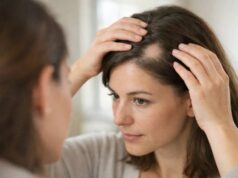
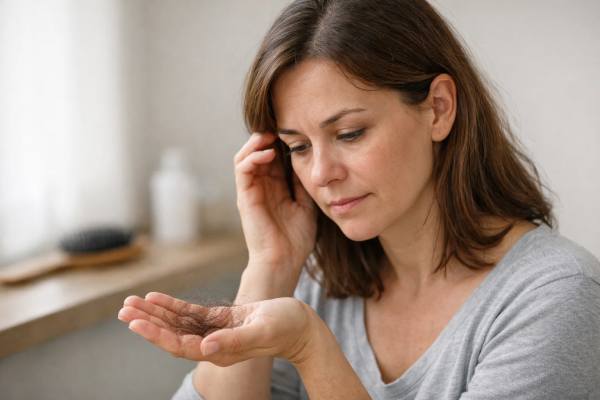
Iron deficiency hair loss usually does not look like a sharply defined bald patch. More often, it shows up as diffuse shedding: extra hair in the shower, more strands on the brush, a ponytail that feels thinner, or a part that slowly looks wider. The reason is that iron deficiency tends to disrupt the hair cycle rather than attack one small area of scalp.
Hair follicles are metabolically active. During anagen, the active growth phase, they need steady oxygen delivery, energy production, and access to nutrients that support cell division. Iron plays an important role in those processes. When iron stores fall, the body starts prioritizing essential organs and functions over less urgent ones. Hair is biologically important, but it is not high on the survival list. As a result, the follicle may shorten the growth phase or push more hairs into resting and shedding.
This is why iron-related hair loss often behaves like telogen effluvium rather than a scarring alopecia. Shedding can rise weeks or months after iron status worsens, and the loss is often generalized rather than localized. Many people notice the change gradually. Others only recognize it once styling becomes harder or the ends seem thinner than before. A useful comparison with shedding versus true hair loss patterns can help frame that distinction.
It is also important not to oversimplify the relationship. Low ferritin is associated with hair shedding in many patients, but not every person with low ferritin develops hair loss, and not every person with diffuse shedding has an iron problem. Hair is influenced by overlapping factors: thyroid disease, illness, rapid weight loss, postpartum shifts, medications, chronic stress, inflammation, and genetic thinning can all produce similar complaints.
That is one reason this topic creates so much confusion online. Some articles claim iron is the hidden cause of almost all shedding. Others dismiss the connection entirely unless anemia is severe. The more accurate middle ground is that iron deficiency is a meaningful, common, and often overlooked contributor to diffuse hair shedding, especially in people with risk factors, but it should be interpreted in context rather than treated as a universal explanation.
A practical way to think about it is this: iron deficiency does not have to be the only trigger to matter. It can be the main driver, a contributing factor, or the reason recovery is stalling. In real life, hair loss often becomes noticeable when several smaller pressures add up. Low iron may be one of the most fixable pieces of that picture.
Ferritin Levels and What They Mean
Ferritin is the lab marker most people hear about first, and for good reason. It reflects stored iron and is often the best single starting test when iron deficiency is suspected. But ferritin is not a perfect “hair number,” and that is where many people get misled.
In otherwise healthy adults, very low ferritin strongly supports iron deficiency. A level below 15 ng/mL is widely accepted as clearly low, and in routine clinical practice many clinicians treat ferritin below 30 ng/mL as compatible with iron deficiency, especially when symptoms fit. The picture becomes more complicated when inflammation, infection, liver disease, obesity, or chronic illness are present, because ferritin is also an acute-phase reactant. In those settings, ferritin can look normal or even elevated while iron availability is still poor.
That is why ferritin should not be read in isolation. A good iron workup may also include:
- Complete blood count.
- Hemoglobin and red-cell indices such as MCV.
- Iron saturation or transferrin saturation.
- Serum iron and total iron-binding capacity in selected cases.
- C-reactive protein or other inflammatory markers when interpretation is unclear.
The hair-specific question adds another layer. Many dermatology conversations center on whether ferritin needs to be “high normal” for hair to thrive. This is where the evidence becomes more nuanced. Some clinicians become concerned about hair shedding when ferritin is below the usual minimum reference range, while others aim for more repletion when diffuse shedding is active. But there is no universal, evidence-based rule that one exact ferritin number guarantees regrowth for every person. A fuller look at ferritin ranges discussed in hair care and dermatology can help make sense of that debate.
The safest takeaway is to avoid two extremes. One extreme is ignoring ferritin unless anemia is severe. The other is assuming any ferritin below a favorite internet target fully explains the hair problem. Neither approach is careful enough.
A more grounded interpretation looks like this:
- Ferritin that is clearly low deserves attention, even if hemoglobin is still normal.
- Borderline ferritin becomes more meaningful when symptoms, diet, menstrual blood loss, or shedding pattern support iron deficiency.
- Ferritin that looks “normal” may still need context if inflammation or chronic disease is present.
- Hair improvement should not be judged by ferritin alone; the whole clinical picture matters.
Another practical point is that lab “normal” ranges are designed for broad medical screening, not specifically for optimal hair cycling. That does not mean every person needs a special hair target. It means that symptoms, history, and trend over time are often more informative than a single printed reference interval.
Ferritin is useful because it makes hidden depletion visible. It is limited because it is still only one piece of a larger iron story.
Symptoms and Who Is Most at Risk
Iron deficiency hair loss rarely arrives alone. Many people who are shedding also notice other clues, although they may not connect them at first. Fatigue is the classic complaint, but it is not the only one. Low exercise tolerance, shortness of breath on exertion, dizziness, headaches, poor concentration, restless legs, brittle nails, feeling colder than usual, and pale skin can all point in the same direction. In some cases, people crave ice or develop other unusual cravings, a symptom known as pica.
Still, symptoms are not always dramatic. Someone may have mild iron deficiency without obvious anemia and feel only a little more tired than usual. In that situation, hair can become the problem that finally prompts testing. That is part of why iron-related shedding is easy to miss. The body may be compensating just enough that the person functions, while the follicle quietly reflects the strain.
Risk is not distributed evenly. The people most likely to develop iron deficiency include:
- Menstruating adults, especially with heavy periods.
- People who have recently been pregnant or are postpartum.
- Vegetarians and vegans with low overall iron intake or poor diet variety.
- People with restrictive eating, rapid weight loss, or low calorie intake.
- Endurance athletes.
- People with gastrointestinal blood loss or frequent blood donation.
- Those with malabsorption disorders or chronic gut symptoms.
Absorption problems deserve more attention than they usually get. Iron deficiency is not always just about eating too little iron. Sometimes the issue is not getting iron across the gut wall effectively. Low stomach acid, celiac disease, inflammatory bowel disease, and certain medications can all interfere with absorption. A closer look at gut-related reasons iron status affects hair can be especially helpful when diet seems reasonable but ferritin remains stubbornly low.
Another nuance is that women are often told their symptoms are “normal” when they are simply common. Heavy bleeding, chronic tiredness, and diffuse hair shedding may be common experiences, but they are not automatically benign. Repeated iron depletion can quietly become a long-term drag on hair, cognition, exercise tolerance, and quality of life.
There is also an overlap problem. Iron deficiency can coexist with other hair-loss triggers. A person may have postpartum shedding and low ferritin. Or telogen effluvium after illness and heavy menstrual blood loss. Or early female-pattern thinning made more obvious by an iron deficit. In those cases, iron treatment matters, but it may not be the whole plan.
This is why a symptom list is most useful when combined with a risk profile. Hair shedding plus fatigue in someone with very heavy periods tells a different story than shedding alone in someone with no clear iron risk. The pattern, not just the presence of hair loss, is what makes iron deficiency more or less likely.
How Treatment Usually Works
Treating iron deficiency hair loss is not just about swallowing a supplement. It usually involves three parallel goals: confirm the deficiency, correct the cause, and restore iron stores steadily enough that the follicle has a chance to recover.
The first step is choosing the right treatment route. For many people, oral iron is the starting point. That often means a ferrous salt or another oral preparation taken once daily or every other day, depending on the clinician’s strategy, the dose, side effects, and the urgency of repletion. More is not always better. Very high doses can worsen nausea, constipation, abdominal pain, or poor adherence without delivering dramatically better results.
This is one reason practical iron treatment is often more conservative than internet advice. If a person cannot tolerate the supplement, they will not stay on it long enough to help hair. In many cases, the most effective plan is the one the person can actually continue. Follow-up labs are commonly repeated after several weeks to check whether ferritin and blood counts are moving in the right direction.
Food still matters, even when supplements are needed. Oral iron works better when the overall diet is not fighting against recovery. Useful strategies include:
- Building meals around iron-rich foods.
- Pairing plant sources of iron with vitamin C-rich foods.
- Avoiding the assumption that one iron pill can compensate for a chronically undernourishing diet.
- Reviewing tea, coffee, calcium timing, and gut symptoms if absorption seems poor.
A practical guide to iron-rich foods that fit a hair-supportive diet can help people move from theory to actual meals.
Just as important is finding the reason iron fell in the first place. Heavy periods are a common cause, but not the only one. Persistent deficiency despite treatment may need a wider workup for gastrointestinal blood loss, malabsorption, inflammatory conditions, or repeated dietary shortfall. If the cause is not addressed, ferritin may improve briefly and then fall again.
Some people need intravenous iron rather than oral treatment. That is more likely when deficiency is significant, oral iron is poorly tolerated, absorption is impaired, or faster repletion is medically necessary. It is not a cosmetic shortcut. It is a medical decision based on severity, response, and underlying cause.
A few common mistakes are worth avoiding:
- Starting high-dose iron without testing.
- Taking iron for a few weeks, then stopping as soon as energy improves.
- Ignoring constipation, nausea, or dark stools until treatment becomes impossible to maintain.
- Treating ferritin while never investigating heavy bleeding or gut symptoms.
- Assuming hair will improve on the same timeline as the lab panel.
The right treatment is not glamorous. It is targeted, monitored, and persistent. That is usually what gives hair the best chance to catch up.
How Long Recovery Takes
Hair recovery after iron deficiency is rarely immediate, and that delay is one of the hardest parts of the process. Blood work can improve before the mirror does. A person may start feeling less tired, see ferritin rising, and still feel that the shedding has not “caught up” to the treatment. That is normal.
The reason is timing. Hair follicles work on a cycle measured in months, not days. When iron stores fall, shedding may increase only after a delay. When iron stores improve, recovery also appears after a delay. The follicle has to return to a healthier cycle, reduce the proportion of hairs entering rest phase, and then produce enough new visible growth to change density and styling. That takes time.
A realistic sequence often looks like this:
- First, lab values begin to improve.
- Then, systemic symptoms such as fatigue may start to ease.
- After that, excessive shedding may slowly decrease.
- Visible regrowth and better density usually come later.
In practical terms, many people need several months before they can honestly judge whether hair is improving. The first useful sign is often not dramatic regrowth. It is that the shower drain looks less alarming and the daily fall becomes less intense. Only after that do baby hairs, fuller edges, or a less see-through part begin to show.
This is why hair recovery should not be judged weekly. A better approach is to compare monthly photos in the same lighting and give the process enough time to become visible. A closer look at when sudden shedding needs a doctor review can help if the timeline feels unusually severe or prolonged.
Another reason recovery can feel incomplete is that iron deficiency may not be acting alone. If low ferritin is corrected but the person also has thyroid disease, chronic stress, postpartum shedding, androgenetic thinning, or ongoing under-eating, hair may improve only partially. That does not mean iron treatment failed. It means the problem had more than one driver.
There is also a difference between stopping loss and restoring length. If the hair has been shedding heavily for months, density needs time to rebuild. If the ends have become thinner and more fragile, retained fullness will lag even after root-level shedding settles.
A useful mindset is to think in milestones, not miracles:
- Fewer shed hairs.
- Better energy and fewer iron-deficiency symptoms.
- Lab values trending in the right direction.
- Small regrowth signs at the part or hairline.
- Gradual density improvement over seasons, not days.
Patience matters, but passive waiting is not enough. Recovery is easiest to trust when ferritin and the rest of the iron story are being followed thoughtfully, not guessed from symptoms alone.
When to Look Beyond Iron
Iron deficiency is common, but it is not the answer to every hair complaint. Sometimes ferritin is only mildly low and the shedding pattern points elsewhere. Other times ferritin is corrected and the hair still does not recover as expected. That is when it becomes important to widen the frame.
Diffuse shedding has a long differential. Thyroid disease, low vitamin B12, postpartum hormonal shifts, major illness, fever, rapid weight loss, medications, inflammatory scalp disease, and chronic stress can all mimic or compound iron-related loss. A broader review of common blood tests used in hair-loss workups can help explain why ferritin is often checked alongside other markers rather than alone.
Pattern matters. Iron deficiency usually causes diffuse shedding, not smooth round bald patches. Patchy loss raises concern for alopecia areata. Prominent thinning through the part or crown with gradual miniaturization points more toward female-pattern hair loss. Redness, pain, thick scale, burning, or pustules suggest a scalp disorder that should not be written off as nutritional.
There are also lab-related reasons not to over-focus on ferritin. A ferritin value can be influenced by inflammation. Hemoglobin can remain normal while stores are low. And sometimes a person feels sure iron is the issue because social media has trained them to think that way, when the real problem is a different deficiency or a non-nutritional trigger altogether.
You should seek medical review sooner if you have:
- Heavy or persistent shedding lasting for months.
- Marked fatigue, dizziness, shortness of breath, or pica.
- Very heavy periods.
- Gastrointestinal bleeding, dark stools not explained by iron, or chronic abdominal symptoms.
- Patchy hair loss rather than diffuse shedding.
- Scalp pain, scale, inflammation, or burning.
- No improvement despite appropriate iron treatment and follow-up.
It is also worth reviewing supplements. Some people respond to hair loss by stacking multiple products, including iron, zinc, biotin, and high-dose vitamins, without confirming a deficiency. That can create side effects, confuse lab interpretation, or produce new imbalances. Iron should be treated as a medical nutrient, not a casual cosmetic add-on.
The most helpful mindset is not “Is it iron or not?” but “How much of this story can iron explain?” Sometimes the answer is most of it. Sometimes it is only one layer. Either way, the best outcomes usually come from following the evidence rather than chasing a single lab value in isolation.
References
- WHO guideline on use of ferritin concentrations to assess iron status in individuals and populations 2020 (Guideline)
- Recommendations for diagnosis, treatment, and prevention of iron deficiency and iron deficiency anemia 2024 (Guideline)
- Iron deficiency without anaemia: a diagnosis that matters 2021 (Review)
- A comprehensive investigation of biochemical status in patients with telogen effluvium: Analysis of Hb, ferritin, vitamin B12, vitamin D, thyroid function tests, zinc, copper, biotin, and selenium levels 2024
- Oral iron treatment in adult iron deficiency 2022 (Review)
Disclaimer
This article is for educational purposes and is not a substitute for personal medical advice, diagnosis, or treatment. Iron deficiency hair loss can overlap with other causes of shedding and thinning, and ferritin results should be interpreted in the context of symptoms, medical history, inflammation, and other laboratory findings. Iron supplements are not risk-free and should not be started or escalated without appropriate guidance, especially if you have digestive symptoms, chronic illness, or possible blood loss. If you have persistent shedding, marked fatigue, heavy bleeding, or unusual scalp symptoms, seek care from a qualified clinician.
If this article was helpful, please share it on Facebook, X, or any other platform where it may help someone understand iron, ferritin, and hair recovery more clearly.