Isatis, usually referring to Isatis tinctoria and commonly called woad or dyer’s woad, is one of those herbs with two very different histories. In Europe, it is famous as an ancient blue dye plant. In herbal medicine, though, it has a longer reputation as a cooling, bitter, strongly active remedy used for feverish respiratory illness, sore throat, inflamed skin, and heat-driven irritation. Modern interest comes from the same place: the plant contains notable compounds such as tryptanthrin, indirubin, indigo precursors, glucosinolates, phenolic acids, and polysaccharides, all of which help explain why it continues to attract pharmacological research.
The challenge is that Isatis is often discussed with more certainty than the evidence supports. Much of the research on Isatis tinctoria is still preclinical, and commercial products can vary widely in plant part, extraction method, and even authenticity. That makes it a herb worth understanding carefully rather than casually. This guide looks at what Isatis is, how its leaf and root differ, which medicinal properties appear most plausible, how it is used, what dosage ranges are commonly cited, and where the main safety limits still stand.
Quick Overview
- Isatis is best known for traditional use in sore throat, febrile respiratory illness, and inflamed or irritated skin.
- Modern studies suggest anti-inflammatory and antimicrobial activity, especially from leaf extracts and indole-related compounds.
- A commonly cited traditional adult dose for dried root is about 1 to 2 g daily in divided doses.
- Pregnant or breastfeeding people, children, and anyone using immune-active or prescription therapies should avoid self-prescribing it.
Table of Contents
- What is isatis?
- Key ingredients and medicinal properties
- Does isatis help with infections?
- Skin benefits and other uses
- How to use isatis
- How much isatis per day?
- Safety, side effects, and interactions
- What the evidence actually says
What is isatis?
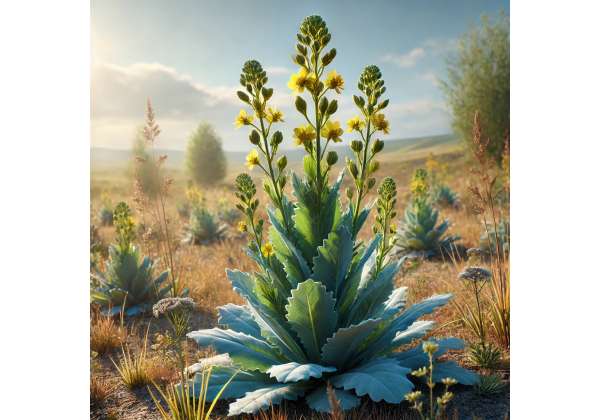
Isatis is a Brassicaceae plant, the same broad family that includes mustard, cabbage, and broccoli. The species in this article is Isatis tinctoria, the classic European woad. It grows as a hardy biennial with bluish-green leaves, yellow flowers, and the famous indigo-producing chemistry that made it valuable long before synthetic dyes existed. Medicinally, however, the plant’s real interest lies in its leaves and roots.
The leaves and roots are not interchangeable in practice. In herbal traditions influenced by Chinese materia medica, the leaf is often associated with “cooling” and clearing heat-type symptoms, while the root is more often sold as “isatis root” for sore throat, febrile conditions, and infection-focused formulas. This matters because consumers often assume that one bottle labeled “isatis” is functionally the same as another. It is not. A leaf extract, root powder, fermented indigo preparation, and cosmetic cream may all come from the same species, yet behave very differently.
Another important detail is naming confusion. In commerce, “isatis” may refer to Isatis tinctoria, Isatis indigotica, or processed indigo materials such as Qing Dai. Some labels use older or regional naming conventions, and market substitution is a real issue. That means the Latin name on the label matters much more than the common name. If a product does not clearly state the species and plant part, it is harder to predict what you are getting.
Traditional use gives Isatis a fairly clear personality. It is not a gentle, nourishing tonic. It is more often described as a bitter, cooling, short-term herb used when the picture feels “hot,” inflamed, swollen, or infectious. That is why it appears in discussions of sore throat, influenza-like illness, inflamed skin, feverish states, and eruptions. In modern language, the herb is often explored for its anti-inflammatory, antimicrobial, and skin-calming potential.
One of the more original things about Isatis is that its old dye identity and its medicinal identity are closely related. Many of the indole-derived compounds that make woad chemically distinctive also help explain its pharmacological interest. That does not mean the dye itself is the medicine. It means the same plant that colored cloth for centuries also happens to be chemically rich enough to sustain real pharmaceutical interest.
If you are comparing it with other short-term immune-support herbs, it sits closer to the “targeted, cooling, infection-era herb” category than to everyday tonics. In that sense, it has more in common with short-term immune-support herbs such as andrographis than with broad nutritional botanicals. It is a plant you usually choose for a reason, not a daily wellness default.
Key ingredients and medicinal properties
The pharmacology of Isatis starts with its chemical diversity. Isatis tinctoria contains indole alkaloids and related compounds such as tryptanthrin, indirubin, indigo precursors, isatin, indican, and other indole-derived molecules. It also contains glucosinolates, phenolic compounds, polysaccharides, carotenoids, fatty acids, and volatile constituents. That is a wide chemical spread for a single herb, and it helps explain why Isatis is studied for more than one type of biological effect.
Tryptanthrin is one of the most discussed compounds because it has shown anti-inflammatory and enzyme-modulating activity in lab research. It is often highlighted as one of the key constituents behind the plant’s COX-2 and 5-lipoxygenase-related effects. Indirubin gets attention for a different reason. It has a long research history in oncology-related contexts and is one of the better-known bioactive markers associated with Isatis-type preparations. That does not make ordinary Isatis root a cancer treatment, but it does show how chemically serious the plant can be.
The plant’s glucosinolates and phenolic acids matter too. As with other members of the mustard family, glucosinolates contribute to the plant’s biological activity and may help explain some of its defensive and antimicrobial behavior. Phenolic acids and related compounds add antioxidant potential and may support the plant’s anti-inflammatory profile. The leaf also contains polysaccharides and other water-soluble molecules that show up more clearly in traditional decoctions and water extracts.
From a practical herbal point of view, Isatis is usually described as having these medicinal properties:
- Anti-inflammatory
- Antimicrobial
- Antioxidant
- Cooling and irritation-calming in traditional terms
- Potentially antiviral in experimental settings
- Potentially skin-soothing in topical or skin-directed preparations
That broad list sounds impressive, but it needs context. The presence of bioactive compounds is not the same thing as proven human benefit. Many of Isatis’s strongest mechanistic claims come from test-tube work, animal models, and cell systems. The plant clearly has active chemistry. The harder question is how reliably that chemistry translates into useful, safe, predictable results in real people.
A useful way to think about Isatis is as a multi-pathway herb rather than a single-action remedy. It does not rely on one celebrated molecule alone. Instead, different preparations may emphasize different parts of the chemistry. Leaf extracts often dominate skin and anti-inflammatory discussions. Root preparations are more often discussed in traditional infection-focused formulas. That is why formulation and plant part matter so much.
Compared with more familiar antioxidant botanicals such as green tea for polyphenol-rich antioxidant support, Isatis is less of a daily beverage herb and more of a focused medicinal plant. Its chemistry is dense, pharmacologically interesting, and best approached with specific goals rather than vague wellness expectations.
Does isatis help with infections?
This is the question most readers are really asking, and it is also where Isatis is most likely to be overstated. The herb has a very strong traditional association with sore throat, febrile respiratory illness, swollen glands, and “heat-toxin” patterns in Chinese medicine language. Modern summaries often translate that into antibacterial, antiviral, or broad immune-support language. That translation is not totally wrong, but it can become misleading when it sounds more clinically certain than it is.
The most evidence-based version of the claim is this: Isatis tinctoria extracts and isolated compounds show antimicrobial and anti-inflammatory activity in laboratory and animal studies, and the plant has a long traditional use history for upper-respiratory and infection-like conditions. That gives the herb credibility. It does not prove that taking an over-the-counter Isatis capsule will treat influenza, strep throat, or any other specific infection in humans.
Research helps explain why the tradition persisted. Tryptanthrin and related compounds have demonstrated anti-inflammatory activity, while broader Isatis extracts have shown antimicrobial and antiviral interest in experimental settings. These results fit the herb’s old reputation for hot, inflamed throats and feverish illnesses. Still, the phrase “antiviral herb” should be read as a research direction, not a guarantee of clinical performance.
In practical use, Isatis is usually chosen for:
- Sore throat with heat and swelling
- Upper-respiratory infections with a “hot” irritated quality
- Short-term use during seasonal infection periods
- Combination formulas rather than long solo use
That last point matters. Isatis is often combined with other herbs in traditional formulas rather than taken by itself. This makes sense because cooling, inflammation-focused herbs often work best when paired with soothing, dispersing, or immune-modulating plants. It also means that when people remember a formula helping them, the benefit may not come from Isatis alone.
A realistic outcome with Isatis, when it helps, is usually support rather than dramatic reversal. People may experience some reduction in throat irritation, heat, swelling, or general inflammatory intensity. What it is less suited for is acting as a substitute for diagnosis, antibiotics when clearly needed, or antiviral drugs in serious illness.
This is especially important because respiratory symptoms can look deceptively simple at first. A herb may be fine for a mild sore throat and general self-care, but high fever, breathing difficulty, dehydration, chest pain, or rapidly worsening symptoms should move the conversation out of the herbal space and into clinical care.
If you compare Isatis to elderberry for short-term seasonal immune support, the difference in feel is useful. Elderberry is often marketed as a general antiviral and immune-season berry. Isatis is sharper, more bitter, and more traditionally directed toward inflammatory heat and throat or skin-type presentations. That narrower traditional identity is part of what makes it interesting and part of why it should not be treated like a catch-all infection herb.
Skin benefits and other uses
Skin is one of the most plausible modern application areas for Isatis, especially for leaf-derived preparations. This may surprise readers who know the herb mainly as “isatis root,” but dermatologic and cosmetic research has become one of the stronger contemporary paths for Isatis tinctoria. The reason is fairly straightforward: the leaf and lipophilic extracts have shown anti-inflammatory effects in keratinocyte models, contact-dermatitis models, and atopic-like skin inflammation studies.
In practical terms, Isatis seems most relevant where skin is inflamed, itchy, reactive, or irritated rather than simply dry. The herb is not a heavy emollient like an oil-rich balm. Instead, it appears more promising as a plant that may calm inflammatory signaling and reduce overactive skin responses. This fits traditional uses for red, irritated, or heat-type eruptions and also aligns with modern observations in pruritic and inflamed skin conditions.
A realistic way to frame the potential skin benefits is:
- Reduced inflammatory signaling in irritated skin
- Possible support for itchy, reactive skin states
- Possible calming of redness and immune-type skin irritation
- Topical rather than oral use being the more plausible entry point for many users
Another emerging area is stress-related and neuroimmune research. A 2022 animal study suggested that a hydroalcoholic leaf extract reduced stress-induced behavioral and cellular changes in mice through antioxidant and anti-inflammatory pathways. That is intriguing because it extends the herb beyond infection and skin. Still, this is early work. It does not justify marketing Isatis as a modern treatment for anxiety, depression, or chronic stress.
There is also a cosmetic and skin-aging angle. Woad-derived leaf materials have been studied for wrinkle-related and barrier-related applications, which makes sense given the plant’s anti-inflammatory and antioxidant chemistry. Yet this is an area where language can drift too far. Cosmetic potential is not the same as therapeutic proof. A compound that performs well in a skin model may eventually become useful in formulas, but that does not mean the raw herb should be treated like a clinically validated dermatology tool.
People sometimes also come across Isatis in discussions of “detox,” a term that often creates more confusion than clarity. Historically, herbs like Isatis were described as clearing heat and toxins. In modern practice, the most grounded interpretation of that language is not vague cleansing. It is inflammation control, microbial defense, and relief of irritated tissues. Reframing it that way keeps the herb closer to what it plausibly does.
If you are comparing topical options, Isatis occupies a different niche from calendula for soothing minor skin irritation. Calendula is gentler, broader, and easier for routine use. Isatis is more specialized, more research-driven, and more tied to inflammatory skin states than to general barrier support.
How to use isatis
The most important rule with Isatis is to match the preparation to the goal. This is not a plant where “an extract is an extract.” Leaves, roots, and processed indigo materials are all discussed under the Isatis umbrella, but they are used differently and should not be treated as equivalent.
For internal use, the root is the form most often associated with traditional short-term use in sore throat and febrile states. It may be taken as powder, capsules, tablets, granules, or decoction. In East Asian practice, root products are often used in compound formulas rather than alone. That matters because the herb can be bitter, cooling, and intense, and it is frequently balanced with other ingredients.
For skin and cosmetic use, the leaf extract is often more relevant. Modern research on woad-derived creams, lipophilic extracts, and anti-inflammatory skin effects tends to focus on leaf material or specific extract fractions rather than on the raw root. This is a good example of why “isatis root” and “woad skin cream” do not belong in the same dosing logic.
The most common real-world forms include:
- Dried root powder or capsules
- Granules or tablets used in traditional formulas
- Water extracts of the leaf
- Lipophilic or petroleum-derived leaf extracts for skin research
- Woad-containing creams or cosmetic preparations
A few practical rules make Isatis easier to use safely:
- Check the full Latin name on the label.
- Confirm whether the product uses leaf, root, or a processed indigo preparation.
- Use it for a specific short-term purpose, not vague daily detox or immune boosting.
- Avoid stacking multiple unknown “cold and flu” herbs at once.
- For skin use, test on a small area first.
This is also one of those herbs where authenticity matters more than many consumers realize. Recent market work has shown that products sold as Daqingye or Banlangen can be substituted or mislabeled. So product quality is not just a premium feature. It directly affects whether the chemistry you expect is present at all.
For many people, the best use of Isatis is not as a stand-alone product but as part of a carefully chosen formula. That is especially true for sore throat or seasonal infection support, where herbs with different roles are often more balanced together than any one sharp, cooling herb taken alone. If your main goal is simple respiratory comfort rather than a more specific traditional pattern, gentler herbs such as licorice in soothing throat formulas may be easier to tolerate.
In other words, how you use Isatis depends on whether you are aiming at throat and infection-type support, irritated skin, or a research-driven niche application. The plant can fit each of those spaces, but not with the same preparation.
How much isatis per day?
Dosage is one of the harder parts of writing honestly about Isatis, because there is no single modern standardized human dose that covers every product type. The root, leaf, cream, granule, and extract forms differ too much for one number to make sense across the board.
For dried root, a commonly cited traditional adult dose is about 1 to 2 g daily in divided doses. That figure appears in older herbal monographs and gives a useful general anchor, especially for short-term use. It should not be interpreted as a universal dose for every modern extract or every clinical goal. It is simply the most commonly repeated traditional adult range for dried root material.
For leaf extracts, there is even less direct human guidance. Research doses in animals or in skin models cannot be translated safely into home use. So for leaf-based supplements or topical products, the most honest instruction is to follow the product label and avoid inventing your own conversion from root dosing.
For topical use, there is no simple “grams per day” answer. A cream, gel, or serum containing woad extract should be used according to its own instructions, usually once or twice daily to the affected area, after a small test application.
A sensible way to think about Isatis dosage is:
- Root: use traditional low-gram dosing only for short-term internal use
- Leaf extract: follow product-specific guidance
- Topical products: use thin, localized application
- Complex traditional formulas: dose according to the formula, not the herb in isolation
Timing matters too. Internal Isatis is usually used for acute, short-term situations, not as an indefinite daily habit. That fits the plant’s traditional identity and its limited long-term safety data. If a person feels the need to take Isatis week after week, that is usually a sign to step back and reassess rather than keep escalating.
A few good dosage habits:
- Start low rather than assuming the upper end is better
- Use short courses, not open-ended daily use
- Do not combine multiple Isatis products at once
- Reassess if symptoms persist after several days
This is one reason Isatis differs from a simple nutritive herb or food-based supplement. You would not usually take it the way you might use fiber, magnesium, or a daily adaptogen. It is closer to a targeted, short-window herb that should be used with a purpose.
If a product hides the plant part, extract ratio, or serving logic, that is a strong reason not to guess. With Isatis, dosing mistakes are more likely when people assume that every bottle means the same thing. It does not.
Safety, side effects, and interactions
Isatis has a long traditional history, but that does not mean its safety profile is fully mapped. In fact, one of the more important points in the literature is that modern clinical trials have not thoroughly established the safety of ordinary Isatis tinctoria leaf or root preparations. Most people tolerate short-term use reasonably well, but the evidence base is not strong enough to treat the herb as automatically benign.
The most commonly mentioned adverse effects are gastrointestinal, especially with internal use. These can include:
- Nausea
- Stomach discomfort
- Loose stools or diarrhea
- Vomiting in sensitive users
Some of the stronger warnings in older sources relate to indirubin, an isolated compound associated with more serious side effects such as thrombocytopenia or marrow-related concerns in specific clinical contexts. That does not mean ordinary whole-herb Isatis causes the same problems at everyday doses. It does mean that concentrated or highly purified compounds should not be casually equated with simple root preparations.
Caution is also reasonable with:
- Pregnancy
- Breastfeeding
- Children
- Autoimmune disease
- Immunosuppressive therapy
- Chemotherapy or other complex prescription regimens
- Chronic liver or gastrointestinal problems
The immune-active reputation of Isatis is another reason for restraint. A plant that influences inflammatory or immune signaling may not pair well with every medication plan. The same applies to skin-directed treatments. If someone is already using prescription therapies for eczema, psoriasis, or dermatitis, adding concentrated Isatis products on their own is not always a harmless experiment.
There is also a practical safety issue that has little to do with pharmacology and a lot to do with quality: substitution and adulteration. If a product sold as Isatis is not actually the expected plant or plant part, then both safety and efficacy become harder to predict. That is why authenticated sourcing matters more here than it does with some mainstream herbs.
Who should avoid self-prescribing Isatis:
- Pregnant people
- Breastfeeding people
- Young children
- People with major chronic illness
- Anyone taking immune-active prescription drugs
- People relying on it instead of medical care for high fever or serious infection signs
The best real-world safety rule is simple: use Isatis for a clear short-term purpose, in a clearly labeled product, and stop if gastrointestinal upset or unexpected symptoms appear. A herb with real biological activity deserves the same respect you would give any other active therapeutic substance. With Isatis, that means no casual “more is better” thinking and no assumption that traditional equals risk-free.
What the evidence actually says
The evidence for Isatis tinctoria is best described as strong in chemistry, meaningful in preclinical pharmacology, and still limited in clinical medicine. That may sound cautious, but it is the most accurate place to stand.
What is well supported:
- The plant contains biologically active compounds, including tryptanthrin, indirubin, indigo-related molecules, glucosinolates, phenolics, and polysaccharides.
- Leaf and root extracts show anti-inflammatory and antimicrobial activity in laboratory settings.
- Animal and cell studies suggest relevance for skin inflammation, oxidative stress, and some immune-related pathways.
- Traditional use for throat, feverish illness, and inflamed skin is coherent with the chemistry.
What is promising but not yet established:
- Reliable oral benefit for viral respiratory illness in humans
- Predictable clinical effectiveness for sore throat or influenza-like illness
- Strong therapeutic value in chronic skin disease
- Mood, neuroimmune, or stress-related uses beyond preclinical interest
What is clearly limited:
- Large randomized human trials
- Long-term safety data
- Standardized dosing across preparations
- Product consistency in the real market
One of the most useful realities about Isatis is that it teaches caution in herbal interpretation. A plant can be pharmacologically rich, culturally important, and still not be ready for broad modern claims. That is exactly where Isatis sits. It is not an empty folk herb, and it is not a proven all-purpose antiviral. It is an old medicinal plant with credible mechanistic support and a thinner clinical track record than its reputation sometimes suggests.
A second important insight is that product quality may matter almost as much as the plant itself. Recent authenticity studies on commercial medicinal materials sold as Daqingye or Banlangen show that substitution is common in some markets. That means even a good evidence base would not fully protect consumers if the wrong plant is being sold under the right name.
So what should a careful reader conclude?
- Isatis is a serious medicinal plant, not just a historical dye herb.
- Its most plausible strengths are anti-inflammatory, skin-calming, and infection-supportive rather than universally “immune boosting.”
- Its leaf and root are best thought of as related but not identical medicinal materials.
- Human evidence remains limited enough that it should be used conservatively.
- Better labeling, better standardization, and more clinical trials are still needed.
That balanced conclusion is less dramatic than online marketing, but far more useful. Isatis may absolutely deserve a place in modern herbal practice. It just deserves that place on evidence-aware terms, not on folklore alone.
References
- Quality assessment of medicinal material Daqingye and Banlangen from Isatis tinctoria Fort. reveals widespread substitution with Strobilanthes species 2025
- Anti-Atopic Effect of Isatidis Folium Water Extract in TNF-α/IFN-γ-Induced HaCaT Cells and DNCB-Induced Atopic Dermatitis Mouse Model 2023
- Hydroalcoholic Leaf Extract of Isatis tinctoria L. via Antioxidative and Anti-Inflammatory Effects Reduces Stress-Induced Behavioral and Cellular Disorders in Mice 2022
- Isatis tinctoria L. (Woad): A Review of Its Botany, Ethnobotanical Uses, Phytochemistry, Biological Activities, and Biotechnological Studies 2020 (Review)
- Isatis tinctoria Monograph 2002 (Monograph)
Disclaimer
This article is for educational purposes only and does not replace medical advice, diagnosis, or treatment. Isatis may have biologically active effects, but modern clinical evidence is still limited, product quality varies, and internal use is not appropriate for everyone. Speak with a qualified healthcare professional before using Isatis if you are pregnant, breastfeeding, managing a chronic illness, or taking prescription medication.
If you found this article helpful, please share it on Facebook, X, or another platform you use regularly.