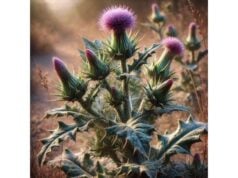
Island Mallow, traditionally known as Lavatera assurgentiflora and now often classified as Malva assurgentiflora, is a striking shrub native to California’s Channel Islands. Most people know it for its large pink flowers and wind-tolerant coastal habit, but it also carries a smaller, more nuanced story as a traditional plant with possible soothing uses. Unlike well-studied medicinal herbs, Island Mallow does not have a large clinical literature behind it. Still, it belongs to the broader Malva group, a genus long associated with softening, moistening, and calming irritated tissues. That connection, along with a documented traditional use record in Peru for respiratory complaints and rheumatic discomfort, gives the plant cautious herbal relevance.
The key word is cautious. Island Mallow is better viewed as a lightly documented traditional mallow than as a proven remedy. Its likely strengths lie in gentle support, especially where dryness, irritation, or inflammation are involved. The guide below explains what Island Mallow is, what its likely active constituents may be, what benefits are realistic, how it has been used, what dosage makes sense, and where the limits of the evidence matter most.
Quick Summary
- Island Mallow may offer mild soothing support for irritated airways and dry tissues based on traditional use and broader Malva research.
- Its most plausible benefits are gentle respiratory comfort and mild skin or tissue soothing rather than strong drug-like effects.
- No standardized medicinal dose exists, but a cautious trial amount is about 1 to 2 g dried aerial parts in 250 mL water once daily.
- Pregnant or breastfeeding people and anyone using medicines for asthma, inflammation, or chronic disease should avoid unsupervised use.
Table of Contents
- What is Island Mallow
- Key compounds and properties
- What benefits are most likely
- How Island Mallow is used
- How much per day
- Side effects and who should avoid it
- What the evidence actually says
What is Island Mallow
Island Mallow is a large evergreen shrub, sometimes almost tree-like in frost-free coastal settings, with soft gray-green leaves and showy rose-pink flowers marked by darker veins. Botanically, it was long known as Lavatera assurgentiflora, but modern references commonly place it in the genus Malva as Malva assurgentiflora. That taxonomic shift is more than a naming detail. It matters because it places Island Mallow beside other mallows that are better studied for food, mucilage, and traditional soothing uses.
In habitat terms, Island Mallow is a plant of edges and exposure. It evolved on the Channel Islands and handles salt spray, wind, dry conditions, and lean soils surprisingly well. That ecological toughness partly explains why gardeners value it as an ornamental and windbreak. Yet a plant’s survival traits do not automatically translate into medicinal power. Many resilient shrubs are excellent landscape plants without being especially useful as herbs. With Island Mallow, the medicinal story exists, but it is not deep or heavily researched.
The best documented human-use signal comes from traditional medicine records outside its original range. A Peruvian medicinal plant catalog lists Lavatera assurgentiflora under the common name malva, with traditional use for bronchitis, asthma, colds, and rheumatism. That is important because it places the plant in real-world healing practice rather than leaving it as pure horticultural curiosity. Still, it does not tell us how effective the plant is, how much was used, or whether it works better than other mallows. It simply confirms that people have seen it as a useful remedy.
That traditional profile also fits what many readers already know about mallows in general. Across the Malva group, herbs are often valued for their softening, moistening, and calming character. They are commonly linked with irritated throats, dry coughs, inflamed skin, and sensitive digestion. Island Mallow likely belongs to that same broad herbal logic, though it is much less researched than common mallow or marshmallow-like demulcent herbs.
This makes Island Mallow best understood as a lightly documented medicinal shrub with a stronger ecological and ornamental identity than clinical one. It is not a mainstream supplement. It is not a standardized drug plant. It is a regional mallow whose traditional respiratory and soothing uses deserve interest, but also restraint. Readers who like comparing gentle botanicals may notice a similar “support rather than force” pattern in mullein for respiratory support, although the two herbs come from very different plant families and evidence traditions.
Key compounds and properties
Direct phytochemical work on Island Mallow itself is limited, and that is one of the most important facts to keep in mind. There is no widely cited, species-specific chemistry profile for Lavatera assurgentiflora comparable to what exists for better-studied medicinal herbs. As a result, most discussion of its “key ingredients” is partly inferential. It draws from two sources: its accepted placement within the genus Malva and the broader chemical patterns already described for Malva species.
That broader pattern is still useful. Reviews of Malva species describe a recurring mix of polysaccharides, mucilage-like compounds, flavonoids, coumarins, polyphenols, vitamins, terpenes, and tannins, especially in leaves and flowers. These are not trivial compounds. Together, they help explain why mallows are repeatedly associated with demulcent, anti-inflammatory, wound-supportive, and moderately antimicrobial effects. Even when a species is not individually characterized in depth, its placement inside that chemical tradition gives us a cautious starting point.
For Island Mallow, the most plausible working assumptions are these:
- It likely contains some mucilage or polysaccharide-rich material in its aerial parts, as many Malva species do.
- Its leaves and flowers may carry polyphenols and flavonoid-type compounds linked with antioxidant activity.
- It likely behaves more as a gentle, soothing plant than as a sharp stimulant or bitter tonic.
- Any medicinal action is probably mild and tissue-oriented, not strongly systemic.
These inferred properties line up with the traditional Peruvian use record for bronchitis, asthma, colds, and rheumatism. A plant that softens irritated surfaces, slightly calms inflammation, and supports the body’s own recovery would fit those uses better than a plant that acts as a strong sedative, purgative, or stimulant.
At the same time, inference has limits. Island Mallow may belong to Malva, but not every Malva species has identical chemistry or the same strength of effect. Soil, climate, genetics, and even the specific plant part used can all change what a plant delivers. That is why it would be inaccurate to present Island Mallow as though it had the same evidence base as common mallow or a well-characterized demulcent herb.
The most honest description of Island Mallow’s medicinal properties is therefore modest. It is probably soothing, likely mildly anti-inflammatory, possibly antioxidant, and traditionally linked with respiratory comfort. That is enough to justify interest, but not enough to promise dramatic results. Readers who want a clearer example of the “gentle coating and calming” herbal pattern may compare that logic with traditional soothing herbs such as marshmallow, even though Island Mallow does not currently have equally strong species-specific evidence.
What benefits are most likely
The most likely benefits of Island Mallow are the benefits that make sense both traditionally and botanically. In practical terms, that means gentle support for irritated tissues rather than bold, disease-specific effects. The traditional record points toward respiratory complaints and rheumatic discomfort, while broader Malva research points toward soothing, softening, and mild anti-inflammatory action.
Respiratory comfort is the clearest place to start. In the Peruvian record, the plant is used for bronchitis, asthma, and colds. That does not mean it is a treatment for chronic lung disease, nor does it mean anyone should substitute it for prescribed asthma care. But it does suggest a traditional role in easing dryness, roughness, or irritation of the upper airways. If Island Mallow shares the gentle mucilage-rich behavior of other Malva relatives, it may help coat and calm irritated throat or bronchial tissues in a mild way.
A second likely area is general soothing of inflamed tissues. Malva species as a group are often associated with wound healing, anti-inflammatory effects, and skin-supportive applications. That makes it reasonable to think Island Mallow may have some value in surface-level irritation or minor inflammation, especially when used in simple topical forms. Still, this should be framed as a possibility supported by genus-level evidence, not as a clinically established species-specific fact.
A third possible benefit is support for mild aches or rheumatic discomfort. The traditional use record explicitly includes rheumatism. That is a broad and older term, so it should not be overinterpreted. It may refer to general soreness, stiffness, or inflammatory aches rather than a modern rheumatologic diagnosis. A mildly anti-inflammatory, tissue-soothing herb could plausibly fit that type of use.
The realistic benefit profile, then, looks like this:
- Gentle support for irritated airways during colds or dry cough.
- Mild soothing for inflamed or dry tissues.
- Possible support for minor skin irritation.
- Possible relief for mild inflammatory aches.
What is not realistic is to present Island Mallow as a proven bronchodilator, a tested anti-rheumatic medicine, or a substitute for established respiratory care. The research simply does not support that level of certainty.
This is where tone matters. Many lesser-known herbs get exaggerated by being described in the language of “powerful healing,” “ancient cure,” or “natural treatment for asthma.” Island Mallow does not need that kind of language. Its strongest case is as a soft, mallow-type support herb with a modest traditional record. That is enough to make it worth learning about, but not enough to justify hype. Readers who prefer better-known skin-calming or tissue-soothing herbs might compare it with calendula for gentle topical support, which has a clearer modern reputation in that lane.
How Island Mallow is used
Island Mallow is not a standardized commercial herb, so its use is best understood through traditional and low-intensity herbal forms rather than capsules or concentrated extracts. Since the traditional record is limited and species-specific preparation methods are not well documented, any modern use should stay simple and conservative.
The most reasonable internal preparation is a mild infusion of the aerial parts, especially leaves or flowers. This follows the general logic used with other mallows: softer plant parts are steeped rather than aggressively boiled, and the goal is gentle extraction of soothing constituents rather than maximum bitterness or potency. A tea made from dried leaves or flowers would make the most sense for readers who are exploring Island Mallow as a respiratory comfort herb.
Topical use is also plausible. A cooled infusion, softened fresh leaf mash, or very simple poultice could theoretically be used for mild skin irritation or dry, inflamed areas. This again follows the broader mallow tradition, where surface soothing is often as important as internal use. But because there is little direct study of Island Mallow in topical preparations, patch testing is important.
A cautious practical approach would be:
- Use a small amount of dried aerial parts for a light infusion.
- Drink it warm rather than very hot if the goal is throat comfort.
- Keep topical trials limited to a small area first.
- Avoid combining it with many other unfamiliar herbs at the same time.
Preparation style matters because gentle herbs often work best when they are not overprocessed. A hard decoction can sometimes concentrate harshness more than comfort. With a plant like Island Mallow, simplicity is likely the safest route.
There is also a strong argument for treating it more like a specialty traditional herb than a daily wellness beverage. Because the evidence is limited, short periods of use for a clear reason make more sense than continuous self-prescribed use. In other words, it is better suited to “I have throat irritation and want a mild soothing tea” than to “I will drink this every day for months because it sounds healthy.”
Readers should also remember that Island Mallow has a strong ornamental and ecological identity. Garden plants are not automatically medicinal-grade material. A shrub grown for landscaping may have been exposed to pesticides, dust, roadside pollution, or unsuitable harvesting conditions. Clean sourcing matters.
If the goal is a gentle herb that softens irritation rather than pushing the body, Island Mallow fits that pattern. But if the goal is a more established soothing plant, better-known options may be easier to source and use confidently. That same gentle-use logic is familiar to readers who use simple soothing plants such as aloe vera, where low-intensity support is often more appropriate than aggressive intervention.
How much per day
No validated medicinal dosage has been established for Island Mallow. That is the most important dosage fact, and it should come first. There are no good human clinical trials defining how much Lavatera assurgentiflora to take for bronchitis, skin irritation, or inflammatory discomfort. Any dose advice therefore has to be conservative and transparent about its limits.
The most reasonable way to approach dosage is as a cautious extrapolation from other Malva herbs rather than as a species-specific rule. For a mild infusion, a sensible starting amount is about 1 to 2 g of dried aerial parts, or roughly 1 to 2 teaspoons depending on cut size, steeped in 250 mL of hot water. For first use, once daily is enough. If it is well tolerated and a person still wants it, some traditional herb users would increase to twice daily for a short period.
A practical low-risk routine looks like this:
- Day 1 to 3: 1 cup daily of a light infusion.
- If well tolerated: increase to 1 cup twice daily.
- Keep use short term, such as several days to two weeks.
- Pause if there is no benefit or if irritation appears.
For topical use, exact “dosing” is less precise. A small amount of cooled infusion or plant paste can be used on a test patch once daily at first. If the skin tolerates it, a slightly wider application may be reasonable. Stronger is not necessarily better.
Timing depends on the reason for use. For throat or upper-airway comfort, warm infusion use between meals often makes the most sense. For general soothing, evening use may feel most helpful. For topical use, applying after washing the area is usually the cleanest approach.
Several points deserve emphasis:
- This is not a standardized drug dose.
- The suggested range is a cautious herbal starting point, not a proven therapeutic amount.
- Large, repeated doses are not justified by the current evidence.
- Island Mallow should not be dosed as a substitute for asthma treatment or anti-inflammatory medication.
This cautious approach may feel unsatisfying, but it is the honest one. Some herbs have robust dosage literature. Island Mallow does not. Until stronger evidence appears, smaller, simpler, and shorter use is the most responsible approach. That is especially true for people who already take medicines or have chronic disease.
For readers who prefer herbs with clearer intake guidance, it can help to compare Island Mallow with better-defined categories such as fiber products with established dosage ranges. Island Mallow is not in that category yet. It belongs in the “traditional herb with limited dosing evidence” category, which requires more restraint.
Side effects and who should avoid it
Because Island Mallow has not been studied deeply in human safety trials, side-effect expectations have to come from common sense, genus-level experience, and the behavior of gentle mucilaginous herbs in general. That usually points toward a relatively mild risk profile, but “mild” is not the same as risk-free.
For internal use, the most likely issues are digestive. A person may notice nausea, fullness, mild stomach upset, or altered bowel pattern if the plant is taken in amounts that are too large or if the plant material is poor quality. Very mucilaginous herbs can also affect how other substances move through the gut, which is one reason not to take them at the exact same time as prescription medications.
For topical use, skin sensitivity is the main concern. Even soft herbs can cause itching, redness, or rash in susceptible people. This is especially true if a person applies a fresh leaf mash or unfiltered infusion to already damaged skin. Patch testing on a small area is a simple and sensible precaution.
Certain groups should avoid self-directed use or seek advice first:
- Pregnant people.
- Breastfeeding people.
- Children.
- People with chronic respiratory disease, especially asthma.
- People taking regular prescription medicines.
- Anyone with a history of plant allergies or sensitive skin.
Asthma deserves special mention. Since traditional use includes asthma, some readers may assume Island Mallow is an asthma herb. That is not a safe leap. A soothing tea is not the same as a bronchodilator, and a traditional respiratory use does not replace inhalers, medical monitoring, or emergency care. People with wheezing, chest tightness, or shortness of breath should not experiment their way through that kind of symptom pattern.
Drug interactions are not well characterized, but cautious spacing makes sense. If a plant contains mucilage-like compounds, it may theoretically reduce or delay absorption of other oral agents when taken together. A practical rule is to separate an experimental Island Mallow infusion from medicines by a few hours unless a qualified clinician says otherwise.
Stop use and seek help if you notice:
- Rash or swelling.
- Worsening cough or breathing difficulty.
- Persistent stomach pain.
- Vomiting.
- New or unusual symptoms after repeated use.
The broader lesson is that Island Mallow should be treated as a low-evidence herb. That does not make it dangerous, but it does mean the margin for confident claims is narrow. Readers thinking about the general problem of self-treating inflammation may also appreciate the contrast with better-studied anti-inflammatory herbs such as boswellia, where the research base is much easier to interpret.
What the evidence actually says
The evidence for Island Mallow is best described as suggestive, not strong. There is enough information to take the plant seriously as a traditional mallow with possible soothing value, but not enough to present it as a clinically established medicinal herb. That middle ground is important.
On the strongest side, we do have clear botanical consensus that the plant is an accepted species now placed in Malva, native to the California Channel Islands and also introduced elsewhere. That taxonomic placement matters because it connects Island Mallow to a better-known genus with documented medicinal patterns. We also have a real traditional-use record from Peru describing use for bronchitis, asthma, colds, and rheumatism. That gives the species practical ethnomedicinal relevance.
Beyond that, the next layer of support comes from Malva species research rather than from Island Mallow trials. Reviews of Malva species describe a group rich in polysaccharides, polyphenols, flavonoids, and related compounds, with moderate antimicrobial action and stronger anti-inflammatory, wound-healing, antioxidant, and demulcent potential. This is not trivial evidence, but it is genus-level evidence. It tells us what Island Mallow may be like, not what has been decisively proven for this species.
What we do not have is equally important:
- No strong Island Mallow clinical trials.
- No standardized medicinal extract.
- No established human dose.
- No robust safety dataset in pregnancy, childhood, or chronic disease.
- No direct proof that the Peruvian traditional uses translate into reliable modern outcomes.
This means the article’s most careful conclusion is also its most useful one. Island Mallow is probably a gentle, soothing herb with the kinds of properties many readers expect from mallows. It likely belongs in the same family of “soft support” remedies used for irritated tissues and mild inflammatory discomfort. But the case for that is built from taxonomy, traditional use, and broader Malva science, not from direct human evidence.
That distinction may sound narrow, yet it is exactly what good herbal writing should preserve. There is a real difference between “likely helpful in mild ways” and “proven treatment.” Island Mallow belongs in the first category. It is interesting, plausible, and culturally documented, but still understudied.
For readers, that means two things at once. First, the plant is not empty folklore. Second, it is not ready for bold claims. Treated with that balance in mind, Island Mallow becomes what it probably is: a lesser-known mallow with real traditional value and a gentle medicinal profile that still needs much better research.
References
- Malva assurgentiflora (Kellogg) M.F.Ray | Plants of the World Online | Kew Science 2025
- Malva assurgentiflora – Calflora 2025
- Catálogo florístico de plantas medicinales peruanas 2013
- Malva species: Insights on its chemical composition towards pharmacological applications 2020 (Review)
Disclaimer
This article is for educational purposes only and is not medical advice. Island Mallow is an understudied traditional plant, and its suggested benefits are based on limited species-specific evidence plus broader research on related Malva herbs. It should not be used as a substitute for treatment of asthma, persistent cough, inflammatory disease, or any condition that requires diagnosis or prescription care. Anyone who is pregnant, breastfeeding, taking medication, or managing a chronic illness should speak with a qualified clinician before using it.
If this article was helpful, please share it on Facebook, X, or any platform where careful plant education can help someone else.