Italian Bugloss, botanically known as Anchusa azurea, is a vivid blue-flowering herb from the borage family that has a longer folk-medicine history than most modern herb guides suggest. Across parts of the Mediterranean and Western Asia, its leaves, flowers, roots, and aerial parts have been used in traditional practice for cough, fever, rheumatic discomfort, wound care, bladder complaints, and general “cooling” or cleansing support. It is also a plant with a dual personality: on one hand, it contains interesting phenolics, triterpenes, fatty acids, and rosmarinic acid-linked activity; on the other, it belongs to a family where pyrrolizidine alkaloid safety questions can matter.
That mix makes Italian Bugloss worth discussing carefully. It may have real antioxidant, anti-inflammatory, and wound-support potential, especially in topical use, but it is not a casual everyday tea for everyone. The best-supported uses are still preclinical or traditional, not strongly clinical. The sections below explain what Italian Bugloss contains, what it may realistically help with, how it has been used, why dosage is tricky, and why safety deserves as much attention as its traditional benefits.
Essential Insights
- Italian Bugloss may offer mild anti-inflammatory and wound-support effects, especially in topical preparations.
- Traditional use includes cough, sore throat, fever, bladder complaints, and rheumatic discomfort.
- Experimental topical ranges of 1% to 10% extract have been studied, but no standardized oral dose exists.
- Avoid internal self-use if you are pregnant, breastfeeding, have liver disease, or want a daily herb with a wider safety margin.
- Possible pyrrolizidine alkaloid exposure makes long-term internal use a poor fit for most people.
Table of Contents
- What is Italian Bugloss
- Key compounds and medicinal properties
- What might Italian Bugloss help with
- How Italian Bugloss is used
- How much per day
- Safety, interactions, and who should avoid it
- What the evidence actually says
What is Italian Bugloss
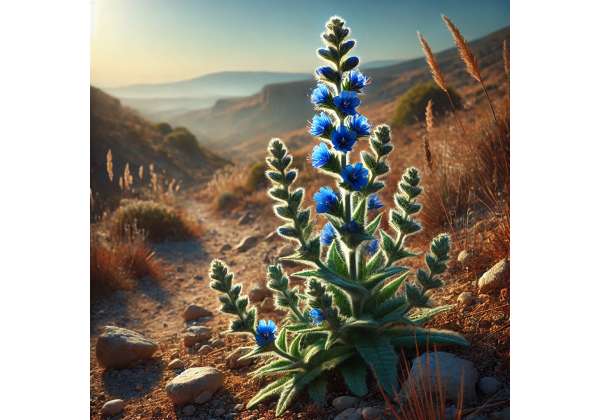
Italian Bugloss is a perennial herb in the Boraginaceae family, the same broad family that includes borage, comfrey, and several traditional wound and respiratory herbs. It is usually recognized by its rough, hairy stems and leaves and its deep blue to violet flowers, which make it a favorite in cottage gardens as well as a plant of folk use. Native and naturalized populations are associated with the Mediterranean region, Southern Europe, Western Asia, and adjoining areas, and the plant has also spread more widely as an ornamental.
Its traditional identity is broader than many readers expect. Old herb uses describe it as a stimulant, tonic, demulcent, diaphoretic, diuretic, and soothing herb for cough, fever, chest pain, sore throat, bladder discomfort, and rheumatic complaints. In some traditions the flowers were used like a tea, the leaves were cooked or decocted, and the powdered herb was applied externally as a poultice for inflamed tissues. The root also had value as a red dye source, which is common in several bugloss relatives and helps explain why these plants moved between medicinal, cosmetic, and practical household use.
That said, Italian Bugloss is not a modern standardized herbal product. People do not usually buy it in the same confident way they buy ginger, psyllium, or chamomile. The gap is partly scientific and partly safety-related. Although the plant has interesting chemistry and real ethnomedicinal history, the number of human clinical studies is small, and the Boraginaceae family is also known for possible pyrrolizidine alkaloid concerns. That means the herb belongs in a category of “interesting but cautious” botanicals, not “daily tonic for everyone.”
Another useful way to understand it is through contrast. Italian Bugloss is not famous because it is universally safe or because its benefits are simple. It is interesting because it sits between food, folk medicine, wound care, and phytochemistry. Seeds contain notable oils, roots and aerial parts contain phenolics and triterpene-related compounds, and preclinical work suggests more pharmacologic activity than a casual garden flower might imply.
Readers familiar with related Boraginaceae herbs may notice some family resemblance in both promise and caution. That is especially true if you have seen discussions of borage and its boraginaceae safety questions. The difference is that Italian Bugloss has a more traditional respiratory and topical profile, while its modern dosage and safety standards are much less settled.
Key compounds and medicinal properties
Italian Bugloss has a more interesting chemistry profile than its modest reputation suggests. Published work on Anchusa azurea reports triterpene saponins, flavonoid glycosides, phenolic acids, fatty acids, anthocyanin-related pigments, tannins, and alkaloid-type constituents. One of the most important identified compounds is rosmarinic acid, which helps explain why the plant is often discussed in connection with antioxidant and anti-inflammatory effects. Root and aerial-part studies have also reported compounds such as rutin, isoquercitrin, astragalin, kaempferol derivatives, quercetin derivatives, and several triterpene glycosides.
This chemistry matters because it points to overlapping actions rather than one single magic constituent. Rosmarinic acid is widely studied across many herbs for antioxidant and inflammation-modulating effects. Flavonoid glycosides can support free-radical scavenging and tissue protection. Triterpene glycosides often show anti-inflammatory or membrane-active properties. Meanwhile, the seed oil profile has nutritional interest because the seeds contain unsaturated fatty acids, including linoleic acid and smaller but notable amounts of gamma-linolenic acid and alpha-linolenic acid.
That combination gives Italian Bugloss a plausible medicinal profile in four main directions:
- Mild anti-inflammatory support.
- Antioxidant and free-radical scavenging activity.
- Tissue-supportive and wound-oriented topical potential.
- Traditional soothing and demulcent-style support for irritated airways.
At the same time, the chemistry is not only about benefit. The Boraginaceae family is known for pyrrolizidine alkaloid concerns, and Italian Bugloss has been reported in the literature as containing alkaloids relevant to safety evaluation. Some reports specifically mention lycopsamine-type concerns or older references to alkaloids such as cynoglossine. Whether the concentration is high or low in a given preparation can vary, but the point is the same: this is not chemistry you ignore. In practical herbal use, the safety profile is part of the active-constituent story.
One useful way to interpret the plant is to separate topical promise from internal caution. A plant rich in rosmarinic acid, polyphenols, and certain glycosides may genuinely help irritated tissue when used externally. But if the same plant may also carry alkaloids with hepatotoxic potential, the threshold for routine internal use becomes much higher.
Recent phytochemical work has also added a more modern layer by examining antioxidant and enzyme-related activity in extracts. Those findings are interesting, but they are best viewed as laboratory signals, not as proof that drinking Italian Bugloss tea will meaningfully alter glaucoma, diabetes, or neurodegenerative risk in humans.
Readers who want a familiar point of reference for plant phenolic activity may think of green tea and broader antioxidant herb chemistry. The difference is that green tea has an enormous human evidence base, while Italian Bugloss still lives mostly in the world of promising compounds and modest traditional use.
What might Italian Bugloss help with
The most honest answer is that Italian Bugloss may help with a few traditional and preclinical targets, but the strongest claims should remain modest. Its benefit profile is most believable in inflammation, wound support, respiratory soothing, and traditional urinary or rheumatic complaints. That does not mean all of those uses are equally proven. It means they are the areas where traditional use and laboratory evidence overlap often enough to deserve attention.
The clearest modern signal comes from anti-inflammatory work. In one species-specific study, methanolic extract from the aerial parts and rosmarinic acid showed significant dose-dependent anti-inflammatory activity in rats, and rosmarinic acid performed comparably to ibuprofen during the acute phase of inflammation. That is a real and meaningful finding. Even so, it is still a preclinical result. It does not automatically tell us how much herb a person would need, how safe long-term use would be, or whether whole-plant folk preparations behave the same way.
Wound support is another promising area. A 2024 burn model study found that 1% and 10% topical extract ointments produced notable burn-wound contraction after 12 days, alongside histologic signs such as collagen deposition, re-epithelialization, and repair of remaining skin tissue without obvious cutaneous toxicity. That makes Italian Bugloss more interesting as a topical herb than many gardeners would guess. It may be especially relevant in traditions where the plant was already applied as a poultice or ointment for inflamed or damaged tissue.
Traditional respiratory use is also plausible. Older descriptions list the plant as demulcent, tonic, and soothing for cough, sore throat, fever, chest discomfort, and asthma-like complaints. That traditional pattern fits a herb with softening, surface-calming, and mild anti-inflammatory activity. It does not, however, make Italian Bugloss a replacement for inhalers, antibiotics, or evidence-based care in serious lung disease.
Other reported folk uses include bladder and kidney-stone complaints, rheumatism, chest pain, and even mild cathartic or cooling roles. These uses are part of the herb’s story, but they are less directly supported by modern targeted studies than the wound and inflammation findings.
So the most realistic benefit summary is this:
- It may help calm mild inflammatory irritation.
- It may support superficial wound or burn recovery in topical use.
- It may provide traditional soothing support for cough or sore throat.
- It may have mild folk use value in urinary or rheumatic patterns, though evidence is thinner there.
If your goal is a respiratory herb with a more established modern profile, it can help to compare Italian Bugloss with better-known respiratory herbs such as great mullein. Italian Bugloss may belong in the same general conversation, but not with the same confidence or safety simplicity.
How Italian Bugloss is used
Italian Bugloss has been used in several forms, but not all of them deserve equal confidence today. Traditional use describes flowers taken like tea, leaves and aerial parts used in decoctions, the dried herb powdered for poultices, and external preparations applied to inflamed areas or wounds. The root was also historically valued for dye, though that is more a practical use than a medicinal one.
In a modern context, the safest general distinction is this: topical use is easier to justify than routine internal use. The preclinical wound literature gives topical application a real basis, while internal use runs into the extra problem of pyrrolizidine alkaloid uncertainty. That does not erase the plant’s history as a tea or decoction herb, but it does change how a careful reader should prioritize forms.
A practical hierarchy of use would look like this:
- Topical preparations for minor, non-infected skin irritation or wound-support contexts.
- Occasional traditional-style infusion only with strong caution and not as a long-term habit.
- Avoid concentrated internal extracts unless professionally evaluated and specifically controlled for safety.
For topical use, the logic is straightforward. A plant with phenolics, rosmarinic acid-related activity, and traditional anti-inflammatory use may be suitable for ointment, compress, or poultice-style experimentation on intact or mildly damaged skin. But even here, “traditional” does not mean automatic safety. A patch test is still sensible, especially because hairy Boraginaceae plants can irritate sensitive skin or contain unwanted compounds depending on source and preparation.
For internal use, simplicity matters. If someone insists on exploring traditional tea use, the mildest possible infusion is more sensible than a hard decoction or repeated strong extract. The goal should be short-term soothing, not chronic dosing. A gentle warm infusion for throat irritation is easier to justify than daily internal use for generalized wellness.
Preparation quality matters too. Garden-grown Italian Bugloss may not be appropriate for medicine if it has been treated with sprays or grown in contaminated soil. Wild or roadside harvesting can be even less predictable. This is one of those herbs where the source can change the risk as much as the plant itself.
Another good rule is not to combine it with several other unfamiliar herbs at once. When a plant already carries family-level safety questions, stacking it with additional botanicals only makes it harder to judge tolerance. Readers who like the broader “soothing tea” tradition may find it more straightforward to begin with better-known demulcent herbs such as marshmallow, then decide whether a more specialized herb like Italian Bugloss is worth exploring.
How much per day
This is the section where clarity matters most: there is no validated, standardized oral dose for Italian Bugloss. No major human clinical literature tells us how many grams, milliliters, or capsules reliably produce benefit with acceptable safety. Because of that, dosage discussion should begin with the form that has the strongest experimental support: topical preparations.
In the 2024 burn-wound study, researchers evaluated 1% and 10% methanolic extract ointments applied topically. Those are useful numbers because they are concrete and species-specific. They do not prove that every home-made ointment is safe or effective, but they do give a defensible experimental range for topical exploration. If someone is thinking of Italian Bugloss at all, that topical lane is more evidence-aware than treating it like a routine daily tea.
For internal use, the best answer is not a confident range but a caution. Because Italian Bugloss may contain pyrrolizidine alkaloids and lacks established modern dosing, frequent or long-term oral use is hard to justify. If a traditional-style infusion is used, it should be weak, short-term, and clearly occasional. A cautious ceiling for exploratory folk-style use would be about 1 g dried aerial parts in 250 mL hot water once daily for a brief period, not because this is clinically proven, but because it keeps exposure low. Even that should not be treated as a recommendation for routine use.
A safer practical framework is:
- Prefer topical over oral use.
- Keep any internal use short and infrequent.
- Avoid long-term daily dosing.
- Stop immediately if any adverse effect appears.
Timing depends on purpose. A topical ointment or compress is best used on clean skin and limited areas. If someone explores a weak internal infusion for cough or throat irritation, taking it warm between meals makes more sense than using it several times daily as a beverage substitute.
Several variables can change how a preparation behaves:
- Whether aerial parts, flowers, or roots are used.
- Whether the material is fresh, dried, or extracted.
- How concentrated the preparation becomes.
- The person’s liver status, medication use, and overall tolerance.
- Whether the product has any testing for pyrrolizidine alkaloids.
This is why Italian Bugloss differs from better-studied herbs. With some botanicals, dosage tables are fairly straightforward. With this one, the most responsible dose guidance is mostly about limiting exposure rather than optimizing benefit. Readers who want a comparison point for a herb with much clearer intake guidance might think of products such as psyllium with well-defined dosing. Italian Bugloss is not in that category, and it should not be treated as though it were.
Safety, interactions, and who should avoid it
Safety is the load-bearing issue with Italian Bugloss. The benefits may be interesting, but they are not the first thing a careful herbal reader should think about. The first question should be whether the form, frequency, and purpose make sense given the plant family and its possible alkaloid exposure.
The biggest concern is pyrrolizidine alkaloids, or PAs. These compounds are relevant because unsaturated PAs are associated with hepatotoxicity, genotoxicity, and carcinogenic concern in herbal-medicine safety guidance. Not every plant in Boraginaceae carries the same amount, and not every preparation exposes a user equally. But the family-level warning is strong enough that internal use of an understudied bugloss herb should be approached with restraint rather than optimism.
That translates into several practical rules:
- Do not use Italian Bugloss as a daily wellness tea.
- Do not assume “traditional” means safe for long-term internal use.
- Do not use it internally during pregnancy or breastfeeding.
- Do not use it internally if you have liver disease or unexplained abnormal liver enzymes.
- Do not give it to children.
Topical use is probably less risky than oral use, but it is not risk-free. Sensitive skin may react to rough, hairy plant material or concentrated extracts. Open wounds, infected burns, and rapidly worsening rashes deserve medical care, not herbal improvisation. Even if a preclinical wound study is promising, a home preparation is still not a sterile clinical product.
Interaction data are limited, but several caution points are reasonable. Any herb with possible liver burden deserves extra care when a person already takes hepatically metabolized medicines. People using multiple anti-inflammatory herbs, sedating medicines, or prescription pain treatments should not casually stack Italian Bugloss into the mix. If any mucilage-like or coating action is present, spacing from oral medicines is also sensible.
People who should generally avoid unsupervised use include:
- Pregnant or breastfeeding people.
- Children and adolescents.
- People with liver disease.
- People taking many medicines.
- People with chronic lung disease who need reliable treatment.
- Anyone seeking a long-term internal herb.
If your interest in Italian Bugloss comes from wound healing, it also helps to compare it mentally with herbs where the same “skin benefit, internal caution” pattern is already well known. Comfrey and its safety balance is a strong example. The exact compounds are not identical, but the lesson is similar: promising topical use does not automatically justify casual internal use.
What the evidence actually says
The evidence for Italian Bugloss is real, but uneven. That is the cleanest summary. There is enough published work to justify a serious article, but not enough to justify simple consumer-style promises. The best data come from phytochemistry, preclinical anti-inflammatory experiments, and a 2024 burn-wound model. Traditional uses provide additional context, especially for respiratory and urinary complaints, but human clinical confirmation is still thin.
On the positive side, the plant clearly contains biologically active material. Rosmarinic acid, flavonoid glycosides, triterpene glycosides, and seed fatty acids are not vague folklore. Species-specific studies have identified them. The anti-inflammatory study from 2012 is also meaningful because it tested Anchusa azurea extracts directly and found that the methanolic aerial extract, its n-butanol fraction, and isolated rosmarinic acid showed significant activity in animal models. That gives the herb more than just a historical reputation.
The 2024 burn study also matters because it moves the conversation beyond general anti-inflammatory talk. Topical ointments made from the extract improved wound contraction, antioxidant measures, histology, and inflammatory cytokine patterns in a burn model. This is still animal research, but it supports the long-standing idea that Italian Bugloss may be most useful externally.
At the same time, the evidence has clear limits:
- Human clinical trials are lacking.
- Oral dosing is not standardized.
- Safety questions remain central because of possible PAs.
- Newer enzyme-inhibition and antioxidant findings are mostly laboratory signals, not treatment proof.
- Traditional claims are broader than the strongest modern evidence.
That means the herb should not be marketed in a simplistic way as “good for asthma,” “natural ulcer remedy,” or “powerful anti-inflammatory.” Those phrases overstep the evidence. A more honest interpretation is that Italian Bugloss is a traditional Boraginaceae herb with credible phenolic chemistry, promising topical wound and anti-inflammatory signals, and an oral safety profile that deserves skepticism rather than enthusiasm.
This balance is what makes the herb interesting. It is not empty folklore, and it is not a proven mainstream remedy. It sits in the middle: strong enough to study, not strong enough to casually recommend for routine internal use. Readers who want herbs with a much more mature evidence base for inflammation will usually do better starting with better-researched anti-inflammatory herbs such as boswellia. Italian Bugloss is better approached as a specialized traditional plant that may have value, especially topically, but still needs more careful research before its therapeutic role becomes clear.
References
- Investigation on anti-inflammatory and antiulcer activities of Anchusa azurea extracts and their major constituent rosmarinic acid – PubMed 2012
- The effects of Anchusa azurea methanolic extract on burn wound healing: Histological, antioxidant, and anti-inflammatory evaluation – PubMed 2024
- Polyphenolic Profiling and Evaluation of Antioxidant, Antidiabetic, Anti-Alzheimer, and Antiglaucoma Activities of Allium kharputense and Anchusa azurea var. azurea | MDPI 2025
- A Comprehensive Review on Pharmacognostical and Pharmacological Characters of Anchusa azurea 2019 (Review)
- Use of herbal medicinal products containing toxic, unsaturated pyrrolizidine alkaloids (PAs) – Scientific guideline | European Medicines Agency (EMA) 2021 (Guideline)
Disclaimer
This article is for educational purposes only and is not medical advice. Italian Bugloss is an understudied herb with possible liver-safety concerns related to pyrrolizidine alkaloids, especially with internal use. It should not be used to self-treat asthma, severe wounds, ulcers, liver problems, or any persistent condition that needs diagnosis or prescription care. Anyone who is pregnant, breastfeeding, has liver disease, takes regular medication, or wants to use this herb internally should speak with a qualified clinician first.
If this article helped you, please share it on Facebook, X, or any other platform where careful, evidence-aware herbal information can be useful.