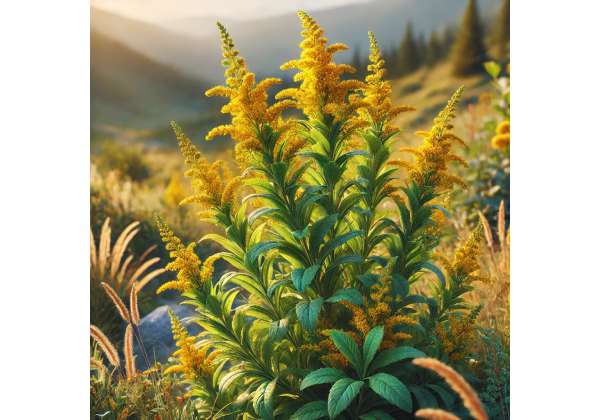
Italian goldenrod, identified botanically as Solidago virgaurea, is better known in the scientific and regulatory literature as European goldenrod. It is a flowering herb in the daisy family that has been used for centuries in traditional European medicine, especially for urinary complaints and mild inflammatory discomfort. What makes it stand out is the way old herbal use and modern phytochemistry meet: the aerial parts contain flavonoids, phenolic acids, triterpene saponins, leiocarposide, and small amounts of volatile compounds that help explain its diuretic, spasmolytic, antioxidant, and anti-inflammatory profile.
That said, Italian goldenrod is best understood as a traditional urinary herb rather than a broadly proven cure-all. European herbal monographs recognize it as a traditional herbal medicinal product to increase urine flow as an adjuvant for minor urinary complaints, but the stronger modern clinical evidence remains limited. That balance matters. It means the herb is useful, but only when its real strengths, realistic outcomes, dosage limits, and safety cautions are kept together in one honest picture.
Essential Insights
- Italian goldenrod is most strongly associated with urinary flushing support and mild anti-inflammatory action.
- Its best-known active groups include flavonoids, phenolic acids, saponins, and leiocarposide.
- A traditional infusion range is 3 to 5 g of dried herb, 2 to 4 times daily.
- Avoid use if you are allergic to Asteraceae plants or have heart or kidney disease that requires restricted fluid intake.
- Evidence supports traditional urinary use more clearly than broad modern therapeutic claims.
Table of Contents
- What is Italian goldenrod?
- Key ingredients and how they work
- What does Italian goldenrod help with?
- How to use Italian goldenrod
- How much per day?
- Side effects, interactions, and who should avoid it
- What the evidence actually says
What is Italian goldenrod?
Italian goldenrod, under the botanical name Solidago virgaurea, is a perennial herb from the Asteraceae family. In authoritative sources, it is usually called European goldenrod rather than Italian goldenrod, but the plant is the same species. It grows across much of Europe and parts of Asia, producing upright stems topped with clusters of golden-yellow flowers. In herbal medicine, the medicinal material is the dried flowering aerial parts, often referred to in pharmacopoeial language as Solidaginis virgaureae herba.
Historically, this herb has been used since at least medieval Europe, where it developed a reputation as a wound herb and later as a urinary herb. Over time, its strongest and most persistent traditional role became support for the urinary tract. Folk medicine sources and later herbal practice linked it with urinary irritation, kidney gravel, bladder discomfort, and mild inflammatory urinary complaints. That long-standing use is one reason modern European regulators still recognize it, even though the highest-grade human trials remain limited.
The part used medicinally is not the root and not the seed, but the dried flowering tops and upper aerial portions. That detail matters because the chemical profile depends heavily on the plant part. The herb is usually prepared as a tea, liquid extract, tincture, or dry extract. This is not an essential-oil herb in the way peppermint or eucalyptus is. Its main medicinal story comes from polyphenols, saponins, and glycosides working together in a whole-herb matrix.
Its place in modern herbalism is fairly specific. Italian goldenrod is not primarily a sedative, not a hormone herb, and not a liver tonic. It is best known as a urinary-support herb that increases urine output and may ease mild irritation through anti-inflammatory and spasmolytic effects. In that sense, it fits into the same broad practical space as corn silk for urinary comfort, although goldenrod has a more formal European monograph and a more complex phytochemical profile.
Readers sometimes assume all goldenrods are interchangeable, but that is not fully correct. Several Solidago species are used in herbal products, and some have overlapping actions, yet S. virgaurea is the species most clearly recognized in the monograph tradition discussed here. So when evaluating dosage, safety, or evidence, it is best to stay anchored to Solidago virgaurea rather than to “goldenrod” in general. That single habit prevents a surprising amount of confusion.
Key ingredients and how they work
Italian goldenrod has a layered phytochemical profile, which helps explain why it behaves like more than a simple diuretic. The herb contains flavonoids, phenolic acids, triterpene saponins, the phenol glycoside leiocarposide, smaller amounts of essential-oil components, and several other minor compounds. The most often discussed groups are flavonoids and phenolic acids, because they help account for antioxidant, anti-inflammatory, and vascular-protective effects seen in preclinical research.
Among the flavonoids, quercetin derivatives, rutin, hyperoside, astragalin, and related compounds appear repeatedly in the literature. These molecules matter because flavonoids often influence inflammation, smooth-muscle tone, capillary stability, and oxidative stress. In practical terms, they help explain why Italian goldenrod is discussed not only as a urinary-flushing herb, but also as a mild spasmolytic and anti-inflammatory one. The herb’s phenolic acids, including caffeic, chlorogenic, ferulic, and related acids, add to that antioxidant and tissue-supportive profile.
Leiocarposide is one of the more distinctive named constituents in Solidago virgaurea. It is not as widely known as quercetin or rutin, but it appears frequently in discussions of this species and may contribute to some of its urinary and anti-inflammatory actions. The herb also contains oleanane-type triterpene saponins, which are often associated with membrane activity, mild secretory effects, and synergistic action alongside polyphenols. This is one reason Italian goldenrod is better described as a multi-compound herb than as a single-active-ingredient herb.
The essential-oil fraction is smaller, but still relevant. More recent work on the plant’s essential oil and hydrolates found a chemically diverse volatile profile, with compounds such as cyclocolorenone, germacrene D, and spathulenol among dominant constituents in certain extracts. These volatile fractions have shown antimicrobial and antioxidant activity in laboratory settings, although that does not mean the essential oil is the main or best medicinal form for everyday use. In most traditional and monograph-supported use, tea or standard extracts remain more relevant than essential oil.
A simple way to think about the chemistry is this:
- Flavonoids help explain antioxidant and spasmolytic activity.
- Phenolic acids support anti-inflammatory and antioxidant effects.
- Saponins contribute to the herb’s broader urinary and tissue-level actions.
- Leiocarposide is a species-linked glycoside often highlighted in S. virgaurea.
- Minor volatile compounds may add antimicrobial and antioxidant support.
This broad-spectrum chemistry is similar in concept to other polyphenol-rich herbs such as green tea, but Italian goldenrod is used for a more focused purpose. It is less about general wellness and more about targeted urinary support with overlapping anti-inflammatory activity. That narrower identity is part of what makes the herb clinically practical, even if the human research base still has limits.
What does Italian goldenrod help with?
The most grounded use of Italian goldenrod is support for minor urinary complaints. The current traditional-use framework recognizes it as a herbal product used to increase the amount of urine as an adjuvant in minor urinary complaints. That language is important. It does not say the herb cures urinary tract infection, dissolves stones reliably, or replaces medical treatment. It says the herb can support urinary flushing in relatively minor situations where increased urine flow may be helpful.
That traditional urinary role is backed by centuries of use and a fair amount of preclinical pharmacology. Review literature describes the herb as diuretic, anti-inflammatory, spasmolytic, and mildly antiseptic in traditional medicine, especially for cystitis-like irritation, bladder inflammation, kidney gravel, and urinary discomfort. Preclinical studies also suggest it may help with bladder irritability and dysuria-related symptoms, although the quality of modern clinical evidence is still modest.
The second realistic benefit area is mild inflammatory support, especially when inflammation and urinary irritation overlap. This is where the herb’s flavonoids, phenolic acids, and saponins matter. Older and newer studies suggest anti-inflammatory effects, and experimental work has also found antihyperuricemic, anti-inflammatory, and antihypertensive effects in animal models. That does not make Italian goldenrod a primary gout or blood-pressure herb, but it does show that its traditional anti-inflammatory reputation is not baseless.
A third area is adjunctive support in recurrent urinary discomfort, especially where biofilm-forming bacteria are part of the broader conversation. Laboratory work suggests Solidago virgaurea extracts may influence survival and biofilm formation of uropathogenic E. coli, and may be worth studying alongside antibiotics. Still, that is laboratory evidence, not a recommendation to self-treat a urinary infection with tea alone. If fever, blood in the urine, dysuria, or flank pain appear, medical assessment is still the right move.
Less established uses also appear in traditional medicine, including digestive, wound, oral-rinse, and gout-related uses. Those uses are historically real, but the evidence is thinner and more variable. Much of the research base is non-clinical, and stronger randomized clinical studies are still lacking. So it is fair to say Italian goldenrod has a broader traditional footprint than its monograph indication, but not fair to present all of those traditional uses as equally proven.
In practical terms, the benefit hierarchy looks like this:
- Best supported:
- urinary flushing support
- adjunctive help for minor urinary complaints
- Reasonably plausible:
- mild anti-inflammatory activity
- mild spasmolytic support
- Interesting but not established:
- gout-related support
- broader antimicrobial use
- general detox or metabolic uses
If you want a stronger example of a urinary herb aimed more directly at antimicrobial support, uva ursi is often discussed in that lane. Italian goldenrod is different. It is usually used more as a flushing, soothing, and anti-irritative urinary herb than as a harsh antimicrobial one.
How to use Italian goldenrod
Italian goldenrod is most commonly used in one of four forms: herbal tea, liquid extract, tincture, or dry extract. The traditional European monograph framework specifically lists comminuted herbal substance for infusion, liquid extract, tincture, and dry extract as accepted herbal preparation types. That gives the herb a more structured practical profile than many folk-only plants. It is not just a historical remedy; it also has recognized modern preparation forms.
Tea is the most traditional and easiest form to understand. The herb is prepared from the dried flowering aerial parts and taken orally with adequate fluid intake. Tea is often the best entry point for someone who wants the herb in its simplest traditional form, especially when the goal is mild urinary support. It also makes the “flushing” logic easier to understand: the herb is usually taken with water, not in a dehydrating context.
Standardized extracts are more concentrated and easier to dose consistently. Liquid extracts and tinctures are usually preferred when someone wants convenience or more controlled intake. Dry extracts can make the herb simpler to include in tablets or capsules. Still, strength varies by extraction ratio and solvent, which is why monograph-backed products are more useful than casual, poorly specified products sold under the vague name “goldenrod.” With a plant that exists in multiple species and product types, specificity matters.
In practice, Italian goldenrod works best when used as a short-term support herb, not as a permanent daily tonic. The traditional-use framework describes a use period of 2 to 4 weeks. That duration makes sense. The herb is not usually taken for months on end. It is more often used during a period of minor urinary discomfort, urinary irritation, or short-term support where increased urinary flow is desired.
Helpful real-world use habits include:
- Choose products clearly labeled as Solidago virgaurea.
- Use the flowering herb rather than unidentified “goldenrod.”
- Maintain good fluid intake unless a clinician has told you to restrict fluids.
- Stop and seek medical evaluation if symptoms worsen or become systemic.
- Avoid treating the herb like a substitute for antibiotics or diagnosis.
This makes Italian goldenrod more comparable to dandelion in structured herbal tea use than to strong medicinal tinctures that people take indefinitely. It is a functional traditional herb with a specific lane, and it performs best when kept in that lane. The biggest mistake people make is overextending its role from “supportive urinary herb” to “self-treatment for anything involving the kidneys or bladder.” The evidence does not justify that jump.
How much per day?
For dosage, the most reliable guidance comes from the established European herbal monograph. For adults and adolescents, the traditional single dose for an infusion is 3 to 5 g of the comminuted dried herb, taken 2 to 4 times daily. For liquid extract, the listed range is 0.5 to 2 mL three times daily. For tincture, it is also 0.5 to 2 mL three times daily. For dry extract, the range is 350 to 450 mg three times daily. The traditional duration of use is 2 to 4 weeks.
That is more structured dosing information than many herbs have, but it still needs interpretation. First, these are traditional-use dosing ranges, not modern precision doses established by large randomized trials. Second, the liquid and dry-extract doses depend on the exact preparation type listed in the monograph. A product with a different extraction ratio or solvent may not map neatly onto these values. So while these ranges are the best starting point, they still require attention to the exact product label.
Timing also matters. Italian goldenrod is usually taken across the day rather than as a single bedtime herb. That pattern fits its urinary-support function. A tea or extract taken with fluids during waking hours makes more practical sense than one large late dose. Readers should also remember that this is a “supportive use” herb, not a rescue medicine. If symptoms are intense from the beginning, relying on dose escalation is not the right strategy.
A simple practical dosing summary looks like this:
- Tea:
- 3 to 5 g dried herb per dose
- 2 to 4 times daily
- Liquid extract:
- 0.5 to 2 mL
- 3 times daily
- Tincture:
- 0.5 to 2 mL
- 3 times daily
- Dry extract:
- 350 to 450 mg
- 3 times daily
- Typical duration:
- 2 to 4 weeks
The monograph tradition does not recommend use in children under 12 because of limited experience. It also states that persistent symptoms during use should prompt consultation with a doctor or qualified healthcare professional. That makes the dose section inseparable from the warning section. Good herbal dosing is not just about how much to take. It is also about when to stop self-managing.
Compared with some urinary herbs, these are moderate, practical doses. If you are used to other flushing herbs such as corn silk, the overall strategy will feel familiar: consistent fluid-supported use over a short period, with a clear stop point if the picture no longer looks minor.
Side effects, interactions, and who should avoid it
Italian goldenrod is generally considered a cautious traditional-use herb rather than a high-risk one, but it still has clear contraindications and warning points. It should not be used in people with hypersensitivity to the herb itself or to plants in the Asteraceae family. It is also contraindicated in conditions where reduced fluid intake is recommended, such as severe cardiac or renal disease. That warning is especially important because the herb is used alongside increased fluid intake. If a person should not be drinking extra fluid, this herb is a poor fit.
The monograph tradition also states that use is not recommended in children under 12 years of age because of the lack of available experience. During use, the development of fever, dysuria, spasms, or blood in the urine should trigger medical consultation. These warnings reinforce the central point of the herb: it is for minor urinary complaints, not for undiagnosed or escalating urinary disease.
Interaction-wise, concomitant treatment with synthetic diuretics is not recommended. That does not automatically mean a dangerous reaction will occur in every case, but it is a sign that combining urine-promoting strategies casually is unwise. From a common-sense perspective, combining goldenrod with prescription diuretics or aggressive fluid manipulation should happen only under supervision.
Allergy deserves a little more detail. Goldenrod belongs to the Asteraceae family, and more recent allergy literature notes that Solidago virgaurea products are not indicated in patients with known hypersensitivity to Asteraceae plants. Cross-reactivity with other members of the family has been discussed, although goldenrod’s cross-reactivity with ragweed appears more limited than people often assume. Even so, if someone already reacts strongly to Asteraceae plants, caution is entirely reasonable.
Possible safety points to remember:
- Do not use with known Asteraceae allergy.
- Do not use when fluid restriction is medically necessary.
- Do not combine casually with synthetic diuretics.
- Avoid self-treatment if urinary symptoms are severe, bloody, febrile, or persistent.
- Avoid routine use under age 12 without professional guidance.
There is also some literature on contact dermatitis involving topically used herbal medicinal products in the range that includes Solidago virgaurea. That does not make topical goldenrod especially notorious, but it is a reminder that “natural” does not eliminate sensitization risk. If you want a simpler benchmark for topical caution in sensitive people, the same general logic used for calendula skin products applies here too: test first, stop if irritation appears, and do not assume family-wide herbs are hypoallergenic.
What the evidence actually says
The evidence for Italian goldenrod is respectable, but uneven. On the positive side, the herb has long-standing traditional use, a formal European traditional-use monograph, a clear phytochemical profile, and a fairly broad body of preclinical research. On the limiting side, modern clinical investigation has been limited in scope and quality. That single point sets the tone for the whole evidence discussion.
What this means in practice is that Italian goldenrod is strongest as a traditionally supported urinary herb with biologically plausible mechanisms, not as a modern evidence-heavy prescription substitute. Diuretic, anti-inflammatory, spasmolytic, and antioxidant effects are all plausible and supported to some degree by non-clinical data. Some newer papers also explore antimicrobial, antihyperuricemic, antihypertensive, and biofilm-related effects. But these findings mostly tell us where the plant may be useful, not where definitive clinical proof already exists.
That distinction is actually useful for the reader. It helps sort claims into three groups:
- Strongest evidence:
- long-standing traditional urinary use
- traditional support for minor urinary complaints
- clear regulatory dosing framework for traditional use
- Good mechanistic support:
- anti-inflammatory activity
- antioxidant activity
- spasmolytic and urinary-supportive rationale
- Still emerging:
- stronger antimicrobial roles
- gout and uric-acid related uses
- cardiovascular or metabolic applications
This is why the herb should be described carefully. It is not accurate to say Italian goldenrod “treats UTI” as if it were an antibiotic. It is also too dismissive to say it is merely folklore. The better phrasing is that it has a strong traditional base, supportive preclinical pharmacology, and a modest clinical evidence base that justifies conservative use in minor situations.
For readers used to herbs with more modern trial depth, such as echinacea in selected respiratory contexts, Italian goldenrod will feel more traditional-use driven. That is not a flaw. It is just the correct level of confidence. The herb deserves a place in evidence-aware herbal practice, especially for mild urinary flushing support, but it should stay in that practical lane until better clinical trials expand the picture.
References
- Final community herbal monograph on Solidago virgaurea L., herba 2008 (Monograph)
- Solidago virgaurea L.: A Review of Its Ethnomedicinal Uses, Phytochemistry, and Pharmacological Activities 2020 (Review)
- Influence of the Extraction Method on the Biological Potential of Solidago virgaurea L. Essential Oil and Hydrolates 2024 (Original Study)
- Diagnostic Workup in IgE-Mediated Allergy to Asteraceae Weed Pollen and Herbal Medicine Products in Europe 2024 (Review)
- Antihyperuricemic, Anti-Inflammatory and Antihypertensive Effect of a Dry Extract from Solidago virgaurea L. (Asteraceae) 2021 (Preclinical Study)
Disclaimer
This article is for educational purposes only and is not medical advice, diagnosis, or treatment. Italian goldenrod is best used, if at all, as a traditional support herb for minor urinary complaints and should not replace medical care for infection, stones, blood in the urine, fever, severe pain, or chronic kidney or heart disease. Speak with a qualified healthcare professional before use if you are pregnant, breastfeeding, taking prescription diuretics, managing kidney or heart conditions, or have known allergies to Asteraceae plants.
If this article helped you, please share it on Facebook, X, or your preferred platform.