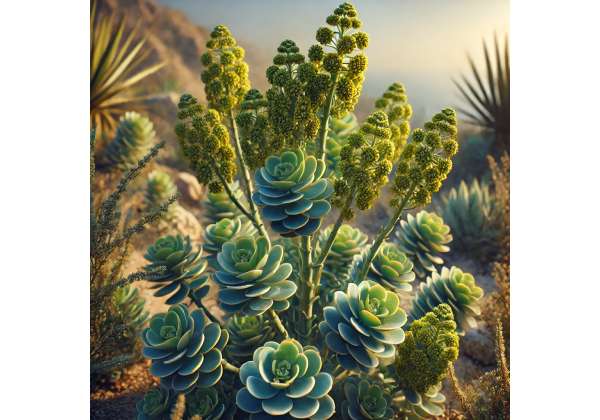
Italian Spurge, or Euphorbia characias, is a striking Mediterranean shrub best known for its lime-green flower heads, blue-gray foliage, and thick white latex. In traditional herbal settings, it has also been used more boldly than most modern readers would expect. Historical uses include external applications for warts and wounds, along with broader folk interest in cleansing, irritation control, and skin repair. Modern laboratory research adds another layer: extracts from the aerial parts and latex contain terpenoids, flavonoids, quercetin derivatives, fatty acids, cerebrosides, and other compounds with antioxidant, wound-healing, anti-inflammatory, antimicrobial, and enzyme-inhibiting potential.
Yet this is not a gentle beginner herb. Italian Spurge belongs to a genus known for irritating and sometimes toxic sap, especially to skin and eyes. That makes it a plant of promise and caution at the same time. The most realistic value today lies in carefully framed topical potential and preclinical interest, not in casual daily internal use. The guide below explains what Italian Spurge contains, what it may help with, how it has been used, what dosage is realistic, and why safety deserves equal weight with any possible benefit.
Top Highlights
- Italian Spurge may support wound healing and mild anti-inflammatory activity in topical preparations.
- Extracts also show antioxidant and skin-enzyme inhibitory activity in preclinical studies.
- Experimental topical preparations have used about 1% to 10% extract, while no standardized oral dose is established.
- Pregnant or breastfeeding people, children, and anyone with sensitive skin or eye-risk exposure should avoid unsupervised use.
- Raw latex should not be treated as a simple home remedy because it can irritate skin and eyes.
Table of Contents
- What is Italian Spurge
- Key compounds and medicinal properties
- What might Italian Spurge help with
- How Italian Spurge is used
- How much per day
- Safety, interactions, and who should avoid it
- What the evidence actually says
What is Italian Spurge
Italian Spurge is an evergreen subshrub in the Euphorbiaceae family, native to the Mediterranean basin. It forms clumps of upright stems lined with narrow blue-green leaves and is topped in spring with dense greenish-yellow flower structures. Gardeners prize it for drought tolerance, architectural form, and the way it brightens dry landscapes. Herbal interest, however, comes from something more dramatic than its flowers: every cut stem releases a thick white latex.
That latex is central to the plant’s identity. In the plant itself, it helps seal wounds and contributes to defense. In human use, it has made many Euphorbia species famous, or infamous, for their strong effects. Across older Mediterranean folk practice, Euphorbia plants were often treated as sharp, active herbs rather than soft daily tonics. Italian Spurge was part of this tradition. The aerial parts and latex were used externally for wounds, warts, and other unwanted skin growths, and in some historical settings Euphorbia species were also linked with purgative or caustic uses. Those older practices help explain the plant’s medicinal reputation, but they also signal why modern use requires caution.
Unlike culinary herbs or common tea plants, Italian Spurge does not fit comfortably into the category of “safe home wellness herb.” It is more accurate to describe it as a traditional medicinal shrub with documented bioactive compounds and a clear irritant potential. That combination is common within the genus. A plant can be pharmacologically interesting and still be a poor choice for casual self-treatment.
Italian Spurge also has two accepted everyday identities that should not be confused. One is ornamental and ecological. It is widely planted in dry gardens, gravel borders, and coastal landscapes because it handles drought and exposure with ease. The other is medicinal and experimental. This second identity depends on extraction, dosage, and route of use. A beautiful landscaping plant does not automatically become a safe household remedy simply because older texts mention it.
The smartest way to think about Italian Spurge is as a plant with real traditional and preclinical interest, especially for skin-related and wound-related applications, but one that needs more respect than softer herbs. It belongs in the same broad mental category as other plants where topical promise and internal caution must be kept separate. That distinction becomes even more important in the sections on dosing and safety.
Key compounds and medicinal properties
Italian Spurge contains a richer chemical profile than its ornamental reputation suggests. Reviews and analytical studies describe several classes of compounds distributed through the latex, aerial parts, leaves, flowers, and seeds. These include terpenoids, sterol hydrocarbons, saturated and unsaturated fatty acids, cerebrosides, phenolic compounds, carboxylic acids, and quercetin-related flavonoids. Together, these help explain why the plant has shown antioxidant, antimicrobial, wound-healing, anti-aging, and enzyme-inhibitory effects in laboratory and animal models.
One of the most important groups is the terpenoid fraction. In Euphorbia characias, diterpenoids have been identified from leaves, stems, and latex. Diterpenes matter because they are often responsible for some of the more active, and sometimes more irritating, properties of Euphorbia species. They are also frequently investigated in natural-product chemistry for antimicrobial, anti-inflammatory, and cytotoxic actions. That does not mean every diterpene is helpful or safe in home use, but it does show why the plant gets attention from pharmacology researchers.
The phenolic and flavonoid side of the chemistry is also important. Aerial-part extracts contain quercetin derivatives and other polyphenols, and these compounds are strongly linked to antioxidant behavior. In both plant science and human nutrition research, antioxidant activity often goes hand in hand with tissue protection, inflammation control, and support for recovery after stress. In Italian Spurge, quercetin glycosides appear especially relevant because wound-healing work on the subspecies wulfenii isolated quercitrin, hyperoside, and guaijaverin as active compounds.
Seeds contribute another layer. The seed lipids are mainly neutral lipids, much of them triacylglycerols, and the plant contains both saturated and unsaturated fatty acids. Studies also report a dominance of unsaturated over saturated fatty acids in the seeds, including linoleic and linolenic acid-family components. This does not make Italian Spurge a mainstream edible seed oil, but it adds to the plant’s biochemical interest.
The latex itself is especially distinctive. It is not just a sticky fluid. It contains proteins and enzymes, including peroxidase-related and oxidase-related systems, that appear to play a role in defense and wound sealing. This is part of why the plant looks unusually active in laboratory work. The same latex that interests researchers, however, is also the part most likely to irritate skin and eyes in everyday handling.
So the medicinal-property profile of Italian Spurge is real, but double-edged:
- Antioxidant potential comes mostly from phenolics and quercetin derivatives.
- Wound-support and anti-inflammatory activity appear linked to active flavonoid compounds.
- Terpenoids likely contribute to broader biological activity.
- Latex enzymes and compounds make the plant pharmacologically interesting but also irritating.
That last point is essential. With Italian Spurge, the active chemistry and the safety concerns are part of the same story, not separate stories.
What might Italian Spurge help with
The benefits of Italian Spurge are best described as promising but mostly preclinical. Traditional use and modern research overlap in several areas, especially wound care, wart treatment, inflammation, and broader skin-related applications. At the same time, there are no strong human clinical trials showing that the plant is a reliable remedy for everyday use. The most responsible view is that Italian Spurge may be useful in carefully controlled topical or experimental contexts, but it is not a casual internal wellness herb.
The strongest practical signal is wound healing. Traditional use already associated the latex and aerial parts with wounds, and modern work has strengthened that idea. In animal wound models, methanol extracts from the aerial parts of Euphorbia characias subsp. wulfenii showed significant wound-healing activity. Researchers also reported anti-inflammatory effects alongside tissue repair markers. From a practical standpoint, this is the clearest reason the plant still matters in herbal discussion. The wound-healing story is not folklore alone; it has experimental support.
Anti-inflammatory activity is the next strong benefit area. The same wound-focused work found a meaningful anti-inflammatory effect, and other studies on extracts have identified enzyme-inhibitory and antioxidant properties that fit an anti-inflammatory profile. This does not put Italian Spurge in the same class as a proven oral anti-inflammatory supplement, but it does suggest that the plant’s topical applications may be more than just caustic folk medicine.
Skin-related enzyme inhibition is another interesting but narrower benefit. Laboratory work shows that extracts can inhibit enzymes involved in skin aging, such as collagenase, elastase, hyaluronidase, and tyrosinase. In simpler terms, this means the plant may help protect structural skin proteins and influence pigment-related processes in experimental settings. That has obvious cosmetic interest, but it should not be confused with proven dermatologic treatment.
The plant has also shown broader laboratory activities that sound impressive, including antimicrobial effects and even anti-HIV enzyme inhibition in vitro. These findings matter scientifically, but they do not translate neatly into home use. A test-tube result is not the same as a safe self-care recommendation.
The most realistic benefit summary is this:
- Topical wound-support potential is credible.
- Mild anti-inflammatory activity is plausible and partly supported.
- Skin-focused anti-aging or enzyme-related activity is interesting but still early.
- Traditional use for warts and inflamed skin has some experimental logic behind it.
If the goal is a gentler topical herb with a cleaner everyday safety reputation, readers often start with calendula for skin support and wound comfort rather than a latex-rich Euphorbia. Italian Spurge is better viewed as a more aggressive and less forgiving plant whose benefits may be real, but whose margin for casual use is much smaller.
How Italian Spurge is used
Traditional use of Italian Spurge centered mostly on external application. Latex or preparations from the aerial parts were used for wounds, warts, and other skin problems, reflecting the long-standing idea that Euphorbia plants can remove, dry, or sharply stimulate tissue. In modern terms, that kind of use sits somewhere between herbalism and irritant therapy, which is why it should not be copied casually.
Topical preparations are the most reasonable modern form to discuss. These may include research-style extracts in ointments, controlled external applications, or carefully formulated products that use plant fractions rather than raw latex. The difference between those and folk practice matters. A prepared topical extract can be standardized, diluted, and observed. Raw latex from a snapped garden stem is unpredictable, irritating, and much more likely to cause a bad reaction.
That means one practical rule should come first: do not use fresh latex straight from the plant as a household remedy. Even though older traditions sometimes used spurges in that way, the risk of dermatitis, blistering, and eye exposure is too high to treat that practice as beginner-friendly.
If the plant is used topically in a careful context, several steps matter:
- Use only on intact skin unless the preparation is specifically designed for damaged skin.
- Start with a very small test area.
- Keep the preparation away from eyes, mouth, genitals, and mucous membranes.
- Wash hands and tools immediately after handling.
- Stop if there is burning, swelling, or persistent redness.
Internal use is harder to justify. Although Euphorbia species have a history in older herbal systems, modern readers should not assume that history equals safe tea use. Italian Spurge is not a comfortable culinary herb, nor is it a good candidate for long-term internal experimentation. A weak traditional infusion may appear in older sources, but modern safety logic weighs against treating that as a standard use.
For readers who are actually seeking a soothing respiratory herb rather than a powerful latex plant, great mullein for cough and throat comfort is a much more straightforward starting point. That comparison matters because many people search by symptom and accidentally land on a plant that is too aggressive for their real goal.
The best current use frame for Italian Spurge is therefore narrow. It belongs mostly in the conversation about topical botanical research, traditional wound and wart use, and skin-focused extract development. It does not belong in the category of everyday internal tonics or casual teas. When the plant is respected for what it is, that narrower role actually makes more sense than trying to force it into broad “wellness herb” status.
How much per day
There is no standardized oral dosage for Italian Spurge that can be recommended with confidence. That is the central dosage fact, and it should stay front and center. Modern evidence does not support a reliable daily amount for internal use, and the plant’s irritating latex is one reason why.
Topical dosing is easier to discuss because the research is clearer there. In wound-healing studies, topical preparations have used extract concentrations in the low-single-digit to moderate range, and literature around skin-related applications commonly discusses preparations around 1% to 10% extract in experimental settings. This does not mean every homemade ointment in that range will be safe or effective, but it does provide a useful frame: the plant’s strongest research signal is topical and relatively controlled.
For internal use, the safest answer is mostly negative guidance:
- No validated daily oral dose exists.
- Routine tea use is not established as safe.
- Concentrated internal extracts should not be self-prescribed.
- Long-term internal use is a poor fit for most people.
This may feel less satisfying than a supplement-style dosage chart, but it is the most honest answer. A plant with sharp latex, variable constituents, and limited oral safety data should not be given a confident “take this much per day” framework just to fill space.
If someone is thinking in terms of practical use, a smarter question is not “How much Italian Spurge should I take?” but “Is this a plant that makes sense to take internally at all?” For most people, the answer will be no. If the goal is wound support or skin-focused experimentation, properly prepared external use is the more evidence-aware route. If the goal is inflammation support, there are safer and better-studied herbs to start with.
For topical use, frequency also matters. More is not necessarily better. Once- or twice-daily application of a properly prepared product is generally a more sensible experimental framework than repeated aggressive use. The skin needs time to respond, and an irritating plant can easily cross the line from therapeutic stimulation to damage.
Several factors change what a preparation might do:
- Whether the preparation uses latex, aerial parts, or isolated fractions.
- Whether it is diluted in an ointment base.
- Whether the skin is intact or already compromised.
- Whether the user has sensitive skin or eczema-like reactivity.
- Whether the plant material is fresh, dried, or extracted.
This is one of those herbs where “dose” is inseparable from “form.” A tiny amount of raw latex may be harsher than a much larger amount of a well-designed extract. That is why no simple oral-equivalent chart can really do the plant justice. The safest route is still to avoid self-directed internal use and keep any topical trial measured, limited, and purpose-specific.
Safety, interactions, and who should avoid it
Safety is the most important section in any serious article on Italian Spurge. The plant’s white latex is irritating and can be toxic on exposed skin or especially in the eyes. That alone changes how the plant should be handled. This is not just a theoretical warning. Official horticultural safety guidance recommends gloves, protective clothing, and eye protection when working with Euphorbia characias.
The most immediate risks are topical and ocular. Skin contact can cause burning, redness, dermatitis, and painful inflammation. Eye contact is more serious and can lead to intense irritation, corneal injury, and urgent ophthalmic problems. The speed of injury matters here: a person often does not realize how much sap has transferred until symptoms begin. For that reason, even pruning the plant in a garden deserves caution.
Internal exposure is less well characterized in ordinary household use, but that does not make it safe. Many spurges are biologically active enough to cause gastrointestinal upset or worse when misused. Italian Spurge should not be treated as a casual “natural purge” or detox herb. Older traditions sometimes used Euphorbia species in strong ways, but those practices do not translate cleanly into safe modern home care.
People who should avoid unsupervised use include:
- Pregnant or breastfeeding people.
- Children.
- Anyone with sensitive skin, eczema, or frequent dermatitis.
- People with eye disease or contact-lens issues.
- Anyone looking for an internal daily herb.
- Pets and livestock around garden plantings should also be considered at risk.
Medication interactions are not fully mapped, but common sense still applies. A plant that causes topical irritation can interact badly with retinoids, acids, medicated creams, or damaged skin. It also makes no sense to combine a strong latex plant with multiple other active botanicals in a first-time trial. Simpler is safer.
If Italian Spurge is being considered because of its wound-healing reputation, readers should remember that a promising wound herb is not automatically safe on broken skin in raw form. This is similar to the caution pattern seen with comfrey and other potent topical herbs, where preparation, route, and context matter as much as the plant itself.
Seek help right away if exposure leads to:
- Eye pain or blurred vision.
- Severe burning.
- Rapid swelling.
- Blistering.
- Persistent rash.
- Vomiting or marked stomach distress after accidental ingestion.
In short, Italian Spurge is not “unsafe because it is medicinal.” It is unsafe because its active chemistry is genuinely aggressive. Respecting that fact is what allows the plant to be discussed honestly instead of romantically.
What the evidence actually says
The evidence on Italian Spurge is better than pure folklore but much weaker than what most people would want before using an herb internally. That middle ground is important. The plant has real scientific interest, especially for wound healing, skin-enzyme inhibition, and antioxidant properties, but the strongest data still come from laboratory and animal studies rather than from human clinical trials.
The 2021 review on Euphorbia characias gives a good overview of why the plant matters. It documents a broad range of compounds from latex, seeds, and aerial parts, then connects those compounds to activities such as antioxidant behavior, antimicrobial action, wound-healing potential, anti-aging activity, and inhibitory effects on enzymes linked with several disease models. This is a real body of work, not just a few scattered folk claims.
The wound-healing evidence is especially meaningful because it is species-specific and experimentally grounded. Methanol extracts from aerial parts of Euphorbia characias subsp. wulfenii improved wound-healing measures and showed anti-inflammatory activity in vivo. Researchers also isolated quercetin glycosides as likely contributors to this effect. That gives the topical-use story a solid scientific anchor.
Aerial-part extracts have also shown antioxidant, antimicrobial, cholinesterase-inhibitory, and anti-HIV enzyme-related activity in vitro. Those results are interesting for biomedical research, but they should not be overstated in consumer language. A laboratory assay can suggest pharmacologic potential without proving that the plant is useful or safe for self-care. The same caution applies to skin-aging studies. Inhibition of collagenase, elastase, hyaluronidase, or tyrosinase is a valuable signal, but it is not the same as proven clinical anti-aging benefit.
The limits of the evidence are just as important as the strengths:
- Human trials are lacking.
- Standardized oral dosage is lacking.
- Safety is a major limiting factor because of latex irritation.
- Traditional uses are broader than the current clinical evidence.
- Topical promise does not automatically justify raw-latex use.
This leaves Italian Spurge in an interesting but narrow category. It is a plant with enough evidence to justify careful topical research and enough traditional history to explain why that research exists. But it is not a plant with enough evidence to recommend as an everyday internal herb. If your main goal is inflammation support from an herb with a larger human evidence base, boswellia for joint and inflammation support is a far more straightforward place to start.
So the most balanced conclusion is this: Italian Spurge is a biologically active medicinal shrub whose strongest case lies in controlled topical and preclinical contexts. It deserves attention, but it also demands restraint.
References
- Euphorbia characias: Phytochemistry and Biological Activities 2021 (Review)
- Euphorbia characias Extract: Inhibition of Skin Aging-Related Enzymes and Nanoformulation 2022
- In vivo wound-healing activity of Euphorbia characias subsp. wulfenii: Isolation and quantification of quercetin glycosides as bioactive compounds 2018
- Biological Activities of Aerial Parts Extracts of Euphorbia characias 2016
- Euphorbia characias | Plant Safely in Drought-Tolerant Landscapes 2026
Disclaimer
This article is for educational purposes only and is not medical advice. Italian Spurge is a biologically active plant with irritating latex and a meaningful risk of skin and eye injury if handled carelessly. It should not be used to self-treat serious wounds, persistent skin disease, eye problems, or any condition that needs diagnosis and professional care. Anyone who is pregnant, breastfeeding, caring for children, or considering internal use should avoid unsupervised experimentation and speak with a qualified clinician first.
Please share this article on Facebook, X, or your preferred platform if you want to help others find careful, evidence-aware herbal information.