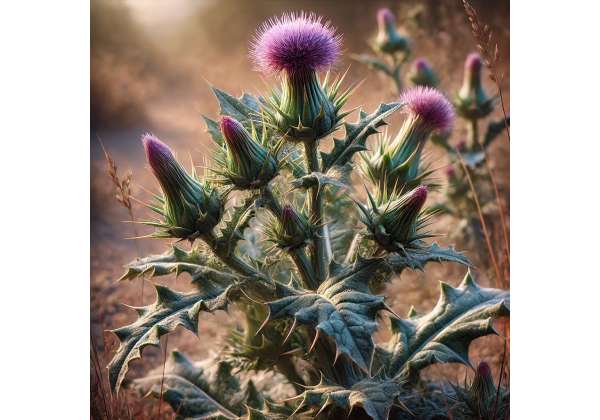
Italian thistle, botanically known as Carduus pycnocephalus, is a prickly annual or biennial plant in the daisy family that is better known as a wild edible and invasive thistle than as a mainstream medicinal herb. That distinction is important. Unlike better-established herbal thistles, this species has only a modest medicinal literature, and most of what is known comes from phytochemical work, traditional food use in Mediterranean communities, and preclinical studies rather than human clinical trials. Still, it is not an empty plant. Research on the aerial parts has identified flavonoids, sterols, and triterpenes, while Mediterranean studies describe the species among wild edible Carduus taxa traditionally consumed as food and sometimes associated with folk medicinal use.
So the most honest way to approach Italian thistle is neither to dismiss it nor to oversell it. It is a plant with real chemistry, real traditional food use, and early pharmacologic promise, especially around anti-inflammatory, antispasmodic, and antioxidant activity. But it is not a clinically standardized herb with a validated human dose or a strong safety dossier for routine medicinal use. That balance is the key to using the plant responsibly and understanding where its value truly lies.
Quick Overview
- Italian thistle is best supported as a traditional wild edible plant rather than a well-established medicinal herb.
- Preclinical studies suggest anti-inflammatory and antispasmodic potential from aerial-part extracts.
- Flavonoids and caffeoylquinic acid derivatives appear to be major phytochemical groups in Carduus preparations that include this species.
- No validated human medicinal dose exists for Carduus pycnocephalus.
- Avoid internal self-treatment during pregnancy, breastfeeding, childhood, or chronic disease care because human safety data are lacking.
Table of Contents
- What is Italian thistle?
- Key ingredients and plant actions
- What does Italian thistle help with?
- How Italian thistle is used
- How much per day?
- Side effects and who should avoid it
- What the evidence actually says
What is Italian thistle?
Italian thistle is the accepted species Carduus pycnocephalus L., an annual or biennial member of the Asteraceae family. Current botanical databases describe it as native across Macaronesia, Europe to the western Himalaya and Arabian Peninsula, and North Africa. In field descriptions, it is usually recognized as a spiny thistle with winged stems, clusters of pink-purple flower heads, and a strong tendency to colonize disturbed sites, roadsides, pastures, and waste ground. In other words, it is botanically real and widely distributed, but its reputation in land management often leans more toward “weed” than “healing herb.”
That practical identity shapes how the plant should be understood. Italian thistle is not widely sold in mainstream herbal commerce as a tincture, capsule, or tea the way better-known herbs are. Yet in Mediterranean ethnobotanical literature, it does show up as a food plant. Studies from southern Italy and Greece record the species among wild prickly thistles whose young stems, leaves, or tender aerial parts were peeled, boiled, fried, or otherwise prepared as traditional seasonal foods. These records matter because they show that the plant does have a human-use history, but that history is primarily culinary and local rather than standardized medicinal practice.
That difference is more than a technicality. A wild edible plant with occasional folk medicinal associations is not the same as a clinically developed herbal medicine. The first is shaped by local ecology, seasonal use, and practical food traditions. The second is shaped by standardized preparations, known doses, and clearer safety expectations. Italian thistle belongs much more comfortably in the first category. That does not make it trivial. It means readers should resist the temptation to import the full reputation of medicinal thistles in general onto this specific species.
This is also why identification matters. The genus Carduus includes multiple species, and the literature sometimes discusses them together. Some Mediterranean papers examine Carduus species as a group, especially when they are used as wild edible plants. But when the conversation moves from food tradition to medicinal claims, it becomes important to stay species-specific. Italian thistle may share some chemistry and cultural uses with other Carduus plants, yet its evidence base is still its own. That is the most reliable way to keep the rest of the article accurate.
For readers who are more familiar with bitter edible field plants such as dandelion, Italian thistle makes sense as part of that wider Mediterranean pattern of seasonal wild greens. The difference is that Italian thistle is much pricklier, less standardized in modern herbal practice, and far less researched as a self-care remedy.
Key ingredients and plant actions
The phytochemical story of Italian thistle is real, even if the clinical story is still thin. A species-specific study of the aerial parts isolated seven flavonoidal compounds, including apigenin, several kaempferol glycosides, and diosmetin glycosides, along with lupeol, beta-sitosterol, and beta-sitosterol glucoside. That same study assessed anti-inflammatory, antispasmodic, and hypotensive activities across extracts and reported variable but meaningful activity. This is the strongest direct reason to take the plant seriously as more than just a spiny weed. It contains compounds that fit known pharmacologic patterns.
The broader Mediterranean literature adds another layer. In hydroalcoholic extracts of four wild edible Carduus species that included C. pycnocephalus, flavonoids and caffeoylquinic acid derivatives were identified as the predominant classes of secondary metabolites. That does not tell us every individual compound concentration in every wild stand of Italian thistle, but it does reinforce the view that the species belongs to a chemically active group of edible thistles rather than to a chemically blank one.
These compounds help explain the plant’s likely actions. Flavonoids such as apigenin, kaempferol derivatives, and diosmetin derivatives are often associated with antioxidant and anti-inflammatory effects, while sterols and triterpenes such as beta-sitosterol and lupeol frequently appear in plants studied for membrane-level, anti-inflammatory, or smooth-muscle effects. That makes the reported findings internally coherent. The isolated compounds and the observed activities point in the same general direction, even if the evidence stops well short of proving clinical benefit in humans.
A useful way to think about Italian thistle is not as a single-active herb, but as a multi-compound wild plant with a bias toward polyphenols and triterpene-related molecules. In practical terms, the phytochemistry supports a few cautious statements:
- antioxidant activity is plausible
- anti-inflammatory activity is plausible
- antispasmodic activity is plausible
- mild vascular or hypotensive signals may be worth further study
What it does not support is the leap from chemistry to strong therapeutic claims. A plant can contain biologically interesting compounds and still have no validated human dose, no good clinical trial record, and no role in routine treatment. Italian thistle is a clear example of that gap. Its chemistry is interesting enough to justify interest, but not mature enough to justify marketing-level promises.
This is also where comparisons need caution. If someone reads that Italian thistle has flavonoids and phenolic acids, that should not automatically make it equivalent to better-studied polyphenol-rich plants such as green tea. Similar classes of compounds do not create identical effects. The plant matrix, dose, extraction method, and route of use all matter. With Italian thistle, most of those variables are still underdefined in human practice.
What does Italian thistle help with?
The most honest answer is that Italian thistle may help in a few plausible ways, but the evidence is mostly preclinical or ethnobotanical rather than clinical. The clearest support is not for a modern disease-specific use, but for its role as a traditional wild edible plant and a source of phytochemically active extracts. That means any “benefit” section has to stay narrower and more realistic than it would for a better-established herb.
The first plausible benefit area is inflammation. The most directly relevant species-specific paper found anti-inflammatory activity in extracts from the aerial parts. That does not mean Italian thistle should be used as a home anti-inflammatory medicine, but it does support the idea that its traditional use as a bitter wild plant may have included some physiologic value beyond calories. In a broader herbal context, anti-inflammatory activity is one of the few species-linked pharmacologic signals that can be stated without stretching the literature.
The second plausible area is digestive or spasm-related support. The same study reported antispasmodic activity, and Mediterranean food traditions often preserve bitter or fibrous wild plants precisely because they are perceived as strengthening, cleansing, or digestively useful. It would be too strong to say Italian thistle is a proven digestive herb, but it is fair to say that both its chemistry and its culinary context make mild digestive relevance plausible. In that sense, it occupies some of the same “bitter edible” territory as chicory, though with far less modern self-care standardization.
A third area is antioxidant support. This is less dramatic than it sounds. Saying a plant has antioxidant potential usually means its extracts contain compounds that behave protectively in laboratory or analytical systems. It does not mean eating the plant will transform oxidative stress in a clinical sense. Still, because Carduus extracts including C. pycnocephalus are rich in flavonoids and caffeoylquinic-acid derivatives, antioxidant activity is a reasonable part of the overall picture.
What should not be claimed? Quite a lot. There is not enough evidence to present Italian thistle as a proven herb for liver disease, urinary disease, metabolic disease, hemorrhoids, or cardiovascular treatment. Some of those uses appear in wider Carduus or regional ethnobotanical contexts, but the species-specific proof is not there. That means the realistic benefit map looks like this:
- most plausible:
- mild anti-inflammatory support
- mild antispasmodic potential
- nutritional value as a traditional wild edible
- possible but unproven:
- broader digestive support
- antioxidant health support
- mild blood-pressure related effects
- not established:
- disease treatment
- standardized medicinal use
- long-term tonic use
That hierarchy is less exciting than a typical herb-marketing page, but it is much more accurate. Italian thistle may have real value, but its value is still closer to “underexplored edible medicinal plant” than to “validated therapeutic herb.”
How Italian thistle is used
Italian thistle is used more convincingly as a food plant than as a standardized medicinal herb. Mediterranean ethnobotanical studies from southern Italy and Greece record the species as a gathered wild edible, with young stems or tender parts prepared by boiling, frying, or similar methods after the tough or prickly outer parts are removed. This pattern matters because it shows the plant’s most stable human-use tradition is culinary, not pharmaceutical.
That food use is not casual. Thistles are labor-intensive foods. The stems often need peeling or trimming, and the edible stage is usually limited to tender growth before the plant becomes too fibrous or heavily spined. In poor or rural food traditions, such plants were often valued because they were seasonal, freely available, and fit into a larger pattern of bitter spring greens. So the “how to use it” question starts with traditional food logic rather than modern capsule logic.
Medicinal-style use is much less clear. The research literature focuses on extracts of aerial parts, not on an established household infusion, tincture, or capsule regimen used across modern herbal practice. That distinction matters. A hydroalcoholic or methanolic extract studied in a lab is not automatically a template for home use. It tells us the plant has active constituents, but not how a reader should safely prepare it in everyday life.
A practical way to frame its uses today is this:
- Traditional edible use
Young stems or tender parts can be treated as seasonal wild greens in the traditions that already recognize them. - Research use
Extracts of aerial parts are valuable in phytochemical and preclinical studies. - Experimental herbal use
This should be considered uncertain because no validated human dose or modern self-care standard exists.
That means the safest route for most readers is not medicinal self-experimentation, but appreciation of the plant as a documented wild edible with interesting chemistry. If someone wants a better-established plant for gentle household herbal use, something like corn silk or another clearly monographed herb is easier to use responsibly. Italian thistle is not there yet.
A final practical note: the edible tradition should not be confused with unrestricted raw use. The literature describes prepared young stems or similar plant parts in specific local contexts, not indiscriminate chewing of mature spiny plants from roadsides or invaded fields. Harvesting, preparation skill, and identification all matter. When a plant has stronger culinary than medicinal validation, the most responsible use is usually to respect that tradition rather than force it into a supplement-style framework.
How much per day?
There is no validated human medicinal dose for Italian thistle. That is the single most important dosing fact, and it should be stated plainly. The sources reviewed here document food use, phytochemical characterization, and preclinical testing, but they do not establish a standardized adult dose in grams, milliliters, or capsules for therapeutic self-use.
This is not a minor detail. Dose is where herbal information becomes practical, and when dose is missing, that usually means the plant has not crossed the line from ethnobotanical interest into responsible routine self-medication. A species can have interesting compounds and promising lab data without having anything close to a dependable human regimen. Italian thistle fits that pattern almost exactly.
So what can be said usefully? First, culinary use is not the same as medicinal dosing. A plant eaten occasionally as a peeled or boiled wild green does not automatically become appropriate for concentrated tea, tincture, powder, or extract use. Second, preclinical extract work cannot be converted casually into a human plan. The extraction method, concentration, and route of use all change the meaning of a dose. A lab result involving aerial-part extract does not tell a reader how much fresh or dried plant would be equivalent.
The most responsible dosage guidance therefore looks like this:
- no validated medicinal daily dose exists
- no validated extract range exists for self-care
- no standardized duration of use exists
- food-level use in traditional cuisines does not equal a therapeutic dose
- concentrated internal use should not be improvised
This may feel unsatisfying, but it is much safer than false precision. Many weak herb articles invent a dosing range simply because readers expect one. That approach is especially risky with under-studied plants. In this case, the absence of a dose is itself a meaningful safety signal. It tells you the species is not ready for routine medicinal self-prescription.
If your real goal is to work with a bitter edible herb that already has a clearer preparation tradition, dandelion is a better example of how a plant can move from food use into practical herbal use with more stable forms and expectations. Italian thistle has not yet made that transition in a well-documented way. So the best answer to “how much per day?” remains simple: no medicinal amount can currently be recommended with confidence.
Side effects and who should avoid it
The main safety issue with Italian thistle is not a well-defined toxicity syndrome. It is uncertainty. The cited literature does not provide a robust human safety record for internal medicinal use, and that means the plant should be approached more cautiously than the chemistry alone might suggest. The species is clearly edible in certain traditional contexts, but “edible sometimes” is not the same as “safe as a concentrated medicinal herb.”
Because the plant belongs to the Asteraceae family, people with strong sensitivities to that family should be careful, even though species-specific allergy data for Carduus pycnocephalus are not well developed in the sources reviewed here. More broadly, anyone considering internal use faces the same practical problem: there is no validated medicinal dose, no clearly established interaction profile, and no reliable long-term safety framework. That alone is enough to make routine unsupervised use a poor idea.
The groups that should avoid medicinal self-use are therefore the ones who have the least room for uncertainty:
- pregnant people
- breastfeeding people
- children
- people with chronic liver, kidney, heart, or gastrointestinal disease
- anyone taking regular prescription medication
- people with known severe reactions to wild Asteraceae plants
Why such a broad list? Because when a plant lacks a real dosing and safety tradition in modern human use, caution has to carry more weight than theoretical benefit. Even a plant with promising anti-inflammatory or antispasmodic activity can be the wrong choice if there is no clear framework for safe internal use.
There are also obvious physical handling issues. Mature Italian thistle is spiny and unpleasant to harvest or prepare without care. That is not a pharmacologic side effect, but it still matters in real life. The culinary traditions that use the plant generally involve young, trimmed, prepared material, not casual contact with mature weedy stands. This is another reminder that the food tradition surrounding Italian thistle is specific and skilled, not loose or indiscriminate.
The bottom line is straightforward: if the plant is approached at all, it should be approached as a carefully identified wild food in traditions that already use it, not as an improvised medicinal extract. If your interest is in topical or internal herbs with clearer safety expectations, something better studied is the wiser choice. Italian thistle is interesting, but safety-wise it remains a plant of caution rather than convenience.
What the evidence actually says
The evidence for Italian thistle is real, but limited and uneven. On the strong side, the species is taxonomically accepted, has a documented Mediterranean food-use tradition, and has species-specific phytochemical and pharmacologic work showing anti-inflammatory, antispasmodic, and hypotensive signals in extracts. On the weak side, the literature reviewed here does not provide human clinical trials, standardized medicinal regimens, or a mature safety framework for routine therapeutic use.
That means the plant sits in an awkward but important middle category. It is not an invented wellness plant with no basis at all. But it is also not a validated herbal medicine with the sort of evidence that supports confident disease-specific claims. Its strongest evidence clusters are:
- accepted species identity
- traditional edible use in Mediterranean communities
- identified flavonoids, triterpenes, and sterols in aerial parts
- preclinical anti-inflammatory and antispasmodic activity
Its weakest areas are just as important:
- no validated human medicinal dose
- no clear clinical indication
- no strong modern trial base
- no defined long-term safety model
This kind of evidence profile calls for restraint. The plant is best understood as an underexplored wild edible with interesting pharmacology, not as a ready-made medicinal herb for broad self-treatment. That may sound like a narrow conclusion, but it is exactly what trustworthy herbal writing should do: preserve the interesting parts without pretending the gaps are smaller than they are.
For readers, the most useful takeaway is practical. If you are interested in Mediterranean wild greens, Italian thistle has authentic food-culture relevance. If you are interested in phytochemistry, it is a legitimate source of flavonoids and other biologically active molecules. But if you are looking for a dependable medicinal herb with a clear dose and safety framework, this is not the first plant to choose. In that sense, it is much farther from an established self-care herb than something like echinacea, which at least has a more mature clinical conversation.
So the evidence-based conclusion is this: Italian thistle may have mild anti-inflammatory, antispasmodic, and antioxidant promise, and it clearly has a place in traditional Mediterranean food culture. But it remains a preclinical and ethnobotanical plant first, not a standardized medicinal herb. That is a limitation, but it is also the most accurate way to understand it today.
References
- Carduus pycnocephalus L. | Plants of the World Online | Kew Science 2026
- Phytochemical and biological studies of Carduus pycnocephalus L. 2015
- Characterization of four wild edible Carduus species from the Mediterranean region via phytochemical and biomolecular analyses 2017
- Ethnobotanical survey of wild food plants traditionally collected and consumed in the Middle Agri Valley (Basilicata region, southern Italy) 2017
- Bitter Is Better: Wild Greens Used in the Blue Zone of Ikaria, Greece 2023
Disclaimer
This article is for educational purposes only and should not be used as medical advice, diagnosis, or treatment guidance. Italian thistle is not a well-established medicinal herb, and current evidence does not provide a validated human dose or a strong safety framework for internal self-treatment. Do not use it medicinally during pregnancy, breastfeeding, childhood, or alongside chronic disease treatment without qualified professional guidance and correct botanical identification.
If this article was helpful, please share it on Facebook, X, or your preferred platform.