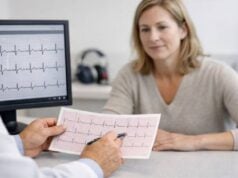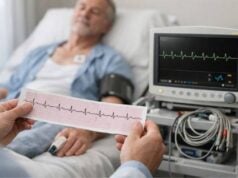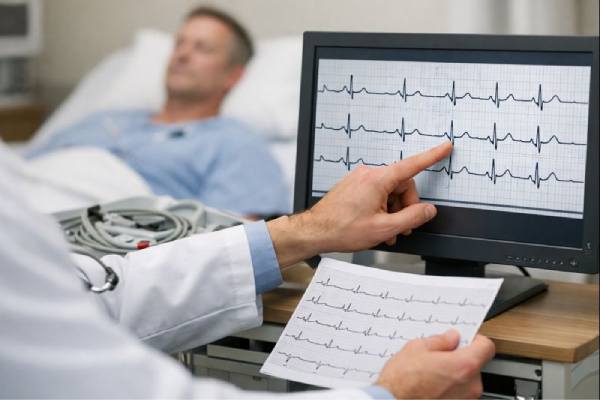
J-wave syndrome is an umbrella term for a small group of heart-rhythm conditions linked to a distinctive bump on an ECG (electrocardiogram—a tracing of heart electricity). The “J-wave” itself is not a disease; it is a clue that the heart’s electrical recovery phase can become unstable in certain people. In practical terms, J-wave syndromes matter because they can raise the risk of dangerous rhythms that may cause fainting or, rarely, sudden cardiac arrest—sometimes in people who otherwise feel healthy.
Most readers encounter this topic after an unexpected ECG finding, a fainting episode, a family history of sudden death, or a cardiology visit where terms like Brugada syndrome or early repolarization are mentioned. This guide focuses on what the finding means, what drives risk, how doctors confirm the diagnosis, and what treatment and day-to-day management typically look like.
Table of Contents
- What J-wave syndrome means
- Causes and risk factors
- Symptoms and possible complications
- How doctors diagnose it
- Treatment options and what to expect
- Living with it, prevention, and when to seek care
What J-wave syndrome means
In everyday language, J-wave syndrome refers to rhythm disorders in which the ECG shows a J-wave or J-point elevation (a rise at the junction between the end of the QRS complex and the start of the ST segment). The best-known conditions in this family include:
- Brugada syndrome, typically showing characteristic patterns in the right-sided chest leads.
- Early repolarization syndrome, often linked to J-point elevation in the inferior or lateral ECG leads (the “bottom” or “side” views of the heart).
Many people have mild early repolarization patterns on an ECG and never develop problems. The term syndrome is generally reserved for situations where the ECG pattern is paired with concerning symptoms (such as unexplained fainting) or serious rhythm events (such as ventricular fibrillation), or when the pattern appears in the setting of strong family history.
To understand why the J-wave can matter, it helps to picture the heart’s electrical cycle in two steps: the signal activates heart muscle (so it squeezes), then the muscle recovers electrically (so it can beat again). In J-wave syndromes, the “recovery” phase can vary too sharply between neighboring regions of heart muscle. That mismatch can create vulnerable moments—especially at rest, during sleep, or with triggers like fever—when a premature beat can spiral into a life-threatening rhythm.
Two important clarifiers reduce anxiety:
- A J-wave on one ECG is not automatically dangerous. Context is everything—symptoms, family history, ECG pattern details, and triggers all matter.
- Risk is not constant. Many people have higher vulnerability only during certain states (for example, fever, certain medications, very slow heart rates, or electrolyte disturbances).
When clinicians talk about “J-wave syndromes,” they are usually thinking about identifying the minority of patients in whom the ECG clue signals a meaningful risk—and then reducing that risk with targeted prevention.
Causes and risk factors
J-wave syndromes are best thought of as electrical vulnerability caused by a combination of biology and triggers. Some people are born with this vulnerability; others show it only under certain conditions.
Underlying causes
- Inherited ion-channel differences. The heart’s rhythm depends on sodium, potassium, and calcium moving through microscopic “channels” in heart cells. Genetic variants that reduce inward sodium or calcium current, or increase outward potassium current, can tilt the balance toward a more pronounced J-wave pattern and greater rhythm instability. Not everyone with a variant develops symptoms, and many people with a clinical syndrome have no single identifiable mutation.
- Regional electrical heterogeneity. J-wave syndromes are closely tied to differences between the outer (epicardial) and inner (endocardial) layers of heart muscle, especially in specific regions like the right ventricular outflow tract (often discussed in Brugada syndrome).
- Autonomic tone (the body’s “rest-and-digest” vs “fight-or-flight” balance). Higher vagal tone (more “rest-and-digest”) can accentuate J-wave patterns in some people, which is one reason events may cluster at night or during rest.
Common risk factors and triggers
Even when the underlying vulnerability exists, triggers often determine when risk shows up:
- Fever (one of the most important practical triggers, especially for Brugada-pattern ECG changes).
- Certain medications that affect sodium channels or alter conduction (including some antiarrhythmics, anesthetics, and psychotropics). A clinician-approved “avoid list” is essential.
- Electrolyte disturbances, especially low potassium or low magnesium.
- Alcohol binges and recreational drugs (notably cocaine and amphetamines) that can destabilize rhythm.
- Very slow heart rates or long pauses (for some J-wave patterns, bradycardia can amplify the ECG changes).
- Hypothermia (cold exposure or medical cooling can exaggerate J-waves; not the same as J-wave syndrome, but relevant in interpretation).
Who is more likely to be identified
- Male sex is associated with higher clinical expression in Brugada syndrome.
- Family history of sudden unexplained death, fainting, or known inherited arrhythmia.
- Prior unexplained syncope (fainting) or nocturnal agonal breathing episodes.
- Previous ventricular fibrillation or cardiac arrest (highest risk group).
A useful way to frame risk: the ECG pattern is the signal, but your personal risk is shaped by the story—symptoms, triggers, and family history.
Symptoms and possible complications
Many people with a J-wave pattern have no symptoms, and the finding is discovered incidentally during a routine ECG, sports screening, preoperative testing, or evaluation for unrelated concerns. When symptoms occur, they often reflect brief episodes of unstable rhythm or the body’s response to reduced blood flow to the brain.
Common symptoms
- Syncope (fainting) that is sudden, unexplained, and not clearly linked to dehydration, overheating, or standing up too quickly. High-risk fainting tends to be abrupt, with little warning, and may occur during rest or sleep.
- Near-syncope (feeling like you are about to faint), especially if it comes with palpitations.
- Palpitations (awareness of a rapid, pounding, fluttering, or irregular heartbeat). Palpitations are common and often benign, but in this context they deserve structured evaluation.
- Nocturnal abnormal breathing described by partners as gasping, snorting, or “agonal” breathing. This can be mistaken for sleep apnea; sometimes it reflects a brief rhythm event that self-terminates.
Serious events
- Ventricular fibrillation (VF) is the rhythm most associated with sudden collapse in J-wave syndromes. VF prevents effective pumping and requires immediate defibrillation.
- Sudden cardiac arrest may be the first presentation in a minority of cases, particularly in high-risk clinical subsets.
Complications beyond the rhythm itself
Even when dangerous rhythms never occur, the diagnosis can carry real-life consequences:
- Anxiety and hypervigilance, especially after an alarming ECG report or a family event.
- Lifestyle restrictions that may feel disruptive (fever management, medication screening, alcohol moderation).
- Device-related issues if an implantable cardioverter-defibrillator (ICD) is needed, such as inappropriate shocks, lead problems, or infection risk.
- Family impact, including decisions about screening, genetic testing, and sports participation.
When symptoms should raise urgency
Seek urgent medical care (or emergency services) if any of the following occur:
- Fainting during rest, sleep, or minimal exertion, especially without warning.
- Seizure-like activity associated with collapse (it can be a sign of cardiac arrest with brain hypoxia).
- Recurrent episodes of sudden palpitations with chest pain, severe shortness of breath, or near-fainting.
- A high fever in someone known (or suspected) to have Brugada syndrome or a high-risk J-wave pattern.
A key point: symptoms can be intermittent, and a “normal day” does not mean “no risk.” Clear documentation—what happened, when, what you were doing, whether fever or alcohol was involved—helps your clinician judge significance and plan prevention.
How doctors diagnose it
Diagnosis is not a single test; it is a careful matching of ECG patterns with clinical context. The goal is to separate benign variants from patterns that represent an inherited arrhythmia syndrome.
Step 1: Confirm the ECG pattern
Clinicians review the ECG for:
- Which leads show the J-point elevation (inferior, lateral, right precordial).
- Shape and size of the J-wave or ST-segment pattern.
- Dynamic changes over time (does it worsen with fever, rest, or slower heart rate?).
- Brugada patterns, which have specific diagnostic criteria and may require repeat ECGs with higher lead placement on the chest.
Because the pattern can fluctuate, doctors often request repeat ECGs under standardized conditions and compare them with old tracings, if available.
Step 2: Evaluate symptoms and history
A structured history typically includes:
- Details of any fainting: posture, triggers, warning signs, duration, recovery, witness reports.
- Any episodes during sleep or at rest.
- Family history of sudden death under 50, unexplained drowning or single-car crashes, ICDs, or known inherited rhythm disorders.
- Medication and substance review (prescription, over-the-counter, supplements, recreational drugs).
Step 3: Exclude structural heart disease
J-wave syndromes are primarily electrical disorders. Doctors often order:
- Echocardiogram to assess structure and pumping function.
- Cardiac MRI in selected cases (especially if there is concern for scar, inflammation, or cardiomyopathy).
- Basic labs for electrolytes and thyroid function when clinically relevant.
Step 4: Rhythm monitoring and provocation
Depending on risk level:
- Holter or patch monitors (24 hours to 14+ days) look for pauses, premature beats, or runs of ventricular rhythm.
- Exercise testing can show how the ECG pattern behaves with faster heart rates.
- Drug challenge testing may be used in suspected Brugada syndrome when the baseline ECG is not diagnostic. This is performed in a controlled setting with resuscitation capability because it can provoke concerning rhythms in vulnerable patients.
- Electrophysiology study (EPS) may be considered in selected cases, but its role varies and is often weighed alongside clinical features rather than used as a stand-alone decision tool.
Step 5: Genetic testing and family screening
Genetic testing is most useful when:
- The clinical diagnosis is strong.
- There is a concerning family history.
- Results will change screening plans for relatives.
A negative genetic test does not rule out a J-wave syndrome. Many cases are polygenic or not captured by current panels. Family screening often relies more on clinical ECG evaluation than genetics alone.
The result of this diagnostic process is usually a risk stratification: low-risk ECG variant, intermediate concern needing monitoring and trigger control, or high risk requiring aggressive prevention.
Treatment options and what to expect
Treatment is tailored to your risk category. The guiding principle is simple: prevent ventricular fibrillation and sudden collapse, while avoiding unnecessary interventions in people whose pattern is unlikely to cause harm.
Immediate treatment in emergencies
If a patient has VF, recurrent near-arrest episodes, or “electrical storm” (multiple VF episodes in a short period), hospital teams may use:
- Defibrillation (life-saving shock) for VF.
- Medications that stabilize electrical currents, often via IV infusion in acute settings when recurrent VF is present.
- Temporary pacing or strategies to prevent very slow heart rates and pauses, when bradycardia is a trigger.
- Aggressive trigger correction: fever control, electrolyte replacement, stopping culprit medications, treating infection, avoiding alcohol withdrawal complications, and ensuring adequate oxygenation.
Long-term prevention for high-risk patients
- Implantable cardioverter-defibrillator (ICD)
- Typically recommended for people who have survived cardiac arrest or have documented VF/unstable ventricular tachycardia.
- Sometimes considered for high-risk syncope plus a strongly diagnostic pattern, depending on specialist assessment.
- Medication to reduce recurrence
- In selected patients—especially those with recurrent shocks, frequent VF triggers, or high-risk patterns—antiarrhythmic therapy may be used to reduce episodes.
- The specific choice depends on the syndrome subtype, comorbidities, and specialist preference.
- Catheter ablation
- For some patients (particularly with Brugada syndrome and recurrent VF or frequent ICD shocks), ablation targeting arrhythmogenic substrate can reduce VF episodes.
- In inferolateral J-wave/early repolarization syndrome with recurrent VF, ablation may be considered when a clear trigger beat or substrate can be identified.
What to expect if you are lower risk
Many people fall into a category where no device is indicated. Management may focus on:
- Avoiding known trigger medications.
- Treating fever promptly.
- Periodic follow-up with repeat ECGs and symptom review.
- Family screening when indicated.
Special situations
- Fever-related risk: People with suspected or confirmed Brugada syndrome are often advised to treat fever early and seek urgent evaluation if fever is high or the person feels unwell, because the ECG pattern and risk can worsen.
- Anesthesia and procedures: A pre-procedure plan matters. An anesthesiologist may adjust medication choices and monitoring intensity.
- Athletics: Many can remain active, but competitive sports decisions should be individualized based on symptoms, diagnostic certainty, and specialist guidance.
A realistic expectation: the most effective prevention strategies are often boringly practical—trigger control, medication screening, and a clear emergency plan—combined with advanced interventions only when the risk profile truly warrants them.
Living with it, prevention, and when to seek care
Living well with a J-wave syndrome is about reducing avoidable risk while preserving normal life. A useful approach is to build a simple “risk hygiene” routine that does not require constant worry.
Daily and seasonal prevention habits
- Fever plan:
- Treat fever early (follow your clinician’s recommendations for thresholds and medications).
- During infection, prioritize hydration and rest, and avoid substances that can destabilize rhythm.
- Know when your care team wants you to get an ECG during fever.
- Medication screening:
- Before starting new prescriptions (including psychiatric meds, some antibiotics, and anesthetic agents), ask your clinician or pharmacist to check safety for Brugada/J-wave vulnerability.
- Do not stop prescribed medications abruptly without medical advice; instead, request safer alternatives when needed.
- Electrolyte awareness:
- Vomiting, diarrhea, extreme dieting, and heavy sweating can lower potassium and magnesium.
- If you have a history of arrhythmia events, your clinician may suggest periodic monitoring or repletion strategies.
- Alcohol and stimulants:
- Avoid binge drinking.
- Avoid cocaine and amphetamines entirely; they can provoke lethal rhythms in susceptible hearts.
- Sleep and recovery:
- Because risk can cluster during rest in some patients, prioritize consistent sleep.
- If loud snoring or witnessed apneas are present, ask about sleep apnea evaluation; improving oxygenation and reducing nighttime stress on the heart may help overall stability.
Family planning and family screening
If a diagnosis is confirmed or strongly suspected:
- First-degree relatives may need ECG screening and, in some cases, additional testing.
- Genetic counseling can help interpret results realistically—especially the meaning of a “variant of uncertain significance.”
If you have an ICD
Daily life is often normal, but success depends on preparation:
- Keep follow-up appointments for device checks.
- Know what an ICD shock feels like and what your care team wants you to do afterward.
- Ask about strategies to reduce inappropriate shocks (for example, programming adjustments and trigger control).
When to seek urgent or emergency care
Call emergency services or go to an emergency department if you experience:
- Sudden fainting without a clear benign explanation.
- Collapse, seizure-like activity, or unresponsiveness.
- Recurrent palpitations with chest pain, severe shortness of breath, or near-fainting.
- High fever with new chest symptoms, marked weakness, or a known high-risk Brugada/J-wave diagnosis.
Long-term outlook
With modern risk stratification and targeted prevention, many people with J-wave syndromes live full lives. The highest-risk individuals benefit from decisive prevention (often an ICD plus trigger control), while lower-risk individuals usually do best with informed monitoring rather than aggressive intervention. The most important takeaway is not to self-diagnose from an ECG term alone—work with an electrophysiology specialist when the pattern is concerning, and focus on the practical steps that reliably reduce risk.
References
- J wave syndromes: What’s new? – PubMed 2022 (Review)
- 2022 ESC Guidelines for the management of patients with ventricular arrhythmias and the prevention of sudden cardiac death – PubMed 2022 (Guideline)
- Triggers of Ventricular Fibrillation in Patients With Inferolateral J-Wave Syndrome – PubMed 2024 (Multicenter Study)
- The diagnostic role of pharmacological provocation testing in cardiac electrophysiology: a clinical consensus statement of the European Heart Rhythm Association and the European Association of Percutaneous Cardiovascular Interventions (EAPCI) of the ESC, the ESC Working Group on Cardiovascular Pharmacotherapy, the Association of European Paediatric and Congenital Cardiology (AEPC), the Paediatric & Congenital Electrophysiology Society (PACES), the Heart Rhythm Society (HRS), the Asia Pacific Heart Rhythm Society (APHRS), and the Latin American Heart Rhythm Society (LAHRS) – PMC 2025 (Guideline/Consensus)
Disclaimer
This article is for educational purposes only and does not provide medical advice, diagnosis, or treatment. J-wave patterns and J-wave syndromes range from benign ECG variants to conditions associated with life-threatening arrhythmias, and evaluation should be individualized. If you have fainting, collapse, severe palpitations, chest pain, or breathing changes during sleep—or if you have a family history of sudden unexplained death—seek urgent medical care and ask for specialist evaluation. Always consult a qualified clinician before changing medications, exercise plans, or fever-management strategies.
If you found this guide useful, please consider sharing it on Facebook, X (formerly Twitter), or any platform you prefer, and follow us on social media. Your support through sharing helps our team continue producing high-quality health content.