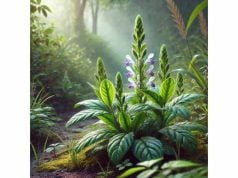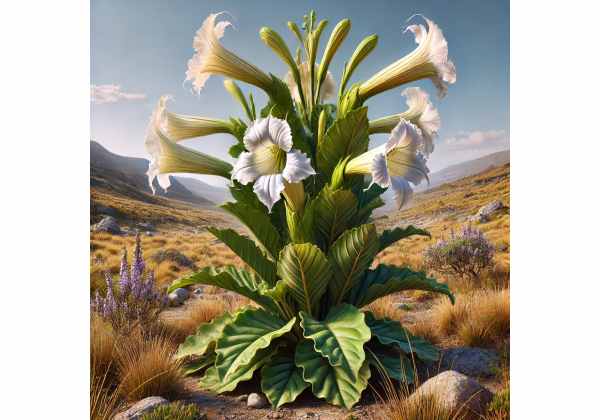
Jaborosa integrifolia is a little-known South American member of the nightshade family that sits in an unusual space between ethnobotany, phytochemistry, and ornamental botany. Unlike mainstream herbs sold in teas or capsules, it is not a well-standardized wellness plant with established human dosing. Its interest comes mostly from two areas: traditional regional use, especially external folk applications, and a distinctive chemistry rich in withanolide-type compounds called jaborosalactones. Those compounds have attracted research attention because related molecules in other plants can show anti-inflammatory, cytotoxic, or biologically active effects in laboratory settings.
That said, this is not an herb to romanticize. The gap between “interesting plant chemistry” and “proven human benefit” is wide, and Jaborosa integrifolia still sits on the early side of that gap. For readers curious about what it may help with, how it has been used, and whether there is any safe dose, the most honest answer is nuanced: it has traditional value and scientific intrigue, but very limited clinical validation. A useful guide must treat safety and uncertainty as seriously as potential benefits.
Essential Insights
- Its most credible value today is as a traditional and research-interest plant, not a proven everyday supplement.
- The clearest practical use recorded in ethnobotanical literature is external application for swelling-related folk complaints.
- No validated oral medicinal dose exists; reported traditional topical applications were commonly left in place for 3–4 hours.
- Pregnant or breastfeeding people, children, and anyone taking anticholinergic or sedating medicines should avoid self-use.
Table of Contents
- What is Jaborosa integrifolia
- Key compounds in Jaborosa
- What might it help with
- Traditional uses and preparations
- How much is safe
- Safety interactions and warnings
- What the evidence really says
What is Jaborosa integrifolia
Jaborosa integrifolia is a perennial species in the Solanaceae family, the same broad plant family that includes tomato, pepper, tobacco, belladonna, and several medicinally important nightshades. That family background matters because Solanaceae plants often produce potent secondary metabolites. Some are useful, some are toxic, and many are both depending on dose, preparation, and context.
Botanically, Jaborosa integrifolia is native to parts of South America and is not a mainstream commercial herb in the way chamomile, peppermint, or ginger are. In practical terms, most people encounter it through botanical collections, seed catalogs, or older ethnobotanical records rather than through established supplement products. That alone is a clue that readers should be careful: when a plant has not been developed into a widely standardized herbal product, it usually means one of three things. Either the evidence is thin, the safety profile is unclear, or its chemistry is difficult to turn into a consistent preparation. With Jaborosa integrifolia, all three issues matter.
The plant’s reputation comes less from long modern clinical use and more from regional knowledge systems and laboratory chemistry. In some Argentine ethnobotanical records, it appears under local names and is tied to external folk remedies. In phytochemical research, it stands out because its leaves and roots have yielded unusual steroidal lactones. Those compounds are part of what makes the plant scientifically interesting, but they do not automatically make it a good self-care herb.
A helpful way to think about Jaborosa integrifolia is this: it is best understood as a plant with medicinal potential rather than established medicinal status. That distinction protects readers from two common mistakes. The first is assuming traditional use automatically proves safety. The second is assuming laboratory activity automatically predicts real-world health outcomes.
Another reason this herb deserves a careful introduction is that it is sometimes grouped mentally with better-known nightshade remedies. That can be misleading. Nightshades vary widely. Some are food plants, some are dangerous, and some sit somewhere in between depending on how they are used. Jaborosa integrifolia should therefore be approached as a specialized herb with limited modern evidence, not as a routine wellness ingredient.
For most readers, the most relevant conclusion is simple: this is a legitimate ethnobotanical and phytochemical subject, but it is not yet a dependable do-it-yourself medicinal herb. That balanced view sets up the rest of the article more honestly than either dismissing it completely or overselling it as a hidden cure.
Key compounds in Jaborosa
The main reason researchers pay attention to Jaborosa integrifolia is its chemistry. The best-known compounds associated with the plant are withanolide-type molecules, especially jaborosalactones. These are steroidal lactones, meaning they are structurally related to a larger family of oxygenated plant steroids that can interact with biological systems in complex ways.
In Jaborosa integrifolia, older species-specific work identified compounds such as jaborosalactones A, B, and D in the roots, while other reports linked the plant with chlorinated steroidal molecules such as jaborosalactones C and E in the leaves. This matters because chlorinated natural steroids are relatively unusual in plants, and their presence helped make Jaborosa species chemically distinctive in the literature.
What do these compounds actually do? The careful answer is that they appear biologically active, but activity has mostly been shown in laboratory, structural, or non-clinical settings. Insect antifeedant effects have been demonstrated for some isolated compounds. Broader withanolide research, much of it based on other genera in the nightshade family, suggests that related molecules may influence inflammation pathways, cell-cycle signaling, oxidative stress responses, and cancer-cell behavior in experimental systems. That makes Jaborosa interesting as a source of lead molecules, not proven as a finished medicine.
A useful comparison is withanolide-containing herbs such as ashwagandha. Both plants involve steroidal lactones, but the comparison should stop there unless the evidence is very specific. Ashwagandha has human research and standardized extracts. Jaborosa integrifolia does not. Similar chemistry does not guarantee similar benefits, similar dosing, or similar safety.
There is also a second layer of caution. Because Jaborosa belongs to the nightshade family, researchers and clinicians naturally think about alkaloid-related risk when evaluating safety. In the broader Solanaceae family, tropane alkaloids are among the most clinically important and potentially hazardous compounds. Accessible modern literature does not provide a clean, standardized clinical profile of these constituents in Jaborosa integrifolia preparations used by humans, which means uncertainty remains part of the safety story.
From a practical reader’s perspective, the chemistry of Jaborosa integrifolia tells us four important things:
- The plant is genuinely bioactive.
- Its active profile is chemically unusual and scientifically valuable.
- Most of the excitement is still preclinical, not clinical.
- Chemical complexity increases the need for conservative dosing and safety decisions.
That is why “key ingredients” should be read as a research map, not a consumer promise. Jaborosalactones and related withanolides help explain why the plant has attracted attention. They do not yet justify broad claims that the whole herb reliably reduces pain, inflammation, infection, anxiety, or liver problems in humans.
What might it help with
When readers search for the health benefits of Jaborosa integrifolia, they usually want a clear answer. The most responsible answer is that its plausible uses fall into three tiers: traditional external uses, theoretical or preclinical medicinal properties based on its compounds, and speculative uses that should not be treated as established.
The strongest real-world signal is traditional folk use, especially for external applications. That does not prove efficacy, but it does show the plant was considered useful in local healing systems. Traditional use deserves respect because it often points researchers toward plants with real pharmacological potential. At the same time, traditional use is not the same thing as modern evidence.
The second tier is medicinal potential suggested by chemistry. Because Jaborosa integrifolia contains withanolide-type compounds, researchers are interested in properties that often come up in the withanolide literature more broadly, including:
- Anti-inflammatory potential
- Cytotoxic or antiproliferative potential in cell models
- Antimicrobial or defense-related activity
- Effects on insects and plant defense systems
For readers, the key phrase is “potential.” A plant compound can show promise in a dish, a chemical assay, or an insect model and still fail to become a useful human remedy. Many compounds never make that leap. Some are too unstable, some are poorly absorbed, some are too toxic, and some work only at concentrations that are unrealistic outside the lab.
The third tier is the most misleading one online: speculative wellness use. This is where rare herbs get promoted for inflammation, detox, digestion, pain, mood, or immune support without enough evidence. Jaborosa integrifolia is particularly vulnerable to this kind of overstatement because it belongs to a famous medicinal plant family and contains unusual active molecules. But evidence-based readers should resist the jump from “chemically interesting” to “clinically helpful.”
So what might it realistically help with today?
Most realistically, it may have value as:
- A traditional topical support plant in communities that already know how to use it
- A source of biologically active molecules for future drug discovery
- A botanical subject worth studying, not casually ingesting
What it does not currently have is convincing human evidence for:
- Reliable oral anti-inflammatory use
- Standardized digestive or liver support
- Proven pain relief
- Validated mood or sleep support
- Routine preventive use
If your actual goal is digestive comfort, a better first stop is a better-studied option such as peppermint for digestive support. That comparison matters because the question is not whether Jaborosa integrifolia has any activity. It is whether it is the best-supported tool for a specific problem. For most common health goals, the answer is no.
That does not make the herb unimportant. It simply places it where it belongs: as a plant with intriguing medicinal properties that still needs much more human-centered evidence before broad benefit claims are justified.
Traditional uses and preparations
Traditional use is where Jaborosa integrifolia becomes most concrete. Instead of talking only about abstract compounds, ethnobotanical records show how people actually used the plant in specific cultural settings. That does not settle the question of effectiveness, but it gives us the most grounded information on practical use.
One of the clearest modern ethnobotanical records comes from Formosa, Argentina, where Jaborosa integrifolia appears in traditional care for a folk illness called py’a ruru, described in the source material as a condition associated with hepatitis or abdominal swelling. In that context, the leaves were not used as a casual tea. They served as part of an external supportive treatment. Fresh leaves were used as a base or support in a poultice-like application, often alongside animal fat, crushed eggs from apple snails, and other household materials. The preparation was placed over the abdomen and typically left in place until the leaves dried, often around 3 to 4 hours.
That detail is important because it tells us three things at once. First, this herb has a real documented place in living regional practice. Second, the route of use was topical rather than clearly internal. Third, the preparation was highly contextual. It was not a neat one-ingredient capsule, tincture, or standardized tea.
Older compilations of Argentine medicinal flora also associate Jaborosa integrifolia with wound-related, cleansing, and vulnerary uses. The exact plant part and indication vary by region and source, which is common in herbal traditions. A plant may be used differently across communities, and those differences can matter. A leaf compress, a root infusion, and a flower wash are not equivalent interventions even if they come from the same species.
For modern readers, there are two helpful lessons here.
The first is that traditional use should be read with precision. “Used medicinally” is not enough. You need to ask:
- Which part of the plant was used?
- Was it topical or oral?
- Was it used alone or in a mixture?
- For how long?
- Under whose guidance?
The second lesson is that traditional context does not translate neatly into modern self-experimentation. A folk preparation built around fresh leaves, local knowledge, and a specific diagnosis is not the same as drying the plant, grinding it, and making your own supplement.
That is why Jaborosa integrifolia should not be copied casually from snippets of folk medicine. Readers interested in soothing, skin-oriented herbal care are better served by better-documented topical herbs such as calendula for skin support, where preparation style and safety are clearer.
Traditional uses still matter, though. They tell us Jaborosa integrifolia was not merely admired as a botanical curiosity. It was handled as a practical remedy in certain communities. The modern challenge is that the traditional record is far richer than the clinical record. Until those two are bridged by better research, tradition can inform curiosity, but it should not be mistaken for a ready-made dosing guide.
How much is safe
This is the section many readers want most, and it is also the section that demands the most restraint. There is no well-established, evidence-based oral medicinal dose for Jaborosa integrifolia in humans. No common standardized extract exists. No widely accepted therapeutic range in milligrams per day exists. No reliable clinical schedule for short-term or long-term use exists.
That means the safest public guidance is straightforward: do not self-dose Jaborosa integrifolia orally as if it were a routine herbal supplement.
Why is dosage so uncertain? Because good herbal dosing depends on several kinds of information that we do not have in a usable form:
- Standardized plant material
- Defined active-marker content
- Human tolerability studies
- Dose-ranging data
- Drug interaction data
- Clear separation between effective and harmful exposure
With Jaborosa integrifolia, the best documented practical exposure is traditional topical use of leaves in local remedies. In one ethnobotanical record, the external application remained in place for roughly 3 to 4 hours. That gives us a duration for a cultural use pattern, not a modern dosing recommendation for the general public.
Readers may also come across laboratory numbers, such as microgram-per-square-centimeter values used in insect antifeedant studies. Those are research conditions, not human dosing instructions. Lab concentrations cannot be converted casually into teas, tinctures, powders, or capsules.
So what is the practical dosage advice?
For oral use:
- No evidence-based oral dose can be recommended.
- Home-prepared teas, tinctures, powders, or capsules are not advisable.
- Wild-harvested or ornamental-plant material should not be assumed safe for medicinal ingestion.
For topical use:
- Traditional use exists, but it does not equal modern safety testing.
- The historical record describes brief external use, not chronic daily application.
- Broken skin, large surface areas, children, and medically fragile people increase the risk of unwanted effects.
For duration:
- There is no validated course length for internal use.
- Repeated unsupervised use is not supported by good evidence.
If your main interest is in herbs traditionally used for digestion, liver comfort, or mild fluid balance, better-studied options such as dandelion with clearer traditional dosing patterns are easier to evaluate safely.
In other words, “how much is safe” for Jaborosa integrifolia is less a number than a principle: avoid oral self-use, treat traditional topical use as contextual rather than universal, and do not mistake the existence of medicinal lore for the existence of a validated dose. In herbal medicine, unknown dosing is not a minor detail. It is often the dividing line between a plant worth studying and a plant ready for personal use. Jaborosa integrifolia still belongs mostly in the first category.
Safety interactions and warnings
Safety is where Jaborosa integrifolia deserves the most respect. The problem is not that it has been proven dangerously toxic in every setting. The problem is that its human safety profile is too incomplete to support casual use. When evidence is thin and the plant belongs to a chemically potent family, the burden of caution rises.
Possible risks fall into four broad groups.
1. Uncertain whole-plant toxicity
A plant can contain valuable compounds and still be a poor candidate for unsupervised use. Whole-plant effects depend on the mix of constituents present in the exact plant part, harvest stage, and preparation. With Jaborosa integrifolia, the chemistry is interesting enough to warrant care, but not standardized enough to support confident home dosing.
2. Nightshade-family caution
The broader Solanaceae family includes species associated with strong alkaloid effects, including anticholinergic toxicity in some relatives. That does not mean Jaborosa integrifolia behaves exactly like belladonna or datura. It does mean that symptoms such as dry mouth, rapid heartbeat, blurred vision, confusion, urinary difficulty, unusual drowsiness, or agitation should be taken seriously if someone experiments with the plant.
3. Skin and contact reactions
Even traditional topical plants can irritate sensitive skin. Fresh plant material may provoke redness, itching, burning, or delayed irritation, especially when applied under occlusion or mixed with other substances. That is one reason folk methods should not be copied blindly.
4. Medication interactions
Because the plant’s full pharmacology is unclear, interaction risk should be handled conservatively. The most concerning combinations are with:
- Anticholinergic medicines
- Sedatives and sleep medicines
- Some antihistamines
- Certain antidepressants
- Drugs affecting heart rhythm or urinary retention
- Multi-herb formulas with unknown nightshade or alkaloid content
Who should avoid it entirely unless guided by a qualified clinician?
- Pregnant people
- Breastfeeding people
- Children
- Older adults with frailty or polypharmacy
- People with glaucoma
- People with urinary retention or significant prostate symptoms
- People with serious liver disease
- Anyone with a history of strong reactions to nightshades
If the reader’s goal is relaxation, sleep support, or gentle digestive calming, better-characterized options such as chamomile with clearer safety expectations usually make more sense.
The most practical safety rule is this: lack of evidence is not proof of safety. With rare herbs, people sometimes assume a plant is gentle simply because it is obscure. In reality, obscurity often means fewer toxicity reports, fewer interaction studies, and less quality control. Jaborosa integrifolia should therefore be approached as a plant with meaningful unknowns. From a risk-management standpoint, that puts it well outside the category of beginner-friendly herbs.
What the evidence really says
The evidence for Jaborosa integrifolia is real, but it is not strong in the way most health seekers mean when they ask whether an herb “works.” The best way to understand the literature is to separate it into layers.
The first layer is taxonomy and ethnobotany. We know the plant is a recognized species with a documented geographic range and a place in traditional regional medicine. That gives it historical and cultural legitimacy.
The second layer is phytochemistry. We know it contains unusual withanolide-type compounds, including jaborosalactones. That gives it chemical credibility and helps explain why researchers find it intriguing.
The third layer is preclinical bioactivity. Isolated compounds and related withanolide research suggest that molecules from this chemical family can influence inflammation, cell growth, and other biological targets in experimental systems. That gives it pharmacological interest.
The fourth layer would be the most important for consumers: human evidence. This is where the case becomes weak. There are no well-known modern clinical trials establishing clear efficacy, safe oral dosing, or routine therapeutic use for Jaborosa integrifolia itself. That gap matters more than any promising mechanism.
So what should a careful reader conclude?
- The plant is not mythical or invented.
- The plant is not clinically established.
- The chemistry is more advanced than the human evidence.
- Traditional use is meaningful, but not enough to standardize modern use.
- The research story supports further study more than current self-medication.
This distinction becomes especially important when rare herbs are marketed online. A molecule with anticancer or anti-inflammatory activity in a lab does not mean the whole herb is a validated cancer or inflammation remedy. A traditional abdominal poultice does not mean the plant is an evidence-based liver herb. A nightshade family connection does not automatically make it poisonous, but it does justify caution.
If your interest in Jaborosa integrifolia comes from liver, inflammation, or general detox claims, a better research-based starting point is often milk thistle for liver support or another herb with modern dosing and safety data. Jaborosa integrifolia is better seen as a promising but unfinished medicinal story.
In the end, the evidence says this plant deserves respect, not routine use. It is a serious subject for ethnobotany and natural-products research, and perhaps a future source of useful pharmacological leads. But as of now, the most accurate consumer conclusion is modest: Jaborosa integrifolia has potential medicinal properties, limited traditional external uses, no validated oral dose, and a safety profile that remains too uncertain for casual supplementation.
References
- Jaborosa integrifolia Lam. | Plants of the World Online | Kew Science 2026 (Taxonomy and distribution). ([Plants of the World Online][1])
- Antifeedant Activity Evaluation of Withanolides from Jaborosa integrifolia 2000 (Species-specific study). ([MDPI][2])
- Recent Advances in the Chemistry and Therapeutic Evaluation of Naturally Occurring and Synthetic Withanolides 2022 (Review). ([PMC][3])
- Beauty of the beast: anticholinergic tropane alkaloids in therapeutics 2022 (Review). ([PubMed][4])
- “El py’a ruru es en guaraní y hepatitis en castellano”. Plantas frías, plantas secantes y otros remedios en la etnobotánica médica de los criollos del Chaco Húmedo formoseño 2022 (Ethnobotanical study). ([scielo.org.ar][5])
Disclaimer
This article is for educational purposes only and does not diagnose, treat, or replace medical care. Jaborosa integrifolia is not a well-standardized supplement, and current evidence does not support a validated oral medicinal dose. Because the plant belongs to a chemically active botanical family and its human safety profile is limited, do not self-treat serious symptoms, pregnancy-related concerns, liver problems, infections, or pain with this herb. Seek medical advice before using any unfamiliar plant medicinally, especially for children, during pregnancy or breastfeeding, or when taking prescription medicines.
If this article was useful, share it on Facebook, X, or your preferred platform so others can find a more careful, evidence-aware guide.