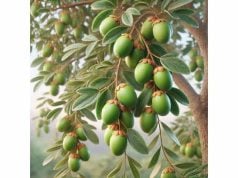
Jaboticaba is a dark purple Brazilian fruit best known for an unusual trait: it grows directly on the trunk and larger branches of the tree. Although it is technically a fruit rather than a classic culinary herb, it is often discussed in herbal and functional-food circles because the peel is rich in bioactive compounds. That peel contains anthocyanins, ellagic acid, tannins, and other polyphenols that give jaboticaba its color, tartness, and much of its research interest.
People use jaboticaba as fresh fruit, juice, frozen pulp, peel powder, and occasional extracts. The most promising benefits relate to antioxidant activity, vascular support, post-meal glucose handling, and low-grade inflammation. Traditional use has also included sore throat and diarrhea support, likely because of the fruit’s astringent tannins.
Still, the important reality is that jaboticaba is more promising than proven. Human studies are growing, but they are still small and short. Used as a whole food, it can fit well into a health-focused diet. Used as a concentrated supplement, it deserves more caution and more realistic expectations.
Quick Overview
- Jaboticaba peel is the richest part for anthocyanins, ellagic acid, and other antioxidant polyphenols.
- Small human studies suggest potential support for post-meal glucose control and vascular recovery after physical stress.
- Study-based adult intakes often use about 15 g/day of peel powder or 250 mL/day of juice.
- Concentrated jaboticaba products are best avoided during pregnancy and breastfeeding unless a clinician approves them.
- People using glucose-lowering medicine should use extra caution with peel powders and extracts.
Table of Contents
- What is jaboticaba made of
- Does jaboticaba have benefits
- How do you use jaboticaba
- How much jaboticaba per day
- Jaboticaba side effects and safety
- What the research actually shows
What is jaboticaba made of
Jaboticaba usually refers to a group of Brazilian fruits from the Plinia genus, and labels may also use older names such as Myrciaria jaboticaba. For readers, the practical point is simple: the chemistry is similar across commonly sold jaboticaba products, but not perfectly identical. That matters because one powder, juice, or extract may not match another in strength.
The fruit has a thin, dark peel, a pale juicy pulp, and one or more seeds. If you eat it fresh, the sweet-tart pulp stands out first. If you look at it from a health perspective, the peel deserves most of the attention. That outer layer concentrates the compounds that give jaboticaba its deep purple color and much of its biological activity.
Its main “key ingredients” include:
- Anthocyanins, especially cyanidin and delphinidin derivatives, which contribute antioxidant and vascular effects.
- Ellagic acid and ellagitannins, polyphenols often linked with anti-inflammatory and gut-microbiome activity.
- Gallic acid and related phenolic acids.
- Flavonols and other minor polyphenols.
- Tannins, which create the astringent taste and may explain some traditional digestive uses.
- Dietary fiber, especially in peel flour and less filtered preparations.
Jaboticaba’s medicinal properties are best understood as a combination effect, not a single-molecule effect. The peel does not behave like a drug with one dominant active ingredient. Instead, it acts more like a polyphenol-rich food matrix. That is why whole peel powder and juice can behave differently even when both come from the same fruit.
Another useful detail is that processing changes the profile. Fresh fruit is delicate and spoils quickly. Commercial products are therefore often sold as frozen pulp, juice, jam, fermented products, or dried peel flour. Filtering, heating, and added sugar can all shift the health value. A sweetened beverage “with jaboticaba” may be much less useful than unsweetened peel powder or minimally processed juice.
In practical terms, jaboticaba belongs in the same broad conversation as other tropical antioxidant berries, but its tannin-rich peel gives it a more astringent and arguably more “functional” character than many sweeter berry products. The biggest takeaway is that jaboticaba is not just fruit sugar in a dark skin. Its peel contains a dense mix of polyphenols and fiber that may influence inflammation, oxidative stress, circulation, and gut signaling in ways that are biologically plausible, even if the clinical story is still developing.
Does jaboticaba have benefits
Yes, jaboticaba appears to have real potential benefits, but the size and certainty of those benefits depend heavily on the form used and the context. It is most accurate to think of jaboticaba as a helpful functional food, not a proven treatment.
The most credible benefit area is antioxidant and anti-inflammatory support. Jaboticaba peel is packed with polyphenols that may help the body handle oxidative stress more efficiently. That does not mean it “detoxes” the body or cancels out an unhealthy lifestyle. It means it may reduce some of the cellular stress linked with hard exercise, poor metabolic health, or chronic low-grade inflammation.
A second promising area is cardiometabolic support. Early human trials suggest jaboticaba may improve certain post-meal markers, such as glucose response or antioxidant status, and may help protect blood vessels during short-term oxidative stress. These effects are interesting because vascular health often worsens before major disease becomes obvious. A food that supports endothelial function even modestly can be worth attention.
A third area is digestive and microbiome support. Peel powder provides both fiber and polyphenols, and these two work together. Fiber changes transit and stool form, while polyphenols are broken down by gut microbes into metabolites that may influence inflammation and barrier health. This does not make jaboticaba a laxative or a cure for gut disorders, but it may fit well into the same broader strategy people use with soluble-fiber support when the goal is steadier digestion and better post-meal control.
Traditional use adds another layer. In Brazilian folk practice, jaboticaba preparations have been used for sore throat, diarrhea, and inflammatory complaints. The astringency of the peel makes that history believable, since tannin-rich foods can tighten tissues and reduce secretions. Still, believable is not the same as clinically proven. Modern trials have not yet confirmed most of those traditional uses.
The realistic benefit list looks like this:
- Mild support for antioxidant defenses.
- Possible help with postprandial, or after-meal, glucose handling.
- Possible vascular support during oxidative stress.
- A useful contribution to a higher-polyphenol diet.
- Modest digestive support when the peel and fiber are retained.
What jaboticaba probably does not do is equally important. It is not established as a weight-loss shortcut, a diabetes treatment, a cancer therapy, or a stand-alone anti-inflammatory remedy. Its benefits appear to be supportive and cumulative. In other words, it may help most when it is part of a pattern that already includes high-fiber meals, movement, sleep, and a lower intake of ultra-processed foods. That is a more honest promise, and it is still a valuable one.
How do you use jaboticaba
Jaboticaba can be used as a food, a functional ingredient, or a concentrated supplement. The best option depends on your goal. For general wellness, whole-food forms are usually the smartest starting point. For targeted polyphenol intake, peel powder is often the most practical.
Common forms include:
- Fresh fruit, eaten whole or sucked from the peel.
- Frozen pulp, often blended into smoothies.
- Juice, either fresh or bottled.
- Peel powder or peel flour.
- Jams, jellies, syrups, and fermented drinks.
- Capsules or extracts, though these vary widely in quality.
If the goal is overall diet quality, fresh fruit or unsweetened frozen pulp makes the most sense. You get flavor, hydration, and at least some of the natural matrix. The drawback is that fresh jaboticaba is highly perishable and not easy to find outside producing regions.
If the goal is metabolic or antioxidant support, peel powder is often more interesting than pulp-heavy products. That is because the peel carries most of the anthocyanins, tannins, and ellagic acid. A juice can still be useful, but its value depends on whether peel compounds were retained and whether sugar was added.
A practical way to use jaboticaba day to day is to pair it with other foods that improve meal structure. Examples include:
- Adding peel powder to plain yogurt or kefir.
- Blending unsweetened pulp into a protein smoothie.
- Using a small serving of juice with a balanced breakfast instead of a dessert drink.
- Mixing peel powder into overnight oats with chia for extra fiber and texture.
This pairing matters because jaboticaba works best in context. A sweetened jaboticaba jam spread on white toast is not the same as peel powder folded into a high-protein, high-fiber breakfast. The first is mostly a sweet food. The second is a more deliberate metabolic-support choice.
For traditional-style use, some people consume the peel or peel-derived preparations for throat or digestive complaints, but that approach is less standardized. Because the peel is tannic, too much at once may irritate sensitive stomachs or worsen constipation. That is one reason gradual use is better than aggressive use.
If you buy a supplement, label quality matters. Look for the plant part used, a clear serving size, and ideally some form of polyphenol standardization. “Jaboticaba blend” is not very informative. “Jaboticaba peel powder” is much more useful. The simplest rule is this: the more the product resembles the actual fruit peel, and the less sugar and hype it carries, the more likely it is to deliver the kind of benefits people are seeking.
How much jaboticaba per day
There is no official daily therapeutic dose for jaboticaba. That is because the research is still early, products vary widely, and the fruit is used both as a food and as a supplement. The best dosage range is therefore a practical, study-informed range rather than a formal medical recommendation.
Human studies give three useful reference points.
First, jaboticaba juice has been used at 250 mL per day in small clinical trials. In those studies, the juice provided a meaningful polyphenol load and was used either acutely before a meal or over several days around exercise. This is a reasonable benchmark for adults using unsweetened or low-sugar juice.
Second, jaboticaba peel powder has been used at 15 g per day for several weeks in adults with metabolic syndrome. That amount is large enough to matter physiologically but still practical in food. It can be mixed into yogurt, shakes, or soft foods.
Third, fresh fruit or frozen unsweetened pulp is often best treated like a berry serving rather than a supplement. A practical daily food range is about 100 to 200 g, depending on the rest of the diet and the product’s sweetness.
A simple guide looks like this:
- Fresh fruit or unsweetened pulp: about 100 to 200 g per day.
- Juice: about 250 mL per day.
- Peel powder: about 5 to 15 g per day, with 15 g being the stronger study-based benchmark.
- Concentrated extract: follow the label cautiously, because standardization is inconsistent.
Timing can also shape the goal:
- With or before meals if the aim is post-meal glucose support.
- Daily for several weeks if the aim is broader cardiometabolic support.
- Around exercise if the aim is recovery or vascular resilience.
- Earlier in the day if sweetened products affect appetite later on.
For beginners, a lower starting dose is smarter. Try 5 g of peel powder daily or a modest serving of fruit and build upward over several days. This reduces the chance of bloating, excessive astringency, or constipation.
Duration matters too. Jaboticaba is not a one-dose miracle food. If you are trying to judge whether it helps, give it at least two to four weeks of consistent use, unless it causes side effects. Keep the rest of the routine stable so you can tell what is actually changing.
The biggest dosage mistake is confusing “more” with “better.” Because jaboticaba peel is rich in tannins and fiber, very high intakes may simply shift you from potential benefit to digestive discomfort. Another common mistake is using a sugar-heavy jaboticaba product and assuming it works like a concentrated peel preparation. Dose only makes sense when the form is right.
Jaboticaba side effects and safety
For most healthy adults, jaboticaba as a food appears to be quite safe. The safety conversation becomes more important when you move from fresh fruit to peel powders, extracts, or large daily intakes.
The most common side effects are digestive. These may include:
- Bloating or fullness, especially with peel powder.
- Mild stomach irritation from the fruit’s tannins and acidity.
- Constipation if intake is high and fluid is low.
- Less often, loose stools when a person is not used to higher polyphenol or fiber intake.
The peel is astringent, and that astringency can be useful in small amounts but unpleasant in larger ones. People with sensitive digestion, reflux, or chronic constipation may tolerate smaller doses better than aggressive “health scoop” servings.
Potential interactions are mostly precautionary rather than firmly established. Jaboticaba may modestly improve post-meal glucose handling, so people who use insulin or oral glucose-lowering medicine should monitor for changes if they start taking concentrated peel powder daily. The same cautious logic applies to anyone on blood-pressure medicine if they are using large, regular amounts for cardiometabolic goals. Jaboticaba is not known to be a strong drug-food interactor, but concentrated functional foods can still shift how a person feels or responds.
Tannins may also affect the absorption of some nutrients or medicines when taken at the same time, especially in larger supplemental amounts. A practical solution is to separate concentrated jaboticaba supplements from important oral medicines by a couple of hours when possible.
Who should avoid or limit it most carefully?
- Pregnant or breastfeeding people using concentrated extracts, because safety data are too limited.
- Children using supplements rather than normal food servings.
- People with known berry or tropical fruit allergies.
- People with diabetes who plan to use peel powder regularly without adjusting monitoring.
- People on medically restricted fluid or potassium intake who want to use juice frequently.
- Anyone with a history of severe constipation who reacts poorly to tannin-rich foods.
There is also a product-quality issue. A whole fruit is one thing. A “jaboticaba detox blend” with stimulants, sweeteners, and mixed botanicals is something else entirely. The more processed and marketing-heavy the product, the less predictable its safety profile becomes.
Compared with some stronger polyphenol concentrates such as grape seed extracts and similar antioxidant products, jaboticaba in food form is relatively gentle. Still, gentle does not mean consequence-free. Safety improves when the dose is moderate, the form is recognizable, the sugar content is low, and the person using it has a clear reason rather than vague “superfood” expectations.
What the research actually shows
The evidence for jaboticaba is encouraging, but it is still in the early-to-middle stage. That is the fairest summary.
What looks strong already is the chemistry. Multiple analyses show that jaboticaba peel is rich in anthocyanins, ellagic acid, and other polyphenols. This makes the fruit biologically plausible as an antioxidant and anti-inflammatory food. Preclinical studies also support benefits related to glucose metabolism, vascular function, inflammation, and tissue protection.
What looks moderately promising is the human data. Several small trials have reported useful findings:
- A study in healthy adults found that jaboticaba juice improved postprandial antioxidant status and increased GLP-1 response after a carbohydrate meal.
- A randomized trial in adults with metabolic syndrome found that 15 g per day of peel powder improved postprandial glucose area under the curve and reduced IL-6.
- A randomized exercise study found that 250 mL per day of jaboticaba juice helped protect microvascular and macrovascular function after eccentric exercise.
- A later exercise-recovery trial suggested improved glutathione status, less soreness, and faster recovery in trained participants.
- A recent pilot study in hemodialysis patients suggested anti-inflammatory and antioxidant potential, though it was small and exploratory.
Those findings are meaningful, but the limits matter just as much.
Most human studies are small. Several use short interventions that last one meal, a few days, or a few weeks. Different studies use different forms of jaboticaba, which makes direct comparison harder. Some measure surrogate markers, such as antioxidant status or inflammatory molecules, rather than hard clinical outcomes like fewer diabetic complications or fewer cardiovascular events.
That means jaboticaba is not yet in the same evidence class as better-established diet tools or more extensively studied polyphenol sources such as green tea and other well-researched functional foods. The gap is not that jaboticaba has failed. The gap is that it still needs bigger, longer, better-standardized trials.
The best evidence-based position is this:
- Jaboticaba is a promising polyphenol-rich food.
- Peel-containing preparations are probably more active than pulp-only products.
- Human data support modest metabolic, vascular, and recovery benefits.
- Evidence is not yet strong enough to justify disease-treatment claims.
- Whole-food use is easier to recommend than concentrated supplement use.
In plain language, jaboticaba is worth considering if you want a realistic, food-first way to increase polyphenol intake. It is not worth using as a replacement for proven therapy, and it should not be marketed as a miracle fruit. Its future looks bright, but the science is still catching up to the enthusiasm.
References
- Jaboticaba berry: A comprehensive review on its polyphenol composition, health effects, metabolism, and the development of food products 2021 (Review)
- Jaboticaba peel improves postprandial glucose and inflammation: A randomized controlled trial in adults with metabolic syndrome 2024 (RCT)
- Jaboticaba berry (Myrciaria jaboticaba) supplementation protects against micro- and macrovascular dysfunction induced by eccentric exercise: a randomized clinical trial 2024 (RCT)
- Effects of the Brazilian Native Fruit Jaboticaba (Plinia cauliflora) Peel on Inflammatory and Oxidative Stress Pathways: Insights from a Pilot Study in Hemodialysis Patients and Renal Cell Models 2025 (Pilot Clinical Study)
- From general toxicology to DNA disruption: A safety assessment of Plinia cauliflora (Mart.) Kausel 2020 (Safety Study)
Disclaimer
This article is for educational purposes only and is not a substitute for medical advice, diagnosis, or treatment. Jaboticaba can be a useful food or functional ingredient, but concentrated peel powders, juices, and extracts may not be appropriate for everyone. Speak with a qualified healthcare professional before using jaboticaba therapeutically if you are pregnant or breastfeeding, have diabetes, kidney disease, or chronic digestive symptoms, or take prescription medicines that affect blood sugar, blood pressure, or fluid balance.
If you found this article useful, please consider sharing it on Facebook, X, or your preferred platform.