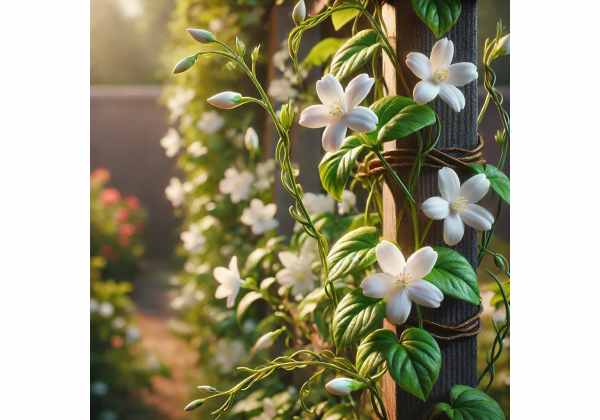
Jasmine is one of the world’s most admired aromatic plants, prized not only for its elegant white flowers but also for its long history in herbal care, perfumery, and soothing household remedies. In the case of Jasminum officinale, often called common jasmine, the plant’s value comes mainly from its fragrant blossoms and their essential oil rather than from heavy nutrient content or food-like medicinal use. That makes jasmine different from many herbs people drink daily as teas or take in capsules. Its most credible benefits cluster around aroma, gentle topical use, and traditional support for emotional ease, skin comfort, and selected women’s health applications. At the same time, jasmine’s reputation is often stretched too far. Many claims online actually belong to jasmine-scented tea made from tea leaves, or to other jasmine species, not to Jasminum officinale itself. The most useful way to understand this plant is as a refined aromatic herb with real bioactive compounds, promising laboratory data, and some focused human evidence, but not as a broad, proven cure-all.
Top Highlights
- Jasmine is best known for calming aroma-based use and gentle topical support rather than for strong oral medicinal dosing.
- The flower oil shows promising antioxidant, antimicrobial, and spasm-relaxing effects in preclinical research.
- A practical infusion range is 1 to 2 teaspoons of dried flowers per cup, up to 2 or 3 cups daily.
- Breastfeeding people who do not want to affect milk supply should avoid concentrated jasmine preparations unless guided professionally.
Table of Contents
- What is jasmine
- Key ingredients and actions
- Does jasmine help
- How jasmine is used
- How much per day
- Side effects and who should avoid it
- What the evidence really shows
What is jasmine
Jasminum officinale is a climbing, sweetly fragrant flowering plant in the olive family, Oleaceae. It is native to parts of Asia and has been cultivated for centuries across the Middle East, the Mediterranean, and beyond. In gardens, it is valued for its graceful vines and intensely scented white blossoms. In herbal and traditional practice, however, the flowers are the main reason it matters. They have been used in perfumery, infused oils, aromatic baths, and gentle household remedies intended to calm the senses or freshen the body and environment.
One important point often gets lost in popular articles: jasmine the flower is not the same as jasmine tea in the supermarket. Most jasmine teas are actually green, white, or black tea leaves scented with jasmine blossoms. Many of the well-known benefits of jasmine tea, especially those tied to caffeine, catechins, and L-theanine, come mostly from the tea plant rather than from Jasminum officinale itself. For readers who want accuracy, that distinction changes almost everything. This article focuses on common jasmine as a plant and aromatic herb, not on tea-based beverage blends that happen to smell like jasmine.
Jasmine also differs from more food-like herbs in another way. It is used primarily through fragrance, flower preparations, and essential oil rather than through large oral amounts. That makes it closer to plants such as lavender in aromatic and relaxation-focused use than to strongly nutritive herbs taken by the tablespoon. The essential oil and absolute are especially prized, but they are far more concentrated than a simple flower infusion and should never be treated as equivalent.
Traditional use gives jasmine a broad reputation. It has been associated with mood easing, sensuality, skin comfort, and women’s health, especially around lactation and reproductive transitions. Modern research partly supports that reputation, but mostly in limited or indirect ways. Some findings relate to aromatherapy or tissue experiments, while others involve extracts or essential oil under laboratory conditions.
That means the best starting definition is a careful one. Jasmine is:
- A fragrant flowering vine with a long aromatic and traditional-medicinal history
- A source of volatile compounds valued in perfumes and complementary care
- A plant with promising but uneven medicinal evidence
- A herb that is most credible when used gently and appropriately, not aggressively
This perspective helps avoid the two most common mistakes. One is assuming jasmine tea claims apply directly to Jasminum officinale. The other is assuming that because jasmine smells delicate, it must be pharmacologically mild in every form. In reality, the whole flower can be gentle, while the concentrated oil can be quite potent.
Key ingredients and actions
Jasmine’s medicinal personality comes largely from its volatile aromatic compounds, supported by polyphenols and other plant constituents found in leaves and flowers. In plain language, this means the scent is not just decorative. It reflects real chemistry that can influence sensation, mood, and in some cases tissue behavior.
Among the most commonly reported aroma compounds in jasmine oil are benzyl acetate, benzyl alcohol, linalool, benzyl benzoate, methyl anthranilate, methyl jasmonate, indole, geraniol, nerol, and related fragrant molecules. Together, they create the rich, sweet, floral scent that people recognize immediately. But fragrance is only part of the story. Some of these compounds are also biologically active. Linalool, for example, is widely studied in aromatic plants for calming and sensory effects. Benzyl acetate and related esters shape the characteristic scent profile, while jasmine-specific aromatic complexity likely contributes to the plant’s long-standing emotional and perfumery appeal.
Beyond the volatile oil, Jasminum officinale leaf extracts have shown flavonoids, saponins, tannins, phenols, and related phytochemicals in newer research. The 2024 phytochemical study on jasmine leaves reported notable phenolic and flavonoid content, along with compounds such as kaempferol, quercetin-related markers, rutin, gallic acid, and cirsiliol. These compounds matter because they help explain the antioxidant and enzyme-related findings seen in preclinical work. They also remind readers that jasmine is not only an aroma plant. It has non-volatile chemistry too, though this is less central in traditional household use than the flower fragrance.
The actions most often linked with jasmine chemistry include:
- Sensory and mood-related effects through aroma exposure
- Antioxidant activity from phenolic and flavonoid compounds
- Antimicrobial and antifungal potential in lab settings
- Smooth-muscle relaxation in preclinical essential-oil studies
- Limited hormone-related or lactation-related effects suggested by small human data and tradition
That last point deserves care. Jasmine has a traditional reputation as a lactifuge, meaning something used to reduce milk supply, and limited clinical observations have examined this possibility. But this does not mean jasmine should be casually used for hormone manipulation. The evidence is too limited for that kind of confidence.
Another useful distinction is between flower aroma and leaf extract. The flower is the main source of perfumery and aromatherapy identity. The leaf appears more often in phytochemical studies looking at antioxidant or glucose-related mechanisms. So when people say “jasmine works,” the natural next question is “which part?” That question often changes the answer.
Readers who enjoy comparing aromatic herbs may notice that jasmine overlaps partly with rose in fragrance-led herbal use. Both plants are valued less for calories or macronutrients and more for subtle bioactive chemistry tied to scent, topical use, and emotional tone. Still, jasmine has its own profile: richer, deeper, and in some contexts more associated with intense floral compounds than soft rosaceous notes.
The simplest takeaway is that jasmine’s active profile is real but layered. The fragrance molecules shape its fastest, most obvious effects. The polyphenols and other phytochemicals give it a broader medicinal backdrop. Together, they make jasmine biologically interesting, but also harder to summarize with one single “active ingredient.”
Does jasmine help
Yes, but mostly in narrower and more context-dependent ways than sweeping wellness lists suggest. Jasmine appears most useful for aromatic calming, sensory comfort, and selected traditional applications, while stronger claims about metabolism, infection, or inflammation still rely mostly on preclinical evidence.
The most believable everyday benefit is mood and sensory support through aroma. Jasmine’s fragrance is widely used in aromatherapy because many people find it relaxing, comforting, and emotionally grounding. That does not automatically make it a treatment for anxiety disorders, but it does make it a plausible complementary tool for tension, restlessness, or sensory stress. One of the few direct human studies on Jasminum officinale found that jasmine aromatherapy was examined during labor, where it did not emerge as a broad miracle intervention, yet it did support the idea that the scent may influence pain perception and emotional state in a specific setting. That is a good example of how jasmine works best in the real world: gently, contextually, and as support rather than as a stand-alone treatment.
A second plausible benefit is topical and sensory comfort. Traditional use and aromatic practice often place jasmine in oils, salves, bath products, and skin preparations. Part of this is emotional or cosmetic, but part is also biochemical. Jasmine flower oil and related extracts have shown antimicrobial and antioxidant properties in non-human studies, which helps explain why it has a traditional reputation for skin support and freshness.
A third possible area is digestive and smooth-muscle comfort, though the evidence here is still preclinical. A 2020 study on Jasminum officinale essential oil reported spasm-relaxing and vessel-relaxing effects in experimental tissue models. That supports the old idea that jasmine may have soothing properties beyond fragrance alone, but it is not the same thing as a proven digestive remedy in people.
There is also emerging interest in metabolic and antioxidant support from leaf extracts. The 2024 leaf study found antioxidant, anti-inflammatory, and enzyme-related activity consistent with interest in blood sugar handling. But this is exactly where restraint matters. The work is promising, not clinically settled. It supports future study, not confident self-treatment of diabetes.
The most honest benefit ranking looks like this:
- Most credible: aroma-based relaxation, gentle sensory comfort, and fragrance-led soothing use
- Reasonably plausible: topical support and general antioxidant potential
- Promising but not established: digestive spasm relief and glucose-related support
- Too uncertain for strong claims: using jasmine alone to treat infection, major inflammation, or chronic metabolic disease
This nuanced view is more useful than hype because it helps the reader choose the right role for the herb. Jasmine may be genuinely helpful, but mainly when it is matched to what it actually does well. If someone wants a softer mood-support herb in tea form, lemon balm may sometimes fit that goal more directly. Jasmine, by contrast, shines most through fragrance, flowers, and carefully prepared aromatic products.
So does jasmine help? Yes. It helps most as a subtle but meaningful aromatic herb, not as a heavy-duty medicinal workhorse. Once that expectation is clear, the plant becomes easier to use well.
How jasmine is used
Jasmine can be used in several forms, but the choice of form determines both the effect and the safety profile. This is a plant where preparation matters a great deal. A cup of flower infusion, a drop of essential oil in a diffuser, and a highly concentrated absolute used on skin are not remotely the same intervention.
The gentlest form is the dried flower infusion. This is often prepared as a light floral tea or tisane, either alone or blended with other herbs. When used this way, jasmine is valued more for aroma, mood, and a soft sense of calm than for strong medicinal impact. The infusion is usually delicate, and many people use it as an evening drink or a fragrant support for winding down.
The next common use is aromatherapy. Jasmine oil or absolute may be inhaled through diffusion, steam, room sprays, or diluted pulse-point application. This route makes sense because scent is one of the plant’s clearest strengths. The aroma is often used for emotional ease, atmosphere, and a sense of comfort or sensuality. In this form, the herb acts less like a classic ingested remedy and more like an aromatic nervous-system companion.
Topical use is another traditional route. Jasmine-infused oils, diluted essential oil blends, and fragrant creams are used for massage, skin softness, and bathing. This is where jasmine overlaps with other intensely floral oils used in perfumery and body care. The goal is usually not aggressive treatment but support: easing tension, improving sensory comfort, or adding a soothing layer to skin rituals.
A less familiar but historically important use involves lactation suppression. Jasmine flowers have been applied topically in traditional settings when reducing milk flow was desired. This is not a casual use and should not be approached as a beauty ritual or general postpartum herb. It belongs in a specialized context, and the evidence base remains limited.
A practical way to think about jasmine forms is this:
- Infusion or tisane: gentlest, best for aroma-led internal use
- Diffuser or inhalation: best for mood, atmosphere, and relaxation support
- Diluted topical use: best for massage, comfort, and cosmetic routines
- Concentrated essential oil or absolute: the strongest form and the one that needs the most caution
There is also one major confusion to avoid: jasmine tea blends. Many products labeled “jasmine tea” are actually tea leaves scented with jasmine flowers. Their stimulating or antioxidant benefits may come mostly from green or white tea, not from jasmine alone. That is why a reader looking for caffeine-free jasmine flower use should choose a pure floral infusion rather than assuming any jasmine-branded drink means the same thing.
For many people, the best starting method is simple: a mild flower infusion or low-dose inhalation. These routes respect what jasmine clearly does well without pushing it into pharmacologic territory where the evidence becomes weaker and the product quality becomes more important.
How much per day
There is no universally standardized clinical dose for Jasminum officinale across all forms. That is the most important dosage fact. Jasmine is not a herb with one accepted capsule amount or one clearly established daily intake the way some supplements are. The correct range depends on whether you are using dried flowers, a blended product, or concentrated essential oil.
For flower infusion, a practical range is 1 to 2 teaspoons of dried jasmine flowers per cup of hot water, steeped for about 5 to 10 minutes. Most adults who tolerate jasmine well can use 2 to 3 cups daily. This is a gentle, food-like level of use and probably the most realistic approach for regular self-care. It aligns with jasmine’s aromatic strengths without forcing the plant into a more medicinal role than the evidence supports.
For blended herbal teas, the dose depends on the full formula. If jasmine is only one part of a calming blend, its contribution may be largely aromatic even when the written serving size seems bigger. In other words, “one tea bag” is not necessarily a meaningful jasmine dose. It is a formula dose.
For essential oil, dose is less about volume swallowed and more about route and dilution. Internal use of jasmine essential oil is generally not a good starting point for self-care because the product is concentrated, expensive, variable, and not well standardized for oral dosing. Topically, low dilution is the safer rule. A 1% to 2% dilution in a carrier oil is a sensible starting point for most adults, especially for facial or neck areas. Stronger use increases the chance of irritation without guaranteeing stronger benefit.
For inhalation or diffusion, only small amounts are usually needed. A few drops in a diffuser or a brief aromatic exposure is often enough. Jasmine is one of those oils where sensory intensity, cost, and effect all rise quickly. More is not always better.
Practical timing depends on the goal:
- Evening or stressful periods: infusion or inhalation for sensory calming
- Massage or topical comfort: diluted oil after bathing or before rest
- Aromatic atmosphere: very short diffusion sessions rather than all-day heavy exposure
One more dosage issue matters because it is easy to overlook. Jasmine used to affect lactation or prolactin should not be self-dosed casually. That is not the same as drinking floral tea. It belongs in a very different category of use, and the evidence is too limited to justify a home protocol.
So the most useful dosing summary is this:
- Mild infusion is the most practical internal form
- Low dilution is the safer topical starting point
- Inhalation should stay brief and light
- Concentrated or specialized uses should not be improvised
With jasmine, dose is less about chasing potency and more about matching the preparation to the plant’s natural strengths.
Side effects and who should avoid it
Jasmine is often perceived as harmless because it smells soft and familiar, but the safety picture depends heavily on the form used. The dried flowers are usually the mildest route. The essential oil or absolute is much more concentrated and deserves more caution.
The most common issue is allergy or irritation. Occasional allergic reactions to jasmine have been reported, and essential-oil preparations can irritate sensitive skin, especially if they are applied undiluted. This risk rises if the oil is old, oxidized, heavily fragranced, or combined with other sensitizing ingredients in perfume blends. For that reason, new topical users should start with a patch test and low dilution.
A second concern involves breastfeeding and lactation. Jasmine has a traditional reputation for reducing milk supply, and official lactation guidance notes that it has been used for this purpose, although the evidence is limited and not high quality. That means breastfeeding people who want to preserve or increase milk supply should be careful with concentrated jasmine use. Small food-like exposure may be different from intentional topical or medicinal use, but caution still makes sense.
Pregnancy is another area where restraint is wise. Jasmine is sometimes discussed in aromatherapy around labor and women’s health, which may tempt people to assume it is automatically suitable during pregnancy. That is not a safe shortcut. Limited targeted use in supervised contexts is not the same as unrestricted routine use. In practice, concentrated jasmine oil is best treated cautiously during pregnancy unless a knowledgeable clinician or qualified aromatherapy professional advises otherwise.
Other people who should be careful include:
- Individuals with fragrance sensitivity or a history of contact dermatitis
- People with asthma or strong scent-triggered headaches
- Breastfeeding people who do not want any effect on milk supply
- Anyone planning to ingest concentrated jasmine oil
- Children, unless the preparation is mild, appropriate, and carefully supervised
There is also a product-quality issue. Jasmine absolute, jasmine fragrance oil, jasmine-infused carrier oil, and pure essential oil are not identical. Fragrance oils may contain synthetic ingredients that change both benefit and risk. A label that simply says “jasmine oil” does not tell you enough. This is one of the most important practical safety lessons for aromatic herbs.
Another subtle risk is overgeneralization. People often assume that if jasmine is helpful for relaxation, then more must be better. But strong fragrance exposure can backfire in scent-sensitive people, causing nausea, headache, or aversion rather than calm. Aromatic herbs work best when they remain pleasant.
For readers who want a lower-intensity floral relaxant, chamomile may sometimes be the gentler option. Jasmine is beautiful and useful, but it is not the universal best choice for every nervous system.
The simplest safety rule is this: flower use is usually milder, concentrated oil needs more respect, and specialized reproductive or lactation uses should not be improvised.
What the evidence really shows
The evidence on Jasminum officinale is promising, but uneven. That is the most honest conclusion. Jasmine clearly contains bioactive compounds, and both traditional use and modern studies suggest real pharmacological potential. But the strongest claims still outrun the best evidence.
The clearest human evidence is narrow. A randomized clinical trial examined Jasminum officinale aromatherapy during labor, but the benefits were limited and context-specific rather than universally impressive. Another line of evidence, involving prolactin and lactation-related use, suggests jasmine may have physiologic effects in some settings, yet the available human data are small and not strong enough to support confident general use. These studies are interesting because they show jasmine is not merely decorative, but they do not justify treating it as a broadly proven medical herb.
The strongest preclinical themes are easier to identify. Jasmine flower oil and jasmine leaf extracts show antioxidant, antimicrobial, anti-inflammatory, enzyme-related, and spasm-relaxing potential. That is scientifically meaningful. It helps explain why jasmine persists in traditional medicine and why researchers continue to investigate it. Still, preclinical promise is not the same as clinical certainty.
A fair evidence ranking looks like this:
- Most credible: jasmine is a biologically active aromatic herb with real sensory and fragrance-led effects
- Moderately credible: it may support relaxation, topical comfort, and selected traditional uses when preparation is appropriate
- Promising but still early: antioxidant, metabolic, antimicrobial, and spasm-relaxing applications
- Not established: broad therapeutic claims for chronic disease, mood disorders, or major hormonal regulation from routine self-use
This matters because jasmine is especially easy to romanticize. Its scent, beauty, and cultural history make it tempting to overstate what it can do. The better view is more balanced. Jasmine is not weak, but it is also not one of the most clinically proven herbs in the materia medica. It belongs in the category of elegant, plausible, partially supported plant medicine.
That perspective also protects the reader from a common mix-up. Some benefits popularly credited to “jasmine” are really benefits of jasmine-scented tea made with Camellia sinensis. Others belong to different jasmine species, especially Jasminum sambac or Jasminum grandiflorum. Sticking to Jasminum officinale narrows the evidence, but it makes the final answer much more trustworthy.
So what does the evidence really support? It supports jasmine as a meaningful aromatic herb, a plant with interesting phytochemistry, and a gentle complementary option when used in the right form. It does not support turning every traditional or laboratory finding into a confident health promise. For most readers, that is actually good news. It means jasmine can be used for what it does best: fragrance-led comfort, subtle support, and careful, beautiful simplicity.
References
- Hypoglycemic and antioxidant activities of Jasminum officinale L. with identification and characterization of phytocompounds 2024
- Mechanistic Insight into Antimicrobial and Antioxidant Potential of Jasminum Species: A Herbal Approach for Disease Management 2021 (Review)
- CHEMICAL COMPOSITION AND PHARMACOLOGICAL EVALUATION OF ESSENTIAL OIL FROM JASMINUM OFFICINALE FLOWERS FOR SPASMOLYTIC AND VASODILATOR ACTIVITIES 2020
- Comparison of the effect of aromatherapy with Jasminum officinale and Salvia officinale on pain severity and labor outcome in nulliparous women 2014 (RCT)
- Jasmine – Drugs and Lactation Database (LactMed®) 2021
Disclaimer
This article is for educational purposes only and is not medical advice, diagnosis, or treatment. Jasmine can be a useful aromatic and topical herb, but concentrated preparations may irritate the skin, affect comfort during breastfeeding decisions, or be inappropriate in pregnancy and certain sensitive individuals. Do not use jasmine essential oil internally or as a substitute for professional care without guidance from a qualified healthcare professional.
If you found this article helpful, please share it on Facebook, X, or another platform you prefer so more readers can find balanced, evidence-aware information on jasmine.