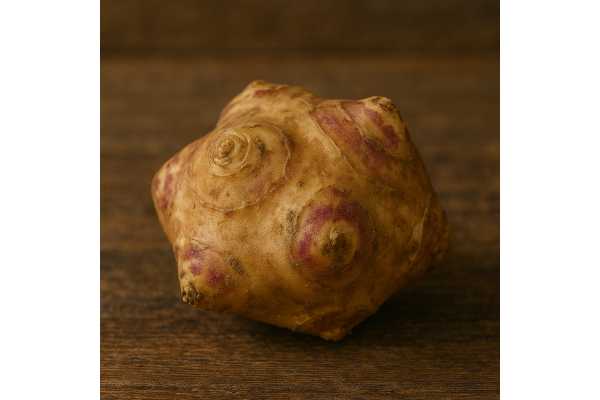
Jerusalem artichoke (also called sunchoke or topinambur) is a knobbly, sunflower-related tuber that has quietly moved from traditional farms and foraging guides into modern nutrition and gut health conversations. Under its thin beige to purple skin, it hides a crisp, slightly sweet flesh rich in inulin, a prebiotic fiber that can support a diverse gut microbiome and a more stable blood sugar response. At the same time, Jerusalem artichoke provides useful amounts of potassium, iron, and several B vitamins, making it more than just another root vegetable.
You can eat it raw in salads, roast it like potatoes, blend it into velvety soups, or use its flour and powders in breads, snacks, and functional foods. Scientific interest in Jerusalem artichoke has grown as researchers explore its role as a functional ingredient, a source of inulin, and a resilient crop that tolerates a range of climates. When used thoughtfully, Jerusalem artichoke can enrich both your plate and your long term health strategy.
Nutrition Snapshot for Jerusalem Artichoke
- One 100 g serving of raw Jerusalem artichoke provides about 65–75 kcal, 17 g carbohydrate, and substantial prebiotic inulin that supports beneficial gut bacteria.
- Regular intake (around 75–150 g cooked, one to three times per week) can contribute to fiber, iron, and potassium intake without adding many calories.
- High in inulin type fructans, Jerusalem artichoke may trigger gas, bloating, or discomfort in people sensitive to FODMAPs or large fiber loads.
- People with irritable bowel syndrome, significant digestive issues, or advanced kidney disease should introduce Jerusalem artichoke cautiously and discuss intake with a healthcare professional.
- A practical starting portion is about ½ cup (75 g) cooked once or twice weekly, increasing only if your digestion tolerates it well.
Table of Contents
- Jerusalem artichoke basics and background
- Jerusalem artichoke nutrition profile
- Research supported benefits of Jerusalem artichoke
- Digestive issues allergies and safety
- Buying storing and sustainable sourcing
- Cooking Jerusalem artichoke and preserving nutrients
- Serving sizes comparisons and FAQs
Jerusalem artichoke basics and background
Despite its name, Jerusalem artichoke is neither from Jerusalem nor a true artichoke. It is the tuber of Helianthus tuberosus, a sunflower relative native to North America and long cultivated by Indigenous communities. Today it is grown in Europe, Asia, and beyond as both a vegetable and an energy or forage crop. You may see it sold as sunchoke, sunroot, earth apple, or topinambur.
The tubers are small to medium, irregular, and knobbly, with beige, pink, or purple skin. Inside, the flesh is pale and crisp when raw, with a nutty, slightly sweet flavor that becomes more mellow and creamy when cooked. Unlike potatoes, which store energy mostly as starch, Jerusalem artichoke stores much of its carbohydrate as inulin, a fructan type fiber that humans cannot digest but gut bacteria can ferment.
This inulin content is a key reason the vegetable attracts nutrition interest. Inulin behaves as a prebiotic, nourishing beneficial microbes such as Bifidobacterium, and has been linked in human research on inulin type fructans to improved bowel habits, better mineral absorption, and modest improvements in metabolic markers. Jerusalem artichoke’s glycemic index is low, with a modest glycemic load, making it attractive for people watching blood sugar, provided portions and overall carbohydrate intake are managed.
Beyond its nutritional profile, Jerusalem artichoke is interesting from a food systems perspective. It tolerates poor soils, cold temperatures, and limited inputs, and can be used for food, animal feed, and biofuel production. This resilience, combined with its versatile culinary uses, positions it as both a traditional food and a modern “functional” ingredient.
Jerusalem artichoke nutrition profile
Nutrient values vary slightly by variety, growing conditions, and database. The figures below summarize typical values for raw Jerusalem artichoke per 100 g from national and regional food composition tables. Percent Daily Values (%DV) are based on general adult requirements and rounded.
Macros and key electrolytes (per 100 g, raw)
| Nutrient | Amount per 100 g | Approx. %DV |
|---|---|---|
| Energy | 65–73 kcal | — |
| Protein | 2.0–2.1 g | 4% |
| Total fat | 0.1–0.6 g | 0% |
| Total carbohydrate | 11.5–17.4 g | 4–6% |
| Dietary fiber (total) | ~3 g | 11% |
| Inulin and other fructans | roughly 8–13 g (estimated) | — |
| Total sugars | 3–10 g | — |
| Sodium | 3–4 mg | 0% |
| Potassium | 430–560 mg | 9–16% |
| Water | ~78–83 g | — |
In practice, “fiber” on labels may underreport inulin, which is sometimes analyzed separately; the physiological fiber effect may therefore be higher than standard fiber values suggest.
Vitamins (per 100 g, raw)
| Vitamin | Amount per 100 g | Approx. %DV |
|---|---|---|
| Vitamin C (ascorbic acid) | 4–6 mg | 4–7% |
| Thiamin (Vitamin B1) | ~0.07–0.2 mg | 5–17% |
| Riboflavin (Vitamin B2) | ~0.06 mg | 3–5% |
| Niacin equivalents (Vitamin B3) | ~1.5–1.9 mg | 9–12% |
| Vitamin B6 | ~0.09 mg | 5% |
| Folate (Vitamin B9) | ~36 µg | 9–11% |
| Vitamin A (RAE) | ~1 µg | <1% |
| Vitamin E | ~0.2 mg | 1–2% |
| Vitamin K | ~0.1 µg | negligible |
Jerusalem artichoke is not a standout source of fat soluble vitamins, but it contributes small amounts of several B vitamins that support energy metabolism and nerve function.
Minerals and trace elements (per 100 g, raw)
| Mineral | Amount per 100 g | Approx. %DV |
|---|---|---|
| Calcium | 20–30 mg | 2–3% |
| Magnesium | 16–17 mg | 4–5% |
| Phosphorus | 72–78 mg | 6–11% |
| Potassium | 430–560 mg | 9–16% |
| Iron | 0.6–3.4 mg* | 5–19% |
| Copper | ~0.12–0.13 mg | 13–14% |
| Zinc | ~0.1–0.12 mg | 1% |
| Selenium | 0 µg | 0% |
*Different databases report different iron values; some analyses of specific varieties show considerably higher iron content than others.
From a practical standpoint:
- Potassium support makes Jerusalem artichoke helpful for diets focused on blood pressure and muscle and nerve function, within overall potassium limits.
- Iron and copper contribute to red blood cell production and iron handling, especially in plant forward diets.
- Magnesium and phosphorus support energy metabolism and bone health.
Glycemic and acid–base characteristics
- Glycemic index: roughly low, often reported around the low 30s.
- Glycemic load for a 100 g serving: low, in the single digits.
- Potential renal acid load (PRAL): mildly alkaline, similar to other root vegetables.
Together, these values explain why Jerusalem artichoke is viewed as a lower glycemic, mineral rich alternative to many starchy sides.
Research supported benefits of Jerusalem artichoke
Most of the evidence around Jerusalem artichoke’s health effects comes from three overlapping areas: its inulin type fructans, its mineral content, and its broader phytochemicals. Many studies use isolated inulin or extracts, but the findings still guide how we think about the whole food.
1. Gut microbiome support and bowel function
Jerusalem artichoke is one of the richest natural sources of inulin, a prebiotic fiber selectively fermented by beneficial bacteria such as Bifidobacterium and Lactobacillus. Human trials of inulin type fructans show that regular intake can:
- Increase beneficial gut bacteria.
- Improve stool frequency and consistency in people with low fiber intake.
- Support intestinal barrier function and aspects of immune activity.
Because Jerusalem artichoke delivers inulin together with small amounts of resistant starch and polyphenols, it likely shares these benefits when eaten in realistic amounts, although most trials used purified inulin or mixes of inulin rich foods.
2. Blood sugar and metabolic health
Jerusalem artichoke’s carbohydrate is largely inulin, which does not raise blood glucose directly. Its low glycemic index and modest glycemic load mean that, gram for gram, it affects blood sugar less than most potato preparations.
Animal studies using inulin extracted from Jerusalem artichoke tubers report improved blood glucose, insulin sensitivity, and gut microbiota composition in models of diet induced diabetes. Human trials of inulin type fructans more broadly describe modest improvements in fasting insulin, triglycerides, and satiety in some participants, especially when higher doses are combined with overall diet changes.
These findings support the idea that replacing some refined starches with Jerusalem artichoke and other inulin rich vegetables may gently support metabolic health, but they are not a substitute for medical treatment or comprehensive lifestyle management.
3. Mineral and micronutrient support
As shown earlier, a 100 g serving of Jerusalem artichoke contributes meaningful amounts of potassium, iron, copper, magnesium, and phosphorus. Inulin may also enhance absorption of calcium and magnesium by altering gut pH and microbial activity. While Jerusalem artichoke alone will not correct deficiencies, it can strengthen a nutrient dense pattern that includes legumes, nuts, seeds, and leafy greens.
4. Antioxidant and anti inflammatory potential
Analyses of Helianthus tuberosus describe a range of polyphenols (such as phenolic acids, flavonoids, and coumarins) with antioxidant, antimicrobial, and anti inflammatory actions in cell and animal models. These findings align with broader evidence that diets rich in diverse plant phytochemicals support cardiometabolic and immune health. At present, human data specific to Jerusalem artichoke are limited, so these benefits should be considered promising but not yet firmly proven.
In summary, the best supported benefits of Jerusalem artichoke relate to gut microbiome modulation, gentle support of glycemic control when used in place of higher glycemic starches, and contribution to mineral intake.
Digestive issues allergies and safety
Jerusalem artichoke is generally safe for most people when eaten in culinary amounts, but its high inulin content means it can cause discomfort if you eat too much too quickly.
Gas, bloating, and FODMAP sensitivity
Inulin is a fermentable oligosaccharide, part of the FODMAP group of carbohydrates that can cause gas and bloating in sensitive individuals. When inulin reaches the colon, gut bacteria break it down and release gases such as hydrogen and methane. For many people this is a sign of a thriving microbiome and settles as the gut adapts. For others, especially those with irritable bowel syndrome (IBS), small intestinal bacterial overgrowth (SIBO), or a history of painful gas, it can be very uncomfortable.
To reduce the risk:
- Start with 30–50 g cooked once or twice weekly.
- Increase only if symptoms are mild and tolerable.
- Prefer cooked forms (roasted, boiled, soups) rather than large amounts raw at first, as heat slightly alters inulin structure and may ease tolerance.
Blood sugar and diabetes considerations
Although Jerusalem artichoke has a low glycemic index, it still contains digestible carbohydrate. People with diabetes or prediabetes should:
- Count it as part of their total carbohydrate budget for the meal.
- Monitor blood glucose responses when introducing it.
Inulin and other fermentable fibers can complement blood sugar management but do not replace medications or individualized diet plans.
Kidney disease and potassium
Because Jerusalem artichoke contains moderate to high potassium for a vegetable, people with advanced chronic kidney disease or those on potassium restricted diets should discuss appropriate portions with their renal team. In many cases, small servings can fit within a carefully planned meal pattern.
Allergy and cross reactivity
True allergy to Jerusalem artichoke appears rare, but it belongs to the Asteraceae family (like sunflower and globe artichoke). People with known severe allergies to related pollens or plants should be cautious with first exposures and seek medical advice if they have a history of significant reactions.
Medication interactions
There are no well documented direct drug interactions with Jerusalem artichoke. However, very high intakes of any fiber supplement or fiber rich food can affect absorption of some oral medications if taken at exactly the same time. As a general precaution, leaving a one to two hour gap between substantial Jerusalem artichoke meals and critical medications is reasonable unless your clinician advises otherwise.
If you have chronic digestive conditions, recent gastrointestinal surgery, complex metabolic disease, or are pregnant or breastfeeding with a high risk pregnancy, introduce Jerusalem artichoke in consultation with your healthcare provider.
Buying storing and sustainable sourcing
How to choose good quality tubers
When shopping for fresh Jerusalem artichokes:
- Look for firm, heavy tubers with smooth, tight skin and minimal cuts or bruises.
- Colors may vary from pale beige to reddish or purple, depending on the variety; all can be fine if the skin is intact.
- Avoid very shriveled, soft, or moldy pieces, which indicate age or poor storage.
Because they are knobbly, smaller tubers are often easier to clean, while larger ones are easier to peel.
You may also encounter:
- Dried chips or crisps made from Jerusalem artichoke slices.
- Flour or powder from dried tubers or juice, often marketed as a prebiotic ingredient for baking or smoothies.
- Inulin extracts labeled as Jerusalem artichoke inulin, typically used like a fiber supplement.
With concentrated products, pay close attention to serving size, as inulin doses used in clinical research are often in the 5–20 g per day range, and exceeding your tolerance threshold can quickly cause digestive upset.
Storage and shelf life
At home:
- Keep fresh tubers unwashed in a breathable bag (paper or perforated plastic) in the vegetable drawer of the refrigerator. They usually keep one to three weeks.
- Do not store in sealed, wet containers; trapped moisture encourages mold.
- Once cut, wrap tightly and refrigerate; use within a few days.
- To prevent browning after cutting, you can briefly soak slices in water with a little lemon juice before cooking.
On farms, tubers often overwinter in the ground and are dug as needed; this can actually preserve texture and flavor in cold climates, although inulin gradually converts to fructose, making late stored tubers somewhat sweeter and potentially easier to digest.
Sustainability and environmental aspects
Jerusalem artichoke has several traits that make it interesting as a sustainable crop:
- It tolerates a range of soils and climates and often requires fewer fertilizers and pesticides than more demanding crops.
- It produces both above ground biomass and tubers, which can be used for feed, food, and biofuel production.
- Its perennial nature and vigorous growth can improve soil cover and reduce erosion.
However, that same vigor means it can behave almost like a weed: tubers left in the ground can regrow, making rotation to other crops harder if not managed carefully. Responsible growers manage fields to avoid unwanted spread into natural areas and to balance high yields with biodiversity.
Whenever possible, buying from local growers or community supported agriculture schemes can reduce transport emissions and help you learn how and where your vegetables are grown.
Cooking Jerusalem artichoke and preserving nutrients
Jerusalem artichoke is extremely versatile in the kitchen and adapts well to many of the ways you might use potatoes or parsnips, with a slightly sweeter, nuttier profile.
Basic preparation
- Rinse tubers thoroughly under running water, scrubbing dirt from crevices.
- Decide whether to peel: the skin is edible and contains some fiber and phytonutrients, but peeling can reduce surface dirt and may slightly lower pesticide residues if present.
- Trim any dark spots or damaged areas.
- Cut into slices, cubes, wedges, or leave whole, depending on the recipe.
Because the flesh can brown on exposure to air, especially when sliced thin, place cut pieces in a bowl of water with a splash of lemon juice if you are not cooking them immediately.
Cooking methods and digestion
Popular techniques include:
- Roasting: Toss chunks with a small amount of oil and roast at moderate heat until golden and tender, concentrating sweetness and giving a texture similar to roasted potatoes.
- Boiling and mashing: Cook until soft and mash alone or with potatoes, celeriac, or cauliflower.
- Soups and purees: Simmer with onions, garlic, and stock, then blend for a silky soup.
- Sautéing and stir frying: Thin slices cook quickly and pair well with greens, mushrooms, or other vegetables.
- Raw salads: Very thinly sliced or julienned raw sunchoke adds crunch and a mild artichoke like sweetness to salads and slaws.
Longer cooking and storage gradually convert some inulin to simpler sugars, which can slightly reduce prebiotic potency but may improve tolerance for people who find raw or lightly cooked tubers too gassy.
Strategies to retain nutrients
- Use steaming or roasting instead of prolonged boiling to minimize loss of water soluble vitamins such as vitamin C and some B vitamins.
- When you do boil, reuse the cooking liquid in soups or sauces when appropriate to reclaim minerals that leach into the water.
- Avoid very high temperatures for long periods if you are cooking with Jerusalem artichoke flour, to reduce the formation of advanced glycation end products and preserve flavor.
Combining for balance
To build balanced meals:
- Pair Jerusalem artichoke with a good protein source (legumes, fish, eggs, poultry, tofu) and non starchy vegetables.
- Combine with vitamin C rich foods (such as bell peppers, cabbage, or citrus) to support non heme iron absorption.
- Use herbs, spices, and a modest amount of healthy fats (olive oil, rapeseed oil, nuts) to enhance satisfaction and nutrient uptake.
For people with sensitive digestion, combining a small amount of Jerusalem artichoke with other, lower FODMAP vegetables can provide flavor and variety while keeping the overall fermentable load manageable.
Serving sizes comparisons and FAQs
Typical serving sizes and frequency
For most adults with no specific contraindications:
- A practical cooked serving is about ½–1 cup (75–150 g).
- A moderate pattern is one to three such servings per week, within an overall vegetable rich diet.
If you are new to Jerusalem artichoke or prone to digestive symptoms, start at the lower end (around 50–75 g cooked) and only increase if you feel comfortable.
How does Jerusalem artichoke compare with potatoes and other roots?
Compared with boiled or roasted potatoes (per 100 g):
- Lower energy overall and a lower glycemic index.
- Less starch, more inulin and fiber.
- Comparable or sometimes higher potassium for the same weight.
- More iron and copper, but less vitamin C than some potato varieties.
Compared with carrots or parsnips:
- Similar or slightly higher calories per 100 g than carrots, but still moderate.
- Higher in potassium and often iron; lower in vitamin A than carrots.
- More fermentable fiber, meaning more powerful prebiotic effects but also a higher risk of gas in sensitive individuals.
Is Jerusalem artichoke keto friendly or low carb?
For strict ketogenic diets, Jerusalem artichoke is usually not suitable because it still contains around 8–12 g of digestible carbohydrate per 100 g, even though its inulin does not directly raise blood glucose. For more liberal low carb plans, a small portion may fit, especially if the rest of the plate is very low in carbohydrate.
Can you eat Jerusalem artichoke raw every day?
Eating small amounts of raw Jerusalem artichoke (for example, a few thin slices in a salad) is reasonable for many people. However, daily large raw portions can easily exceed your personal tolerance for inulin and cause notable gas and bloating. Alternating raw and cooked preparations and rotating with other vegetables is a gentler strategy for both comfort and dietary variety.
Is Jerusalem artichoke good for weight management?
Jerusalem artichoke is relatively low in calories and moderately high in fiber and inulin, which can contribute to satiety. On its own, it will not drive weight loss, but substituting it for more energy dense sides (creamy gratins, refined starches) can help reduce meal calorie density while maintaining satisfaction.
Who should be especially cautious or seek advice first?
- People with IBS, SIBO, or known FODMAP intolerance.
- Individuals with advanced kidney disease or strict potassium limits.
- Anyone on complex medication regimens where major diet changes should be coordinated with their care team.
- Those with strong allergies to other Asteraceae plants.
For these groups, personalized advice from a registered dietitian or doctor is strongly recommended before making Jerusalem artichoke a regular feature of meals.
References
- Jerusalem artichoke: A comprehensive review of nutritional composition, health benefits and emerging trends in food applications 2025 (Systematic Review)
- Exploring the Therapeutic Potential, Ethnomedicinal Values, and Phytochemistry of Helianthus tuberosus L.: A Review 2024 (Review)
- The Prebiotic Potential of Inulin-Type Fructans: A Systematic Review 2022 (Systematic Review)
- Inulin from Jerusalem artichoke tubers alleviates hyperglycaemia in high-fat-diet-induced diabetes mice through the intestinal microflora improvement 2019 (Animal Study)
- Jerusalem artichoke, raw 2023 (National Food Composition Data)
Disclaimer
The information in this article is for general educational purposes only and is not intended to replace personalized medical advice, diagnosis, or treatment. Jerusalem artichoke can interact with individual health conditions, medications, and dietary needs in ways that require professional judgment. Always consult a qualified healthcare provider or registered dietitian before making significant changes to your diet, particularly if you have digestive disorders, diabetes, kidney disease, food allergies, or other chronic medical conditions.
If you found this article useful, you are warmly invited to share it on Facebook, X (formerly Twitter), or any other platform you prefer. Your thoughtful sharing helps support our team in continuing to provide carefully researched, high quality nutrition content for readers around the world.