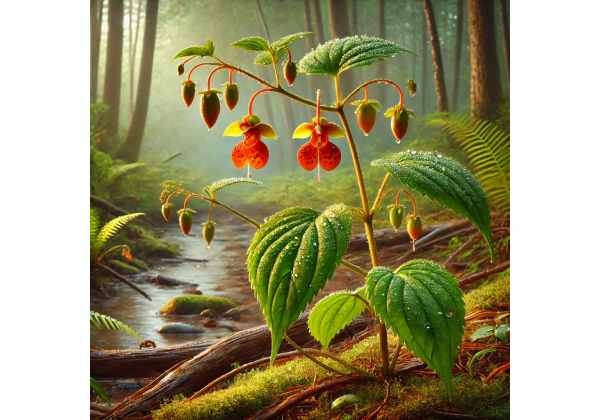
Jewelweed is a bright orange, moisture-loving North American herb best known as a traditional skin remedy rather than a modern supplement. If you have ever heard it called spotted touch-me-not or orange balsam, you have met the same plant. Folk medicine has long linked fresh jewelweed juice, mash, or washes with relief after poison ivy exposure, stinging nettle contact, insect bites, and other itchy outdoor irritations. What makes the herb interesting today is not just that reputation, but the gap between tradition and research. Fresh preparations seem more promising than bottled extracts, and simple soap-and-water washing still appears to be the more reliable first step after poison ivy contact.
That puts jewelweed in an important category: useful, practical, and worth knowing, but easy to overstate. Its strongest case is topical use for mild plant-related skin irritation, especially when applied soon after exposure. Its weakest case is oral use, where modern evidence is thin and dosing is not standardized. For most readers, the real value of jewelweed is not hype. It is knowing when it may help, how to use it sensibly, and when to choose proven medical care instead.
Field Notes
- Jewelweed is used mainly for mild itchy plant rashes, especially after poison ivy or stinging nettle contact.
- Fresh topical preparations appear more promising than stored extracts or heavily processed products.
- A practical topical range is 2 to 4 applications daily to intact skin for 1 to 3 days.
- People with severe blistering rashes, facial or genital involvement, open skin, or known plant sensitivity should not rely on jewelweed alone.
Table of Contents
- What is jewelweed
- Which compounds matter
- Does jewelweed help poison ivy
- How is jewelweed used
- How much should you use
- Side effects and who should avoid it
- What the evidence really shows
What is jewelweed
Jewelweed is an annual herb in the balsam family that grows in damp, shady places across much of eastern and northern North America. It is easy to recognize once you know its habits: watery translucent stems, soft oval leaves that seem to bead up water, and hanging orange flowers marked with reddish spots. When the seed pods ripen, they spring open at a touch, which explains the old name touch-me-not. Older medical papers may also call the plant Impatiens biflora, but modern botanical sources place it under Impatiens capensis.
Its reputation as a medicinal plant is unusually specific. Unlike herbs that are promoted for everything from digestion to immunity, jewelweed is remembered mostly as an outdoor skin remedy. Traditional users crushed the fresh stems and leaves into a juicy mash or rinsed the skin with a fresh preparation after contact with poison ivy, stinging nettles, or other itchy plants. That narrow focus is actually a strength. It tells you where the herb belongs: in first-aid style topical care, not in broad claims about whole-body health.
There is also a practical reason jewelweed became popular in the same places poison ivy thrives. The two plants often grow in overlapping habitats such as wet edges, disturbed woodland margins, and stream banks. That made jewelweed convenient. If someone brushed against poison ivy while walking or working outdoors, the remedy might be growing nearby. That pattern helped build its folklore.
Still, a folk remedy is not automatically a proven therapy. Jewelweed’s modern value depends on separating three ideas:
- Botanical identity: knowing you have the right plant.
- Traditional use: understanding why people used it on the skin.
- Clinical reality: recognizing that fresh plant use and manufactured extracts do not perform the same way.
That last point matters. People sometimes assume that if a fresh wild plant was traditionally soothing, then any soap, salve, or bottled extract with jewelweed on the label must work even better. The research does not support that assumption. Jewelweed makes the most sense when readers treat it as a local, topical herb with a limited but interesting history, not as a miracle antidote. If your interest is broader skin support rather than plant-rash folklore, herbs such as witch hazel for topical irritation come with more standardized preparations and clearer product expectations.
Which compounds matter
Jewelweed is not as chemically mapped or standardized as major commercial herbs, but a few compounds come up repeatedly in the literature. The two most discussed are lawsone and saponins. Lawsone is a naphthoquinone, a pigment-related compound also associated with henna chemistry, and it was once proposed as the main reason jewelweed might help after poison ivy exposure. That theory became less convincing when research found that lawsone content did not track neatly with rash prevention. In other words, more lawsone did not reliably mean better protection.
Saponins are the other major suspects, and they may be more important for jewelweed’s real-world effects. These soap-like plant compounds can foam in water and may help explain why fresh jewelweed mash or saponin-rich preparations seemed more active in some post-exposure studies. Even here, though, the story is not simple. Some soaps containing jewelweed worked, but not better than similar soaps without it. That suggests part of the benefit may come from the cleansing action itself rather than a uniquely powerful anti-rash molecule.
Beyond those headline compounds, jewelweed likely contains a broader mix of phenolic substances and other plant metabolites that contribute to mild antioxidant or soothing effects. The problem is not that these compounds are impossible. The problem is that the herb has not been standardized the way common dermatologic botanicals have been. A fresh stem, a frozen mash, a tincture, and a commercial soap can all be called jewelweed while delivering very different chemistry.
That leads to three useful takeaways:
- Freshness matters because the plant’s watery chemistry changes quickly after harvest.
- Cleansing may matter as much as any specific jewelweed compound.
- Product labels rarely tell you enough to predict performance.
This is why jewelweed often feels more like a field remedy than a pharmacy herb. Its best-known active story is still tied to immediate, fresh use rather than long shelf life. That does not make it useless. It just means that readers should be cautious about assuming a polished retail formula captures what traditional use actually involved.
A practical comparison helps. With aloe vera for minor skin soothing, consumers usually know what the gel is meant to do and how it is prepared. Jewelweed is murkier. The plant may have real activity, but the form and timing appear to shape the outcome more than marketing language does.
Does jewelweed help poison ivy
This is the question most readers actually care about, and the honest answer is: sometimes, but not reliably enough to replace standard care. Jewelweed’s reputation comes from poison ivy and related urushiol rashes, yet the human evidence is mixed. One controlled trial found that a jewelweed extract was not better than water for treating experimentally induced poison ivy or poison oak dermatitis. Later work suggested that fresh jewelweed mash could reduce rash development after exposure, but it also found that soap was more effective overall. That is a valuable result because it reframes the herb. Jewelweed may be helpful in some forms, especially fresh, but prompt washing is the better-supported first move.
That difference between prevention and treatment is important. Jewelweed seems more plausible as a post-exposure topical wash or mash used very early than as a rescue treatment once a full blistering rash is already established. In other words, if you have just brushed poison ivy and you are outdoors, fresh jewelweed may be a reasonable traditional measure. If you already have a spreading rash two days later, it is much less convincing.
Jewelweed is also used for:
- Stinging nettle irritation
- Minor itchy plant rashes
- Insect bites
- Mild skin discomfort after outdoor exposure
Those uses fit the plant’s folk profile, but they are supported mostly by tradition and analogy, not by strong trials. That distinction matters because poison ivy is not just “itchy skin.” It is an allergic contact dermatitis caused by urushiol. The proven priority is removing the resin from the skin quickly. Jewelweed may help after that, but it should not distract from the main task.
A realistic decision flow looks like this:
- Wash the exposed skin and anything that touched the resin.
- Use jewelweed only as an added topical comfort measure, not as a replacement for washing.
- Watch for swelling, blistering, facial involvement, or worsening spread.
- Seek medical care when the rash is extensive or severe.
This is why jewelweed belongs in a modest first-aid category. It may soothe mild cases and may reduce symptoms when used promptly, but it is not a dependable antidote. Readers who expect it to erase a significant urushiol rash often end up disappointed. For broader topical herbal care of irritated skin, some people compare it with plantain leaf support, but poison ivy remains a situation where speed, washing, and symptom monitoring matter more than any single herb.
How is jewelweed used
Jewelweed is mainly a topical herb. Traditional preparations rely on the fresh aerial parts, especially the juicy stems and leaves, because the plant is soft, watery, and easy to crush. That is very different from many dried medicinal herbs that hold up well in capsules or teas. With jewelweed, the form is part of the therapy.
Common topical forms include:
- Freshly crushed plant mash
- Expressed juice from stems and leaves
- Cooled fresh wash or rinse
- Salves or oils
- Sprays
- Soaps
- Gels or creams sold as poison ivy products
Fresh use is the most faithful to tradition. A person who has just come into contact with an irritating plant might crush the fresh stems, apply the juice to intact skin, and rinse or repeat. Some people simmer or steep the plant briefly to make a wash, then cool it before applying. Others freeze fresh jewelweed in cubes for seasonal use. These approaches are practical, but they are not standardized, so strength varies a great deal.
Commercial products are more convenient, yet this is where expectations should stay careful. The research on jewelweed soaps suggests that cleansing itself may explain much of the benefit. A product can feel soothing and still owe most of its value to washing away irritants or cooling the skin, not to jewelweed-specific pharmacology.
A sensible way to use jewelweed is to match the form to the moment:
- Right after suspected poison ivy exposure: wash first with soap and water, then consider fresh jewelweed as an extra topical step.
- For mild itch from nettles or outdoor irritation: use a fresh wash, gel, or compress on intact skin.
- For a more established rash: use jewelweed only for comfort, not as the main treatment.
What not to do is just as important:
- Do not rub the plant aggressively onto broken or oozing skin.
- Do not delay washing because you are looking for jewelweed.
- Do not swallow homemade preparations as though they were proven internal remedies.
- Do not assume more applications mean faster recovery.
Because the herb is mostly topical, it pairs better with low-risk skin support than with internal supplementation. Readers exploring that broader category often also look at calendula for minor skin irritation, but jewelweed remains the more situational plant: best known for plant-rash folklore, most useful when applied quickly, and easiest to overrate once a rash is already severe.
How much should you use
Jewelweed does not have a standardized evidence-based dose in the way a well-studied supplement does. That is one of the clearest differences between jewelweed and mainstream herbal products. Modern research focuses almost entirely on topical preparations, and even there the tested forms vary from fresh mash to extract to soap. Because of that, the safest approach is to think in terms of topical frequency and duration rather than milligrams.
A practical topical range for intact skin is:
- Apply a thin layer of fresh juice, fresh mash, or a simple topical preparation 2 to 4 times daily
- Continue for 1 to 3 days for mild irritation
- Stop sooner if the skin stings, reddens more, or looks worse
That range is practical rather than clinically standardized. It reflects cautious first-aid style use, not a firm research-based prescription. For many people, one or two early applications after exposure matter more than repeated heavy use later.
Timing matters more than volume. Jewelweed makes the most sense:
- Immediately after exposure to poison ivy or nettles
- Early in the itchy phase of a mild rash
- On small areas of intact skin
It makes less sense:
- After the rash is widespread
- On weeping or infected skin
- As a substitute for corticosteroids when they are clearly needed
- As an oral product with improvised dosing
If you are using a commercial product, follow the label rather than trying to convert folk use into homemade math. Products differ widely in how much actual jewelweed they contain, whether they are mostly soap or carrier ingredients, and whether they include other soothing agents.
The oral question is even simpler: there is no well-established oral dosage supported by modern clinical evidence for jewelweed. That is why most careful discussions keep the herb in the topical category. An herb can have a long traditional record and still lack a dependable internal dose.
A good rule is to use the least amount needed to lightly coat the irritated area, then reassess. If the skin feels calmer, fine. If it burns, spreads, or blisters more, stop and switch to proven care. Jewelweed is not a case where “stronger” is automatically better. In fact, repeated rubbing and overapplication can worsen already irritated skin more than they help.
Side effects and who should avoid it
Topical jewelweed is usually discussed as a low-risk herb, but low risk is not the same as risk free. The first issue is irritation. Any plant material applied to already inflamed skin can sting, redden, or trigger additional sensitivity in some people. That is especially true if the skin is raw, blistered, or scratched open. Fresh herbs are chemically messy, and even a plant with a soothing reputation can feel harsh on damaged skin.
Possible problems include:
- Burning or stinging on application
- Worsening redness
- New itch or rash from plant sensitivity
- Contamination if homemade preparations are stored poorly
- Delayed medical care in people treating a severe reaction on their own
The most important “who should avoid it” group is not just people with plant allergies. It is people with serious poison ivy reactions. Jewelweed is not enough when the rash involves the face, eyes, mouth, genitals, or large sections of the body, or when swelling, severe blistering, fever, or sleep-disrupting itch is present. Those cases deserve medical treatment.
Use extra caution with:
- Open wounds or broken blisters because fresh plant material can irritate and contaminate damaged skin.
- Children with large rashes because dosing and severity are harder to judge at home.
- Pregnant or breastfeeding people considering oral use because internal safety is not well established.
- Anyone with a history of strong allergic skin reactions because an herb may add one more variable to an already reactive situation.
Another overlooked safety point is storage. Fresh jewelweed preparations spoil quickly. A homemade mash, infusion, or frozen cube is not automatically sterile. If it smells off, changes color unusually, or has been sitting unrefrigerated, do not put it on inflamed skin.
The herb also has an indirect safety risk: it can create false confidence. A person may believe that because jewelweed is “natural,” it can handle a rash that actually needs steroid treatment, oral antihistamines, or a clinician’s evaluation. In poison ivy care, timely washing and symptom monitoring matter more than loyalty to a folk remedy.
If your goal is simply to calm mild irritated skin, lower-risk standardized products often make more sense than improvised plant material. That does not erase jewelweed’s place, but it does put it in perspective. The herb is best used conservatively, on small intact areas, and with a low threshold to stop if the skin reacts badly.
What the evidence really shows
Jewelweed is a good example of why herbal evidence needs nuance. The traditional reputation is strong, the mechanism is plausible, and yet the human data are still limited and inconsistent. That does not mean the herb never works. It means the best-supported conclusion is narrower than the folklore.
Here is the evidence pattern in plain terms:
- Older and modern interest: jewelweed has been used for decades, especially against poison ivy dermatitis.
- Negative result: a controlled trial using jewelweed extract found no significant treatment benefit compared with water.
- More encouraging result: a later study found that fresh jewelweed mash reduced rash development after poison ivy exposure.
- Important qualifier: soap still performed better overall, and jewelweed soaps were not clearly better than similar soaps without jewelweed.
- Review-level conclusion: modern reviews describe the evidence as limited, heterogeneous, and not strong enough for confident clinical recommendations.
That makes jewelweed a “maybe useful, not proven” herb. The strongest use case is mild, early, topical, post-exposure care. The weakest use case is broad dermatology marketing, oral supplementation, or claims that it can reliably stop poison ivy once the dermatitis is well underway.
What readers should take from the literature is not cynicism, but calibration:
- Tradition probably noticed something real, especially with fresh topical use.
- Cleansing and timing may explain more of the benefit than a single magic compound.
- Extracts, salves, and soaps are not interchangeable with fresh plant mash.
- Evidence for internal medicinal use is very poor.
- Standard medical care remains more dependable for moderate to severe poison ivy dermatitis.
This balanced view is more useful than either extreme. Saying jewelweed is worthless ignores why it stayed in North American folk medicine. Saying it is a proven antidote ignores the controlled studies and modern reviews. The truth sits in the middle. Jewelweed may offer mild, early topical benefit, especially as part of quick skin cleansing, but it is not established as a standalone treatment.
That perspective actually makes the herb easier to use well. You do not need jewelweed to be magical for it to be worthwhile. You only need to know where it plausibly fits: prompt topical first aid for mild irritation, guided by common sense, and backed by a readiness to escalate to proven care when a rash is more than minor.
References
- The Efficacy of Complementary and Alternative Medicines in Medical Dermatology: A Comprehensive Review 2025 (Review)
- Effects of Herbal Medicines on the Prevention and Treatment of Contact Dermatitis: A Systematic Review 2022 (Systematic Review)
- Poison ivy – oak – sumac 2023 (Government Medical Encyclopedia)
- The effectiveness of jewelweed, Impatiens capensis, the related cultivar I. balsamina and the component, lawsone in preventing post poison ivy exposure contact dermatitis 2012 (Controlled Trial)
- Treatment of poison ivy/oak allergic contact dermatitis with an extract of jewelweed 1997 (Randomized Controlled Trial)
Disclaimer
This article is for educational purposes only and does not replace medical advice, diagnosis, or treatment. Jewelweed is best understood as a traditional topical remedy with limited modern evidence, mainly for mild plant-related skin irritation. It should not be used as a substitute for prompt washing after poison ivy exposure, and it should not delay professional care for severe, widespread, infected, or high-risk rashes. Oral use is not well standardized and should not be improvised without professional guidance.
If this guide helped you, please share it on Facebook, X, or your preferred platform so others can find a clear, evidence-aware overview of jewelweed.