Jicama is a crisp, mildly sweet root vegetable from the legume family, prized for its refreshing texture and its unusual nutritional profile. While it looks like a turnip or potato from the outside, the peeled white flesh is juicy, low in calories, and naturally rich in prebiotic fiber. That makes it appealing not only as a crunchy snack, but also as a food with genuine digestive and metabolic interest. Traditionally grown in Mexico and Central America, jicama has become popular far beyond its native range because it is easy to eat raw, fits savory and sweet dishes, and adds bulk without much starch.
Its most useful benefits are realistic rather than dramatic. Jicama can support gut regularity, help with fullness, and provide vitamin C while keeping energy intake modest. Its prebiotic fiber, especially inulin and related fructans, is the part most associated with its “medicinal” value. At the same time, jicama has an important safety distinction: the tuber is edible, but the seeds and several above-ground parts are not. Used correctly, it is a smart, practical food with more to offer than crunch alone.
Core Points
- Jicama provides prebiotic fiber that may support regularity and a healthier gut environment.
- Its low-energy, high-water crunch can help with fullness while adding vitamin C.
- A practical serving is about 1/2 to 1 cup peeled jicama, or roughly 75 to 130 g at a time.
- Avoid the seeds, pods, leaves, and vine, and use smaller portions if you are sensitive to fructans.
Table of Contents
- What is jicama?
- Jicama nutrients and compounds
- What benefits can jicama offer?
- How to eat and use jicama
- How much jicama per day
- Safety, side effects, and who should avoid it
- What the research actually shows
What is jicama?
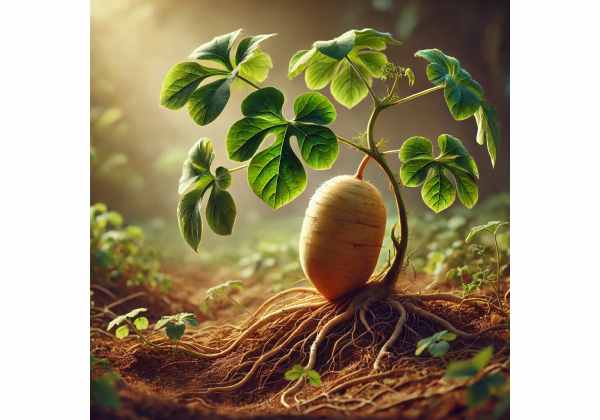
Jicama is the swollen edible tuber of Pachyrhizus erosus, a tropical vine in the bean family. People often describe the flesh as a cross between an apple, a water chestnut, and a mild pear, though its flavor is less sweet than any of those. The texture is what makes it stand out: crisp, juicy, and firm enough to stay crunchy in salads, slaws, and snack plates.
Although it is sometimes grouped with root vegetables in cooking, jicama is not a true potato-style staple. It is much lower in starch than potatoes, yams, or cassava and much higher in water. That is why it feels refreshing rather than heavy. Most people eat it peeled and raw, cut into sticks, cubes, or thin slices. It can also be stir-fried, roasted, or added to soups, though cooking softens the crunch that makes it distinctive.
Jicama has a long history in Mexican and Central American food traditions, where it is commonly served with lime, chili, salt, or fruit. In practical nutrition terms, it works well for people who want something crisp and filling without choosing chips or a more sugary fruit snack. It is also popular in meal-prep because it holds its texture well after cutting, especially when kept chilled.
Its identity as a “functional” food comes mostly from its fiber. Jicama contains fructans, including inulin-type carbohydrates, that escape digestion in the small intestine and are fermented by gut microbes later in the colon. This gives it a different nutritional personality from many other crunchy vegetables. It is not just watery bulk. It is a low-energy food with a meaningful prebiotic profile.
One point matters more than any other safety fact: only the tuber is eaten. The seeds, pods, leaves, and vine contain toxic compounds and should not be treated as food. That difference between edible root and toxic above-ground parts is central to understanding jicama correctly.
For readers deciding whether jicama is “healthy,” the more useful question is not whether it is a miracle food. It is whether it fits a real-life need. If you want a hydrating, fiber-containing, low-calorie plant food that feels substantial and versatile, jicama can be an excellent fit. Its value is practical, not flashy.
Jicama nutrients and compounds
Jicama’s nutritional profile is unusual because it combines high water content with meaningful fiber and relatively little starch. That combination helps explain why it feels filling without being dense. For most people, the standout nutrients are fiber and vitamin C, followed by smaller amounts of minerals such as potassium and magnesium.
The most important “active” component is inulin as a prebiotic fiber. Inulin belongs to a family of carbohydrates called fructans. Human digestive enzymes do not fully break these down in the small intestine, so they reach the colon largely intact. There, beneficial bacteria ferment them into short-chain fatty acids. Those metabolites help support the gut lining, influence stool consistency, and may have broader effects on appetite signaling and glucose handling.
Jicama also contains other carbohydrate fractions that matter nutritionally. Depending on maturity and variety, it may contain fructooligosaccharides, pectin-related compounds, and modest starch. This matters because not all jicama roots are chemically identical. A younger, juicier tuber may not behave exactly like a large mature one. Storage and processing can also change texture and some bioactive content.
Vitamin C is another practical strength. Jicama is not a megadose source, but it contributes enough to matter when eaten regularly. That matters for collagen formation, antioxidant defense, wound healing, and immune function. The amount is especially useful because it comes in a food that is naturally low in fat and calories.
The root also contains phenolic compounds and small amounts of isoflavone-related phytochemicals. These are partly why jicama attracts interest beyond simple nutrition. In lab studies, some of these compounds show antioxidant or anti-inflammatory activity. Still, it is wise to keep the scale in mind: jicama is a food first, not a concentrated botanical extract.
Its main nutritional strengths can be grouped this way:
- Prebiotic fiber for microbiome and bowel support
- Low energy density for fullness and snack control
- Vitamin C for antioxidant and connective-tissue support
- High water content for volume and hydration
- Modest mineral support without much sodium or fat
Just as important is what jicama does not provide in large amounts. It is not protein-rich, not iron-dense, and not a major source of fat-soluble vitamins. That is why it works best as part of a pattern, not as a stand-alone “superfood.”
A good way to think about jicama is as a bridge food. It offers the crunch and convenience many people want from a snack, but nutritionally it behaves more like a fiber-forward produce choice than a starchy side dish.
What benefits can jicama offer?
Jicama’s benefits are strongest in areas where fiber, water, and low energy density matter most. That means digestion, fullness, and steadier eating patterns are the most realistic outcomes. It may also support metabolic health indirectly, especially when it replaces more refined snacks.
The clearest benefit is digestive support. Because jicama contains inulin and related fermentable fibers, it can help feed beneficial gut microbes. Over time, that may improve stool regularity and help create a healthier intestinal environment. The effect is not immediate like a laxative. Instead, it is more gradual. People often notice the difference over days or weeks as their total fiber intake improves and their gut adapts.
Jicama can also help with fullness. Its high water content and crisp texture force slower eating, and its fiber adds bulk without many calories. That makes it useful for people who want a snack that feels substantial. It will not cause weight loss by itself, but it can make lower-energy eating patterns easier to sustain.
Its low glycemic impact is another practical advantage. Jicama tastes slightly sweet, but it is not sugar-heavy in the way many snack foods are. The fiber slows the overall carbohydrate effect, and the food itself is less starch-dense than many root vegetables. That makes it a reasonable choice for people trying to keep meals and snacks steadier. In that sense, it belongs in the same conversation as another fructan-rich root, even though the taste and texture are very different.
Vitamin C adds another layer of value. Regular intake supports collagen production, antioxidant defense, and immune function. Jicama is not the richest source in the produce aisle, but it contributes meaningfully when used often.
Other likely benefits are more modest:
- Better snack quality when used instead of chips or sugary treats
- More produce intake for people who dislike soft vegetables
- Easier hydration because of the root’s high water content
- A crisp, cooling food that pairs well with spicy and acidic flavors
- Added variety for people trying to improve fiber diversity
The limits matter too. Jicama is not a drug for constipation, diabetes, or high cholesterol. Its benefits come from repeated dietary use, not from a single serving. It also may not feel “gentle” to everyone. People with sensitive digestion can get gas or bloating, especially if they jump from very low fiber intake to a large portion.
The best way to frame jicama is as a helpful nutritional tool. It works well when the goal is to make a meal or snack pattern better, lighter, and more fiber-aware. That is a real benefit, even if it is less dramatic than supplement marketing often promises.
How to eat and use jicama
Jicama is easiest to use when you treat it as both a snack food and a salad ingredient. Start by peeling away the thick brown skin completely. The inner flesh should be white, moist, and crisp. From there, it can be sliced into rounds, cut into matchsticks, diced into cubes, or shredded.
Raw use is the most popular because it preserves the texture. Jicama sticks with lime and chili are a classic example, but the root also works well with cucumber, mango, orange, herbs, cabbage, and avocado. It can add crunch to tacos, grain bowls, wraps, and slaws without making a dish heavy.
It also cooks better than many people expect. In a quick stir-fry, jicama keeps some bite. Roasting softens it but still leaves it firmer than potato. That makes it useful when you want bulk and texture without turning a dish into a starch-forward meal. Cooked jicama is often best in savory dishes with aromatics, citrus, or warm spices.
A few practical ways to use it well:
- Slice it for snacks and pair it with lime, chili, tahini, or yogurt-based dips.
- Add matchsticks to slaws for crunch without relying on croutons or fried toppings.
- Mix cubes into fruit salads where you want crisp texture and a mild, cooling flavor.
- Stir-fry it briefly with peppers, onions, or shrimp for a lighter side dish.
- Use it as a crunchy component in lunch boxes because it keeps well when chilled.
Jicama juice exists, but it is usually less useful than the whole root. Juicing removes much of the fiber that gives jicama its distinctive nutritional advantage. If your main goal is prebiotic support or fullness, eating the whole peeled flesh is the better option.
It is also wise to keep preparation simple. Jicama does not need heavy sugar syrups or creamy dressings to be enjoyable. Its strength is fresh crunch. Acidic flavors such as lime or vinegar and bright seasonings such as chili, cilantro, mint, and ginger tend to bring out its best qualities.
For meal planning, jicama is a practical produce choice because it is sturdy. Whole roots store well in a cool place, and cut pieces can last several days in the refrigerator if sealed. That makes it easier to use consistently than fragile greens.
The real secret to using jicama well is not to think of it as an exotic ingredient. Think of it as a crisp fiber food that can stand in for less nutritious crunchy snacks.
How much jicama per day
There is no formal medicinal dose of whole jicama root, because it is used primarily as a food rather than as a standardized supplement. The most useful way to think about dosage is by serving size, tolerance, and goal.
For most adults, a practical starting portion is about 1/2 cup of peeled jicama, roughly 75 g. That is enough to test tolerance, especially if your usual fiber intake is low. A common everyday serving is 1 cup, around 120 to 130 g. Many people can comfortably eat 1 to 2 cups per day as part of meals or snacks, provided they tolerate fructans well.
The right amount depends on why you are eating it:
- For a light snack, 1/2 to 1 cup is usually enough.
- For improving produce and fiber intake, 1 cup once daily works well for many people.
- For replacing a more processed snack, 1 to 2 cups split across the day can be reasonable.
- For sensitive digestion, smaller servings taken with other foods are often better than one large portion.
Timing matters less than consistency. Jicama can be eaten any time of day, but many people find it works best with lunch, an afternoon snack, or as part of dinner rather than late at night. That is simply because fermentable fiber may cause less noticeable bloating when it is not eaten in a large evening portion.
Children can usually eat small food portions if the root is peeled and cut safely, but serving sizes should stay modest at first. For older adults, jicama can be a helpful crunchy option, though chewing comfort and digestive tolerance matter.
One useful distinction is the difference between jicama as food and fiber as therapy. If your goal is broad dietary improvement, jicama is excellent. If your goal is high-dose clinical fiber intake, foods like jicama are gentler and less concentrated than higher-dose fiber supplements like psyllium. That does not make jicama weak. It simply means it is better for daily habit-building than for aggressive therapeutic dosing.
As a simple rule, increase intake slowly. Moving from almost no fermentable fiber to a large bowl of jicama in one sitting is where many people run into gas and bloating. Start low, watch how you feel for a few days, and build up only if digestion stays comfortable.
For most healthy adults, the sweet spot is not a “dose” in the supplement sense. It is a repeatable portion that supports satiety and gut health without making the digestive system work too hard.
Safety, side effects, and who should avoid it
Jicama is generally safe when you eat the properly peeled tuber. The main safety issue is not the edible root itself. It is confusion about which parts of the plant can be eaten. The root is food. The seeds, pods, leaves, and vine are not. Those above-ground parts contain rotenone and related toxic risks and should never be treated as edible vegetables.
For ordinary food use, the most common side effects are digestive. Because jicama contains inulin and other fermentable fibers, large servings can cause gas, bloating, cramping, or a sense of abdominal fullness. This is more likely in people with irritable bowel syndrome, fructan sensitivity, or those following a low-FODMAP approach. In those cases, small portions are the safest way to test tolerance.
A few practical safety points matter:
- Always peel jicama fully before eating.
- Do not eat seeds, pods, leaves, or vine.
- Start with a small serving if you are not used to high-fiber foods.
- Keep portions moderate if you know fructans trigger symptoms.
- Refrigerate cut jicama and discard it if it becomes slimy or sour-smelling.
People with digestive sensitivity are the main group who may need to limit it. That includes those with IBS, small intestinal bacterial overgrowth concerns, or active bloating that worsens with onions, garlic, chicory, or other fructan-rich foods. Jicama is not harmful for everyone in these groups, but it can be uncomfortable.
Allergy is uncommon but possible. Because jicama comes from the legume family, anyone with a history of multiple legume allergies should use care the first time they try it. There is not enough evidence to say that legume allergy automatically predicts a jicama reaction, but caution is sensible.
Medicine interactions are minimal when jicama is eaten as food. It does not behave like a concentrated herb or supplement. The main indirect issue is digestive timing. If a very large fiber-rich meal slows or changes your gut response, it may alter how comfortable you feel with oral medicines, but this is more a practical point than a known dangerous interaction.
Pregnancy and breastfeeding usually do not raise concern when jicama is eaten as a normal food, provided it is the peeled root only. The toxic warning applies to non-edible plant parts, not to ordinary culinary use of the tuber.
The safest summary is simple: peeled jicama root is food, but the plant as a whole is not universally edible. That distinction is what keeps the safety profile straightforward.
What the research actually shows
The research on jicama is promising, but it is stronger in some areas than others. The most reliable support comes from nutritional composition studies, jicama-specific phytochemical reviews, and broader research on inulin and fructans. The weakest area is large human clinical trials testing whole jicama as a stand-alone intervention.
What does seem clear is that jicama contains inulin-type carbohydrates and other nutritionally relevant polysaccharides. That supports its reputation as a low-glycemic, prebiotic food rather than just a crunchy vegetable. Research also confirms that the plant contains bioactive compounds beyond fiber, including phenolics and isoflavone-related substances, especially in some non-edible portions.
The benefit claims should still be separated into two levels. The first level is well grounded: jicama is a low-energy food with prebiotic fiber and a nutrient pattern that supports digestive and metabolic health in a general diet. The second level is more preliminary: jicama extracts or specific compounds may show antioxidant, anti-inflammatory, or even cell-level protective effects under laboratory conditions. That second level is interesting, but it should not be oversold.
The best-supported conclusions look like this:
- Jicama is a legitimate source of inulin-type fiber.
- Its carbohydrate profile helps explain its low glycemic character.
- Its fiber can plausibly support a healthier gut environment.
- The edible root is distinct from toxic seeds and some other plant parts.
- Much of its broader “medicinal” reputation comes from mechanistic and preclinical work, not large outcome trials in people.
This matters because food media often turn early science into certainty. A cell study showing antioxidant activity does not mean jicama cures inflammation in real-world diets. A prebiotic mechanism does not mean one serving will transform the microbiome overnight. What the evidence does support is steadier and more useful: regular intake of jicama can be part of a fiber-forward, lower-energy eating pattern with plausible digestive and metabolic advantages.
In other words, jicama earns respect more as a functional food than as an herbal remedy. It has enough science behind it to justify interest, but not enough direct human trial data to justify hype. That is a healthy middle ground. For most readers, the evidence points to a simple conclusion: jicama is worth eating because it is practical, nutritious, and unusually well suited to modern snack habits, not because it promises dramatic medicinal effects on its own.
References
- The Bioactivity and Phytochemicals of Pachyrhizus erosus (L.) Urb.: A Multifunctional Underutilized Crop Plant 2021 (Review)
- Polysaccharides of nutritional interest in jicama (Pachyrhizus erosus) during root development 2022
- Health Effects and Mechanisms of Inulin Action in Human Metabolism 2024 (Review)
- Acute rotenone poisoning: A scoping review 2024 (Scoping Review)
Disclaimer
This article is for educational purposes only and is not medical advice. Jicama is a food, not a substitute for diagnosis or treatment. Anyone with persistent digestive symptoms, suspected food allergy, or a medical condition that requires a specialized diet should review dietary changes with a qualified clinician. Eat only the properly peeled tuber, and never consume the seeds, pods, leaves, or vine.
If this guide helped you, please share it on Facebook, X, or your preferred platform so others can learn how to use jicama safely and well.