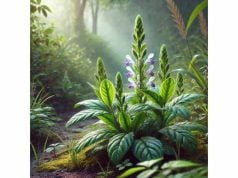
Jimbu is a high-Himalayan herb from the onion family that has long been used in Nepal and nearby mountain regions as both a seasoning and a household remedy. Dried Jimbu may look simple, but once it is warmed in ghee, oil, or soup, it releases a savory aroma that sits somewhere between chives, onion, and wild garlic. That fragrant character explains why it remains important in traditional lentil dishes, broths, pickles, and restorative foods. Ethnobotanical records describe it for coughs, colds, sore throat, indigestion, stomach discomfort, and general convalescent support, especially in hot soups and everyday cooking. Modern research on Allium hypsistum is still limited, but the plant has shown sulfur-rich volatile compounds, phenolics, flavonoids, tannins, and in vitro antioxidant activity that make its traditional reputation scientifically plausible. The most accurate way to understand Jimbu is as a food-first medicinal herb: promising, culturally important, and practical, but not yet proven in large human trials for specific diseases.
Essential Insights
- Jimbu may gently support digestion and respiratory comfort when used in warm foods and soups.
- Its sulfur compounds and phenolic antioxidants likely drive much of its aroma and biological activity.
- A practical food-based range is about 0.5 to 2 teaspoons of dried Jimbu in a shared dish or soup.
- People with onion or garlic allergy, bleeding-risk medication use, or pregnancy concerns should avoid medicinal-dose experimentation.
Table of Contents
- What is Jimbu
- Key compounds and medicinal actions
- What might Jimbu help with
- How to use Jimbu
- How much Jimbu per day
- Side effects and who should avoid it
- What the evidence really shows
What is Jimbu
Jimbu is a perennial Himalayan allium traditionally harvested, dried, and used as both a culinary herb and a local remedy. It is especially associated with Nepal’s higher-altitude food cultures, where a small amount of the dried herb can transform a pot of lentils or soup. Traditional records describe it as a familiar ingredient in dals, vegetable dishes, pickles, and warming broths. Its uses also extend beyond flavor. Jimbu has been used for cough, cold, fever, headache, indigestion, stomach discomfort, and sore throat, usually in simple home preparations rather than concentrated extracts. That detail matters because it shows what kind of herb this is. Jimbu is not historically a dramatic “take this once and expect a major effect” plant. It is a daily-use food medicine that works best in the background of normal eating.
Its ecological and cultural context helps explain its place in the kitchen and home pharmacy. Mountain herbs often need to do several jobs at once: taste good, store well, suit harsh climates, and support basic comfort when fresh produce is limited or seasonal. Jimbu does all of that. It dries well, keeps its aroma, and pairs naturally with simple, warming meals. That practicality is part of its medicinal value. A herb that makes nourishing food more appealing during illness or cold weather may aid recovery even before its phytochemicals are considered.
Because Jimbu belongs to the Allium family, it makes sense to compare it with more familiar relatives such as onion, garlic, leek, and milder chive-like allium herbs. The comparison is useful, but it should not be stretched too far. Family resemblance suggests a sulfur-rich aroma and some overlap in digestive or antimicrobial tradition, yet Jimbu is still its own species with a much smaller research base. Readers who understand it as a mountain allium with culinary and medicinal overlap will have a more accurate picture than those who treat it as either just a garnish or a fully proven therapeutic herb.
The most useful starting conclusion is simple: Jimbu is best approached as a traditional, food-centered herb with meaningful ethnomedicinal credibility and early scientific support. That makes it interesting and worthwhile, but it also means its strongest modern use remains supportive rather than definitive. If your expectations are modest, Jimbu makes sense. If you expect supplement-level clinical proof, the evidence is not there yet.
Key compounds and medicinal actions
Jimbu’s medicinal logic starts with its chemistry. Reviews of Nepali culinary herbs describe Allium hypsistum as containing sulfur-rich volatile compounds such as dimethyl disulfide, dimethyl trisulfide, thiophene-related compounds, and similar aromatic constituents. These compounds likely explain its distinctive onion-garlic scent and part of its digestive and antimicrobial reputation. With allium herbs, aroma is not just culinary decoration. The same molecules that make the plant smell vivid often contribute to the physiological effects people have noticed for generations.
More recent phytochemical work adds depth to that picture. Studies of Allium hypsistum and related species have identified alkaloids, terpenoids, steroidal compounds, glycosides, carbohydrates, amino acids, flavonoids, phenolic compounds, and tannins across different extracts. In one recent analysis, the ethanolic extract of A. hypsistum showed the highest total phenolic content and the strongest free-radical scavenging activity among the tested species, though still below the reference antioxidant. These findings do not prove a clinical effect in humans, but they do show that Jimbu is chemically active in ways that fit its traditional reputation.
A practical way to understand its constituents is to group them by likely function:
- Sulfur compounds support aroma, savory flavor, and possible antimicrobial or digestive effects.
- Phenolics and flavonoids support antioxidant activity.
- Terpenoids and related secondary metabolites may contribute to broader biological actions that are still being studied.
That grouped view is useful because many herbal claims become confusing when readers expect one hero compound. Jimbu probably does not work that way. Its value is more likely to come from a whole matrix of volatile and nonvolatile compounds acting together in food or simple extracts.
The best comparison point is garlic as the best-studied allium reference. Garlic has far stronger human research, clearer pharmacology, and more established supplement data. Jimbu does not have that level of documentation. Still, the shared allium pattern helps explain why Jimbu is linked with digestive warmth, pungency, and possible antimicrobial actions. The gap is not plausibility. The gap is proof. Jimbu’s compounds make the traditional uses reasonable, but they do not yet tell us how large or reliable the effects are in real people.
This distinction is important for anyone interested in medicinal properties. Chemistry can justify interest, but it should not be mistaken for clinical certainty. Jimbu clearly has active constituents. What remains uncertain is how those constituents behave in human bodies when the herb is eaten in soup, heated in oil, or taken more intentionally over time. That is why Jimbu belongs in the category of promising traditional herb, not proven modern remedy.
What might Jimbu help with
Traditional use points most strongly to digestion and minor respiratory complaints. Across Nepali ethnobotanical records, Jimbu is described for cough, colds, sore throat, fever, stomach trouble, and indigestion, often in hot soups or as part of seasoned food. Those uses are modest, familiar, and believable. They match what people often expect from aromatic allium herbs: warming, appetite-friendly, and useful when the body feels sluggish or chilled. This does not mean Jimbu is a treatment for pneumonia, chronic gastrointestinal disease, or significant infection. It means it may have a reasonable place in self-care for ordinary discomforts when used the way tradition uses it.
Digestive support is probably the clearest practical use. Jimbu is often added to lentils, vegetables, and broths, which suggests a role in improving appetite, easing post-meal heaviness, and helping simple foods feel more satisfying and digestible. A sulfur-rich herb that is lightly fried and added to warm meals may stimulate the senses and support digestion in ways that are partly chemical and partly culinary. Some herbs help not because they act like pharmaceuticals, but because they make a meal easier to enjoy, digest, and tolerate. In that role, Jimbu has more in common with fennel for post-meal comfort than with high-dose supplement products.
Respiratory comfort is the second traditional cluster. Hot Jimbu soup for cold symptoms or throat discomfort makes cultural and practical sense. Warm liquids support hydration, aromatic vapors may feel soothing, and savory flavor can help when appetite is poor during illness. Here again, the likely benefit is supportive rather than curative. Jimbu may help the sick person eat, drink, and feel more comfortable. That is valuable, even if it is not the same as directly eliminating a pathogen or shortening an illness in a clinically proven way.
There is also early interest in metabolic and antioxidant support. Laboratory studies have reported antioxidant activity and enzyme-related findings that make Jimbu interesting for future research on glucose handling and oxidative stress. These are promising signals, but they remain preliminary. A laboratory model can suggest that Jimbu deserves more study; it cannot prove that a person’s blood sugar or cardiometabolic risk will improve from using the herb in cooking.
A realistic benefits summary looks like this:
- gentle digestive support in warm meals
- supportive use during minor cold-season discomfort
- antioxidant potential from phenolics and flavonoids
- possible future interest for metabolic research
That is strong enough to justify respect, but not strong enough to justify hype. Jimbu seems most useful when it stays close to its traditional role: a warming, fragrant food herb with modest medicinal promise.
How to use Jimbu
The best way to use Jimbu is the traditional culinary way. Dried Jimbu is usually added briefly to hot ghee or oil, or simmered into soups and broths, so the herb releases its full aroma before serving. This is important because Jimbu is not at its best when treated like a delicate leaf herb. A little heat wakes it up. Once warmed, it becomes savory, rounded, and deeply compatible with lentils, potatoes, vegetables, and simple grain dishes. The fact that it shines in ordinary food is one of its strengths. Many people are more likely to use a herb regularly when it improves a meal than when it asks to be taken separately.
A practical home method is simple:
- Heat a small amount of ghee or oil.
- Add a pinch or two of dried Jimbu for a brief moment.
- Remove from heat once the aroma blooms.
- Pour over dal, soup, cooked vegetables, or a restorative broth.
This approach keeps the herb flavorful without making it harsh. It also reflects how many traditional herbs are intended to work: frequently, modestly, and as part of food.
Soup is another especially sensible use. Traditional records mention Jimbu in hot soups for cough, cold, fever, indigestion, and general weakness. That makes sense because soup is one of the easiest ways to combine warmth, hydration, aroma, and light nourishment. The herb does not need to carry the whole therapeutic burden by itself. Instead, it becomes part of a preparation that supports appetite and comfort during minor illness. This is a better fit for Jimbu than trying to force it into a tincture-or-capsule model when the underlying evidence is still limited.
Jimbu can also work in pickles, spiced potatoes, sautéed greens, and savory grain dishes. In these settings, it behaves much more like a culinary allium than a tea herb. It is not mainly valued for delicate infusion drinking. It is valued for seasoning warm food. That makes it closer to ginger’s warming kitchen-herb role than to a mild floral tisane. The herb’s best medicinal form is often the form that people will actually use, and for Jimbu that usually means a meal.
If you are new to Jimbu, start by using it in food once or twice a week rather than chasing a strong medicinal result. That lets you learn its flavor, assess your tolerance, and get the benefits of familiarity without overdoing a pungent allium herb. Used this way, Jimbu stays in the zone where it is most convincing: practical, traditional, and easy to respect.
How much Jimbu per day
There is no clinically validated human dose for Jimbu in the way readers might expect for a supplement. The literature on Allium hypsistum mainly describes traditional use, ethnobotanical practice, and laboratory findings, not standardized therapeutic dosing. That means honesty matters more than pretending there is a precise medically proven number. The safest and most defensible way to discuss Jimbu dosage is to keep it within culinary and food-remedy ranges.
For most people, a practical range is about 0.5 to 2 teaspoons of dried Jimbu in a shared dish, pot of soup, or lentil preparation. For a single bowl of broth or a lightly seasoned serving, even less may be enough. This is not a clinical dose. It is a food-based working range that respects the herb’s traditional use and the fact that strong human outcome data are still missing. When a herb is normally eaten as part of a meal, that is often the most responsible place to keep it unless stronger evidence exists.
Timing is straightforward. Use Jimbu with meals, especially warm meals. It is more likely to feel comfortable in lunch or dinner dishes than on an empty stomach. If your interest is digestive support, adding it to dal, soup, or vegetables makes more sense than taking it alone. If your interest is minor cold-season comfort, a hot broth or soup is the most traditional and practical form. In both cases, context matters. Jimbu seems to belong in preparations that are warming, moist, and easy to digest.
A sensible self-use framework is:
- start with small culinary amounts
- use it with food rather than separately
- do not combine it with multiple other strong allium products at first
- avoid turning it into an open-ended daily high-dose habit
This framework is less exciting than supplement marketing, but it fits the evidence much better. Jimbu has not earned a more-is-better reputation. Its best case is that small, repeated food use may offer gentle benefits with low friction.
Duration should also stay conservative if you are using it intentionally for comfort rather than just flavor. A few days to a couple of weeks of food-based use makes more sense than months of medicinal dosing, because long-term safety data and interaction data are limited. If someone wants a structured intervention for blood sugar, blood pressure, or another measurable issue, a clinician-guided plan with a better-studied option is more appropriate. Jimbu is valuable, but it is still early in research terms.
Side effects and who should avoid it
Human safety data specific to Jimbu are sparse, so the best safety approach combines common sense, traditional culinary use, and cautious comparison with better-studied allium herbs. In food amounts, Jimbu appears far more reassuring than in imagined medicinal doses. The main risk is not that the herb is known to be highly dangerous. The main risk is that people may assume a common seasoning is automatically safe in any amount simply because it is familiar. With under-researched herbs, that assumption causes more trouble than the plant itself.
Possible side effects are best framed as plausible rather than well-quantified. A pungent allium herb may irritate a sensitive stomach, worsen heartburn in some people, or cause throat and mouth irritation if used too strongly. It may also be poorly tolerated by people who do not do well with onion, garlic, or strong savory aromatics. Because allergy data for Jimbu itself are limited, anyone with a known onion or garlic allergy should be cautious and avoid casual experimentation.
Medication caution also deserves attention. Better-studied allium herbs such as garlic can increase bleeding risk in supplement form and may interact with certain drugs. Jimbu is not garlic, and it should not be described as proven to cause the same effects. Still, because it is an allium herb with limited direct interaction research, people taking anticoagulants, antiplatelet medicines, or high-dose aspirin should avoid medicinal-style Jimbu use unless a clinician says otherwise. The same caution applies before surgery. Food amounts in a normal meal are different from deliberate repeated medicinal dosing.
The groups who should be most conservative include:
- people with onion or garlic allergy
- people taking blood thinners or antiplatelet drugs
- people with very sensitive digestion or active reflux
- pregnant or breastfeeding people considering medicinal use
- children, because a small body can turn a culinary herb into a disproportionately strong exposure
Pregnancy deserves a cautious, food-first stance rather than a strong prohibition claim, because Jimbu-specific pregnancy studies are lacking. Culinary use in normal dishes is one thing. Intentional therapeutic dosing is another, and the latter has not been studied well enough to encourage.
The best safety rule is simple: enjoy Jimbu as a seasoning unless you have a compelling reason to use more. Its strongest traditional credibility is in food. Staying near that traditional pattern is usually the smartest way to preserve both benefit and safety.
What the evidence really shows
The evidence for Jimbu is promising, coherent, and still incomplete. That is the balanced conclusion. On one side, there is enough to take the herb seriously: repeated traditional use, clear botanical identity, a review describing key compounds and customary uses, and early in vitro work showing antioxidant and possible enzyme-related activity. On the other side, there are no large human trials showing that Jimbu reliably improves digestion, cold symptoms, blood sugar, altitude-related discomfort, or any other major clinical endpoint. So the herb has a real evidence signal, but it is still an early signal rather than a settled one.
What the current evidence supports fairly well is this: Jimbu is a traditional Himalayan food herb with biologically active sulfur compounds and phenolic constituents, and its culinary use as a warming, restorative ingredient is entirely reasonable. The antioxidant findings are also credible enough to justify more research. But what the evidence does not support is strong therapeutic language such as proven remedy, clinically established, or effective treatment for specific diseases. That kind of wording would go beyond what the available literature can defend.
This matters because many herbs become distorted when laboratory results are treated as clinical conclusions. An extract that inhibits digestive enzymes in vitro may be interesting, but it does not automatically mean a bowl of Jimbu soup lowers blood sugar in a measurable way. A phytochemical profile rich in flavonoids and phenolics makes antioxidant claims plausible, but it does not guarantee outcomes that a patient would notice. Good herbal interpretation means respecting the distance between chemistry, tradition, and clinical proof rather than collapsing them into one marketing message.
The most useful place to land is somewhere between dismissal and hype. Jimbu is more than a flavoring herb because its chemistry and traditional record are too substantial to ignore. But it is also less than a validated supplement, because high-quality human evidence is still missing. That middle ground is not disappointing. It is actually the most practical position for a reader who wants to use the herb intelligently: cook with it, appreciate its traditional strengths, and do not ask it to carry claims that the evidence has not yet earned.
References
- PHYTOCHEMICAL AND ANTIOXIDANT ASSESSMENT OF ALLIUM HYPSISTUM, ALLIUM PRZEWALSKIANUM AND ALLIUM WALLICHII 2024
- A Comparative In Vitro Study on Potential of Anti-Diabetic and Anti-Oxidant Properties in Extracts of Allium Hypsistum, Allium Przewalskanium and Allium Wallichii 2023
- Culinary herbs and spices in Nepal: A review of their traditional uses, chemical constituents, and pharmacological activities 2021
- Ethnomedicinal Uses of Plant Resources in Puranchaur Village, Kaski, Nepal 2022
- Garlic 2025
Disclaimer
This article is for educational purposes only and is not a diagnosis, treatment plan, or substitute for medical advice. Jimbu has a meaningful traditional history, but modern human research on Allium hypsistum remains limited. Use culinary amounts first, and speak with a qualified clinician before trying medicinal use if you take prescription medicines, have bleeding or digestive concerns, are pregnant or breastfeeding, or have a known allergy to onion or garlic.
Share this article on Facebook, X, or your preferred platform if you know someone who would appreciate a balanced, practical guide to Jimbu.