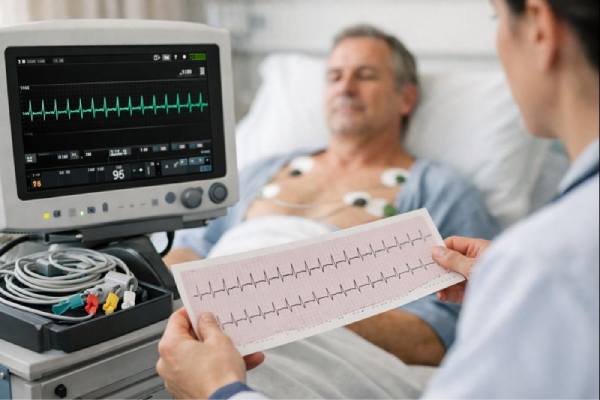
Junctional tachycardia is a fast heart rhythm that starts near the heart’s “junction,” where electrical signals normally pass from the upper chambers to the lower chambers. It’s less common than many other rapid rhythms, but it matters because it can reduce how well the heart pumps—especially in infants, after heart surgery, or when certain medicines or illnesses irritate the heart’s electrical tissue. Some episodes are brief and mild. Others can cause low blood pressure, shortness of breath, or heart failure symptoms if the fast rate persists.
The reassuring news is that clinicians can usually identify junctional tachycardia with an ECG and treat it by correcting triggers, slowing the rhythm, and supporting circulation when needed. Understanding the warning signs helps you know when it’s urgent.
Table of Contents
- What it is and why it matters
- What causes junctional tachycardia?
- Risk factors and common triggers
- Symptoms and possible complications
- How doctors diagnose it
- Treatment options and what to expect
- Day-to-day management and when to seek care
What it is and why it matters
“Junctional” refers to the atrioventricular (AV) junction—specialized tissue between the atria (upper chambers) and ventricles (lower chambers). In a typical heartbeat, the sinus node in the right atrium sets the pace, and the AV node relays the signal downward in a controlled way. In junctional tachycardia, the AV junction (or nearby tissue such as the His bundle region) becomes the pace-setter at an abnormally fast rate—often over 100 beats per minute in adults, and sometimes much higher in children.
There are a few related rhythms that are easy to mix up:
- Accelerated junctional rhythm: a junctional rhythm that is faster than a usual “escape” rhythm but not extremely rapid. It can be benign or a sign of irritation to the conduction system.
- Junctional ectopic tachycardia (JET): a more specific form, often seen in infants/children, especially after congenital heart surgery. It typically reflects increased automaticity (the tissue “fires” on its own).
- AV nodal re-entrant tachycardia (AVNRT): a common supraventricular tachycardia caused by a re-entry circuit near the AV node. It can look similar on an ECG, but management choices can differ.
Why it matters comes down to timing. When the AV junction drives a fast rhythm, the atria and ventricles may lose their normal coordination (AV synchrony). That can reduce stroke volume (how much blood the heart ejects each beat). In people with limited cardiac reserve—newborns, postoperative patients, or those with heart muscle weakness—the combination of a high rate and poor filling can quickly lead to low blood pressure, poor perfusion, and worsening heart failure. If the fast rhythm continues for days or weeks, some patients can develop tachycardia-induced cardiomyopathy, where the heart weakens primarily because it has been beating too fast for too long.
The key takeaway: junctional tachycardia is not automatically an emergency, but persistent, very fast, or symptomatic episodes deserve prompt medical assessment because the risk is mostly about reduced pumping efficiency and the body’s response to sustained stress.
What causes junctional tachycardia?
Junctional tachycardia usually happens when the AV junction becomes irritated, overstimulated, or damaged, making it more likely to generate rapid impulses or participate in abnormal circuits. Clinicians often group causes into a few practical buckets:
1) Postoperative or procedural irritation (common in children)
After congenital heart surgery, swelling, local trauma, or inflammation near the AV node region can trigger JET. Factors like longer bypass times, higher surgical complexity, and early postoperative stress hormones can raise risk. The rhythm often appears in the first 24–48 hours after surgery, when the heart is already vulnerable from anesthesia, fluid shifts, and temporary pumping weakness.
2) Medication effects and toxicity
Certain drugs can promote junctional rhythms by changing conduction or automaticity. A classic example is digoxin toxicity, which can slow conduction through the AV node while also increasing automaticity in pacemaker tissues—an unstable combination that can produce junctional rhythms and other arrhythmias. Stimulants and some catecholamine infusions (used in intensive care) can also increase the tendency for automatic tachycardias.
3) Heart muscle or conduction system disease
Myocarditis (inflammation of the heart muscle), ischemia (reduced blood flow), cardiomyopathies, and infiltrative diseases can disturb the conduction system. In adults, junctional tachycardia may appear during acute illness, after heart attacks, or with structural heart disease—sometimes as a sign that the AV junction is under stress.
4) Electrolyte and physiologic stress
Low magnesium, low potassium, fever, pain, dehydration, anemia, and low oxygen states can make cardiac cells more “excitable.” In postoperative settings, this is especially relevant: even modest electrolyte abnormalities can tip a sensitive conduction system into a sustained rhythm problem.
5) Congenital and genetic forms (rarer)
Congenital JET can present in infancy and may be persistent. Some cases show familial clustering, suggesting genetic susceptibility affecting ion channels or conduction tissue. These forms can be more resistant to treatment and more likely to cause heart failure if the rate remains high.
A helpful way to think about cause is this: junctional tachycardia is often less about a single “spark” and more about a vulnerable substrate—tissue near the AV junction that is irritated—plus triggers such as stress hormones, electrolytes, temperature, or medications. That is why treatment commonly focuses on both controlling the rhythm and fixing the underlying drivers.
Risk factors and common triggers
Risk depends heavily on age and clinical setting. Many adults will never encounter junctional tachycardia, while pediatric cardiac units plan for it because it can be a known postoperative complication.
Higher-risk groups
- Infants and young children after congenital heart surgery, especially procedures near the AV node region (for example, repairs involving the septum or AV valves).
- People receiving intensive care catecholamines (medications that raise heart rate and contractility) during shock, post-surgery recovery, or severe illness.
- Patients with digoxin exposure, particularly older adults, people with kidney impairment, low body weight, dehydration, or interacting medications that raise digoxin levels.
- People with myocarditis, recent heart injury, or significant structural heart disease, where the conduction system is more irritable.
- Those with congenital (persistent) junctional ectopic tachycardia, a rare condition that may present in infancy.
Common triggers that can flip risk into an episode
- Fever: higher temperature speeds cellular firing and can escalate a borderline rhythm into sustained tachycardia.
- Pain, agitation, and inadequate sedation (in hospital settings): stress hormones increase automaticity.
- Low magnesium and low potassium: even “slightly low” values can matter in vulnerable patients.
- Hypovolemia or dehydration: the body compensates with adrenaline, increasing rate and irritability.
- Hypoxia (low oxygen) or significant lung disease: raises strain on the heart and can destabilize rhythm.
- Anemia: the heart may speed up to deliver oxygen, increasing susceptibility to tachyarrhythmias.
- Stimulants (caffeine excess, energy drinks, certain decongestants, illicit stimulants): can contribute in susceptible individuals.
Risk cues that clinicians take seriously
- A very fast rate (especially in infants) that does not settle with calm, fluids, or fever control.
- Signs of poor perfusion: cool extremities, low urine output, altered mental status, gray/blue color.
- Rising lactate or worsening kidney function in critical care—suggesting the body is not getting enough blood flow.
- Loss of AV synchrony on ECG, which can worsen cardiac output.
If you’re outside the hospital setting, the most practical “risk factor” is context: junctional tachycardia is more likely when you have a significant heart condition, are recovering from a cardiac procedure, or are taking medications that affect conduction. For everyone else, palpitations and a fast pulse are still worth evaluating—but the differential diagnosis is broader, and many cases are not junctional tachycardia.
Symptoms and possible complications
Symptoms range from subtle to severe, and they depend on three main variables: how fast the rhythm is, how long it lasts, and how well the heart tolerates losing its normal timing.
Possible symptoms
- Palpitations (a racing, fluttering, or pounding heartbeat)
- Shortness of breath, especially with exertion or when lying flat
- Chest discomfort or pressure (more concerning in older adults or those with coronary disease)
- Dizziness or lightheadedness
- Fatigue and reduced exercise tolerance
- Fainting (syncope), which suggests a dangerous drop in blood pressure or other serious rhythm issues
- In infants: poor feeding, sweating with feeds, rapid breathing, irritability, lethargy, or a grayish color
Signs that an episode may be hemodynamically significant
- Low blood pressure, confusion, cold clammy skin
- Marked shortness of breath, worsening oxygen needs
- New or worsening swelling in legs/abdomen (fluid retention)
- Reduced urine output (a sign perfusion is low)
Complications clinicians watch for
- Heart failure decompensation: The rapid rate reduces filling time, and AV dyssynchrony can further reduce output. In vulnerable patients this can spiral quickly.
- Tachycardia-induced cardiomyopathy: Persistent high heart rate over weeks to months can weaken the heart muscle. The good news is that function often improves when rate control is achieved.
- Myocardial ischemia: In adults with coronary disease, sustained tachycardia can provoke angina or even contribute to injury because the heart needs more oxygen while receiving less during shortened diastole.
- Postoperative instability: In children after surgery, junctional tachycardia can prolong ventilation, increase ICU stay, and complicate recovery because it raises venous pressures and reduces forward flow.
When symptoms suggest an emergency
Seek urgent care (or emergency services) if a fast heartbeat is accompanied by:
- Fainting, severe dizziness, confusion
- Chest pain/pressure lasting more than a few minutes
- Severe shortness of breath, blue lips, or inability to speak full sentences
- Weakness on one side, trouble speaking, or new severe headache
- In infants: poor responsiveness, breathing distress, or feeding refusal with sweating
One practical insight: people sometimes dismiss palpitations when they come and go, but the pattern matters. If episodes are longer, more frequent, or increasingly associated with shortness of breath or near-fainting, that trend is a stronger warning than any single brief spell.
How doctors diagnose it
Diagnosis starts with confirming the rhythm and then answering a second question: what is the mechanism? That distinction guides treatment.
1) History and exam
Clinicians ask about onset (sudden vs gradual), triggers (fever, dehydration, medication changes), duration, and symptoms. They also review medication lists carefully—especially digoxin, beta-blockers, calcium channel blockers, and interacting drugs. In children, timing relative to surgery is a major clue.
2) ECG (electrocardiogram)
The ECG is the cornerstone. Junctional tachycardia often shows:
- A narrow QRS complex (because the ventricles are activated normally), though it can be wide if there is a pre-existing bundle branch block.
- Absent, inverted, or “hidden” P waves, because atrial activation may occur backward (retrograde) or not be linked normally to ventricular beats.
- AV dissociation in some cases, particularly JET: the ventricles run fast from the junction, and atrial activity may march independently.
3) Continuous monitoring
A rhythm strip or telemetry helps capture transitions and responses to interventions. Holter monitors or patch monitors may be used for intermittent symptoms outside the hospital.
4) Differentiating from look-alikes
This step prevents mis-treatment:
- AVNRT often starts and stops abruptly and may respond strongly to vagal maneuvers or adenosine. Junctional tachycardia can be less responsive if it’s automatic rather than re-entrant.
- Atrial tachycardia may show abnormal P-wave patterns that precede QRS complexes.
- Sinus tachycardia usually has a clear reason (fever, pain, dehydration) and preserves the normal P wave before each QRS.
Clinicians sometimes use pacing maneuvers or electrophysiology study in complex cases, especially when considering ablation.
5) Lab tests and imaging to find the “why”
Common evaluations include:
- Electrolytes (potassium, magnesium, calcium)
- Kidney function (important for drug clearance, including digoxin)
- Thyroid studies if clinically indicated
- Drug levels when relevant (for example, digoxin level)
- Markers of infection/inflammation if myocarditis is possible
- Echocardiogram to assess heart function and rule out structural contributors
A useful mental model is that diagnosis is both a snapshot (the ECG pattern) and a story (the clinical context). The same ECG rate can mean very different things in a healthy adult after three cups of coffee versus a two-month-old in the ICU after heart surgery.
Treatment options and what to expect
Treatment is individualized, but it usually follows a sequence: stabilize the patient, remove triggers, slow or terminate the rhythm, and prevent recurrence when necessary.
1) Immediate stabilization (if symptoms are significant)
If blood pressure is low or breathing is strained, clinicians prioritize oxygenation, IV access, fluids (when appropriate), and careful support of circulation. In critical care settings, they also reduce unnecessary catecholamine stimulation when feasible.
2) Correct reversible drivers
This step is often as important as any antiarrhythmic:
- Treat fever aggressively (antipyretics, cooling measures)
- Correct low magnesium and potassium (common targets in postoperative care)
- Treat pain and agitation; optimize sedation in ICU settings
- Address dehydration, anemia, or hypoxia
- Review medications and stop potential offenders when safe
3) Rhythm control vs rate control
The approach depends on mechanism and severity.
- For postoperative JET (common pediatric scenario): supportive measures plus antiarrhythmics are frequently used. Amiodarone is a common choice in many centers. Cooling strategies (controlled mild hypothermia) may be used in selected ICU settings to reduce automaticity. Some patients respond to beta-blockade in carefully monitored doses.
- For medication-related junctional tachycardia: treat the toxicity first (for example, antidotes and supportive care in digoxin toxicity), then manage the rhythm in a monitored environment.
- For stable, less severe cases: clinicians may focus on rate control and monitoring while treating the trigger, especially if the rhythm is expected to resolve.
4) Electrical cardioversion
Because many junctional tachycardias are automatic (not re-entrant), shock therapy may be less effective than it is for some other tachycardias. Cardioversion is still considered in unstable patients, but clinicians often pair it with strategies that address the underlying automatic focus and physiologic stressors.
5) Catheter ablation (selected cases)
For recurrent or persistent symptomatic junctional tachycardia—especially congenital forms—catheter ablation can be considered. It requires careful risk–benefit discussion because the target is near the AV node, and injury could cause AV block requiring a pacemaker. In experienced centers, mapping and energy delivery strategies aim to minimize that risk, and cryoablation may be considered in some contexts.
What to expect
- Postoperative JET often improves within days as inflammation and stress hormones settle, especially when triggers are controlled early.
- Congenital or persistent forms can require longer-term medication strategies and closer follow-up.
- When tachycardia-induced cardiomyopathy occurs, heart function may improve over weeks to months after reliable rate/rhythm control—an encouraging trajectory that reinforces the value of early treatment.
Day-to-day management and when to seek care
Living with (or after) junctional tachycardia is mostly about preventing triggers, tracking patterns, and knowing when symptoms have crossed the line from “monitor” to “act now.”
Practical self-management (when you’re stable and under care)
- Know your baseline: resting heart rate, typical blood pressure, and what “normal palpitations” feel like for you.
- Hydration and illness planning: dehydration and fever are common accelerants. During viral illnesses, prioritize fluids, rest, and fever control as advised by your clinician.
- Medication discipline: take prescriptions exactly as directed, and avoid “doubling up” if you miss a dose unless a clinician tells you to. If you take digoxin or other narrow-therapeutic-index drugs, ask what symptoms should prompt immediate contact.
- Avoid stimulant overload: limit energy drinks and high-dose caffeine, and be cautious with decongestants that can raise heart rate.
- Electrolyte awareness: if you are prone to low potassium/magnesium (for example, on diuretics), ask whether periodic blood tests and supplementation make sense.
- Use wearable data wisely: watches and finger pulse checks can help document timing and rate trends. Record: start time, peak rate, symptoms, and what you were doing. This log often shortens the path to a clear diagnosis.
Follow-up care that often matters
- Repeat ECGs or ambulatory monitoring to confirm resolution
- Echocardiogram if symptoms persist or if the rhythm was prolonged
- Medication reviews after any hospitalization or surgery
- Pediatric follow-up plans that include clear thresholds for calling the cardiac team, especially after congenital heart surgery
When to seek urgent care
Go urgently (or call emergency services) if you have a fast heartbeat plus:
- Chest pain/pressure, fainting, severe dizziness, confusion
- Severe shortness of breath, blue/gray color, or sudden weakness
- New neurologic symptoms (trouble speaking, facial droop, one-sided weakness)
- For infants: breathing distress, poor responsiveness, feeding refusal with sweating, or marked lethargy
When to contact your clinician promptly (same day or next day)
- Episodes becoming more frequent or longer
- Palpitations with new shortness of breath or exercise intolerance
- A resting rate that stays unusually high for hours without an obvious cause
- Medication side effects (especially if on antiarrhythmics): severe fatigue, faintness, visual changes, or new swelling
A final, often-overlooked point: junctional tachycardia may be the signal rather than the core problem. Treating the rhythm is important, but finding and fixing the trigger—fever, electrolytes, medication toxicity, postoperative stress, myocarditis—is what most reliably reduces recurrence and protects heart function long term.
References
- Diagnosis and management of junctional ectopic tachycardia in children 2021 (Review)
- Clinical risk prediction score for postoperative accelerated junctional rhythm and junctional ectopic tachycardia in children with congenital heart disease 2023
- Junctional Tachycardia: A Critical Reassessment 2023 (Review)
- Ivabradine in the treatment of congenital junctional ectopic tachycardia: A systematic review 2025 (Systematic Review)
Disclaimer
This article is for educational purposes only and does not provide medical advice, diagnosis, or treatment. Junctional tachycardia can be harmless in some situations and dangerous in others, especially in infants, postoperative patients, and people with heart disease or medication toxicity. If you have chest pain, fainting, severe shortness of breath, signs of stroke, or a rapidly worsening condition, seek emergency care. For personal guidance, consult a qualified clinician who can interpret your symptoms, medications, and test results.
If you found this article helpful, please share it on Facebook, X (formerly Twitter), or any platform you prefer, and follow us on social media. Your support through sharing helps our team continue producing high-quality health content.