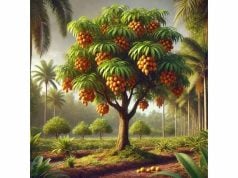
Kan Phai Mahidol, botanically known as Afgekia mahidoliae, is a rare flowering vine from Thailand’s legume family. It is better known in botanical and academic circles than in everyday herbal practice, which makes it an unusual subject: part ornamental symbol, part conservation plant, and part emerging source of bioactive leaf compounds. Unlike widely used medicinal herbs, Kan Phai Mahidol does not have a long, well-documented record of standardized clinical use in humans. What it does have is a growing body of laboratory and phytochemical research centered on its leaves, especially their flavonoid glycosides.
That difference matters. The most promising findings point to antioxidant activity and possible wound-support effects, particularly through compounds linked with keratinocyte and fibroblast migration. These signals are interesting, but they remain preclinical. In other words, this is not yet a proven herbal medicine with established oral doses, routine supplement forms, or broad clinical guidance. The most helpful way to approach Kan Phai Mahidol is with curiosity and caution: as a botanically important plant with real medicinal potential, but still limited human evidence.
Quick Overview
- Kan Phai Mahidol is a rare Thai vine whose leaf extracts show antioxidant activity in laboratory studies.
- Its most plausible medicinal direction is skin and wound-support research rather than general oral wellness use.
- Key leaf compounds include juglanin, astragalin, nicotiflorin, isoquercetin, apigenin-7-O-glucuronide, and arbutin.
- No standardized human oral dose has been established.
- Pregnant or breastfeeding people, children, and anyone self-medicating with concentrated extracts should avoid unsupervised use.
Table of Contents
- What is Kan Phai Mahidol?
- Key compounds and medicinal properties
- Potential benefits and realistic outcomes
- Does it help wound repair?
- How is it used?
- How much should you take?
- Safety, interactions, and evidence
What is Kan Phai Mahidol?
Kan Phai Mahidol is a woody climbing plant in the Fabaceae family, the same broad plant family that includes peas, beans, licorice, and many other flowering legumes. It is native to Thailand and is especially associated with limestone habitats in the country’s western region. Botanically, it is unusual enough that many readers will never have seen it sold as a tea, tincture, or capsule in mainstream herbal markets. In fact, one of the most important things to understand at the start is that this plant is not a common commercial herb. It sits closer to the edge of medicinal research than to everyday supplement use.
That matters because readers often assume that every plant with “health benefits” has a stable traditional dose, a clear preparation style, and a body of human studies behind it. Kan Phai Mahidol does not. Its medical interest comes mainly from leaf chemistry and early laboratory findings. Its broader public identity is also shaped by its rarity and symbolic value. It has been recognized as the symbolic plant of Mahidol University, which adds cultural importance but does not automatically translate into clinical usefulness.
There is also a naming detail worth knowing. Older sources and some scientific records use the spelling Afgekia mahidolae, while current accepted taxonomy uses Afgekia mahidoliae. When you search for studies, both spellings may appear. That can make the research look more scattered than it really is. If you want a fuller picture, it helps to search both versions.
From a practical standpoint, the leaf is the plant part that matters most in medicinal discussions. That is where researchers have isolated the flavonoid glycosides most often linked with antioxidant and wound-related activity. The flowers are striking, and the vine itself has ornamental appeal, but the medicinal conversation is mostly about leaf extracts rather than casual whole-plant use.
Another useful perspective is to see Kan Phai Mahidol as a “research herb,” not a “kitchen herb.” You would not approach it the way you approach turmeric, ginger, or mint. There is no established tradition of adding it to food for daily preventive use. There is no well-known standardized tea method. There is no ordinary supplement category built around it. That alone should shape expectations.
So what is it, really? It is a rare Thai leguminous vine with identified leaf phytochemicals, early wound-healing and antioxidant signals, and a medicinal profile that remains promising but incomplete. The reader who benefits most from learning about it is not someone looking for a miracle herb, but someone who wants to understand where a plant sits on the spectrum from traditional curiosity to clinically useful botanical.
Key compounds and medicinal properties
The most important medicinal information about Kan Phai Mahidol comes from the chemistry of its leaves. Researchers studying the leaf extracts have identified several flavonoid glycosides and one notable hydroquinone glycoside. These compounds help explain why the plant has drawn interest for antioxidant activity and cellular events related to wound support.
The main reported compounds include:
- juglanin
- astragalin
- nicotiflorin
- isoquercetin
- apigenin-7-O-glucuronide
- arbutin
This list is more useful than it first appears. It tells you that Kan Phai Mahidol is not being studied because of one famous essential oil or one dramatic alkaloid. Instead, its profile is built around flavonoids and related phenolic compounds. These are the kinds of molecules often associated with antioxidant action, inflammation-related signaling, and tissue-response pathways in experimental models.
Three compounds deserve special attention. Juglanin, astragalin, and nicotiflorin are all kaempferol-derived glycosides. In simplified terms, they are flavonoids attached to sugar groups, and that structure can affect absorption, stability, and cellular behavior. Nicotiflorin, also known as kaempferol-3-O-rutinoside, is particularly important because it has been studied directly in relation to keratinocyte migration. Juglanin and nicotiflorin have also shown in vitro effects on fibroblast migration, which matters because fibroblasts help build connective tissue during wound repair.
The medicinal properties most often discussed for this plant are:
- antioxidant
- wound-supporting
- antimicrobial in early work
- possibly anti-inflammatory through flavonoid-mediated pathways
Still, it is important not to flatten chemistry into guaranteed health outcomes. A plant containing antioxidant flavonoids does not automatically become a clinically useful antioxidant treatment. Many plants contain interesting flavonoids. What matters is the extract type, the concentration, the route of use, and whether findings hold up outside the lab.
One helpful comparison is with green tea polyphenols. Green tea also contains well-studied bioactive compounds with strong mechanistic data, but even there, the real-world effect depends on preparation, dose, context, and outcome measured. With Kan Phai Mahidol, the gap between compound discovery and practical human use is even wider.
Another subtle point is that the medicinal story here is leaf-specific. If someone encounters the plant as an ornamental vine and assumes that any part can be brewed, chewed, or applied medicinally in the same way, that would go beyond the evidence. Current interest is tied to extracted leaf chemistry, not to informal whole-plant use.
So when people ask about the “key ingredients” of Kan Phai Mahidol, the best answer is not marketing language. It is a concise chemical truth: this plant’s medicinal promise lies mainly in flavonoid glycosides and related phenolics that appear capable of supporting antioxidant defense and wound-related cell behavior in preclinical settings.
Potential benefits and realistic outcomes
The phrase “health benefits” can easily become misleading with a plant like Kan Phai Mahidol. The research is intriguing, but the benefit profile is narrower and more tentative than with established medicinal herbs. The most responsible way to present its benefits is to separate plausible outcomes from proven therapeutic uses.
The most realistic potential benefits include:
- support for antioxidant defense in laboratory models
- support for cell migration involved in wound repair
- possible antimicrobial effects in early extract research
- possible anti-inflammatory effects inferred from its flavonoids
Of these, wound-related support is the most coherent. It connects the plant’s chemistry with specific laboratory findings rather than broad wellness language. Antioxidant activity is also reasonable to mention, but readers should understand what that usually means in practice. Much antioxidant research happens in assays that measure how extracts handle free radicals or reduce oxidant stress under controlled conditions. That is useful, but it is not the same as showing that an herb improves long-term human health when taken orally.
A more grounded way to think about Kan Phai Mahidol is this: it may have pharmacologic value as a source of compounds for topical or targeted therapeutic development. That is different from saying it is a good everyday supplement. Many promising plants never become practical self-care herbs because their best uses depend on extraction, formulation, or compound isolation.
Potential benefit areas can be ranked by confidence:
- most plausible: wound-support biology and antioxidant activity
- possible but less defined: topical skin-support applications
- uncertain: routine internal use for general health
- not established: treatment of chronic disease, immunity boosting, cognitive enhancement, or broad detox claims
That last category matters because niche herbs often attract inflated claims simply because they are rare. Rarity is not evidence. A plant can be botanically special and still medically underdeveloped.
There is also a pattern worth noticing in the research language. The strongest statements tend to involve cells, extracts, and isolated compounds. The weakest statements are the ones people often want most, such as “Does it help energy?” or “Can it heal the body?” At this stage, the honest answer to those larger lifestyle questions is no one really knows.
If a reader is looking for a practical benefit today, the most defensible takeaway is that Kan Phai Mahidol may become relevant in future skin-support or wound-oriented formulations if the research progresses. That is a meaningful possibility, but it is not the same as a validated current remedy. In this sense, Kan Phai Mahidol resembles a plant at the beginning of a therapeutic story, not the middle or the end of one.
That distinction may sound less exciting, but it is more useful. It protects readers from false confidence and preserves what is genuinely interesting about the plant: not hype, but potential.
Does it help wound repair?
If Kan Phai Mahidol has one medicinal direction that stands out above the rest, it is wound-related research. That does not mean it is a proven wound herb in the clinical sense. It means the most specific and biologically meaningful data so far point toward processes involved in skin repair.
Two findings are especially important. First, certain compounds isolated from the leaf extract have been shown to promote fibroblast migration in an in vitro scratch-wound model. Second, kaempferol-3-O-rutinoside from Afgekia mahidoliae has been shown to promote keratinocyte migration through pathways involving focal adhesion kinase and Rac1 activation. Those details matter because fibroblasts and keratinocytes play different but complementary roles in wound healing. Keratinocytes help re-cover the wound surface. Fibroblasts help rebuild the supportive matrix beneath it.
Taken together, these findings create a coherent scientific signal. The plant does not just look “antioxidant” in a vague way. It appears to influence cell behavior that is directly relevant to re-epithelialization and wound closure. That gives Kan Phai Mahidol a sharper medicinal identity than many niche plants ever develop.
Still, there are limits:
- these are preclinical findings
- they do not prove benefit in human wounds
- they do not establish a safe over-the-counter dosage
- they do not tell us whether crude leaf preparations work the same way as isolated compounds
Those limits are not minor. A compound that improves cell migration in a lab can fail in real skin because penetration, stability, concentration, irritation, and formulation all matter. The move from petri dish to cream, gel, or dressing is a big one.
It is also useful to compare Kan Phai Mahidol with better-established wound-support botanicals. Unlike gotu kola for skin healing, Kan Phai Mahidol does not yet have the same level of clinical tradition, topical product development, or human-use literature. That does not make it unimportant. It simply places it earlier in the evidence curve.
Another practical insight is that its wound potential may be more relevant topically than orally. When a plant’s most compelling data involve skin-cell migration, the most logical future applications are local, targeted, and formulation-dependent. Oral use might eventually matter, but current evidence does not push strongly in that direction.
So does it help wound repair? The best answer is yes in preclinical models, especially through leaf-derived flavonoids affecting keratinocytes and fibroblasts. But there is not enough evidence to say that casual home use of the plant will safely improve wound healing in people. For now, its strongest role is as a promising research lead rather than a proven home remedy.
How is it used?
Kan Phai Mahidol is not used the way most readers expect medicinal herbs to be used. There is no widely recognized tea ritual, no standard culinary role, and no common retail supplement category built around it. In practice, its “use” falls into three different lanes: botanical cultivation, laboratory extraction, and cautious experimental herbal interest.
The first lane is botanical and conservation-oriented. Because this is a rare Thai species, cultivation can matter as much as consumption. Tissue culture research has been explored in part because it offers a way to study and preserve the plant while also increasing phenolic and flavonoid production under controlled conditions. That is a very different story from wild-harvesting a familiar herb.
The second lane is research use. Scientists have focused on leaf extracts, isolated compounds, and tissue-culture systems. In this setting, Kan Phai Mahidol is not treated as a folk tea. It is treated as a phytochemical source. That distinction is important because it means the most interesting results usually come from selected extracts, not from unstandardized home preparations.
The third lane is cautious herbal curiosity. A reader may encounter the plant and wonder whether to use it as a topical botanical or experimental supplement. The most reasonable response is to treat it as a plant that is not yet ready for casual self-medication. If used at all, it makes more sense in topical, professionally guided, or research-oriented formats than in improvised oral use.
Practical forms that may eventually matter include:
- standardized leaf extracts
- compound-enriched topical preparations
- future wound-support formulations
- cultivated research material rather than wild-collected plant matter
There are also important things not to do:
- do not assume ornamental plant material is safe to ingest
- do not treat a rare wild plant as a casual foraging herb
- do not equate one extract with another
- do not assume that leaf chemistry guarantees whole-plant safety
For readers who mainly want a topical botanical with a clearer practical record, calendula for skin support is currently much easier to use responsibly. That comparison helps put Kan Phai Mahidol in perspective. The latter is intriguing, but it is not yet a straightforward consumer herb.
If topical experimentation ever becomes more common, a careful approach would still matter: standardized source, good manufacturing quality, patch testing, and limited-area use first. But even that advice reflects general botanical caution more than plant-specific clinical knowledge.
So how is Kan Phai Mahidol used today? Mostly as a rare plant of botanical importance and a research source for bioactive leaf compounds. Its medicinal use remains more potential than practice, and that is exactly why it should be handled with restraint.
How much should you take?
This is the section where honesty matters most. There is no standardized human oral dose for Kan Phai Mahidol. At present, the literature does not provide the kind of clinical dosing guidance you would expect for an established medicinal herb. That means any confident milligram recommendation for routine self-use would be more guesswork than evidence.
Why is dosing so uncertain?
- the key studies are preclinical
- the most interesting work uses isolated compounds or defined extracts
- there are no strong human trials establishing oral effectiveness
- there are no recognized monographs setting standard adult doses
That leaves readers in an unusual position. They may know the plant contains promising flavonoids, yet still have no validated answer to “How much per day?” This is not a flaw in the article. It reflects the actual state of the science.
A practical way to think about dose is to separate three questions:
- Is there an evidence-based oral dose?
No. Not at this time. - Is there a validated topical dose?
Not in the way there is for established medicinal creams or monographed herbs. - Can research concentrations be converted into consumer doses?
No. Cell-culture concentrations and elicitor studies do not translate directly into safe human intake.
That last point is especially important. Research papers may mention chemical concentrations, extract fractions, or tissue-culture conditions. Those numbers can look precise, but they are not consumer dosage guides.
For readers who still encounter a product labeled as Afgekia mahidoliae extract, the safest practical rules are:
- use only products with clear sourcing and composition
- follow the manufacturer’s labeled serving rather than inventing your own dose
- start with the lowest listed amount
- use one product at a time
- avoid long unsupervised courses
- stop if irritation, stomach upset, or unusual symptoms occur
For topical experimentation, one cautious general step is reasonable even without plant-specific dose data: apply a small amount to an intact patch of skin first and wait 24 hours before broader use. That is not a Kan Phai Mahidol dose recommendation. It is a standard botanical safety practice.
Another useful insight is that compound strength matters more than gross herb weight. A capsule containing a non-standardized powdered leaf is not equivalent to an extract enriched for specific flavonoids. Without standardization, milligrams alone do not tell the full story.
So how much should you take? The most accurate answer is that you should not self-prescribe this plant as though it had an established daily intake. Until human studies define safe and useful ranges, Kan Phai Mahidol belongs in the category of experimental or specialist-guided botanical use, not routine self-dosing.
Safety, interactions, and evidence
Kan Phai Mahidol’s safety profile is limited by the same issue that limits its dosing profile: there are too few human data. That does not mean it is dangerous by default. It means its risks have not been mapped well enough to support casual, confident use. With many herbs, safety is shaped by long food use, traditional practice, or clinical trials. Here, none of those foundations is especially strong.
The safest summary is that concentrated medicinal use should be approached cautiously because:
- there are no robust human safety trials
- interaction data are not well defined
- product forms are not standardized
- most evidence comes from lab studies rather than routine human use
Who should avoid unsupervised use?
- pregnant people
- breastfeeding people
- children and adolescents
- people with chronic medical conditions
- people taking prescription medicines
- anyone with a known legume-family plant sensitivity
These groups are not singled out because specific harm has been proven in each case. They are singled out because evidence is too thin to justify experimentation.
Possible safety concerns are mostly theoretical or general botanical ones at this stage:
- skin irritation from topical preparations
- gastrointestinal discomfort from oral extracts
- allergy or hypersensitivity
- unpredictable effects from concentrated products
- variation in potency between preparations
Interactions are also more a matter of caution than documented certainty. Since the plant contains bioactive flavonoids, it is reasonable to be careful with any medication regimen that already requires close monitoring. But it would be irresponsible to claim a long list of proven herb-drug interactions when the direct evidence is not there.
The evidence base overall can be described in layers.
The strongest layer:
- leaf phytochemistry is real and increasingly defined
- antioxidant activity has been demonstrated in extract-focused work
- wound-related cellular effects are biologically meaningful
The middle layer:
- antimicrobial and broader protective effects remain plausible
- topical development appears more logical than oral wellness use
The weakest layer:
- established human benefits
- standardized dosage
- long-term safety
- clinical interaction mapping
That hierarchy is essential. It prevents the common mistake of taking a promising plant and speaking about it as though it were already a mature therapeutic tool.
There is also a broader lesson here. Some herbs become famous because their traditional use is deep. Others become interesting because their chemistry is sharp. Kan Phai Mahidol belongs more to the second group. Its current value lies in what it may teach formulators and researchers about wound-support compounds, not in what it already offers as a ready-made daily remedy.
Readers who want well-established oral or topical botanicals should keep that distinction in mind. Even herbs often marketed for focus or skin support, such as bacopa for cognitive support, usually come with a larger practical tradition than Kan Phai Mahidol does. With this plant, the evidence is promising but early, and that is the right note to end on: serious interest, careful boundaries, and no hype.
References
- Afgekia mahidoliae BL Burtt & Chermsir. – Flora of Thailand 2020
- Establishment of Afgekia mahidolae B.L. Burtt & Chermsir in vitro culture and effect of elicitation on its bioactive compounds 2023
- A Comprehensive Review of Molecular Mechanisms, Pharmacokinetics, Toxicology and Plant Sources of Juglanin: Current Landscape and Future Perspectives 2024 (Review)
- Medicinal Importance, Pharmacological Activities and Analytical Aspects of a Flavonoid Glycoside ‘Nicotiflorin’ in the Medicine 2022 (Review)
- Kaempferol-3-O-rutinoside from Afgekia mahidoliae promotes keratinocyte migration through FAK and Rac1 activation 2015
Disclaimer
This article is for educational purposes only and is not medical advice. Kan Phai Mahidol is a rare plant with limited human research, no standardized oral dose, and an incomplete safety profile. Do not use it to treat wounds, infections, chronic disease, or any other health condition in place of qualified medical care. Seek advice from a clinician, pharmacist, or trained herbal professional before using concentrated extracts, especially during pregnancy, breastfeeding, childhood, or while taking prescription medicines.
If this article helped you, please share it on Facebook, X, or another platform you use so more readers can find careful, evidence-aware herbal information.