
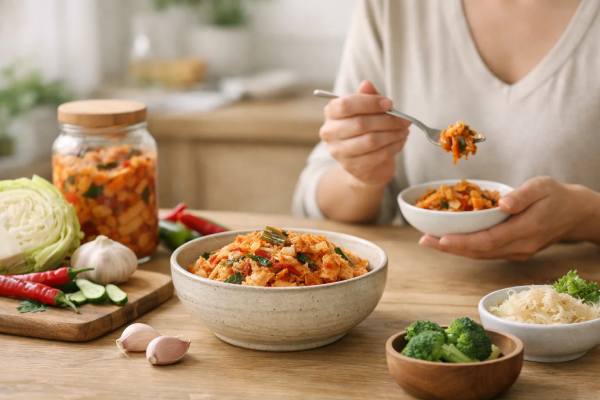
Kimchi is more than a spicy side dish. It is a living food—at least when unpasteurized—made through fermentation that can change both the microbes you ingest and the compounds your gut encounters. That matters because the gut and brain are in constant conversation through immune signals, the vagus nerve, hormones, and metabolites produced by gut bacteria. When people ask whether kimchi can support mood, they are usually asking a bigger question: can fermented vegetables shift the microbiome in a way that influences stress resilience, low mood, or mental clarity?
The evidence is promising but not simple. Fermented foods can modify the gut ecosystem and inflammation markers in human studies, yet mood outcomes are rarely the primary endpoint, and effects likely depend on the overall diet and the person’s baseline gut health. This article breaks down what kimchi can realistically do, what it cannot, and how to use it safely.
Key Insights for Everyday Use
- Fermented vegetables can influence gut microbiota patterns and immune signaling, which are connected to mood regulation.
- The strongest evidence supports fermented foods as part of an overall diet pattern, rather than kimchi as a stand-alone “mood fix.”
- Sodium, histamine sensitivity, and gastrointestinal flare-ups are the most common reasons kimchi is not a good fit for some people.
- Small, consistent servings often work better than occasional large portions, especially for digestion.
- A practical approach is to start with 1–2 tablespoons daily for a week, then adjust based on sleep, gut comfort, and mood tracking.
Table of Contents
- Kimchi basics and live cultures
- How the gut talks to the brain
- Evidence on fermented foods and mood
- Why fermented vegetables may matter
- How to use kimchi for benefits
- Safety, sodium, and special cases
Kimchi basics and live cultures
Kimchi is a fermented vegetable dish most commonly made from napa cabbage and radish, salted and seasoned with ingredients like garlic, ginger, and chili. The key word is fermented. Fermentation is not the same as pickling in vinegar. In fermentation, naturally occurring (or added) bacteria convert sugars in the vegetables into acids, especially lactic acid, which preserves the food and changes its flavor, texture, and chemistry.
Why “live” matters but is not the whole story
When kimchi is unpasteurized and refrigerated, it usually contains live lactic acid bacteria. When it is pasteurized or shelf-stable, many live microbes are reduced or eliminated, though fermentation-derived compounds can remain. This distinction is important for expectations:
- Live-culture kimchi may deliver microbes and microbial enzymes directly to the gut, even if many do not permanently colonize.
- Pasteurized kimchi may still offer “postbiotic-like” components (acids, peptides, and plant metabolites) but is less likely to have the same probiotic potential.
In real life, both versions can be valuable foods, but they may act through different pathways.
Kimchi is not a standardized “probiotic supplement”
A supplement typically lists a strain and a dose. Kimchi varies by recipe, fermentation time, temperature, and salt content. Two jars can taste similar but contain different microbial communities and metabolite profiles. This variability is one reason kimchi is exciting as a traditional food, and also one reason it is hard to study as a precise mental health intervention.
Why fermented vegetables are a unique category
Kimchi sits at an interesting intersection: it is a fermented food, but it is also a high-fiber, phytochemical-rich vegetable preparation. That combination matters for the microbiome because it provides both potential microbes and the plant compounds those microbes can interact with. If you are looking for gut-brain benefits, kimchi is not just “bacteria in a jar.” It is a complex food system that may shape digestion, immune signaling, and gut barrier function in ways that differ from fermented dairy or capsule probiotics. ([PubMed][1])
How the gut talks to the brain
The microbiome-brain link is not a single pipeline. It is a network of communication routes that can influence mood, stress response, and even sleep quality. Understanding these routes helps you judge claims about kimchi more realistically.
1) Immune signaling and inflammation tone
A large portion of the immune system is positioned near the gut. The gut lining constantly decides what to tolerate, what to block, and what to respond to. When the gut barrier is stressed or the microbial ecosystem becomes less diverse, inflammatory signaling can rise. Chronic low-grade inflammation is not the only factor in depression or anxiety, but it can amplify fatigue, sleep disruption, and stress sensitivity. Diets that improve gut barrier integrity and reduce inflammatory markers may indirectly support mood stability over time.
2) Microbial metabolites that affect the nervous system
Gut microbes metabolize fibers and plant compounds into molecules your body uses—some of which influence brain function. A well-known example is short-chain fatty acids (SCFAs), produced when microbes ferment certain fibers. SCFAs can influence gut lining health, immune regulation, and possibly neuroinflammation pathways. Fermented foods can also deliver organic acids and bioactive peptides that may shift gut ecology and digestion even before major microbial changes occur.
3) The vagus nerve and gut sensation
The vagus nerve is a major communication channel between the gut and brain. Signals from gut stretch, inflammation, and microbial activity can affect stress response and emotional state. This does not mean kimchi “stimulates the vagus nerve” in a simple way, but it does mean that gut comfort and gut inflammation can shape how calm or reactive you feel. For many people, the most immediate mood effect of a food is indirect: better digestion, steadier energy, and fewer symptoms that keep the nervous system on high alert.
4) Stress hormones and sleep-circadian stability
Gut disruption and inflammatory signaling can affect the hypothalamic-pituitary-adrenal (HPA) axis, which regulates cortisol and stress responses. Sleep and mood are tightly linked; if a food improves digestive comfort and supports a more stable evening routine, mood can improve even without dramatic microbial shifts. Conversely, if a food triggers reflux, bloating, or histamine-like reactions, sleep can suffer and mood can worsen.
This is the central lens for kimchi and mood: fermented vegetables may help when they support gut comfort and immune balance, and they may hinder when they increase physiological stress through symptoms or sensitivities. ([PubMed][1])
Evidence on fermented foods and mood
The most important evidence question is not “Does kimchi cure depression?” It is “Do fermented vegetables measurably shift biology in ways that could support mental health, and do people report mood changes in controlled settings?” The current research base is broader for fermented foods in general and for probiotic interventions than it is for kimchi specifically.
What human diet studies show most clearly
Human dietary intervention research has shown that increasing fermented food intake can change the gut microbiome and immune markers. These outcomes matter because immune tone and microbial diversity are plausible upstream factors for mood and stress resilience. However, many fermented food studies prioritize microbiome and immune outcomes, not psychiatric endpoints, so mood conclusions must be cautious.
There are also human trials that focus on fermented vegetables specifically. These typically measure stool microbiota changes and inflammatory markers, and they suggest fermented vegetables can shift gut ecology, even when changes in blood markers are modest. From a mental health perspective, this is encouraging but incomplete: changes in microbiota composition do not automatically translate into meaningful mood improvements.
What probiotic and psychobiotic research adds
Probiotic clinical trials—often using Lactobacillus and Bifidobacterium strains—have reported mixed but generally modest benefits for depressive and anxiety symptoms in some populations. The pattern that emerges in many reviews is that effects, when present, are not dramatic and may be more consistent in people with milder symptoms or specific baseline profiles. This matters for kimchi because fermented vegetables are sometimes described as “natural probiotics,” but they do not provide the same standardized strains and doses as clinical trials.
Why results are inconsistent
Even high-quality studies can produce variable outcomes because:
- “Fermented foods” include very different products (dairy, vegetables, drinks), each with different microbes and compounds.
- People’s baseline microbiomes differ widely, and not everyone responds the same way.
- Mood is influenced by sleep, exercise, social stress, and expectations—variables that are hard to fully control.
- Some people feel worse if fermented foods aggravate reflux, IBS symptoms, or histamine sensitivity.
A realistic evidence-based stance is this: fermented foods and fermented vegetables can shift gut microbiome and immune-related markers in humans, and probiotic interventions can modestly improve mood-related symptoms in some trials. Whether kimchi meaningfully improves mood for a given person is plausible, but not guaranteed, and is best evaluated as part of a broader diet and lifestyle pattern. ([PMC][2])
Why fermented vegetables may matter
If kimchi influences mood, it is likely because fermented vegetables combine three features that are rarely bundled together: live microbes (sometimes), prebiotic-like plant substrates, and fermentation-derived metabolites. That trio may matter more than any single “probiotic strain” story.
Kimchi as a “delivery system” for microbial signals
Even when microbes from food do not permanently colonize, they can still interact with the gut environment while passing through. This can include competition with other microbes, temporary shifts in pH, and immune signaling at the gut lining. Fermentation also breaks down certain plant components, which can change how your body tolerates the food and how microbes process it downstream.
Plant chemistry that supports a calmer gut environment
Vegetables used in kimchi bring fiber and phytochemicals, and the seasonings add additional bioactive compounds. Garlic, ginger, and chili contribute sulfur compounds and polyphenols that can influence microbial ecology and inflammatory signaling. From a practical standpoint, this means kimchi can act more like a functional food pattern than a “pill substitute,” because it consistently supplies plant compounds that shape the gut environment.
Fermentation metabolites and gut barrier support
Fermentation produces organic acids that can influence gut pH and microbial composition. A healthier gut barrier is associated with fewer immune “false alarms” triggered by bacterial components leaking through the gut lining. When the gut barrier is strained—by chronic stress, highly processed diets, or gastrointestinal illness—people often report fatigue, sleep disruption, and mood volatility. Supporting the gut barrier is not a direct depression treatment, but it can reduce one common amplifier of symptoms.
Why the benefit may depend on your baseline diet
Kimchi is more likely to help when it is part of a diet that also includes:
- Regular fiber from vegetables, legumes, whole grains, or seeds (as tolerated).
- Adequate protein and stable meal timing.
- Limited ultra-processed foods that can disrupt gut ecology.
In other words, kimchi may be a multiplier rather than a foundation. If the rest of the diet is low in fiber and high in refined foods, adding kimchi alone may not move the needle much. But if the overall pattern already supports microbial diversity, fermented vegetables can be a useful “nudge” toward a more resilient gut ecosystem. ([PubMed][1])
How to use kimchi for benefits
If you want to test whether kimchi supports your mood, the best approach is structured, small, and consistent. Large servings can backfire by triggering gastrointestinal symptoms, reflux, or sleep disruption—effects that can overwhelm any potential microbiome benefit.
Start low and build slowly
A simple progression that fits most people:
- Days 1–3: 1 tablespoon daily with a meal.
- Days 4–7: 1–2 tablespoons daily, preferably earlier in the day if reflux is an issue.
- Weeks 2–4: 2–4 tablespoons daily (roughly 30–60 grams), adjusted to digestion and sodium needs.
Consistency matters more than intensity. A small daily exposure is more likely to support gradual microbiome shifts than a large portion once or twice per week.
Pair kimchi with “microbiome-friendly” context
Kimchi tends to work better when it is not the only gut-supportive element. Consider pairing it with:
- A fiber-rich meal base (vegetables, beans or lentils if tolerated, whole grains, or seeds).
- Protein for blood sugar stability and satiety.
- Healthy fats like olive oil, nuts, or fish, which can support overall anti-inflammatory patterns.
This pairing matters because fermented foods can introduce microbes and metabolites, but fiber is often what helps beneficial microbes thrive over time.
Choose the right type of kimchi
Practical label and handling cues:
- Look for refrigerated products and terms such as “raw” or “unpasteurized” when you want live cultures.
- Avoid leaving kimchi at room temperature for extended periods once opened.
- Expect flavor to evolve; more sour often means continued fermentation.
If you prefer less microbial variability, a consistent brand and fermentation style can make your personal experiment easier to interpret.
Track outcomes that actually reflect mood support
Instead of only rating “mood,” track upstream signals for 2–4 weeks:
- Sleep quality and number of nighttime awakenings.
- Afternoon energy stability and cravings.
- Irritability and stress reactivity.
- Gut comfort (bloating, reflux, bowel regularity).
If kimchi improves digestion and sleep, mood often follows. If it worsens digestion or sleep, that is a valid reason to reduce the dose or choose a different fermented food.
This is also where expectations should stay grounded: any mood shift is likely to be subtle, gradual, and most meaningful when kimchi is part of an overall pattern that supports gut ecology. ([PMC][2])
Safety, sodium, and special cases
Kimchi is generally safe for many people, but it is not universally tolerated. Most issues fall into three buckets: sodium load, histamine-like reactions, and gastrointestinal sensitivity.
Sodium and blood pressure considerations
Kimchi is often salty, and sodium content can be substantial depending on the recipe and serving size. For people with hypertension, heart failure, kidney disease, or a medical need to limit sodium, kimchi can be a poor fit unless you choose lower-sodium versions and keep servings small. A practical compromise for some people is using kimchi as a flavor accent (1 tablespoon) rather than a large side dish.
Histamine sensitivity and “wired” reactions
Fermented foods can be higher in histamine and other biogenic amines. If you notice flushing, headaches, itching, nasal congestion, or a sudden “activated” feeling after fermented foods, you may be sensitive. In that case, smaller portions, fresher kimchi, or alternative fermented foods may be better. Some people do well with fermented dairy; others do better with non-fermented gut-supportive foods like fiber-rich plants.
IBS, reflux, and FODMAP triggers
Kimchi contains common triggers for sensitive digestion: garlic, onion-like seasonings, chili heat, and acidity. If you have IBS, reflux, or gastritis, kimchi may worsen symptoms, especially later in the day. Options that sometimes help:
- Choose milder kimchi styles with less chili and garlic.
- Eat it earlier and with a full meal, not on an empty stomach.
- Reduce portion size rather than abandoning it immediately.
If symptoms persist, it is reasonable to switch to a different fermented food rather than forcing tolerance.
Who should be more cautious
Extra care is appropriate if you are:
- Immunocompromised or at high risk for foodborne illness.
- Pregnant and unsure about food safety practices for live fermented foods.
- On medications where sodium and hydration shifts matter significantly.
Kimchi can be part of a gut-supportive plan, but only if it improves your overall physiology—especially sleep and digestive comfort. If it reliably worsens symptoms, that is not failure; it is useful information, and there are other ways to support the microbiome-brain link. ([PMC][3])
References
- Gut Microbiota-Targeted Diets Modulate Human Immune Status – PMC 2021 (Randomized Trial)
- The effects of fermented vegetables on the gut microbiota for prevention of cardiovascular disease – PMC 2024 (RCT)
- Probiotics’ Effects in the Treatment of Anxiety and Depression: A Comprehensive Review of 2014–2023 Clinical Trials – PMC 2024 (Systematic Review of Clinical Trials)
- Fermented Vegetables as a Source of Psychobiotics: A Review of the Evidence for Mental Health Benefits – PubMed 2025 (Review)
- Kimchi friend or foe: preserving cultural foods developed pre-refrigeration – PMC 2025 (Commentary)
Disclaimer
This article is for educational purposes only and does not provide medical advice, diagnosis, or treatment. Fermented foods can affect digestion, reflux symptoms, histamine-related reactions, and sodium intake, and may be inappropriate for some people—especially those with kidney disease, heart failure, uncontrolled high blood pressure, immune compromise, or medically required sodium restrictions. If you have a medical condition, take prescription medications, or experience severe or persistent symptoms, consult a qualified clinician for personalized guidance.
If you found this article useful, consider sharing it on Facebook, X (formerly Twitter), or any platform you prefer so others can benefit from it too.





