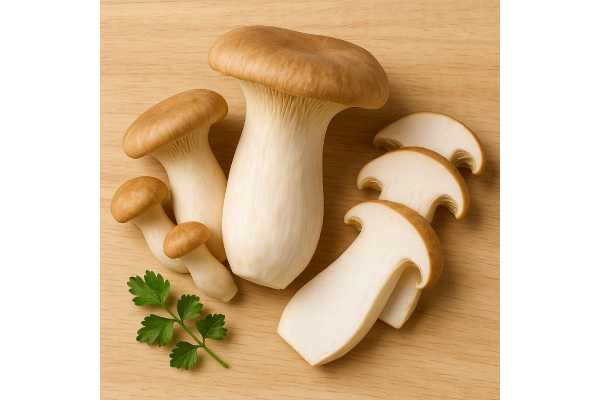
King oyster mushrooms (Pleurotus eryngii) are the heavyweight of the oyster family—thick, meaty stems, small caramel-cap crowns, and a talent for crisp, mahogany sears that rival a good steak. Cooks reach for them because they excel at three things: browning, texture, and versatility. Slice them into scallop-like medallions, pull them into “shreds” for tacos, or roast batons that stay juicy inside while the edges turn golden. Nutrition-wise, king oysters are low in calories and saturated fat but supply fiber, B-vitamins, potassium, and the mushroom-specific antioxidant ergothioneine. In the right light—or with UV treatment while drying—they also provide vitamin D2. This guide distills what matters: how to recognize quality king oysters, what a realistic per-100-gram nutrition profile looks like, where the strongest health evidence sits, and the safety basics for everyday kitchens. You’ll also get practical advice on sustainable buying, smart storage, and cooking methods that lock in flavor while preserving nutrients.
At a Glance
- Typical serving: 100–150 g fresh (about 1½–2 cups sliced) or 10–12 g dried, eaten 2–4 times per week in mixed meals.
- Key benefits: low calorie and saturated fat; source of niacin, riboflavin, potassium, fiber, and ergothioneine; excellent browning and satisfying chew.
- Safety caveat: fully cook before eating; start with modest portions if you have a history of sensitivity to high-fiber or fermentable foods.
- Who should limit or avoid: people with mushroom allergy; those advised to avoid fungi due to medical conditions; anyone relying on uncertain identification of wild look-alikes.
Table of Contents
- King oyster essentials
- Nutrition Profile
- Evidence-Based Health Benefits
- Risks, Allergies and Interactions
- Selecting, Quality, Sustainability and Storage
- Preparation, Cooking and Nutrient Retention
- Portions, Comparisons and FAQs
King oyster essentials
King oysters are cultivated year-round and sold under names like king trumpet, French horn, and eryngii. Their signature anatomy—massive, cylindrical stems with compact caps—explains their performance on heat. The stem’s tight cellular structure and relatively low moisture mean slices brown readily without leaking as much water as delicate mushrooms. When you press a hot spatula on rounds (“dry sear”), they sizzle, caramelize, and keep a tender, juicy center. Pulling the stem into strands with a fork creates a fibrous texture perfect for barbecue sauces and birria-style braises; cross-cut “scallops” deliver clean sear marks and a springy bite.
Flavor is savory and slightly sweet, with umami from natural glutamates and 5’-nucleotides. The cap reads mild; most of the chew lives in the stem. Because the taste is subtle, king oysters love companions that add aromatic depth—brown butter and thyme, soy and mirin, miso, roasted garlic, smoked paprika, or lemon and parsley. They’re equally at home in plant-based menus (as a texture stand-in) and omnivorous kitchens (as a flavor amplifier that lets you cut back on meat without losing satisfaction).
From a cook’s perspective, their advantages stack up: consistent size, long refrigerated life, minimal trimming waste, and dependable browning. From an eater’s perspective, they’re a low-energy, high-satiation food: lots of chew and aroma for few calories. And from a planner’s perspective, they bridge weekday speed and weekend projects—quick skillet sides, sheet-pan dinners, ramen toppings, rice bowls, and slow braises all work.
Practical tip: surface dryness is the single biggest lever. Pat slices dry; give them space in the pan; and salt partway through to coax out a little moisture for gloss without collapsing the crust. Finish with acid (lemon, sherry vinegar) and fat (olive oil, butter, or sesame oil) for balance.
Nutrition Profile
How to use these tables. Values for Pleurotus eryngii vary by substrate, climate, and handling. The figures below reflect realistic ranges from contemporary analyses of king oyster and closely related culinary mushrooms. Percent Daily Value (%DV) uses adult reference DVs. Cooking reduces water and concentrates many nutrients per cooked weight.
Macros and electrolytes (per 100 g, raw)
| Nutrient | Amount | %DV |
|---|---|---|
| Energy | 25–35 kcal | — |
| Water | ~88–92 g | — |
| Protein | 2.7–3.6 g | — |
| Total fat | 0.3–0.6 g | 0–1% |
| Carbohydrate | 4.0–6.0 g | 1–2% |
| Dietary fiber | 2.0–3.0 g | 7–11% |
| Total sugars | 1.5–2.5 g | — |
| Sodium | 5–20 mg | 0–1% |
| Potassium | 300–450 mg | 6–10% |
Carbohydrates (per 100 g, raw)
| Component | Amount | Notes |
|---|---|---|
| Starch | ~0–0.3 g | minimal |
| Free sugars | 1.5–2.5 g | mannitol common |
| β-glucans | present | viscosity-forming fibers |
Fats and fatty acids (per 100 g, raw)
| Lipid | Amount | Notes |
|---|---|---|
| Total fat | 0.3–0.6 g | very low |
| Saturated fat | ~0.05–0.1 g | negligible |
| Monounsaturated fat | ~0.05–0.1 g | trace |
| Polyunsaturated fat | ~0.2–0.3 g | linoleic acid predominant |
| Cholesterol | 0 mg | fungi contain none |
Protein and amino acids (per 100 g, raw)
| Item | Amount | Notes |
|---|---|---|
| Protein | 2.7–3.6 g | modest |
| Flavor amino acids | — | glutamate/aspartate (umami) |
Vitamins (per 100 g, raw)
| Vitamin | Amount | %DV |
|---|---|---|
| Thiamin (Vitamin B1) | 0.05–0.10 mg | 4–8% |
| Riboflavin (Vitamin B2) | 0.15–0.25 mg | 12–19% |
| Niacin (Vitamin B3) | 4–7 mg | 25–44% |
| Pantothenic acid (Vitamin B5) | 1.0–1.5 mg | 20–30% |
| Vitamin B6 (Pyridoxine) | 0.07–0.15 mg | 4–9% |
| Folate (Vitamin B9) | 35–60 µg | 9–15% |
| Vitamin C | 1–3 mg | 1–3% |
| Vitamin D2* | 0–several µg | 0–50% |
*Vitamin D2 forms from ergosterol when mushrooms are exposed to ultraviolet (UV) light during drying or processing. Sun-exposed or UV-treated king oysters can contribute to daily vitamin D intake; untreated fresh mushrooms typically contain little.
Minerals (per 100 g, raw)
| Mineral | Amount | %DV |
|---|---|---|
| Phosphorus | 90–130 mg | 7–10% |
| Magnesium | 12–20 mg | 3–5% |
| Calcium | 2–6 mg | 0% |
| Iron | 0.5–1.5 mg | 3–8% |
| Zinc | 0.5–1.2 mg | 5–11% |
| Copper | 0.1–0.3 mg | 11–33% |
| Selenium | 1–3 µg | 2–5% |
| Manganese | 0.05–0.15 mg | 2–7% |
Bioactives and phytonutrients (qualitative)
- Ergothioneine: a distinctive antioxidant amino-acid derivative concentrated in edible fungi.
- β-glucans (1,3/1,6): soluble fibers studied for lipid and glucose effects and immune modulation.
- Phenolics and terpenoids: low to moderate, influenced by substrate and growth conditions.
- Ergosterol: vitamin D2 precursor under UV exposure.
Allergens and intolerance markers
- Rare IgE-mediated allergy to mushroom proteins.
- Mannitol and fermentable fibers can cause bloating in sensitive individuals.
Glycemic and acid–base metrics
- Glycemic impact: low, given modest digestible carbohydrate and fiber.
- Acid–base: near neutral in mixed meals.
Variability notes
- Cultivation substrate and postharvest handling shift minerals and phenolics; drying concentrates nutrients per 100 g. UV-exposed products report higher vitamin D2; check labels.
Evidence-Based Health Benefits
Lower energy density without losing satisfaction. King oysters deliver chew, aroma, and browning at very low calories and saturated fat. Replacing part of the meat or cream in sauces, tacos, ragùs, or stir-fries with well-seared slices lowers the dish’s energy density while preserving the “reward” cues (sizzle, crust, savory juices). Repeated, small substitutions like this help heart-smart and weight-conscious patterns stick over time.
β-glucans and fiber for metabolic support. Like other edible mushrooms, Pleurotus species provide β-glucans that add gentle viscosity to broths and help curb the need for added fat and salt. When mushrooms displace refined starches or higher-fat items in real meals, reviews of clinical work show small, favorable shifts in triglycerides and other cardiometabolic markers. Treat these as supportive effects: they’re meaningful when combined with whole-diet improvements.
Ergothioneine and redox balance. Ergothioneine (often abbreviated EGT) is unusual in human nutrition: we transport it through a dedicated carrier (OCTN1), and it concentrates in tissues prone to oxidative stress. Culinary heat does not destroy EGT; sautéing, roasting, and braising retain useful amounts. Including king oysters routinely adds this hard-to-find compound to your pattern without relying on supplements.
Vitamin D2 potential with UV exposure. UV-treated or sun-exposed mushrooms can raise vitamin D2 intake, and controlled studies show UV-processed mushrooms increase circulating vitamin D levels. Realistically, treat king oysters as a supporting source rather than your only strategy for vitamin D sufficiency.
Potassium and copper with low sodium. Per 100 g, king oysters typically deliver several percent of daily potassium, phosphorus, and copper with very little sodium—an easy fit for blood-pressure-friendly menus.
Behavioral benefits: speed, consistency, flexibility. Because they store well and cook fast, king oysters help you build weeknight meals quickly and predictably. A panful of browned slices can turn grains, beans, or eggs into a complete dinner in minutes—an underappreciated path by which palatable, easy foods encourage better long-term habits.
Practical intake. A realistic target is 100–150 g fresh (10–12 g dried) per serving, two to four times weekly, folded into balanced meals. High-dose extracts are unnecessary for culinary benefits; if you consider supplements, involve a clinician.
Risks, Allergies and Interactions
Identification and sourcing. King oysters are overwhelmingly cultivated and sold under clear names, reducing misidentification risk compared with wild foraging. If you do collect wild Pleurotus species, confirm with multiple features (decurrent gills, growth on wood, spore print, cap and stem morphology) and local expertise. Never eat wild mushrooms you cannot identify with certainty.
Cook thoroughly. Raw or undercooked mushrooms may cause gastrointestinal upset in some people, and cooking improves digestibility and flavor. Sear, roast, or braise until the interior is piping hot and the exterior browns.
Allergy and intolerance. True mushroom allergy is uncommon but possible; symptoms include oral itching, hives, wheeze, or rarely anaphylaxis. Fermentable fibers and sugar alcohols (e.g., mannitol) may trigger bloating in sensitive individuals. If you’re new to king oysters, start with a modest, well-cooked portion.
Medication and condition notes.
- Diabetes therapy: Increases in high-fiber foods can slightly change post-meal glucose; monitor if you use insulin or sulfonylureas.
- Gout: Mushrooms carry moderate purines; many people tolerate modest portions—coordinate during flare-prone periods.
- Immunocompromised or pregnancy: Prefer verified, commercial sources; cook thoroughly; avoid old leftovers.
Contaminants and handling. Cultivated king oysters generally pose lower heavy-metal risk than wild species, but basic hygiene still matters: trim bases, keep cold (1–5 °C), avoid cross-contamination, and refrigerate leftovers within 2 hours. Discard mushrooms that smell sour or feel slimy.
Emergency guidance. Severe symptoms after eating mushrooms—persistent vomiting/diarrhea, confusion, heavy sweating, reduced urine, or jaundice—require urgent medical care. Save samples if possible for identification.
Selecting, Quality, Sustainability and Storage
Buying smart. Look for firm stems without soft spots, caps that are smooth and uncracked, and a clean, mild aroma (bready, slightly sweet). Avoid packages with pooled liquid or dark, slimy patches. Uniform medium stems (3–5 cm diameter) cook most evenly for “scallops” and baton roasts; very large stems are ideal for pulled textures; small stems excel in quick sautés.
Label cues. Reputable producers list species (Pleurotus eryngii), origin, lot codes, and best-by dates. UV-treated products may declare vitamin D content; if vitamin D matters to you, check for this specific claim rather than assuming.
Sustainability notes.
- Resource-efficient crop: Oyster mushrooms grow on agricultural byproducts (sawdust, straw), making them comparatively low-impact.
- Waste-less cooking: Use the entire stem (prime browning surface); save trimmings for stock or finely dice into stuffings and dumpling fillings.
- Packaging: Choose minimal or recyclable packaging when possible; store correctly to extend life and reduce waste.
Home storage.
- Fresh: keep unwashed in a breathable container (paper bag or vented box) at 1–5 °C; use within 5–7 days.
- Dried: store airtight, dark, and cool up to 12 months; add a desiccant packet in humid climates.
- Freezing: best after a brief sauté to drive off moisture; cool, portion, and freeze for 2–3 months.
- Meal-prep tip: brown a large batch; chill quickly; reheat portions in a hot pan to restore crust.
Quality troubleshooting.
- Watery pan: mushrooms were wet or overcrowded—pat dry and cook in batches.
- Rubbery bite: slice stems thinner or switch to moist methods (braise with stock/wine).
- Flat flavor: brown harder, then finish with acid (lemon, sherry vinegar), fresh herbs, and a touch of butter or olive oil.
Supplier questions that build trust. Ask about substrate (e.g., hardwood sawdust), handling temperatures, and any UV processing for vitamin D. Favor producers with strong cold-chain practices and consistent sizing if presentation matters to you.
Preparation, Cooking and Nutrient Retention
Prep fundamentals. Trim the dry base; wipe with a barely damp towel. Rinsing is fine if needed, but dry thoroughly—surface moisture fights browning. For “scallops,” cut 2–3 cm rounds from the stem; for shreds, score lengthwise and pull apart with forks; for batons, quarter lengthwise.
High-heat methods that shine.
- Dry-sear “scallops.” Heat a wide stainless or cast-iron pan until very hot. Add slices to a dry pan; press with a spatula for deep browning; then add a small amount of oil or butter, plus salt. Finish with garlic, lemon, parsley.
- Roast batons. Toss with oil and salt; roast at 220 °C for 15–18 minutes on a preheated sheet, turning once. Add smoked paprika and a splash of sherry vinegar at the end.
- Stir-fry strips. Sear in batches over high heat; deglaze with soy and mirin; finish with sesame oil and scallions.
- Braise for tenderness. After browning, simmer with stock and aromatics 15–25 minutes; great for noodle soups and ragùs.
- Grill skewers. Marinate in olive oil, garlic, lemon zest, and thyme; grill over medium-high until charred and juicy.
Retention of nutrients and bioactives.
- Water-soluble vitamins (B-complex, vitamin C) can leach; capture pan juices or use broths in the dish.
- Minerals (potassium, phosphorus, copper) are heat-stable and concentrate as water cooks off.
- Ergothioneine is relatively heat-stable; sautéing, roasting, and braising preserve meaningful amounts.
- Vitamin D2 formed by UV exposure is reasonably heat-stable; avoid very long boiling if maximizing D.
- β-glucans persist and lend subtle body to soups and sauces.
Flavor frameworks.
- Mediterranean: brown-butter lemon “scallops” over orzo with capers and parsley.
- Pan-Asian: soy–mirin glaze with ginger and garlic; finish with sesame seeds.
- Latin-inspired: chile-rubbed shreds braised with tomato and cumin for tacos; quick-pickle onions for contrast.
- Comfort classic: creamy thyme-shallot pan sauce deglazed with white wine and a splash of cream over mashed potatoes.
Safety checkpoints. Cook to a steaming hot center; refrigerate leftovers within 2 hours; reheat until piping hot. When trying larger portions for the first time, increase gradually to gauge tolerance.
Portions, Comparisons and FAQs
Practical portion and frequency. A sensible serving is 100–150 g fresh (about 1½–2 cups sliced) or 10–12 g dried. Enjoy 2–4 times per week as part of balanced meals that include quality proteins, whole grains, and vegetables.
How do king oysters compare to shiitake and portobello?
- Texture: king oysters are the firmest and meatiest; shiitake caps are tender with chewy stems; portobellos are spongier and release more water.
- Flavor: king oysters are subtly nutty and rely on browning; shiitake are more aromatic; portobellos bring earthiness and a larger cap surface for grilling.
- Nutrition: all are low in calories and fat, with B-vitamins, potassium, and ergothioneine; exact numbers vary by growing conditions and handling.
Can king oysters help reduce meat intake? Yes—use them to replace half the meat in ragùs, tacos, or stir-fries without a drop in satisfaction. Pair with legumes (lentils, beans) or eggs for protein balance in fully plant-based meals.
Do they provide vitamin D? Only if UV-exposed or sun-dried; check labels for vitamin D2 content. Treat them as a supportive source rather than your sole strategy.
Are the stems edible? Absolutely. The stem is the star: slice for “scallops,” baton for roasting, shred for braises, or dice finely for stuffings. Save any trimmings for stock.
Can I eat them raw? Not recommended. Cooking improves safety, digestibility, and flavor.
Any special equipment needed? A wide stainless or cast-iron skillet for high-heat searing is the single most useful tool. Preheated sheet pans are next.
Budget and access tips. Buy family packs; choose uniform sizes for even cooking; rotate between fresh and dried to control cost and waste. A small jar of dried king oysters delivers outsized flavor in sauces and soups.
References
- Vitamin D from UV-Irradiated Mushrooms as a Way for Vitamin D Supplementation: A Systematic Review 2023 (Systematic Review).
- Edible Mushrooms and Beta-Glucans: Impact on Human Health 2021 (Systematic Review).
- Consuming Mushrooms When Adopting a Healthy Mediterranean-Style Dietary Pattern Does Not Influence Short-Term Changes of Most Cardiometabolic Disease Risk Factors in Healthy Middle-Aged and Older Adults 2024 (RCT).
- Mushroom Poisoning 2020 (Review).
- Pleurotus Mushrooms in Nutrition and Health 2025 (Review).
Disclaimer
This article is for general education and does not replace personalized medical advice, diagnosis, or treatment. Cook mushrooms thoroughly, purchase from reputable sources, and do not eat any wild mushroom unless identified with certainty by a qualified expert. If you are pregnant, immunocompromised, over 65, managing chronic illness, have a history of mushroom allergy, or take prescription medications, consult a healthcare professional before changing your diet or using mushroom products. In any suspected mushroom poisoning, seek urgent medical care.
If you found this guide helpful, please consider sharing it on Facebook, X (formerly Twitter), or your preferred platform. Your support helps us continue producing careful, evidence-informed nutrition content. Thank you.