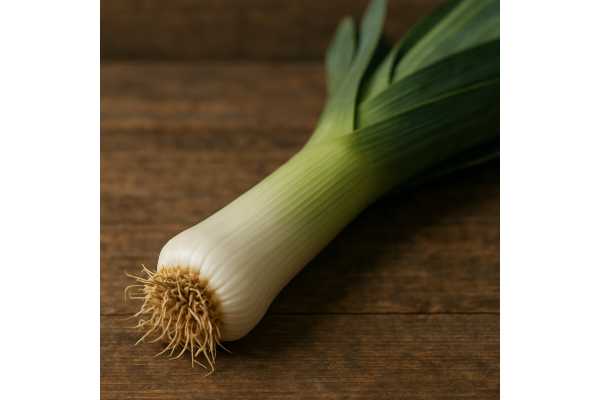
Leeks are one of those vegetables that quietly upgrade almost any dish. Part of the Allium family alongside onions and garlic, they bring a gentle, sweet onion-like flavor with none of the sharp bite that puts some people off. In the kitchen, leeks work just as well in rustic soups and stews as they do in refined, layered dishes like quiches, risottos, and braises.
Nutritionally, leeks are more than a flavor base. They provide meaningful amounts of vitamin K, folate, vitamin C, and manganese, plus a mix of antioxidant compounds such as flavonoids and sulfur-containing molecules typical of Allium vegetables. These compounds are being studied for potential roles in supporting heart health, vascular function, and long-term disease risk. At the same time, leeks remain relatively low in calories and fat, with modest carbohydrates and fiber that can fit into many dietary patterns when portioned sensibly.
If you enjoy onions but want something softer, sweeter, and a bit more elegant on the plate, leeks are worth a closer look.
Key Takeaways for Leeks
- Typical serving is about 1 cup (90–100 g) sliced raw leek, providing around 50–60 kcal and useful amounts of vitamin K, folate, and vitamin C.
- Leeks contain prebiotic fibers and Allium-specific antioxidants that may support gut health and cardiometabolic health over time.
- Because leeks are high in FODMAP fructans, the white bulb can trigger digestive symptoms in some people with irritable bowel syndrome (IBS).
- A practical pattern for most healthy adults is 1–3 leek-based dishes per week, using roughly ½–1 cup cooked leek per portion.
- People with IBS on a low FODMAP diet, those with known Allium sensitivity, or individuals on strict potassium- or vitamin K–restricted diets should discuss leek intake with a healthcare professional.
Table of Contents
- Leek background and culinary roles
- Leek nutrition per 100 grams
- Health effects of eating leeks
- Leek risks, allergies and drug interactions
- Buying, storing and sustainable leeks
- Cooking leeks and preserving nutrients
- Leek portions, comparisons and FAQs
Leek background and culinary roles
Leeks (Allium ampeloprasum var. porrum) are cool-season vegetables that have been cultivated for thousands of years across the Mediterranean and Europe. They look like oversized green onions: a long white shaft that gradually shifts into pale green and then dark green leaves. The edible portion is usually the white and light green part, though the darker tops can flavor stocks and broths.
Their flavor is their main selling point. Compared with onions, leeks are milder, sweeter, and more aromatic. When gently sautéed, they soften into a silky base that blends into soups, stews, sauces, and casseroles. Classic dishes such as leek and potato soup, cock-a-leekie (a traditional Scottish chicken soup), and leek tarts all rely on this mellow, slightly sweet allium flavor.
Culinarily, you can treat leeks almost anywhere you would use onions, shallots, or green onions, particularly when you want a softer, more refined taste. They pair especially well with:
- Potatoes, parsnips, and other root vegetables
- Cream, milk, and cheese in gratins, quiches, and sauces
- Eggs in frittatas and omelets
- Fish and shellfish in broths, chowders, or braises
- Whole grains like barley, farro, or brown rice
One practical note: leeks trap soil between their layers as they grow. Cleaning them well is essential. Usually this means trimming away the root, slicing lengthwise, and rinsing under running water or soaking sliced leeks in a bowl so grit sinks to the bottom.
From a dietary perspective, leeks fit into Mediterranean-style eating, vegetarian and flexitarian patterns, and many traditional cuisines. Their relatively low caloric density means you can use them generously to add flavor and volume without dramatically changing the energy content of a dish.
Leek nutrition per 100 grams
Most nutrition data for leeks comes from raw bulbs plus lower leaf portions, standardized per 100 g (about 3.5 oz).
Macros and electrolytes (per 100 g raw leek)
| Nutrient | Amount | %DV* |
|---|---|---|
| Energy | 61 kcal | 3% |
| Total carbohydrate | 14.2 g | 5% |
| Dietary fiber | 1.8 g | 6% |
| Total sugars | 3.9 g | — |
| Protein | 1.5 g | 3% |
| Total fat | 0.3 g | <1% |
| Saturated fat | 0.04 g | <1% |
| Sodium | 20 mg | <1% |
| Potassium | 160–180 mg | 3–4% |
*Approximate values; Daily Values based on a 2,000 kcal diet.
Leeks are therefore a low-energy-density vegetable: most of their weight is water, with modest carbohydrates and very little fat or protein. They contribute a small but meaningful amount of fiber, particularly when eaten in larger portions.
Vitamins (per 100 g raw leek)
Based on standard composition data:
| Vitamin | Amount | %DV |
|---|---|---|
| Vitamin K | ~39 µg | ~33% |
| Folate (Vitamin B9) | ~64 µg DFE | ~16% |
| Vitamin B6 | ~0.25 mg | ~15% |
| Vitamin C | ~12 mg | ~13% |
| Vitamin A (RAE) | ~36–70 µg | ~4–8% |
| Thiamin (B1) | ~0.1 mg | ~8% |
| Niacin (B3) | ~0.4 mg | ~3% |
| Vitamin E | small amounts | 3–6% (approx.) |
The standout nutrients are vitamin K (important for blood clotting and bone health), folate (crucial for cell division and pregnancy), vitamin B6 (involved in metabolism and neurotransmitter production), and vitamin C (immune and collagen support).
Minerals (per 100 g raw leek)
| Mineral | Amount | %DV |
|---|---|---|
| Manganese | ~0.4–0.5 mg | ~20–25% |
| Iron | ~2.1 mg | ~12% |
| Magnesium | ~25–30 mg | ~6–8% |
| Calcium | ~50–60 mg | ~4–5% |
| Phosphorus | ~30–35 mg | ~2–3% |
| Copper | ~0.1 mg | ~10–12% |
| Selenium | ~1 µg | ~2% |
The manganese and iron content is notable for a vegetable, and leeks contribute a modest amount of magnesium and calcium to overall intake.
Fats, phytonutrients and glycemic metrics
Leeks are very low in fat, but the small amount present is largely polyunsaturated. More interesting are their non-nutritive components:
- Flavonoids (for example, kaempferol derivatives)
- Phenolic acids and other polyphenols
- Organosulfur compounds similar to those in onions and garlic
These compounds contribute to antioxidant capacity and are being investigated for effects on inflammation, vascular tone, and carcinogenesis.
Glycemic data suggest a relatively low glycemic index (around 15 for raw leeks), meaning they’re unlikely to cause large blood sugar spikes when eaten in typical portions, especially as part of mixed meals.
Health effects of eating leeks
Because leeks are usually eaten as part of composite dishes rather than in large standalone portions, their health effects are best understood in the context of overall diet. Still, research on Allium vegetables as a group and on leeks themselves suggests several potential benefits.
Cardiometabolic health
Reviews and meta-analyses of Allium vegetable intake (including onions, garlic, and leeks) have linked higher consumption to lower risks of several cardiovascular outcomes, modestly improved blood lipids, and better markers of vascular health.
Proposed mechanisms include:
- Organosulfur compounds that may support nitric oxide production and vasodilation
- Antioxidant activity from flavonoids, which can help reduce oxidative stress
- Mild improvements in cholesterol handling and platelet function
For most people, using leeks regularly as part of a vegetable-rich diet is a realistic way to add more Allium diversity, complementing or partly replacing onions and garlic.
Possible cancer-protective effects
Systematic reviews exploring Allium vegetables and cancer risk generally find that higher intakes are associated with lower risks for certain cancers, particularly gastrointestinal (stomach, colorectal, esophageal) and possibly prostate cancers, though results are not fully consistent.
Leeks contribute:
- Sulfur compounds that can influence detoxification enzymes and cell signaling
- Polyphenols that may protect DNA and modulate inflammatory pathways
It’s important to emphasize that these findings largely reflect patterns of overall Allium intake rather than leeks alone. They should be viewed as supportive evidence for including a variety of Allium vegetables in an overall balanced diet, not as proof that leeks themselves prevent cancer.
Gut health and prebiotic fibers
Leeks contain fructans, a type of fermentable fiber that can act as a prebiotic—feeding beneficial gut bacteria, particularly Bifidobacteria and related species.
For individuals without IBS or FODMAP sensitivity, moderate amounts of leek may:
- Add fermentable fibers that support a diverse microbiota
- Increase production of short-chain fatty acids like butyrate, which support colon cell health
- Complement other prebiotic foods such as onions, garlic, chicory roots, and whole grains
For those with IBS, these same fructans can provoke symptoms, making portion control and focusing on the green tops (which tend to be lower in FODMAPs) more appropriate.
Bone health support
Leeks offer vitamin K, some calcium, and manganese—nutrients that play roles in bone metabolism. Observational data link higher vitamin K intake to better bone density and lower fracture risk, particularly when combined with adequate calcium and vitamin D from the wider diet. While leeks alone will not drive bone health outcomes, they can contribute to the vitamin K pool, especially in people who do not regularly eat leafy greens.
Weight management and overall dietary quality
Because leeks are:
- Low in energy,
- Flavor dense, and
- Useful for adding bulk and moisture,
they can help make vegetable-based dishes more satisfying without adding many calories. Using leeks as part of soups, stews, braises, and grain dishes can be one small strategy in a broader approach to weight management and higher diet quality.
Leek risks, allergies and drug interactions
For most people, leeks are safe and well tolerated when eaten in culinary amounts. There are, however, some important considerations.
Digestive symptoms and FODMAPs
Leeks are high in fructans, one of the main FODMAP (fermentable carbohydrate) groups that can trigger bloating, gas, cramping, and altered bowel habits in people with IBS or other functional gut disorders.
Key points:
- The white bulb and pale stem contain the highest fructan load.
- The dark green leaves are generally lower in FODMAPs and are often tolerated better in modest portions.
- Many low FODMAP guides suggest that around 1 cup (about 100 g) of chopped green tops can be a low FODMAP serve, whereas the bulb must be more strictly limited.
Anyone following a low FODMAP diet should work with a dietitian and rely on up-to-date lab-tested serving sizes, as individual tolerance varies.
Allergies and cross-reactivity
Leek allergy is relatively uncommon but can occur, especially in individuals who are already sensitized to other Allium species (onion, garlic, chives) or to certain pollens. Symptoms may include:
- Oral allergy (itching, tingling, or mild swelling in the mouth and throat)
- Gastrointestinal symptoms
- Skin reactions
Severe reactions are rare but possible. People with known Allium allergies should treat leeks with the same level of caution and seek allergy testing if unsure.
Medication and medical condition interactions
Several factors merit caution:
- Vitamin K content: Leeks provide meaningful vitamin K. Individuals on vitamin K–antagonist anticoagulants (such as warfarin) do not necessarily need to avoid leeks, but they do need a consistent vitamin K intake. Any major change in leek consumption should be discussed with the prescribing clinician.
- Potassium: While leeks are not exceptionally high in potassium, those with advanced kidney disease on restricted potassium diets may need to count them as part of their daily allowance.
- Low-fiber or low-residue diets: People recovering from certain bowel surgeries or flares of inflammatory bowel disease may be advised to temporarily avoid fibrous, gas-forming vegetables including leeks.
Food safety and contamination
Standard produce hygiene applies:
- Leeks grow in soil and can trap dirt between layers, so thorough washing is essential.
- As with other vegetables, there is a small risk of microbial contamination; cooking to appropriate temperatures reduces this risk.
- Nitrate levels in leeks are generally not a concern for healthy adults, but infants should not be fed large amounts of high-nitrate vegetables in purees without professional guidance.
Overall, most healthy adults can safely enjoy leeks regularly, with special caution for people with IBS, FODMAP sensitivity, anticoagulation therapy, or complex kidney disease.
Buying, storing and sustainable leeks
Choosing good leeks and handling them well at home helps you get the best flavor, texture, and nutritional value while minimizing food waste.
How to select quality leeks
When shopping, look for:
- Firm, straight stalks with crisp white and light green portions
- Tightly layered leaves with minimal splitting or drying
- Vibrant green tops without extensive yellowing, wilting, or slime
- A diameter of 2–4 cm (about 1–1.5 inches) for a balance between tenderness and yield
Very thick leeks can be more fibrous, particularly in the outer layers. Smaller to medium leeks often cook more evenly and are easier to slice finely for delicate dishes.
If possible, choose leeks with a higher proportion of white and pale green, especially when you plan to use them in sautéed or braised dishes where tenderness is important.
Storage for freshness and safety
Leeks keep well under refrigeration:
- Store unwashed leeks loosely wrapped or in a ventilated bag in the vegetable drawer.
- They typically last up to 1–2 weeks; the outer leaves may dry slightly, but you can trim these away.
- Avoid sealing them tightly in plastic without ventilation, which can trap moisture and encourage spoilage.
For longer storage:
- Freezing:
- Slice and thoroughly wash leeks.
- Blanch briefly in boiling water (about 1–2 minutes), then cool rapidly in ice water.
- Drain well and freeze in portions. Frozen leeks work best in cooked dishes such as soups and stews, as their texture softens.
- Using the tops: Dark green leaf ends can be saved in a freezer bag with other vegetable scraps to make stock, reducing waste.
Sustainability considerations
Leeks are generally a relatively sustainable crop:
- They’re often grown in temperate climates and can be a seasonal winter vegetable in many regions.
- Buying locally grown leeks in season reduces transport emissions and often improves freshness.
- Because the tops are frequently discarded, making a habit of using them in stocks, broths, or finely sliced in tolerated quantities can significantly cut down waste.
If you garden, leeks are a rewarding crop with a long harvest window. They can stand in the ground over cool months and be pulled as needed, which spreads out harvest and reduces the need for refrigeration.
Cooking leeks and preserving nutrients
Leeks are versatile: they can be eaten raw, lightly cooked, or very soft and sweet after long, slow cooking. Each approach influences both flavor and nutrient retention.
Cleaning and basic preparation
Because leeks collect a surprising amount of grit, a careful cleaning routine is essential:
- Trim off the root end and any dried or very dark green leaves.
- Slice lengthwise from top to bottom, stopping just short of the root if you want to keep the base intact.
- Rinse under running water, fanning the layers apart to release dirt.
- For sliced leeks, cut into rings or half-moons, then swish them in a bowl of water; lift the leeks out, leaving sand behind.
This prep step does not meaningfully affect their nutrient profile but is crucial for food safety and eating quality.
Cooking methods and nutrient retention
Water-soluble vitamins (especially vitamin C and some B vitamins) and certain phenolic compounds are sensitive to prolonged heat and to cooking in excess water. Studies on leek powders and dehydrated leeks suggest that high-temperature drying and long heating times can reduce total phenolic content and antioxidant activity, though gentler methods preserve more.
Practical implications:
- Sautéing or sweating:
- Gently cook sliced leeks in a small amount of oil or butter over low–medium heat until soft and translucent.
- This preserves more water-soluble nutrients than boiling and enhances absorption of fat-soluble components.
- Steaming:
- Steaming preserves vitamin C and folate better than boiling because there is little leaching into water.
- Works well for serving leeks as a side vegetable or before grilling.
- Boiling and braising:
- Some nutrients leach into the cooking liquid. When that liquid is consumed (for example, in soups or stews), overall nutrient loss from the dish is minimal.
- Long braises deliver exceptional flavor and tenderness at the cost of some vitamin loss.
Light cooking often improves digestibility and flavor while maintaining a good proportion of nutrients. Raw leeks, finely sliced, can appear in salads or as a garnish but may be too pungent or fibrous for some people.
Flavor pairing and practical uses
Ideas for using leeks while keeping nutrition in mind include:
- Soups and stews: start by sweating leeks with carrots and celery as an alternative to onion-based mirepoix.
- Leek and potato dishes: pair the mild sweetness of leeks with starchy vegetables and milk or stock for balanced, filling meals.
- Grain bowls: fold sautéed leeks into cooked barley, quinoa, or farro, along with leafy greens and beans.
- Egg dishes: combine leeks with spinach or mushrooms in frittatas, omelets, or quiches for a nutrient-dense brunch.
Using a small amount of healthy fat (olive oil, canola oil, or a mix of butter and oil) helps deliver fat-soluble vitamins and increases satiety without overwhelming the dish.
Leek portions, comparisons and FAQs
Portion size, frequency, and how leeks compare to other Allium vegetables are common practical questions.
Typical portions and frequency
Reasonable everyday portions for most adults:
- Raw: ½–1 cup (45–90 g) thinly sliced, often combined with other vegetables.
- Cooked: ½–1 cup cooked leeks per serving, recognizing that cooking reduces volume.
Eating leek-containing dishes 1–3 times per week fits comfortably into most balanced diets. People on low FODMAP diets may use smaller amounts of the green tops more frequently, depending on individual tolerance, under professional guidance.
How do leeks compare with onions and garlic?
- Flavor: Leeks are milder and sweeter than onions, less pungent than garlic.
- Digestive tolerance: Some individuals who struggle with onions find small amounts of leek tops more tolerable, though this is not universal.
- Nutrient profile: All three are low-calorie, Allium vegetables with overlapping but distinct mixtures of organosulfur compounds and polyphenols. Onions may provide more quercetin; garlic is richer in allicin-derived compounds; leeks contribute more vitamin K and folate per 100 g than most onions.
Who should limit or avoid leeks?
- People with IBS or suspected FODMAP sensitivity: may need to limit bulb portions and prioritize small amounts of green tops.
- Those on warfarin or similar anticoagulants: should keep vitamin K intake consistent and discuss meaningful changes in vegetable patterns with their clinician.
- Individuals with known Allium allergies: need medical advice before including leeks.
- Patients on highly restricted potassium or low-fiber diets: should review leek intake with a dietitian or physician.
Frequently asked questions
Are raw leeks safe to eat?
Yes, raw leeks are safe when washed thoroughly. Thin slices can be added to salads or used as a garnish. Some people find raw leeks too strong or experience more digestive symptoms than with cooked leeks.
Can you eat the dark green tops?
Yes. While they are tougher, they are excellent for flavoring stocks and can be finely sliced and cooked longer in soups or braises. People on low FODMAP diets often rely on these tops as a lower-FODMAP onion substitute in moderate portions.
Are organic leeks nutritionally superior?
Organic leeks may differ slightly in pesticide residues and sometimes in phytochemical content depending on growing conditions, but major macronutrients and vitamins are broadly similar. The choice between organic and conventional leeks can reasonably be guided by budget, availability, and personal values.
Do leeks fit into low-carb or weight-loss diets?
Yes, in moderation. Their carbohydrate content is modest per serving, and their low energy density, fiber, and strong flavor make them useful for adding bulk and interest to lower-calorie meals.
References
- Nutrition Facts for Raw Leeks 2024 (Database)
- Leeks: Nutrition Facts and Potential Health Benefits 2023 (Overview)
- Allium vegetable consumption and health: An umbrella review of meta-analyses of multiple health outcomes 2019 (Systematic Review)
- Allium Vegetables, Garlic Supplements, and Risk of Cancer: A Systematic Review and Meta-Analysis 2022 (Systematic Review)
- Dehydrated at Different Conditions and Powdered Leek as a Concentrate of Biologically Active Substances: Antioxidant Activity and Phenolic Compound Profile 2021 (Experimental Study)
- High and Low FODMAP Foods 2019 (Guidance)
Disclaimer
The information in this article is for general education only and is not a substitute for personalized medical advice, diagnosis, or treatment. Nutrient values are approximate and can vary with variety, growing conditions, and preparation methods. If you have a medical condition, take prescription medications (especially blood thinners), follow a therapeutic diet (such as a low FODMAP or renal diet), or are pregnant or breastfeeding, consult a qualified healthcare professional or registered dietitian before making significant changes to your eating pattern.
If you found this article helpful, you are warmly invited to share it on Facebook, X (formerly Twitter), or any other platform you use. Your support in sharing our work helps our team continue providing carefully researched, practical nutrition content.