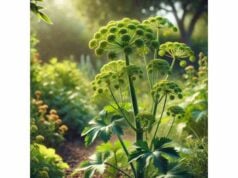
Lemon myrtle, botanically known as Backhousia citriodora, is one of Australia’s most distinctive native plants. Its leaves carry a vivid lemon aroma that is brighter and sweeter than many citrus-scented herbs, and that fragrance is not just pleasant. It reflects a chemistry rich in citral and other volatile compounds that has made lemon myrtle important in food, fragrance, and herbal product development. Traditionally, the leaves have been used as a flavoring and in gentle household remedies, while modern interest has focused on antimicrobial, antioxidant, anti-inflammatory, and topical applications.
What makes lemon myrtle especially interesting is the gap between its strong laboratory profile and its still-limited human clinical evidence. It is clearly a bioactive plant, but it is not yet a well-established internal medicinal herb in the same way that chamomile or peppermint are. Its strongest current roles are culinary, aromatic, and topical. That means lemon myrtle is genuinely promising, but it works best when viewed as a potent citral-rich native herb with practical uses and real safety limits rather than as a general cure-all.
Quick Summary
- Lemon myrtle is especially valued for its citral-rich leaf oil and strong aromatic, culinary, and topical potential.
- The most realistic benefits are antimicrobial, antioxidant, and anti-inflammatory effects supported mainly by preclinical research.
- A 10% topical solution has been studied once daily for molluscum contagiosum, but no standard oral medicinal dose exists.
- Culinary use makes the most sense in small seasoning or tea amounts rather than as aggressive self-medication.
- Avoid internal self-use of the essential oil, and avoid medicinal use during pregnancy, breastfeeding, or in young children without professional guidance.
Table of Contents
- What is lemon myrtle
- Key compounds and why they matter
- Does lemon myrtle have real benefits
- How lemon myrtle is used
- How much per day
- Safety, side effects, and who should avoid it
- What the evidence actually says
What is lemon myrtle
Lemon myrtle is an evergreen rainforest tree native to Queensland, Australia, and it belongs to the myrtle family. The part most often used is the leaf, which contains a highly aromatic oil and also a wider range of polyphenols and other plant compounds. In everyday practice, lemon myrtle sits in an unusual middle ground between herb, spice, and aromatic raw material. It appears in teas, seasoning blends, desserts, essential oils, soaps, skin products, and specialty extracts, but each of those forms behaves differently.
That difference is important from the start. A dried culinary leaf used in tea or seasoning is not equivalent to a concentrated essential oil, and neither is the same as a standardized extract used in a research setting. Many misunderstandings about lemon myrtle begin when people assume all forms of the plant are interchangeable. They are not. The leaf can be a gentle flavoring or infusion ingredient. The essential oil is far more concentrated and can become irritating or unsafe when used carelessly.
Lemon myrtle is also often confused with other lemon-scented plants. Its aroma invites comparisons with lemon verbena, lemongrass, lemon balm, and lemon eucalyptus, but those plants belong to different botanical groups and have different traditional uses and safety profiles. If you want a broader comparison with aromatic Australian tree remedies, eucalyptus traditions and applications offer a useful contrast because eucalyptus is more strongly tied to respiratory use, while lemon myrtle is better known for flavor, fragrance, and topical potential.
Historically, lemon myrtle has been used by First Nations communities in Australia as both a food and a healing plant. More recent commercial use has expanded rapidly because of its intense lemon note and its exceptionally high citral content. That flavor advantage helped it move into food and beverage applications, while laboratory research helped drive interest in medicinal and cosmetic uses.
Still, it helps to define the plant by what it clearly is rather than by what marketing sometimes claims it to be. Lemon myrtle is not a classic European tea herb with established monographs for internal self-care. It is not a standard supplement with a universally accepted dosage. And it is not a harmless “just food” plant once its oil is concentrated. It is best understood as a potent aromatic native leaf with meaningful culinary value, interesting preclinical medicinal promise, and a safety profile that depends heavily on the form being used.
That framing keeps the rest of the discussion honest. Lemon myrtle deserves attention, but the most useful attention is careful, practical, and form-specific.
Key compounds and why they matter
The chemistry of lemon myrtle explains almost everything people notice about it. The scent, the sharpness, the preservative interest, the skin irritation risk, and many of the herb’s most discussed “benefits” all flow from its chemical makeup. The best-known constituent is citral, which is actually a combination of two isomers: geranial and neral. In the common citral chemotype of lemon myrtle, citral often makes up the great majority of the essential oil, which is one reason the plant is often described as one of the richest natural sources of citral.
That matters because citral is not just fragrant. It has been studied for antimicrobial, antioxidant, anti-inflammatory, and food-preservation applications. It is also central to the plant’s irritant potential when used as an undiluted oil. This is a useful example of how the same compound can support both benefit and risk depending on the dose and form.
Lemon myrtle leaves and extracts may also contain:
- polyphenols and flavonoids,
- tannins,
- ellagitannins such as casuarinin,
- phenolic acids,
- minor terpenes and volatile aromatics.
These non-volatile compounds are especially important when the leaf is extracted with water or hydroalcoholic solvents rather than steam-distilled into essential oil. In other words, a leaf tea and an essential oil do not present the same chemistry. The tea emphasizes water-soluble compounds and milder aromatic exposure. The essential oil emphasizes highly concentrated volatiles, especially citral.
This distinction is one reason lemon myrtle deserves a more careful reading than herbs discussed only as teas. In the kitchen, the leaf behaves like an aromatic seasoning herb. In the lab, the oil behaves more like a concentrated biologically active material. And in food science or cosmetics, both leaf extracts and oils may be studied for preservation or formulation roles.
A useful comparison is lemongrass as a culinary aromatic. Both plants share lemon-scented appeal and citral-related chemistry, but lemon myrtle generally carries a more intense citral profile and a more concentrated lemon note. That helps explain why small amounts go a long way.
Another important point is that lemon myrtle has more than one chemotype. The citral chemotype is the dominant and commercially important one. A rarer citronellal chemotype has also been identified, which changes the scent and some of the biologic expectations. Most culinary and commercial lemon myrtle, however, centers on the citral type.
So what do these compounds mean in practical terms?
- The strong aroma and flavor come mainly from citral.
- The topical and preservative interest comes partly from volatile oil activity.
- The antioxidant and anti-inflammatory interest is broader and also involves phenolics.
- The safety profile changes dramatically depending on whether the material is leaf, extract, or essential oil.
That is the chemistry story in a sentence: lemon myrtle is not just lemon-scented. It is chemically concentrated in a way that makes it both useful and easy to misuse.
Does lemon myrtle have real benefits
Yes, lemon myrtle appears to have real benefits, but they need to be described with the right level of certainty. The plant has strong preclinical support and a few human-facing applications, yet it still lacks the kind of broad clinical evidence that would justify big internal health claims. That is a common pattern with aromatic plants: they can look impressive in the lab long before they become well-validated therapies.
The most realistic benefit areas are these:
- Antimicrobial potential
- Antioxidant activity
- Anti-inflammatory activity
- Food and product preservation potential
- Specialized topical use
The antimicrobial case is one of the clearest. Lemon myrtle oil has shown activity against several bacteria and fungi in laboratory studies, and some research also suggests antibiofilm effects. This makes the plant interesting for skin products, oral-care products, surface formulations, and food systems. But it is important not to overtranslate this into “treats infection” language. Killing microbes in vitro is not the same thing as safely treating human infection at home.
The antioxidant and anti-inflammatory story is also promising. Extract studies have found meaningful polyphenol content and effects on inflammatory mediators in laboratory models. That gives the plant plausible support for soothing, protective, or product-development roles. But again, plausible and preclinical are not the same as clinically proven.
One of the few more concrete human-related findings involves topical use for molluscum contagiosum. An older randomized trial used a 10% solution of lemon myrtle essential oil once daily and found a better response than vehicle. That does not make lemon myrtle a universal antiviral treatment, and it should not be generalized to every rash or viral skin lesion. But it does show that the plant has at least one product-specific human use beyond the laboratory.
This is also where comparison helps. In skin-focused aromatic herbs, readers often look at tea tree for topical antimicrobial support. Lemon myrtle belongs in that neighborhood of interest, though its chemistry is more citral-heavy and its human evidence base is smaller and more specialized.
The weakest benefit claims are the ones that sound most dramatic. Lemon myrtle is sometimes promoted online for cancer prevention, major digestive healing, full immune support, and broad detox effects. Those claims go too far. A plant can be antioxidant and antimicrobial without being a clinically meaningful treatment for complex disease.
So, does lemon myrtle have real benefits? Yes, but they are best understood in layers:
Most credible
- culinary and flavor use,
- product-preservation interest,
- antimicrobial and antibiofilm potential in the lab,
- specialized topical applications.
Promising but not established
- broader anti-inflammatory support,
- internal “functional food” effects,
- performance as a general oral medicinal herb.
That may sound restrained, but it is the right kind of restraint. Lemon myrtle does not need inflated claims to be impressive. A plant that is aromatic, bioactive, and genuinely useful across food, fragrance, and topical research is already doing a lot.
How lemon myrtle is used
Lemon myrtle is one of those plants whose usefulness depends heavily on choosing the right form. For most people, the safest and most practical uses are culinary or lightly aromatic rather than strongly medicinal. The leaves can be dried and used in tea blends, desserts, syrups, spice mixes, seafood dishes, and baked goods. In these settings, lemon myrtle acts more like an intensely lemony herb than like a drug.
The major use forms include:
- Dried leaf
- Leaf tea or infusion
- Flavor extracts
- Essential oil
- Topical products
- Specialty supplements or standardized extracts
Culinary use is the easiest place to start. Because the flavor is strong, even small amounts can carry a dish or drink. This is why lemon myrtle is often used as a finishing herb or tea ingredient rather than as a bulk leafy infusion. In food use, the practical goal is flavor, not aggressive self-treatment.
Tea is a common home use, but it deserves realistic expectations. Lemon myrtle tea can be pleasantly aromatic and may offer some of the gentler benefits associated with the leaf, yet it should not be assumed to deliver the same effects as concentrated essential oil or a research extract. A cup of tea is a mild, food-adjacent use.
The essential oil is very different. It is potent, highly citral-rich, and much more likely to irritate skin or mucous membranes if misused. Essential oil may appear in diffusers, soaps, cleaning products, massage blends, and skin formulations, but it should never be treated like a harmless “natural essence.” In many cases, professionally formulated products make far more sense than do-it-yourself applications.
Some people are tempted to treat lemon myrtle like a calming lemon herb similar to lemon balm for internal soothing use, but that is not the best model. Lemon balm is much better established as a gentle internal tea herb. Lemon myrtle is better viewed as a strong aromatic leaf whose internal medicinal role is still much less defined.
A practical form-by-form approach looks like this:
- For food and drinks: use the leaf in small amounts.
- For tea: keep expectations modest and use it as a flavorful aromatic infusion.
- For skin or topical use: prefer finished products over raw oil experiments.
- For essential oil use: treat it as concentrated and dilution-dependent.
- For supplements: read the extraction method and dose rather than assuming all lemon myrtle products are comparable.
Another overlooked use is in oral-care and hygiene products, where lemon myrtle’s flavor and antimicrobial interest make it attractive. That may be sensible in formulated products, but it does not mean the essential oil should be swished, swallowed, or improvised into home remedies.
So how is lemon myrtle best used? Mostly as a culinary and aromatic plant first, and only secondarily as a medicinal material. That order keeps the herb aligned with what it currently does best and avoids turning promising chemistry into overconfident self-treatment.
How much per day
This is the section where honesty matters most. Lemon myrtle does not have a well-established, evidence-based standard oral medicinal dose for general self-care. No major monograph gives a universally accepted daily amount for internal therapeutic use, and the human clinical data are too limited to justify a supplement-style dosing rule.
That means dosage needs to be handled in a form-specific way.
For culinary use, the right amount is usually simply small. Lemon myrtle is intensely flavored, so it is commonly used in seasoning-level amounts in cooking, baking, syrups, teas, and beverage blends. The exact quantity depends on the product, the freshness of the leaf, and the recipe. In practical terms, this is a “start low and taste” herb rather than a plant that benefits from heavy use.
For tea use, there is also no standardized medicinal dose backed by strong clinical data. Most home use is based on culinary or aromatic preference rather than therapeutic validation. A lightly flavored infusion is more defensible than a very strong brew used repeatedly for self-medication.
For topical use, the one concrete human dosing example comes from the molluscum contagiosum study, which used:
- a 10% solution of lemon myrtle essential oil
- applied once daily
That does not create a universal skin-treatment rule. It only tells us that one specific topical concentration has been studied in one specific condition.
For extracts and supplements, the situation is even more uncertain. Some animal studies have used doses such as 250 mg/kg/day of lemon myrtle extract in research settings, but animal dosing should not be converted casually into human self-use. Those studies are useful for science, not for home instructions.
The most practical dosage guidance, therefore, is not a universal number but a set of limits:
- keep leaf use in the culinary range unless a professional advises otherwise,
- do not self-dose the essential oil orally,
- do not assume a “natural” extract is safe at high doses,
- use topical products only at product-directed strengths.
This is also where the difference between leaf and oil becomes crucial. A leaf tea and an essential oil do not belong on the same dosing scale. One is mild and food-like. The other is concentrated enough to cause irritation or toxicity if handled poorly.
If a reader wants a single takeaway, it is this: lemon myrtle is a plant where form matters more than raw quantity. For most people, daily use makes most sense as a modest culinary herb or occasional aromatic tea. Once the essential oil or concentrated extract enters the picture, dosing should stop being casual and start being product-specific.
Safety, side effects, and who should avoid it
Lemon myrtle is often described as safe, but that statement is only true when the form and dose are clearly understood. The dried culinary leaf used in small amounts is very different from the essential oil. Most safety problems arise when people move too quickly from “edible herb” to “concentrated natural oil” without adjusting their caution.
The first major concern is skin irritation. Citral-rich oils can be irritating, especially when used undiluted or on sensitive skin. Lemon myrtle oil is potent enough that a person can react to it even if they tolerate other essential oils well. This is one reason finished products usually make more sense than homemade concentrated blends.
The second concern is internal misuse of the essential oil. Lemon myrtle oil should not be treated like a food ingredient simply because the leaf is culinary. Essential oils are concentrated chemical mixtures, and swallowing them casually is not a responsible extension of herbal practice.
The third concern is sensitive populations. Based on the available literature and common safety logic for concentrated aromatic products, the following groups should avoid self-directed medicinal use:
- pregnant people,
- breastfeeding people,
- young children,
- people with very sensitive skin,
- people with fragrance allergy or prior essential-oil reactions,
- anyone planning to ingest the oil.
Older toxicology work also showed that lemon myrtle oil and citral can be cytotoxic in vitro and that citral can penetrate skin under test conditions. That does not mean ordinary diluted external use is automatically dangerous. It means the oil deserves respect, especially when repeated skin exposure is involved.
A newer toxicological screening study using zebrafish larvae also reminds us that “plant extract” is not automatically risk-free. The main lesson is not alarm. It is proportion. Lemon myrtle extracts may be promising, but safe concentration ranges still matter and deserve testing rather than assumption.
If the goal is topical aromatic support, a more familiar and better-established skin-oriented option such as Australian tea tree products may sometimes be easier to use correctly. Lemon myrtle can still be valuable, but it is less forgiving when concentration is poorly controlled.
A practical safety checklist looks like this:
- Use the leaf freely only in normal culinary amounts.
- Patch-test any skin product first.
- Do not apply undiluted essential oil to large skin areas.
- Keep the oil away from eyes, lips, nostrils, and broken skin.
- Avoid oral self-use of the essential oil.
- Keep medicinal use conservative in pregnancy, breastfeeding, and childhood.
This is not a plant that needs fear. It needs form awareness. Lemon myrtle is safest when you keep the culinary leaf and the concentrated oil in separate mental categories. Once that distinction is clear, most of the avoidable risks become much easier to manage.
What the evidence actually says
The evidence on lemon myrtle is strong in some areas and weak in others, which is exactly why the herb is often misunderstood. Its chemistry and laboratory performance are impressive. Its human clinical evidence is still relatively thin. The most accurate summary is that lemon myrtle is a promising bioactive plant with limited direct clinical validation.
The strongest formal support comes from reviews and preclinical studies. Review literature confirms that Backhousia citriodora is an unusually rich natural source of citral and that it has important culinary, aromatic, toxicological, and commercial significance. That establishes the plant as more than a niche flavoring. It is clearly a serious subject of phytochemical and applied research.
The next strongest layer is in vitro and animal evidence. This includes studies showing:
- antioxidant effects,
- antibacterial and antibiofilm activity,
- anti-inflammatory actions,
- extract-specific functional effects such as skeletal muscle satellite cell activation,
- topical or formulation interest for fungi, microbes, and skin use.
These findings matter because they show the plant is not chemically passive. But they still do not prove that drinking lemon myrtle tea, swallowing a capsule, or rubbing on homemade oil will reliably improve human health outcomes.
The human evidence is much thinner. The best-known clinical example is the older trial using a 10% lemon myrtle essential oil solution for molluscum contagiosum in children. That study is important precisely because it is unusual. It gives lemon myrtle one product-specific human outcome that moves beyond speculation. But it is still a narrow finding, not a broad license for generalized medicinal claims.
The research also highlights another important pattern: water extracts and essential oils are not the same thing. A water extract may emphasize tannins and ellagitannins such as casuarinin. An essential oil emphasizes citral and volatile chemistry. If one study finds satellite cell activity in a water extract and another finds antimicrobial activity in an oil, it does not mean a consumer product delivers both effects in a useful way.
So what does the evidence really support?
Well supported
- lemon myrtle is chemically rich and highly aromatic,
- it is one of the most citral-rich natural plant sources,
- it has meaningful antimicrobial, antioxidant, and anti-inflammatory activity in preclinical work,
- it has practical culinary and product-development value.
Supported with important limits
- topical use in selected, specific applications,
- development of skin, hygiene, and preservative products,
- future potential as a functional extract.
Not yet strongly established
- routine internal medicinal use,
- treatment of chronic inflammatory conditions,
- broad immune or antiviral claims,
- supplement-style daily dosing for general wellness.
That may sound cautious, but it is the most useful kind of caution. Lemon myrtle already deserves attention for what it clearly is. There is no need to make it more certain than the evidence allows. Right now, it stands as an impressive native aromatic plant with real potential, a few practical uses, and a research story that is still unfolding.
References
- Backhousia citriodora F. Muell. (Lemon Myrtle), an Unrivalled Source of Citral 2021 (Review)
- Chemical Composition, Antioxidant, Antibacterial, and Antibiofilm Activities of Backhousia citriodora Essential Oil 2022 (Preclinical Study)
- Lemon Myrtle (Backhousia citriodora) Extract and Its Active Compound, Casuarinin, Activate Skeletal Muscle Satellite Cells In Vitro and In Vivo 2022 (Preclinical Study)
- Phytochemical Composition and Toxicological Screening of Anise Myrtle and Lemon Myrtle Using Zebrafish Larvae 2024 (Preclinical Study)
- Essential oil of Australian lemon myrtle (Backhousia citriodora) in the treatment of molluscum contagiosum in children 2004 (RCT)
Disclaimer
This article is for educational purposes only and is not medical advice, diagnosis, or treatment. Lemon myrtle is a culinary and aromatic plant with promising laboratory evidence, but it is not a well-established internal medicinal herb, and concentrated essential oil should not be self-used casually. Do not use lemon myrtle oil internally, and seek professional guidance before medicinal use during pregnancy, breastfeeding, childhood, or if you have sensitive skin or known fragrance allergy.
Please share this article on Facebook, X, or your preferred platform if it helped clarify what lemon myrtle can and cannot reasonably do.