Light sensitivity, also called photophobia, is more than “disliking bright rooms.” It is a real discomfort response in which ordinary light feels painful, overwhelming, or simply impossible to tolerate. For some people it is a short-lived symptom after a day of wind, screens, or contact lenses. For others it is the clue that the eye’s surface is inflamed, the iris is irritated, or the brain’s pain pathways are on high alert, as in migraine. The good news is that many causes are treatable once you match the pattern of symptoms to the right plan—often starting with restoring a stable tear film, controlling inflammation, and adjusting triggers like glare and flicker. This guide explains what photophobia can mean, how to spot urgent warning signs, and what you can do today while you arrange appropriate care.
Essential Insights
- Many cases improve when the tear film is stabilized and glare is reduced with simple, consistent habits.
- Photophobia with severe pain, sudden vision loss, or a red eye can signal an emergency that needs same-day evaluation.
- Migraine is a leading non-eye cause, and managing light sensitivity often requires treating the migraine itself.
- Chronic light sensitivity may reflect nerve sensitization, so “normal-looking” eyes do not always mean the symptom is minor.
- Use structured changes for two weeks: preservative-free lubrication, lighting control, and screen adjustments, then reassess.
Table of Contents
- What photophobia really means
- Common eye-related causes
- Neurologic and systemic causes
- Triggers and why light feels worse
- How photophobia is evaluated
- Treatment options and relief strategies
What photophobia really means
Photophobia is a symptom, not a diagnosis. The term literally suggests “fear of light,” but in medicine it usually describes light-induced discomfort—ranging from squinting and watery eyes to true pain in the eyes, forehead, or temples. People often notice it first outdoors, under fluorescent lighting, or when driving at night with oncoming headlights. Others feel it as a “raw” sensation during screen use, even in dim rooms. Understanding where the discomfort seems to originate can help narrow the cause.
Two pathways: eye pain and head pain
Light sensitivity can be driven primarily by the eye, the nervous system, or both:
- Eye-dominant photophobia: Burning, foreign-body sensation, tearing, gritty feeling, or a red eye often points to the ocular surface (dry eye, corneal irritation) or inflammation inside the eye (such as uveitis). Light feels harsh because the front of the eye is irritated, and the trigeminal nerve (the main facial pain nerve) is easily triggered.
- Head-dominant photophobia: If light worsens a headache, nausea, or sound sensitivity, migraine is a common culprit. Light can amplify pain processing in the brain even when the eye itself looks normal.
What “mild” and “severe” can look like
Photophobia severity is not just about brightness. Many people tolerate a sunny day but struggle under flickering LEDs. Others can handle a bright room if they control glare, but feel immediate pain with overhead fluorescent lights. Your pattern matters.
A practical way to track photophobia is to note:
- Timing: sudden onset over hours versus gradual over weeks
- Laterality: one eye versus both eyes
- Associated symptoms: red eye, discharge, blurred vision, headache, nausea, fever, neck stiffness
- Context: contact lens wear, recent injury, new medication, recent viral illness, migraine history
When photophobia is urgent
Photophobia deserves urgent evaluation when it comes with any of the following:
- Severe eye pain or pain that rapidly worsens
- Sudden vision loss, new halos around lights, or a dramatic drop in clarity
- A red eye with pain or light sensitivity (especially one eye)
- Corneal injury risk (metal grinding, chemical exposure, contact lens sleeping)
- Neurologic red flags (fever, stiff neck, confusion, new weakness, worst headache of your life)
If your photophobia is new and intense, it is safer to treat it as a “rule-out” symptom rather than something to push through.
Common eye-related causes
Eye-related causes are among the most common reasons light becomes uncomfortable, and they often respond well to targeted treatment once identified. The key is that many conditions look similar at first—watery, irritated eyes—yet require very different care.
Dry eye disease and tear film instability
A smooth tear film acts like the eye’s first optical surface. When the tear film breaks up quickly, light scatters, the surface dries, and nerves become reactive. Photophobia can show up as:
- stinging or burning
- fluctuating blur that improves after blinking
- discomfort that worsens with screens, air conditioning, and wind
- “tired eyes” late in the day
Dry eye can be driven by meibomian gland dysfunction (oily layer deficiency), low tear production, medication effects, or contact lens wear. People are often surprised that a “dry eye problem” can feel like a light problem, but the connection is strong.
Corneal irritation and corneal injury
The cornea has dense nerve supply. Even a small scratch can cause intense light sensitivity. Corneal triggers include:
- Corneal abrasion from fingernails, makeup tools, plant material, or rubbing
- Contact lens overwear, poor fit, or sleeping in lenses
- Infectious keratitis, which can progress quickly and is especially concerning in contact lens wearers
- Foreign body exposure, such as dust, sand, or metal fragments
If you have pain, tearing, and photophobia after contact lens use, treat it as time-sensitive. Continuing lens wear can worsen damage and delay healing.
Inflammation inside the eye: anterior uveitis
Anterior uveitis (iritis) often causes:
- pronounced photophobia (sometimes described as deep ache)
- redness, especially around the colored part of the eye
- blurred vision
- pain with focusing or pupil constriction
This is not a condition to self-treat with leftover drops. It requires medical evaluation because treatment may involve prescription anti-inflammatory medication and careful monitoring.
Conjunctivitis and eyelid inflammation
Not all pink eye causes photophobia, but some do—especially when the cornea is irritated or the ocular surface is inflamed. Blepharitis and allergic conjunctivitis can worsen light sensitivity through chronic surface irritation and unstable tears. Allergy clues include itching, seasonal patterns, and swelling. Blepharitis clues include crusting along the lashes and burning that is worse on waking.
Post-procedure sensitivity and surface healing
Photophobia can temporarily increase after eye procedures (including certain laser treatments) because the surface and nerves are recovering. The expected course depends on the procedure, and persistent or worsening symptoms should be reassessed to rule out dryness, inflammation, or infection.
The common thread across these eye-related causes is that light sensitivity often improves when you protect the surface, restore tear stability, and treat inflammation early.
Neurologic and systemic causes
Not all photophobia starts in the eye. In many people, the eyes look normal, yet light still feels unbearable. When that happens, the nervous system may be amplifying light as a pain signal, or systemic illness may be affecting the pathways that connect vision and discomfort.
Migraine and light sensitivity
Migraine is one of the most common causes of photophobia. Light sensitivity can occur:
- during the headache phase
- before headache (as an early warning sign)
- between attacks in some people
Migraine-associated photophobia often comes with nausea, sound sensitivity, motion sensitivity, and a preference for dark, quiet rooms. It can be triggered by flicker, glare, strong contrast (sun through trees while driving), or long screen sessions. Importantly, treating the migraine pattern—rather than only “treating the eyes”—often brings the biggest relief.
Traumatic brain injury and post-traumatic headache
After concussion or head injury, light sensitivity can become persistent. Some people experience discomfort disproportionate to what an eye exam shows. This is not imaginary; it can reflect changes in how the brain processes sensory input. The approach typically blends environmental adjustments (light control), symptom-guided rehabilitation, and headache management.
Meningitis and other urgent neurologic causes
Photophobia plus fever, stiff neck, confusion, or a rapidly worsening headache can signal an emergency. While these scenarios are less common than dry eye or migraine, they are the reason clinicians take photophobia seriously—especially when the onset is sudden and the person feels systemically ill.
Medication effects and pupil changes
Certain medications can increase light sensitivity by dilating pupils, changing tear film, or increasing dryness. Examples include some antidepressants, antihistamines, and medications with anticholinergic effects. Eye drops that dilate the pupil for an exam can also temporarily cause significant sensitivity. If photophobia began soon after a medication change, that timing is meaningful—though you should not stop prescribed medication without medical guidance.
Systemic inflammatory and autoimmune conditions
Some systemic diseases are linked to eye inflammation, including forms of arthritis and inflammatory bowel disease. In those cases, photophobia may be part of uveitis. The symptom may recur, sometimes affecting one eye at a time. If you have repeat episodes of photophobia with a painful red eye, it is worth asking whether an inflammatory cause is being considered.
A useful rule is this: if photophobia is coupled with headache features, neurologic triggers, and minimal eye findings, broaden the lens beyond the eye. If it is coupled with eye pain, redness, and blurred vision, prioritize urgent eye evaluation.
Triggers and why light feels worse
Many people ask, “Why does light suddenly bother me?” The answer is often a combination of light characteristics and sensitized tissue. Brightness matters, but so do glare, flicker, contrast, and how long you are exposed.
Glare, flicker, and contrast
Some of the most photophobia-provoking environments are not the brightest—they are the most visually chaotic:
- flickering fluorescent or poorly regulated LED lighting
- high-glare environments (sun on snow, water, glossy floors)
- strong contrast patterns (striped shadows, scrolling high-contrast text)
- nighttime driving with oncoming headlights and reflective road signs
Even subtle flicker can be uncomfortable, especially for migraine-prone brains. Glare can also worsen symptoms in people with dry eye because an irregular tear film scatters light.
Screen use as a multiplier
Screens contribute to photophobia through several routes:
- reduced blink rate, which dries the ocular surface
- sustained focusing effort, which can aggravate eye strain
- high-contrast content and rapid motion (video, scrolling)
- blue-rich and bright displays, especially in dark rooms
If photophobia worsens after long screen sessions, it is not necessarily a “screen allergy.” It can be a clue about tear film instability, uncorrected vision needs, or a migraine threshold being crossed.
Environmental triggers that irritate the ocular surface
The eye surface becomes reactive when it is repeatedly stressed by:
- wind and dry air (heating, air conditioning, airplane cabins)
- smoke, strong fragrances, and chemical fumes
- dust and pollen
- chlorine exposure
- contact lens overuse
A practical sign is “I feel fine in the morning, but by late afternoon light is unbearable.” That pattern often points to cumulative surface dryness and inflammation.
Sleep, hydration, and pain thresholds
Photophobia tends to intensify when the nervous system is more sensitive:
- sleep deprivation
- dehydration
- skipped meals or blood sugar swings
- high stress and muscle tension
- hormonal shifts (in some migraine patterns)
This does not mean photophobia is “just stress.” It means the threshold for discomfort is dynamic. Improving baseline stability—sleep, hydration, consistent meals—often reduces symptom intensity even before medical treatment kicks in.
A two-week trigger experiment
If you are not in an urgent category, a structured two-week experiment can clarify triggers:
- Use preservative-free lubricating drops regularly and limit harsh environmental exposure.
- Lower glare with brimmed sunglasses outdoors and indirect lighting indoors.
- Reduce screen strain with frequent blink breaks and softer contrast settings.
- Track whether symptoms are worse with flicker-heavy lighting or after headaches.
Patterns matter more than single days. A short, intentional trial often reveals whether the driver is primarily ocular surface stress, migraine threshold, or both.
How photophobia is evaluated
A good photophobia evaluation is not only about looking for a single cause. It is about separating urgent eye disease from treatable surface problems and neurologic patterns—then matching treatment to the most likely driver.
Key history questions clinicians use
Expect questions such as:
- When did the light sensitivity start, and was it sudden or gradual?
- Is it one eye or both eyes?
- Is there eye pain, redness, discharge, or blurred vision?
- Do you wear contact lenses, and did you sleep in them?
- Any recent injury, chemical splash, or foreign body exposure?
- Do you have headaches, nausea, aura, or sound sensitivity?
- Any fever, stiff neck, or new neurologic symptoms?
- What medications or new supplements have started recently?
These questions are not “scripted.” Each one helps narrow the risk level and the next step.
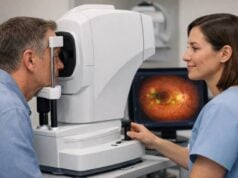
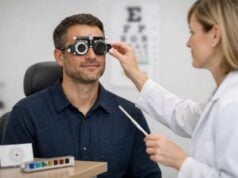
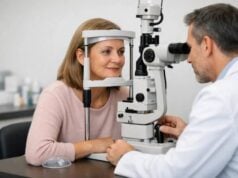
What an eye exam focuses on
In an eye-focused evaluation, clinicians typically assess:
- visual acuity and refraction (to see if blur is optical or inflammatory)
- pupil response and light reaction
- eyelid margins and meibomian gland function
- tear film stability and ocular surface staining patterns
- corneal clarity and signs of abrasion or infection
- anterior chamber inflammation signs that suggest uveitis
- eye pressure if symptoms suggest angle-closure risk
Even when the eye looks mostly normal, tear film testing can reveal instability that explains “light hurts by 4 p.m.”
Why a “normal exam” can still be meaningful
Some people feel dismissed when told the exam is normal. In reality, a normal exam can be reassuring—because it lowers the likelihood of dangerous infections or inflammation—while still leaving room for real symptoms driven by dryness, migraine, or nerve sensitization. Photophobia can be a clue about pain processing, especially when symptoms feel out of proportion to surface findings.
When additional testing is considered
Depending on the pattern, clinicians may recommend:
- corneal topography or specialized imaging if surface irregularity is suspected
- testing for inflammatory or autoimmune conditions when uveitis is recurrent
- neurologic evaluation if there are red flags or severe headache patterns
- assessment for binocular vision strain if symptoms are tied to near work
Red flags that change the plan immediately
Same-day or urgent evaluation is typically recommended for:
- contact lens wearers with pain and photophobia
- photophobia with significant redness and reduced vision
- suspected corneal ulcer, uveitis, or acute glaucoma symptoms
- systemic illness signs such as fever or neck stiffness
The goal of evaluation is not just naming a cause. It is ensuring that serious conditions are treated early and that common causes are not overlooked.
Treatment options and relief strategies
Photophobia treatment works best when you treat the underlying driver and reduce amplification from glare and dryness. Many people need a layered plan: a medical approach plus practical light management.
Immediate relief steps you can use safely
If you are not in an emergency category, these are generally reasonable first steps:
- Use preservative-free lubricating drops regularly for a short trial, especially before screens and outdoor time.
- Prefer indirect lighting indoors and reduce glare (lamps pointed at walls, matte surfaces where possible).
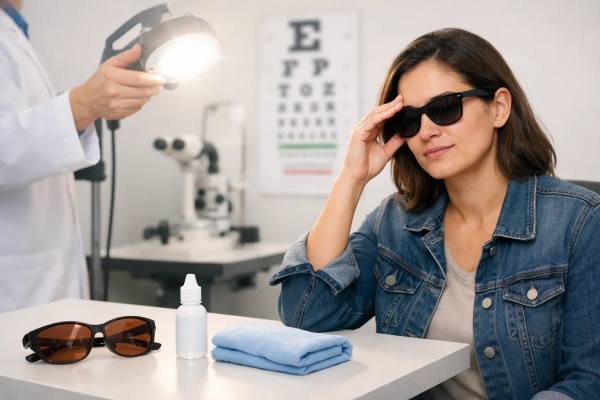
- Wear wraparound sunglasses outdoors and add a brimmed hat to cut overhead glare.
- Take screen breaks: every 20 minutes, look far away and blink slowly for 20 seconds.
- Avoid rubbing your eyes; rubbing increases inflammation and can worsen corneal irritation.
These measures reduce triggers while you identify the cause.
Dry eye and eyelid treatment strategies
When dryness is a major driver, consistency matters more than intensity. Options may include:
- scheduled lubrication and nighttime protection strategies if morning symptoms are strong
- warm compresses and lid hygiene for meibomian gland dysfunction
- environmental changes such as humidification and airflow control
- prescription anti-inflammatory therapies when inflammation is persistent
Be cautious with redness-relief drops that “get the red out.” They can worsen dryness and cause rebound redness, which may amplify discomfort over time.
When infection or inflammation is suspected
Some causes require prompt prescription treatment:
- suspected corneal infection needs urgent evaluation and targeted therapy
- anterior uveitis typically requires anti-inflammatory treatment and monitoring
- significant corneal injury may require protective measures and follow-up
Do not use leftover antibiotic or steroid drops without guidance. Steroids, in particular, can worsen certain infections and delay correct diagnosis.
Migraine-focused strategies
If photophobia tracks with migraine features, relief often improves when migraine control improves. Migraine care can include:
- acute medications taken early in an attack
- preventive therapies when attacks are frequent or disabling
- trigger management focused on sleep regularity, hydration, and meal timing
- practical light strategies that reduce “threshold crossing,” especially flicker and glare
Some people benefit from tinted lenses designed to reduce specific wavelengths, but they should be used thoughtfully. Wearing very dark lenses indoors can sometimes increase sensitivity over time by keeping the system adapted to darkness. The goal is comfort without training your brain to expect darkness.
Neuropathic and chronic ocular pain considerations
When photophobia persists despite reasonable surface treatment and the eyes look relatively quiet, clinicians may consider a neuropathic component. In these cases, treatment may focus on:
- stabilizing the ocular surface while addressing pain processing
- reducing triggers gradually rather than avoiding all light
- coordinated care when headache, neck tension, and sensory sensitivity cluster together
This is an area where individualized care matters. The right plan can be very different from “more drops.”
How to know if you are improving
Progress is often seen as:
- less squinting and fewer tears in normal lighting
- more stable vision during reading and screens
- fewer “bad spikes” with headlights and glare
- reduced need to seek dark rooms
If there is no improvement after a structured two-week approach—or symptoms are worsening—re-evaluation is appropriate. Photophobia is treatable in many cases, but it is safest when approached as a symptom worth investigating, not one to normalize.
References
- Dry Eye Syndrome Preferred Practice Pattern® 2024 (Guideline)
- Photophobia in migraine: A symptom cluster? 2021 (Review)
- Clinical neuroimaging of photophobia in individuals with chronic ocular surface pain 2022 (Review)
- Infectious keratitis: A review 2022 (Review)
- Systematic review of clinical practice guidelines for uveitis 2023 (Systematic Review)
Disclaimer
This article is for educational purposes only and does not provide medical advice, diagnosis, or treatment. Light sensitivity can be caused by conditions ranging from dry eye and migraine to urgent eye infections or inflammation that require prompt in-person care. Seek same-day medical evaluation if you have severe eye pain, a painful red eye, sudden vision changes, possible eye injury, contact lens–related pain, fever, stiff neck, confusion, or other neurologic warning signs. For personalized guidance, consult an eye-care professional or qualified clinician who can evaluate your symptoms, examine your eyes, and recommend appropriate treatment.
If you found this article useful, please consider sharing it on Facebook, X (formerly Twitter), or any platform you prefer.