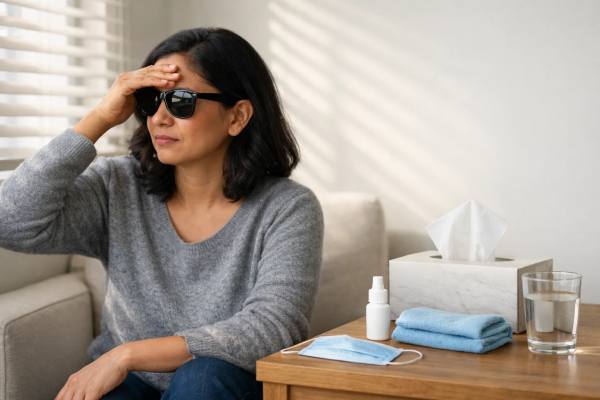
Light sensitivity (photophobia) can feel like an unexpected twist in a COVID-19 illness. One day you’re dealing with fatigue, congestion, or fever; the next, normal daylight or a phone screen feels harsh and uncomfortable. For many people, this symptom is temporary and tied to surface irritation (dry eye), inflammation, headache, or the general “sensory overload” that can come with viral infections. For others, photophobia signals a problem that deserves faster attention—especially when it shows up with eye pain, blurred vision, or a red eye.
The good news is that many practical steps can reduce discomfort while your body recovers: protecting the tear film, calming inflammation triggers, and adjusting lighting and screen habits. This guide explains why COVID-19 can make light feel painful, what patterns are usually reassuring, and how to know when photophobia is a reason to seek prompt care.
Essential Insights
- Light sensitivity during COVID-19 is often linked to dry eye, viral conjunctivitis, headache, or general inflammation and usually improves as the illness resolves.
- Gentle home strategies—lubrication, compresses, lighting adjustments, and screen pacing—often reduce symptoms within days.
- Photophobia with eye pain, blurred vision, or a contact lens wearer’s red eye should be evaluated promptly.
- Use a “calm and track” approach: note what worsens symptoms, protect the cornea, and reassess if you are not clearly improving.
Table of Contents
- What photophobia means with COVID-19
- Why COVID-19 triggers light sensitivity
- Common symptom patterns and what they suggest
- What helps at home without making it worse
- When to worry and seek urgent care
- Persistent photophobia after COVID-19
What photophobia means with COVID-19
Photophobia is more than “bright lights are annoying.” It is a heightened sensitivity in which light feels uncomfortable, painful, or exhausting. During COVID-19, photophobia can develop for several reasons, and understanding the concept helps you respond appropriately rather than guessing.
Photophobia is a symptom, not a diagnosis
Light sensitivity can originate from the eye surface, the inside of the eye, or the nervous system. In everyday terms, it helps to sort photophobia into three broad buckets:
- Surface-driven photophobia: the front of the eye (tear film, conjunctiva, cornea) is irritated or inflamed. This often comes with dryness, burning, gritty sensation, redness, or watery tearing.
- Internal eye photophobia: inflammation inside the eye can make light feel sharply painful. This is less common but more urgent. It often comes with deeper pain, blurred vision, and sometimes a smaller-looking pupil in the affected eye.
- Neurologic photophobia: the brain’s processing of light is altered, often through headache or migraine-like pathways. This can happen with viral illnesses and is frequently associated with headache, nausea, or sound sensitivity.
COVID-19 can touch all three pathways, directly or indirectly. That is why two people can describe “light sensitivity” and mean very different experiences.
How to describe it accurately
Clear description is one of the most useful tools you have. If you are monitoring at home or speaking to a clinician, note:
- Does the discomfort feel like it is on the surface (burning, gritty) or deep (aching behind the eye)?
- Is it one eye or both?
- Is there redness, watery discharge, or crusting?
- Is your vision unchanged, slightly blurred, or clearly worse?
- Do you also have headache, nausea, or neck stiffness?
What is usually reassuring
Photophobia is often less concerning when it is:
- Mild to moderate and improves with rest
- Linked to screen use, dry indoor air, or prolonged blinking breaks
- Paired with watery tearing rather than thick discharge
- Gradually improving as COVID symptoms improve
What photophobia is not
Photophobia is not a reliable marker of contagiousness, and it does not automatically mean eye damage. Many people experience it temporarily during viral illness and recover fully. The key is to treat it as a signal: soothe likely triggers, protect your cornea, and watch for patterns that suggest a higher-risk cause.
Why COVID-19 triggers light sensitivity
COVID-19 can make light sensitivity show up through a mix of eye-surface changes, inflammation, and nervous system effects. You do not need to know every mechanism to manage symptoms well, but a practical model helps you avoid common mistakes.
Dry eye and tear-film instability
A large share of photophobia during respiratory illness is driven by the tear film. The tear layer is the eye’s smooth optical coating. When it breaks up quickly, the cornea becomes exposed and reactive, which can make light feel sharp or “too bright.” COVID-19 can contribute to tear-film instability through:
- Fever and dehydration
- Reduced blinking during fatigue and screen use
- Dry indoor air and mouth-breathing from congestion
- Mask-associated airflow toward the eyes in some settings
Photophobia from dryness often fluctuates: it worsens late in the day, after screens, or in windy environments, and improves with lubrication and rest.
Viral conjunctivitis and surface inflammation
COVID-19 can be associated with conjunctival inflammation in some people. When the conjunctiva is inflamed, the eye may water, burn, and look red. Even mild conjunctivitis can increase light sensitivity because the ocular surface becomes more irritable and reflex tearing increases.
Headache and migraine-like pathways
Viral illnesses can amplify headache circuits, and COVID-19 is commonly associated with headache in many individuals. Photophobia linked to headache often feels “global” rather than purely in the eye, and it may come with:
- Nausea or reduced appetite
- Sensitivity to sound
- Worsening with movement
- A desire to rest in a dim room
This pattern matters because the most effective relief often involves headache-focused strategies in addition to eye comfort care.
Sinus pressure and facial pain overlap
Congestion and sinus inflammation can create facial pressure that people interpret as eye pain. Bright light can feel worse when the brow and forehead are tender. This is not typically dangerous, but it can be surprisingly uncomfortable and can mimic more serious eye conditions unless you look for vision changes and true ocular pain.
Less common but important causes
A small subset of people develop photophobia from conditions that require medical evaluation, such as corneal inflammation or internal eye inflammation. These usually announce themselves with pain, reduced vision, pronounced redness, or a “this feels different” intensity.
The best approach is to assume common causes first, use safe supportive strategies, and then escalate quickly if the symptom pattern does not fit a routine course.
Common symptom patterns and what they suggest
Because photophobia can come from multiple pathways, symptom patterns are often more useful than labels. Use the combinations below to guide your next step.
Pattern 1: Light sensitivity with dryness and burning
This is one of the most common patterns during and after COVID-19. Typical features include:
- Stinging, burning, or gritty sensation
- Blinking that briefly improves comfort
- Worse symptoms after screens, reading, or driving
- Little to no discharge (or thin watery tearing)
This pattern suggests tear-film instability and surface irritation. It often responds well to lubrication, compresses, and screen pacing.
Pattern 2: Light sensitivity with watery red eyes
When photophobia comes with a red, watery eye, think of viral conjunctivitis or generalized surface inflammation. Often you’ll also see:
- Tearing that is mostly clear
- Mild eyelid puffiness
- One eye starting first, then the other sometimes following
This is often contagious if conjunctivitis is present, mainly through hand-to-eye spread and shared items. Supportive care and hygiene are usually appropriate if pain is mild and vision is normal.
Pattern 3: Light sensitivity with headache and nausea
This is a neurologic photophobia pattern. The eye may look normal, but light feels overwhelming. Features can include:
- Headache as the dominant symptom
- Nausea, motion sensitivity, or sound sensitivity
- Preference for a quiet, dim room
- Worsening with physical activity
Eye drops alone may not help much here. You usually need a combined plan: hydration, rest, trigger reduction, and appropriate headache management.
Pattern 4: One eye, strong pain, and blurred vision
This is a pattern to take seriously. Red flags include:
- Deep aching pain or sharp pain with light
- Blurred vision that does not clear with blinking
- A very red eye, especially if redness is concentrated around the colored part of the eye
- A sensation of a foreign body that will not go away
This can point to corneal inflammation, internal eye inflammation, or other urgent conditions. Do not rely on home care alone.
Pattern 5: Contact lens wearer with photophobia
If you wear contact lenses, treat photophobia as higher risk, even if it began during a respiratory illness. A safe rule is simple:
- Remove lenses immediately.
- Do not restart lenses until the eye is fully comfortable and white again.
- Seek prompt evaluation if there is pain, light sensitivity, discharge, or any vision change.
Contact lens–related corneal problems can start subtly and progress quickly. The safest choice is to lower your threshold for evaluation.
These patterns are not perfect diagnostic tools, but they help you respond safely: soothe common causes and escalate early when a higher-risk pattern appears.
What helps at home without making it worse
Home care for photophobia should do three things: protect the eye surface, reduce nervous system triggers, and avoid products that can prolong redness or hide worsening disease. The goal is comfort with safety.
Step 1: Protect the tear film
These measures are low-risk and often high-benefit:
- Use lubricating drops: Artificial tears can reduce corneal exposure and light sensitivity. If you need drops more than 4 times per day, preservative-free versions are often gentler.
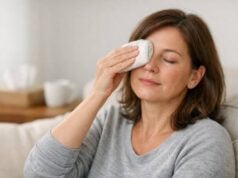
- Try cool compresses: A clean, cool compress for 5 to 10 minutes can calm surface inflammation and reduce discomfort.
- Limit drying exposures: Avoid direct fan airflow, very dry rooms, and smoke. If your environment is dry, a humidifier can help.
If your eyes feel worse late in the day, set a routine rather than waiting for symptoms to spike.
Step 2: Pace screens and lighting
During COVID-19, screen time often increases while blink rate drops. A simple structure helps:
- Use the 20-20-20 approach: every 20 minutes, look at something about 20 feet away for 20 seconds and blink deliberately.
- Reduce glare: lower screen brightness to a comfortable level, avoid bright white backgrounds, and position screens to reduce reflections.
- Choose gentle lighting: indirect lamps can be easier than overhead lights. Bright light avoidance is reasonable short-term, but try not to stay in total darkness all day, which can increase sensitivity over time.
Step 3: Treat the whole-body triggers
Photophobia often improves when systemic triggers improve:
- Hydrate steadily, especially with fever or reduced intake
- Rest more than usual, because sleep disruption amplifies light sensitivity
- Manage headache thoughtfully if it is part of the symptom cluster
If photophobia feels strongly linked to headache, dim lighting, hydration, and rest are often more effective than adding more eye drops.
What to avoid
A few common products can backfire:
- Redness-relief drops: these can cause rebound redness and do not address the underlying cause of photophobia.
- Old prescription drops: using leftover antibiotic or steroid drops without guidance can irritate the eye or worsen some conditions.
- Rubbing the eyes: rubbing increases inflammation and can worsen surface damage, even when it briefly feels relieving.
How fast should you see improvement
Many people notice some relief within 24 to 72 hours when the plan matches the cause (for example, dryness-focused care for dry eye–driven photophobia). You do not need a perfect day to count it as progress. Look for trend markers:
- Less squinting in normal indoor light
- Less burning and tearing
- More stable comfort across the day
If you are not clearly improving or you are worsening, treat that as useful information and consider evaluation rather than doubling down on home care.
When to worry and seek urgent care
Most photophobia during COVID-19 is manageable, but certain symptoms raise the probability of a problem that needs prompt assessment. The goal is not to alarm you—it is to prevent delays when early care protects vision.
Seek urgent evaluation the same day if
These features can indicate corneal inflammation, internal eye inflammation, or pressure-related problems:
- Moderate to severe eye pain, not just scratchiness
- Significant light sensitivity that makes it hard to keep the eye open
- New blurred vision, haze, or reduced clarity that does not clear with blinking
- A very red eye, especially if redness is concentrated around the colored part of the eye
- A visible white spot, cloudy patch, or “film” on the cornea
- Severe headache with nausea and a very red eye
If you have these symptoms, it is safer to be evaluated than to wait for “one more day.”
Be seen promptly within 24 to 48 hours if
These situations are higher-risk even if symptoms are not dramatic:
- You wear contact lenses and have a red eye or photophobia
- You are immunocompromised or have poorly controlled diabetes
- You have had recent eye surgery or have a known corneal condition
- Discharge becomes thick and persistent, or eyelids are repeatedly stuck shut
- Symptoms are not improving after about a week, or they worsen after initial improvement
Why contact lenses are a special category
Contact lenses increase the risk of corneal infection and inflammation. During a viral illness, people may sleep more, hydrate less, and rub their eyes more—all of which increase risk. If you wear lenses, the safest default is:
- Stop lenses immediately with any red eye or photophobia.
- Switch to glasses until fully recovered.
- Seek care sooner if discomfort is more than mild or if vision is affected.
A simple self-check that reduces uncertainty
If you are debating whether to seek help, these questions are practical:
- Is my vision worse than yesterday?
- Does light feel painful rather than just unpleasant?
- Does the eye hurt in a deep or sharp way?
- Is only one eye significantly involved?
- Do I wear contact lenses or have a higher-risk medical condition?
If the answer to any is yes, leaning toward evaluation is the safer option.
COVID-19 can make you tired and less attentive to symptom changes. Clear rules help you act decisively when the pattern suggests something more than routine irritation.
Persistent photophobia after COVID-19
Some people recover from the acute infection but notice that light sensitivity lingers or returns in waves. Persistent photophobia can be frustrating because it affects work, driving, and screen-based tasks. It also has more than one plausible driver, so the best approach is structured rather than reactive.
Common reasons photophobia lingers
After COVID-19, lingering photophobia is often tied to one or more of the following:
- Dry eye that persists: tear-film disruption can continue after illness, especially if screen habits changed during recovery or if mask use and indoor air dryness are ongoing.
- Post-viral headache patterns: some people develop migraine-like sensitivity after viral infections. Light sensitivity may persist even when the eyes look normal.
- Deconditioning and sleep disruption: poor sleep increases pain sensitivity, including light sensitivity, and it can prolong recovery loops.
- Inflammatory after-effects: in a smaller group, ocular or neuro-ophthalmic inflammation can persist and may require clinical guidance.
A helpful clue is whether lubrication and environmental changes help. If photophobia improves with tear-film support, dryness is likely part of the story. If photophobia tracks more with headache and nausea, neurologic pathways may dominate.
How to manage persistent symptoms safely
Use a two-track strategy for two weeks:
- Eye-surface track: consistent artificial tears, compresses, screen pacing, and reduced drying exposures.
- Nervous-system track: regular hydration, steady sleep schedule, gradual return to activity, and avoidance of abrupt lighting extremes.
Also consider “light training” rather than constant darkness. Staying in very dim conditions all day can make your visual system more reactive. The goal is comfortable, gradual exposure: softer lighting, brief outdoor exposure with sunglasses if needed, and incremental screen time rather than all-or-nothing.
When persistent photophobia should be evaluated
Even if symptoms are not severe, evaluation is reasonable when:
- Photophobia lasts beyond 2 to 3 weeks without clear improvement
- Vision feels different from your baseline (even if subtle)
- One eye is consistently worse than the other
- You have recurrent red eye episodes with light sensitivity
- You are relying on darkness to function day to day
A clinician can check for corneal involvement, inflammation inside the eye, and other conditions that require targeted treatment rather than continued trial-and-error.
What recovery often looks like
Many people improve gradually rather than suddenly. A realistic recovery marker is not “no light sensitivity,” but “I can tolerate normal indoor light and short screen tasks without escalation.” If you see that trend, stay consistent. If the trend is flat or worsening, escalate to evaluation.
Persistent photophobia is real, but it is also navigable when you treat it as a symptom pattern that can be measured, supported, and reassessed.
References
- Ocular manifestations of COVID-19: A systematic review of current evidence – PMC 2024 (Systematic Review)
- Neuro-ophthalmic Manifestations of Coronavirus Disease 2019 and Its Vaccination: A Narrative Review – PMC 2023 (Review)
- Investigating the Impact of COVID-19 Infection on Dry Eye Parameters – PMC 2023
- A review of neuro-ophthalmic sequelae following COVID-19 infection and vaccination – PubMed 2024 (Review)
Disclaimer
This article is for educational purposes and does not replace individualized medical advice. Light sensitivity can be caused by common, self-limited issues such as dry eye or headache, but it can also be a sign of eye conditions that require urgent treatment to protect vision. Seek prompt medical evaluation if you have eye pain, significant light sensitivity, blurred vision, a very red eye, a visible corneal spot or haze, a red eye while wearing contact lenses, recent eye injury or chemical exposure, or symptoms that worsen or do not improve.
If you found this article helpful, please consider sharing it on Facebook, X (formerly Twitter), or any platform you prefer so others can recognize COVID-19–related light sensitivity and know what helps and when to seek care.