Ligustrum vulgare, better known as common privet or wild privet, is a familiar hedge plant across Europe and many other temperate regions. It is not a mainstream kitchen herb, and that distinction matters. While folk medicine has used its leaves for sore throat rinses, mild inflammatory complaints, and other traditional purposes, modern interest in common privet comes mainly from laboratory studies that have identified notable phenolic compounds, secoiridoids, flavonoids, and related antioxidants. These findings make the plant scientifically interesting, but they do not automatically make it a proven home remedy.
That is the central point readers need most. Ligustrum vulgare appears to have real pharmacological potential, especially in anti-inflammatory and antioxidant research, yet its safety profile is more complicated than many gentle garden herbs. The berries are not considered edible, the flowers and pollen can irritate sensitive people, and there is no well-established human medicinal dose. The most useful way to approach common privet is with restraint: understand its chemistry, respect its traditional background, separate preclinical promise from clinical proof, and treat safety as part of the herb’s story rather than an afterthought.
Key Facts
- Common privet shows antioxidant and anti-inflammatory potential in laboratory studies, but human clinical evidence remains very limited.
- Its leaves contain notable phenolic compounds such as oleuropein-related constituents, flavonoids, and phenylethanoids.
- No standardized oral dose exists; research water infusions have used about 20 g dried leaves per 200 mL water, but self-dosing is not advised.
- Children, pregnant or breastfeeding people, and anyone with privet pollen allergy or sensitivity to plant berries should avoid medicinal use.
Table of Contents
- What common privet is and why species identity matters
- Key ingredients and how Ligustrum vulgare may work
- Potential health benefits and what the research actually shows
- Traditional uses and modern practical applications
- Dosage, forms, and why self-prescribing is a poor idea
- Safety, side effects, interactions, and who should avoid it
- Bottom line: should Ligustrum vulgare be used as a home herb
What common privet is and why species identity matters
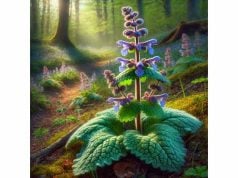
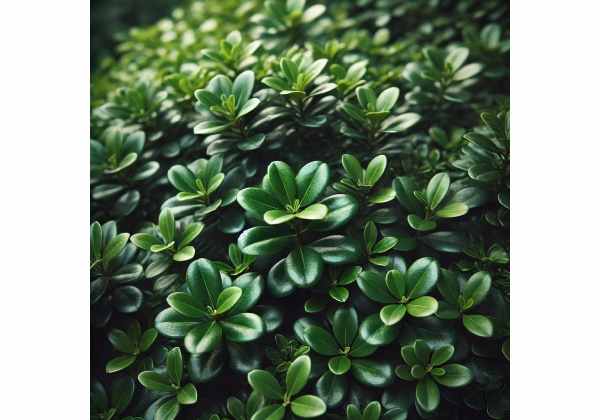
Ligustrum vulgare is a semi-evergreen or deciduous shrub in the olive family, Oleaceae. It is best known as common privet, a plant long used for hedges, screens, and ornamental borders. In the wild or in old landscapes, it often appears as a dense shrub with smooth opposite leaves, clusters of small white flowers, and dark berries that persist into the colder months. From a gardening perspective, it is ordinary. From a medicinal perspective, it is much less straightforward.
That is because the word “ligustrum” can mislead people. Different Ligustrum species are discussed in traditional medicine, botanical research, landscaping, and toxicology, but they are not interchangeable. Common privet, Ligustrum vulgare, has a smaller and much more limited medicinal literature than some other species in the genus. This is important because readers sometimes encounter broad claims about “ligustrum” without being told which species those claims actually refer to. Once that happens, the impression of certainty becomes stronger than the evidence deserves.
For common privet specifically, the best-supported facts are these:
- it has a history of folk use, especially for inflammatory complaints and mouth or throat applications
- its leaves and fruits contain several biologically active plant compounds
- most benefit claims come from laboratory or animal research rather than strong human trials
- its berries and other plant parts are not treated as routine food
- pollen, fragrance, skin contact, and ingestion can all pose problems in sensitive individuals
Species identity also matters for safety. A plant used as a hedge is often assumed to be harmless because it is common in public spaces. That is a mistake. Common does not mean edible, and ornamental does not mean suitable for herbal self-treatment. In fact, the more a plant sits at the border between garden shrub and medicinal curiosity, the more important precision becomes.
Another reason to be exact is chemistry. Common privet belongs to the same broad family as olive, and some overlapping compound types appear in both. That helps explain why researchers are interested in it, especially when discussing Oleaceae compounds such as oleuropein and related phenolics. Still, sharing a family or a few phytochemicals does not make two plants equally safe or equally useful.
So the first practical lesson is simple: before discussing benefits, dosage, or traditional use, it is necessary to know that this article is about common privet, Ligustrum vulgare, not an abstract “ligustrum” category. That one step prevents many of the misunderstandings that make herbal articles less safe than they appear.
Key ingredients and how Ligustrum vulgare may work
The medicinal interest in Ligustrum vulgare comes from its chemistry rather than from any well-established clinical use. Modern phytochemical studies show that different parts of the plant contain a changing mix of compounds depending on the organ, season, and maturity stage. Leaves, flowers, shoots, and fruits do not behave the same way, which is one reason homemade preparations are hard to standardize.
Several compound groups stand out.
The first group is phenolic compounds, including flavonoids and phenylethanoid derivatives. These are important because they often contribute antioxidant activity and may help explain why common privet extracts show free-radical scavenging and enzyme-modulating effects in laboratory models.
The second group is iridoids and secoiridoid-related compounds. Among the most discussed names in common privet research are oleuropein, echinacoside, and related derivatives. Oleuropein is especially interesting because it is well known in olive-family chemistry. In common privet, however, it should be seen as a clue to potential pharmacology, not as proof of clinical effect.
A third group includes bitter or protective leaf constituents that appear to influence inflammatory pathways in preclinical studies. These may act on cyclooxygenase, lipoxygenase, leukotriene signaling, and oxidative stress pathways. That matters because many traditional anti-inflammatory herbs have at least some laboratory signature in these same systems.
Researchers have also identified newer points of interest in common privet leaves, including:
- oleocanthal- and oleacein-related leaf bioactives
- enzyme-inhibitory fractions
- antioxidant phenolics
- compounds associated with antiproliferative effects in cell-line studies
These findings help explain why Ligustrum vulgare draws scientific attention. A plant does not have to be a successful medicine to be chemically interesting. In many cases, researchers are asking whether a species might serve as a source of useful compounds rather than whether people should start drinking it as tea.
That distinction is crucial. A laboratory study may show that an extract inhibits COX-2 activity, scavenges radicals, or slows the growth of certain cultured cells. Those are meaningful early signals, but they do not tell us what a safe dose would be in people, whether the same effect occurs after digestion, or whether the herb’s risks outweigh its benefits in real life. In herbal medicine, a plant’s mechanism is only one piece of the story.
A practical way to understand common privet is this: it contains enough interesting chemistry to justify pharmacological research, especially around inflammation and oxidative stress, but not enough clinical evidence to justify casual self-treatment. Readers who keep that balance in mind will understand the plant far more accurately than those who focus only on the most promising compounds.
Potential health benefits and what the research actually shows
If common privet is discussed honestly, its benefits need to be framed as potential, conditional, and mostly preclinical. The plant does show biologically interesting activity, but that is not the same as having proven health benefits for everyday users.
The strongest area of interest is anti-inflammatory potential. Several studies on leaf extracts suggest that Ligustrum vulgare can influence inflammatory mediators, reduce oxidative burst in immune cells, and inhibit enzymes linked to inflammatory cascades. These effects help support the idea that the plant’s traditional anti-inflammatory reputation was not invented out of nowhere. At the same time, the evidence remains largely laboratory based. That means the benefit is better described as plausible than proven.
The second area is antioxidant activity. Extracts from leaves, flowers, and some other plant parts show antioxidant behavior in test systems. This often sounds more dramatic than it is. Many plants show antioxidant activity in vitro. What matters is whether those effects translate into meaningful benefits in people at safe doses. For common privet, that translation has not been clearly established.
A third area is experimental organ protection. Animal research has suggested protective effects of Ligustrum vulgare extracts in inflammatory damage models, including pancreatitis-related pathways. That is scientifically interesting because it points to a broader anti-inflammatory and cytoprotective pattern. But it is still animal research. It should not be presented as evidence that common privet prevents or treats pancreatic disease in people.
A fourth area is antiproliferative or cytotoxic activity in cultured cells. This is common territory in phytochemical research. Plant extracts may inhibit the growth of selected cell lines, but that does not mean a plant is a practical or safe cancer remedy. Many compounds that look impressive in a petri dish never become useful therapies. This is one of the most important places where readers need protection from overinterpretation.
So what is reasonable to say?
Reasonable:
- Ligustrum vulgare contains compounds with anti-inflammatory and antioxidant activity in laboratory studies.
- Some extracts have shown enzyme-modulating and protective effects in preclinical models.
- Traditional use for inflammatory complaints has some mechanistic support.
Not reasonable:
- common privet is a proven immune booster
- common privet treats arthritis, hypertension, or infections in humans
- its berries should be taken as a home remedy
- its experimental cell or animal results can be treated like clinical results
This nuance matters because the plant sits in a gray zone. It is more than a simple hedge shrub, but less than a validated medicinal herb for general home use. Readers who want a firm clinical promise will not find one here. What they will find is a plant with real pharmacological interest, early evidence worth watching, and a large enough gap in human data that restraint remains the safest interpretation.
Traditional uses and modern practical applications
Traditional use of Ligustrum vulgare is narrower and more cautious than many modern herb summaries imply. In southern and eastern European folk practice, common privet leaves were used for conditions involving inflammation, especially in the mouth and throat, and in some cases for rheumatic, diuretic, or hypotensive purposes. These uses are historically meaningful because they help researchers understand where to look, but they do not function as modern proof.
The most realistic traditional application was external or local rather than broad internal self-medication. A leaf infusion or rinse makes more sense historically than swallowing large amounts of berries or taking strong extracts daily. That pattern is actually reassuring. Traditional systems often learned through experience where a plant was gentle enough to use and where it was better handled with care.
In modern practical terms, common privet has a few possible roles, though each comes with limits.
Possible uses people discuss:
- experimental leaf infusion as a short-term rinse or gargle
- research extracts for anti-inflammatory investigation
- phytochemical sourcing of Oleaceae-derived compounds
- ornamental plant interest with medicinal curiosity
Uses that are harder to justify:
- routine berry use
- unsupervised internal dosing for chronic illness
- use in children
- long-term home supplementation
This is where comparison helps. Someone looking for a garden plant for gentle mouth, throat, or skin support is usually better served by a safer and better-established herb such as calendula for topical and mucosal care. Calendula has clearer traditional continuity, more practical modern formulations, and a much easier safety conversation. Common privet, by contrast, remains a plant of cautious interest rather than a first-line home herb.
Another important modern application is not therapeutic at all. Ligustrum vulgare is useful as a research plant because it contains valuable compounds and is widely available as biomass in some regions. In that context, scientists may ask whether it can serve as a source of specific phenolics or lead compounds. That is a legitimate and interesting use, but it is very different from recommending the plant for routine herbal self-care.
So the best practical summary is this: common privet has a modest traditional footprint and a stronger research role than consumer herbal role. It may still belong in a serious article about medicinal plants, but mostly as a plant whose uses must be interpreted narrowly. Its story is about careful boundaries. Traditional use exists, modern laboratory interest exists, but broad home-herbal enthusiasm is not strongly justified by the evidence we currently have.
Dosage, forms, and why self-prescribing is a poor idea
Dosage is where caution becomes practical. Ligustrum vulgare does not have a well-established modern human dosing standard for routine medicinal use. There is no high-quality consensus telling readers how much leaf, extract, or fruit they should safely take for a specific health outcome. That absence is not a minor detail. It is the main reason common privet should not be treated like a casual tea herb.
Research papers do give us some technical preparation details. For example, laboratory work on water infusions has used strong leaf-to-water ratios, including preparations equivalent to roughly 20 g of dried leaves per 200 mL of water or similar 1:10 plant-to-water extraction methods. These numbers are helpful for understanding how studies were performed, but they are not consumer dosing recommendations. A research infusion is designed to test chemistry or cell effects, not to tell the public what is appropriate to drink.
The same problem appears with extract studies. Preclinical work may use purified fractions, lyophilized materials, or animal doses measured in mg/kg. None of that can be translated directly into safe home use without strong human data. Herbal articles often fail here by turning laboratory conditions into practical advice. That is exactly what should not happen with common privet.
If a reader still wants to understand the forms that appear in literature, they generally include:
- aqueous leaf infusions
- hydroalcoholic or methanolic extracts
- lyophilized laboratory fractions
- leaf-derived phytochemical isolates
- fruit extracts in experimental animal work
What should ordinary readers do with that information?
The safest answer is:
- do not treat the berries as edible medicine
- do not assume that a hedge plant is safe to brew freely
- do not extrapolate animal or cell-study doses into human routines
- do not use common privet as a substitute for better-characterized herbs
A careful article should also address duration. Because human safety and efficacy data are limited, there is no evidence-based duration for oral use. That means the usual questions, such as “How many days?” or “How many times daily?” do not have reliable answers. When a plant lacks both dose clarity and safety certainty, the responsible position is not to invent a schedule.
The one relatively defensible use pattern is brief, external, and conservative, such as research-informed discussion of short-term local rinse use. Even there, people with allergies, reactive skin, or sensitivity to fragrant flowers should be cautious.
So while dosage sections often promise practical certainty, this plant offers the opposite lesson. Sometimes the most useful dose guidance is to say that no validated home-use dose exists and that the uncertainty itself is part of safe herbal practice.
Safety, side effects, interactions, and who should avoid it
Common privet deserves more safety emphasis than many readers expect. Its risks are not always dramatic, but they are real enough that it should not be treated like a benign leafy tonic.
The berries are the most obvious concern. Privet berries are not regarded as food, and ingestion may lead to gastrointestinal symptoms such as nausea, vomiting, abdominal pain, and diarrhea. Children are a special concern because curiosity and low body weight increase the risk from accidental ingestion. That is one reason common privet is a poor candidate for casual home herbalism: the plant parts most visible to non-experts are also the ones least appropriate to experiment with.
The leaves and berries may also irritate skin or eyes in sensitive people. Even without ingestion, contact can be a problem. The flowers introduce another layer of risk. Their scent can be irritating, and privet pollen is well recognized as a respiratory allergen in susceptible individuals. People with allergic rhinitis, seasonal wheeze, asthma triggered by pollens, or known sensitivity to privet hedges should take that seriously.
Possible adverse effects include:
- nausea, vomiting, diarrhea, or abdominal discomfort after ingestion
- skin irritation or dermatitis
- eye irritation after contact
- respiratory irritation from flowers or pollen
- allergy-related symptoms in sensitized people
Interaction data are limited, which means caution is smarter than certainty. There is not a well-mapped interaction profile for Ligustrum vulgare in ordinary clinical use, largely because it is not a well-standardized clinical herb. In practical terms, that means people on multiple medicines, especially for blood pressure, inflammation, immune conditions, or allergy management, should avoid unsupervised use rather than assume there are no interactions.
The main groups who should avoid medicinal use are:
- children
- pregnant or breastfeeding people
- anyone with known privet or olive-family pollen allergy
- people with asthma or strong fragrance sensitivity
- anyone tempted to use the berries internally
- people with chronic illness who are already taking prescription medicines
There is also a practical safety comparison worth making. If someone is seeking an immune-season herb or a dark berry botanical for everyday use, they are usually better off with a better-known and more food-compatible option such as elderberry with a clearer traditional and modern profile. That does not mean elderberry is perfect for everyone. It means common privet is not the herb to choose when safer, more established options exist.
The most important safety message is simple: common privet’s medicinal interest does not cancel its irritation and toxicity concerns. The plant is interesting, but it is not forgiving. That alone should shift it from the “try it at home” category into the “read about it carefully” category for most people.
Bottom line: should Ligustrum vulgare be used as a home herb
For most readers, the answer is no, or at least not routinely. Ligustrum vulgare is a plant with enough traditional use and pharmacological promise to deserve attention, but not enough clinical clarity or safety simplicity to deserve enthusiastic recommendation. That may sound restrained, yet restraint is exactly what makes an herbal article trustworthy.
Common privet does have genuine points in its favor. It contains interesting phenolics and secoiridoids. It has shown anti-inflammatory and antioxidant behavior in laboratory models. It has a small but real folk history, particularly for inflammatory complaints involving the mouth and throat. It also offers researchers a useful source of compounds worth studying further. None of that is trivial.
Still, the practical case for home use remains weak. There is no standardized consumer dose. Human clinical evidence is scarce. The berries are not treated as edible. The pollen can trigger allergy. Contact can irritate some people. And the most promising results remain concentrated in cell work, mechanistic studies, and animal models.
That leads to a reasonable conclusion:
- common privet is better understood as a research-interest plant than a daily herbal remedy
- its traditional use is historically important, but modern self-treatment should remain cautious
- the safest public guidance is conservative, especially for internal use
- curiosity is justified, but casual experimentation is not
This does not make the plant unimportant. On the contrary, it gives Ligustrum vulgare a more interesting role. It sits at the edge of medicinal botany, where garden plants, traditional use, phytochemistry, and toxicology meet. Plants in that category often teach the most valuable lesson: not every bioactive herb is a good home herb.
Readers who mainly want a practical remedy should usually choose something with clearer evidence, clearer dosing, and fewer safety questions. Readers who want to understand emerging medicinal plants, however, can learn a lot from common privet. Its story encourages scientific humility. It reminds us that promising chemistry is not the same as proven treatment, and that wise herbal use depends just as much on knowing when not to use a plant as on knowing what it contains.
References
- Comparative Analysis of Phytochemical Profiles and Selected Biological Activities of Various Morphological Parts of Ligustrum vulgare 2024. (Open laboratory study)
- Oleocanthal and Oleacein from Privet Leaves: An Alternative Source for High-Value Extra Virgin Olive Oil Bioactives 2024. (Open phytochemical study)
- Activity of Ligustrum vulgare L extracts against acute pancreatitis in murine models by regulation of p38 MAPK and NF-κB signaling pathways 2022. (Animal study)
- Ligustrum pollen: New insights into allergic disease 2020. (Review)
- Privet (Ligustrum) | Queensland Poisons Information Centre 2024. (Official guidance)
Disclaimer
This article is for educational purposes only and should not be used as a substitute for medical advice, diagnosis, or treatment. Ligustrum vulgare is not a well-standardized medicinal herb, and evidence for safe, effective human use remains limited. Because common privet may cause gastrointestinal upset, skin or eye irritation, and respiratory allergy symptoms, it should not be self-prescribed for children, pregnancy, chronic illness, or acute symptoms. Seek professional medical advice before using any privet preparation, and get urgent help after accidental berry ingestion or significant allergic symptoms.
If this article helped you, please share it on Facebook, X, or your preferred platform.