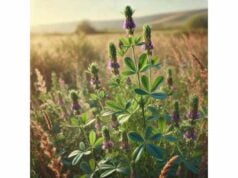
Lion’s tail, also widely called wild dagga or lion’s ear, is a striking South African herb with bright orange flowers and a long traditional history. It belongs to the mint family and has been used in folk medicine for coughs, chest complaints, skin irritation, headache, digestive discomfort, and states of nervous tension. In recent years, it has drawn broader attention because some traditions also describe a mild calming or psychoactive effect, especially when the aerial parts are smoked. That reputation has made the plant more famous, but not always more accurately understood.
A well-grounded look at Leonotis leonurus shows a herb with genuine ethnobotanical importance, interesting chemistry, and promising laboratory findings, especially in antioxidant, anti-inflammatory, neuroactive, and antimicrobial research. At the same time, strong human clinical evidence is still limited, and safety questions become more important as the form becomes more concentrated or the dose becomes less traditional. The most useful way to understand lion’s tail is not as a miracle herb or a legal cannabis substitute, but as a traditional medicinal plant whose benefits, compounds, uses, and risks deserve a careful, evidence-aware reading.
Key Insights
- Lion’s tail has traditional value for mild calming support and respiratory discomfort, especially in short-term folk use.
- Its labdane diterpenes and polyphenols help explain the herb’s antioxidant, anti-inflammatory, and neuroactive potential.
- If used as a tea, a cautious traditional-style range is often about 1 to 2 g dried aerial parts per cup, once or twice daily.
- Smoking-related claims are not the same as proven medical benefit, and inhaled use should not be treated as a safe standard remedy.
- Pregnant or breastfeeding people, children, and anyone with seizure, psychiatric, liver, or medication-related concerns should avoid unsupervised use.
Table of Contents
- What Lion’s Tail Is and Why It Stands Out
- Key Ingredients and Medicinal Properties
- Lion’s Tail Benefits and What the Evidence Actually Shows
- Traditional Uses for Calm, Cough, and Topical Care
- How Lion’s Tail Is Prepared and Used
- Dosage, Timing, and Duration
- Safety, Side Effects, and Who Should Avoid It
What Lion’s Tail Is and Why It Stands Out
Lion’s tail, Leonotis leonurus, is a perennial shrub native to southern Africa and best known for its tall stems and dense whorls of orange tubular flowers. In gardens, it is often grown as an ornamental because it is dramatic, drought-tolerant, and attractive to pollinators. In traditional medicine, however, it has a very different identity. The leaves, flowers, stems, and sometimes roots have all been used in decoctions, infusions, topical applications, and inhaled forms for a surprisingly wide range of complaints.
Part of what makes the plant stand out is the way it sits between everyday herbalism and more controversial popular culture. Traditional records describe use for coughs, skin rashes, boils, itching, constipation, headache, muscular cramps, epilepsy-related complaints, and chest infections. More recent public interest has focused on reports that the dried leaves and flowers may produce mild calming or psychoactive effects when smoked. That reputation has encouraged comparisons to cannabis, but those comparisons are usually much simpler than the evidence allows.
A good starting point is to see lion’s tail as a traditional southern African medicinal plant first, not as a novelty smoke herb. Its folk use was broader than one effect and often more practical than sensational. It was a household remedy, not just a plant associated with altered states. That context matters because it changes how the herb should be judged. A plant that was used for chest discomfort, topical irritation, and general nervous-system complaints deserves to be read through its full ethnobotanical history, not just through modern market language.
It also stands out chemically. Lion’s tail is rich in labdane diterpenes and other phytochemicals that have attracted pharmacological interest. Some of these compounds help explain why the herb shows antioxidant, anti-inflammatory, anticonvulsant, anxiolytic, and antimicrobial signals in preclinical work. Yet that same chemistry is one reason the plant should not be treated casually in concentrated forms.
In practical terms, lion’s tail belongs in the category of herbs that are intriguing, useful in tradition, but not fully settled by modern human research. Readers who want a comparison with a more established calming herb may find it helpful to consider California poppy as a gentler calming reference point. Lion’s tail is not the same herb, but the comparison helps frame an important truth: traditional calmative herbs often have real value, while still demanding restraint, clarity, and respect for dose and form.
Key Ingredients and Medicinal Properties
Lion’s tail owes much of its medicinal reputation to a group of compounds that are chemically interesting and pharmacologically active enough to justify scientific attention. The best-known among them are labdane diterpenes, especially marrubiin and related compounds such as leoleorin A and leoleorin B. These diterpenes are important because they give the herb more than just fragrance or bitterness. They help explain why Leonotis leonurus is repeatedly studied for neuroactive, anti-inflammatory, and other biologic effects.
Marrubiin is especially notable. It is a diterpene also discussed in other members of the mint family and is often linked in the literature to antispasmodic, antioxidant, and cardiometabolic interest. In lion’s tail, it is better treated as a marker of pharmacological promise than as a guaranteed therapeutic solution. The plant also contains flavonoids, phenolic compounds, and other secondary metabolites that likely contribute to its antioxidant profile. These compounds work less like dramatic single-drug ingredients and more like a coordinated phytochemical network.
Recent work on smoke constituents has added another layer. Researchers identified labdane diterpenoids in smoke-derived fractions and linked them to anticonvulsant and anxiolytic effects in zebrafish models. That is an important finding, but it should be interpreted carefully. It supports the plausibility of certain traditional inhaled uses without proving that smoking the plant is safe, medically standardized, or comparable to a conventional treatment.
Another important medicinal-property issue is confusion around leonurine. Online summaries often repeat that lion’s tail contains leonurine, a compound associated with the Leonurus genus. The problem is that scientific analyses of Leonotis leonurus have not consistently confirmed leonurine in this species. This is more than a technical point. It means many simplified ingredient lists are likely copying each other rather than reflecting actual plant chemistry. In a herb article, that distinction matters because the credibility of the whole piece depends on not repeating attractive but uncertain claims.
The broader medicinal profile of lion’s tail can be described in a careful way:
- Potentially calming or neuroactive in certain preparations
- Antioxidant and anti-inflammatory in extract studies
- Traditionally used for respiratory and topical complaints
- Chemically variable enough that plant part and preparation matter
This places lion’s tail in a category shared by several traditional mint-family herbs: a plant with real pharmacological promise, but not one that can be reduced to a single “magic ingredient.” For readers who like to compare active plant chemistry across calming herbs, scullcap’s soothing compound profile offers a helpful contrast. Lion’s tail is generally more rugged, more culturally specific, and less clinically settled, but the comparison highlights how different calmative herbs can work through very different phytochemical pathways.
Lion’s Tail Benefits and What the Evidence Actually Shows
When people search for lion’s tail benefits, they often encounter dramatic claims. Some articles treat it as a natural relaxant, others as a respiratory herb, and others as a legal stand-in for cannabis. The evidence supports a more careful conclusion. Lion’s tail appears to have real traditional benefits and meaningful preclinical activity, but strong human clinical proof remains limited.
The most plausible benefit is mild calming support. Traditional use and newer experimental work suggest that the plant may influence anxiety-like behavior and seizure-like activity in certain models. This is one of the reasons the herb became associated with smoked use in some settings. Still, the evidence does not justify presenting lion’s tail as a proven anxiolytic medicine or a substitute for prescribed care. The best current reading is that calming effects are plausible, modest, and highly dependent on preparation.
A second likely benefit is respiratory support. Traditional medicine has used lion’s tail for coughs, chest infections, and bronchitic discomfort. This fits with the general pattern of aromatic and bitter herbs that are used to open the chest, encourage expectoration, or make breathing feel easier during mild illness. Again, the problem is not plausibility. It is the leap from plausibility to proof. Lion’s tail may have a place as a short-term supportive herb, but it should not be described as a confirmed treatment for asthma, pneumonia, or serious infection.
A third area of interest is topical and inflammatory support. Folk uses for eczema, itching, boils, rashes, and minor skin complaints make sense when you look at the plant’s antimicrobial and anti-inflammatory laboratory profile. Topical applications are also easier to justify than aggressive internal dosing because they keep the herb close to its traditional use pattern and away from the uncertainty of high-dose systemic use.
Metabolic and antioxidant benefits are also discussed in the literature. Animal and laboratory studies suggest anti-inflammatory, antioxidant, and even antidiabetic potential, with marrubiin and related compounds receiving special attention. These findings are promising, but not enough to build a chronic-disease self-treatment plan around. They should be read as scientific leads, not as established outcomes in humans.
A practical evidence summary looks like this:
- Traditional use is broad and credible.
- Preclinical evidence is promising.
- Human trials are scarce.
- Strong benefit claims should be avoided.
That pattern places lion’s tail in the same general evidence zone as many folk herbs: too active to dismiss, too underconfirmed to oversell. For respiratory support, a better-established comparison would be traditional mullein for cough and throat comfort. Lion’s tail may still be useful, but its evidence remains more preliminary and more dependent on historical practice than on human clinical validation.
Traditional Uses for Calm, Cough, and Topical Care
Traditional use tells the clearest story about lion’s tail. Long before the plant became associated with “wild dagga” marketing, it was used as a practical medicinal herb in southern African communities. The plant appears repeatedly in ethnobotanical records as a remedy for chest complaints, skin conditions, digestive trouble, headache, muscular tension, and nervous-system symptoms. That range can sound too broad at first, but it is typical of herbs that were used flexibly in household medicine.
For calming and nervous-system use, lion’s tail has an unusual profile. Folk accounts describe it as helpful for epilepsy-related complaints, headache, and nervous tension. Some traditions specifically describe smoking the leaves or flowers for relief, which later fed the herb’s modern psychoactive reputation. The important thing is not to flatten those traditions into a simple claim that “lion’s tail gets you high.” The traditional frame was more functional: reduce distress, settle the body, and manage symptoms that were hard to control with other household measures.
Its respiratory use is easier for modern readers to understand. Decoctions and infusions were used for coughs, colds, chest infections, and asthma-like discomfort. In that role, lion’s tail behaves like many strong folk herbs that are warming, bitter, and aromatic enough to feel medicinal in the lungs and throat. Even when the exact mechanism is not fully mapped, the use pattern itself is coherent.
Topical use is another important thread. Leaves and stems have been applied to sores, boils, itching, skin rashes, and inflamed areas. These applications fit the herb’s antimicrobial and anti-inflammatory laboratory profile and probably explain why the plant remained valued in communities where topical plant medicine was part of daily care. A traditional topical herb does not need to be miraculous to be remembered. It needs to be accessible, useful, and locally trusted.
Digestive and purgative use also appears in the literature. Some preparations were used for constipation, intestinal discomfort, and cleansing-type purposes. This is one area where modern readers should be especially careful, since a traditional purgative or strong internal herb can easily become a poor self-care choice when stripped from its cultural context.
In modern practical terms, lion’s tail makes the most sense when its uses are grouped this way:
- Mild calming and nervous-system support
- Cough and chest comfort
- Topical care for irritated skin
- Occasional digestive or purgative use in traditional settings
Readers looking for a gentler plant-first option for irritated skin may prefer calendula for topical soothing support. Lion’s tail remains interesting and relevant, but its traditional use suggests it should be approached as a strong, context-rich folk herb rather than a casual everyday wellness tea.
How Lion’s Tail Is Prepared and Used
How lion’s tail is prepared matters almost as much as why it is used. Different preparations can shift the herb from mild and food-adjacent to concentrated and far less predictable. Traditional practice includes infusions, decoctions, poultices, topical washes, and smoked or inhaled forms from the dried aerial parts. Modern users often encounter the plant as dried leaf, flower, loose tea, tincture, extract, or ornamental material harvested at home.
Tea is the most conservative starting point. An infusion made from the dried aerial parts is one of the easiest ways to approach the herb without turning it into a concentrated experiment. Tea-style use suits the plant’s traditional role in coughs, chest discomfort, mild tension, and general folk medicine. It also creates a slower, more self-limiting experience than extract or inhaled use. You feel the herb in context rather than in a sharp pharmacological surge.
Decoctions are stronger and more traditional for tougher plant material, but they also demand more caution. If the goal is respiratory or digestive support, a simple infusion is usually a better first step than a long-boiled decoction. Tinctures and extracts increase uncertainty even more, because the strength varies greatly and there is no widely accepted standardized lion’s tail product for medical use.
Topical use is often more grounded. A wash, compress, or poultice aligns well with the herb’s traditional uses for boils, itching, and localized irritation. Even here, a patch test is wise. A topical herb can still irritate sensitive skin, especially if the preparation is overly strong or combined with alcohol.
The most controversial preparation is smoked use. Traditional records and new research make it clear that smoke-related use has ethnobotanical roots and some scientific plausibility. But plausibility is not the same as recommendation. Inhaled plant smoke introduces respiratory irritation, dose uncertainty, and safety concerns that are difficult to justify as a routine wellness practice. The 2024 work on smoke constituents is scientifically valuable precisely because it shows that traditional use deserves study, not because it proves smoking is a good modern therapeutic route.
A practical hierarchy of use looks like this:
- Mild tea for cautious internal use
- Topical applications for localized care
- Tincture or extract only with more restraint
- Smoked or inhaled use treated as high-uncertainty and not first-line
This is one of those herbs where simplicity is usually better than intensity. The more concentrated the preparation, the less the user is relying on traditional household herbalism and the more they are entering a poorly standardized zone. For most readers, that is not an upgrade. It is a risk increase.
Dosage, Timing, and Duration
Lion’s tail does not have a well-established modern human dosing standard. That is the most important point in this section, and it should shape every practical recommendation that follows. There are promising animal data, meaningful traditional uses, and interesting chemical studies, but there is no widely accepted clinical dosage framework comparable to licensed herbal medicines.
That means any dose advice should be conservative and clearly framed as customary rather than proven. For tea-style use, a cautious range often begins around 1 to 2 g dried aerial parts per cup, steeped for about 10 to 15 minutes, once or twice daily. This is not a validated medical dose. It is a reasonable traditional-style starting point for adults who are trying the herb as a mild tea rather than as an extract or inhaled product. Some people may choose fresh herb, but dried material is easier to measure and generally more consistent.
Timing depends on the reason for use. For a cough or chest discomfort, tea is usually taken earlier in the day or in the evening when symptoms are most noticeable. For calmative use, evening is the more sensible starting time because it reduces the chance that an individual sensitivity will interfere with work, driving, or coordination.
A careful starting strategy looks like this:
- Choose one form only.
- Start with the lowest simple tea-strength preparation.
- Observe effects over several days rather than escalating quickly.
- Avoid combining it immediately with other sedating herbs or substances.
- Stop if dizziness, nausea, heavy sedation, or unusual symptoms appear.
Duration should also stay modest. Lion’s tail is not a herb that should be used casually for months in medicinal amounts without professional oversight. A short trial of several days to one week makes more sense than open-ended use. If the herb has not helped within that period, increasing the dose is not automatically the right answer. Often the better response is to reconsider the symptom, the preparation, or whether the herb is a poor fit.
There is even less reason to be confident with extracts, concentrates, or smoking-related doses. Those methods introduce too much variability to support simple household dosing rules. The safest practical interpretation is that lion’s tail belongs to the low-and-slow category, not the push-the-dose category.
If someone mainly wants a mild tea for stress-linked evening tension, lemon balm as a gentler calming tea option may be easier to dose and live with. Lion’s tail still has a place, but that place is narrow, modest, and best respected rather than stretched.
Safety, Side Effects, and Who Should Avoid It
Safety is where lion’s tail needs the most restraint. The plant’s traditional use and preclinical promise can make it sound benign, but that is not the same as proven low-risk use across all forms and doses. In fact, the available safety data suggest that concentrated internal use deserves caution, and animal toxicity findings make it unwise to treat the herb as harmless simply because it is natural.
The most likely mild side effects are dizziness, nausea, digestive upset, dry mouth, or unwanted sedation, especially in people who are sensitive to calming herbs or who use strong preparations. Tea-style use is less likely to cause problems than extracts or inhaled forms, but individual responses vary. Topical use may also irritate sensitive skin, particularly when the herb is used in strong homemade preparations.
The more serious concern comes from toxicology. In rat studies, high doses of aqueous extract caused mortality and produced notable hematological, biochemical, and histopathological changes. Animal results do not automatically predict typical human outcomes, but they are strong enough to reject the casual assumption that “more is better.” They also support the idea that chronic or high-dose use should not be improvised.
Smoking-related use deserves its own warning. Even if smoke constituents show interesting anticonvulsant or anxiolytic activity in experimental models, inhaling combusted plant material is not a clean or low-risk delivery system. It introduces respiratory irritants and unpredictable exposure. A plant with calming potential does not become a good smoking herb merely because a traditional use exists.
People who should avoid unsupervised use include:
- Pregnant or breastfeeding people
- Children and adolescents
- Anyone with seizure disorders unless supervised by a qualified clinician
- People with major psychiatric conditions
- Anyone taking sedatives, anticonvulsants, antidepressants, or multiple chronic medications
- People with significant liver, kidney, or lung disease
Interaction data are limited, which should be read as uncertainty rather than reassurance. Herbs with CNS activity can interact in messy, additive ways with alcohol, sleep aids, antianxiety medicines, and other calming products. Even without definitive interaction charts, caution is justified.
The safest bottom line is simple. Lion’s tail may be reasonable as a cautious short-term folk herb in low-intensity forms, but it is not a plant to take lightly, to combine casually, or to use as a self-directed substitute for treatment of epilepsy, anxiety disorder, infection, or chronic disease. When the symptom is serious, the herb should step back and medical evaluation should step forward.
References
- Chemical profiling, anticonvulsant and anxiolytic effects of the smoke constituents isolated from Leonotis leonurus (L.) R.Br 2024 (Experimental Study)
- The use and potential abuse of psychoactive plants in southern Africa: an overview of evidence and future potential 2024 (Review)
- Phytochemical Profiles, Micromorphology, and Elemental Composition of Gomphocarpus fruticosus (L.) W.T. Aiton and Leonotis leonurus (L.) R.Br., Plants Used for Managing Antidepressant-like Conditions in Folk Medicine 2024 (Phytochemical Study)
- “Wild cannabis”: A review of the traditional use and phytochemistry of Leonotis leonurus 2015 (Review)
- Safety evaluation of the aqueous extract of Leonotis leonurus shoots in rats 2008 (Toxicology Study)
Disclaimer
This article is for educational purposes only and is not medical advice. Lion’s tail has a meaningful traditional history, but modern human research is still limited and the safety of concentrated use is not well established. Do not use it to self-treat seizures, severe anxiety, chest pain, shortness of breath, serious skin infection, or any ongoing condition that needs diagnosis and monitoring. Speak with a qualified healthcare professional before using lion’s tail if you are pregnant, breastfeeding, taking prescription medicines, or have a neurological, psychiatric, liver, kidney, or lung condition.
If this article was helpful, please share it on Facebook, X, or your preferred platform so others can find balanced, evidence-aware herbal information.